It has been less than a year since Genesis, the luxury arm of Hyundai Motor Group, sent shockwaves through the automotive world with the debut of the Magma GT Concept. A mid-engine, low-slung, and undeniably aggressive machine, the concept served as a physical manifestation of the brand’s ambition to transcend the premium sedan and SUV market. While the automaker has remained characteristically guarded regarding a definitive production timeline, the frequency of the car’s public appearances—and the intensity of the buzz surrounding it—suggest that Genesis is inching closer to delivering its first true halo vehicle.
The Sight and Sound of Ambition
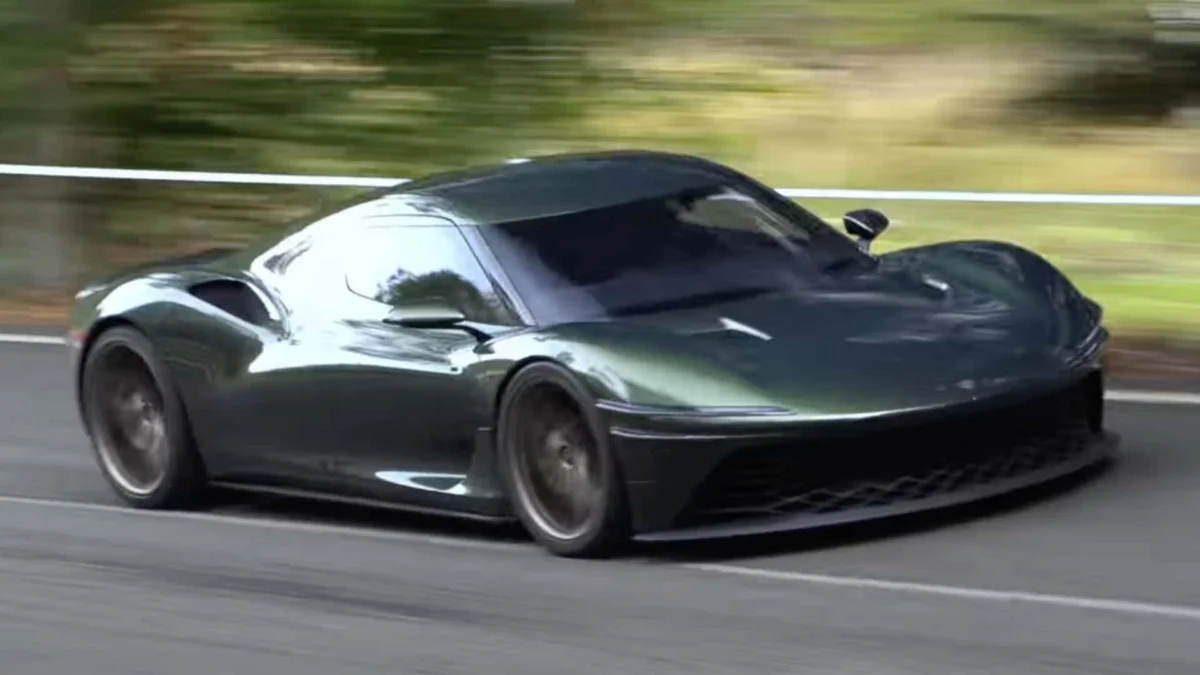
The most recent chapter in the Magma GT’s saga unfolded on the hallowed grounds of a hill climb event, where the car was captured on video by the NM2255 | Raw Car Sounds YouTube channel. The footage provides a tantalizing, albeit brief, look at the supercar’s real-world behavior.
During the acceleration run, the Magma GT struggled visibly for traction against the greasy, cold asphalt of the hill climb course. While the driver was clearly not pushing the vehicle to its absolute limit, the car’s rear-drive chassis showed a playful, tail-happy disposition, sliding with a raw, mechanical honesty rarely seen in the sanitized world of modern, computer-aided supercars.
Crucially, the video provided an auditory confirmation of the rumors surrounding the powertrain. The Magma GT emits a deep, guttural, and unmistakable V8 burble. Unlike the high-pitched, clinical whine of electric performance vehicles or the strained note of turbocharged four-cylinders, this engine possesses the resonant, chest-thumping character expected of a world-class supercar. Genesis has previously teased that the coupe is capable of producing up to 800 horsepower, a figure that places it firmly in the company of established European and American titans of the segment.
A Chronology of the Magma Evolution
The Genesis Magma program did not appear in a vacuum; it is the culmination of a deliberate, multi-year strategy to pivot the brand’s image toward high-octane performance.
- Early 2024: Genesis signals its intent to expand the "Magma" sub-brand beyond aesthetic trims, aiming to create a standalone performance division that rivals BMW’s M or Mercedes-AMG.
- The Debut: The Magma GT Concept is unveiled, stunning audiences with its mid-engine architecture and "Magma Orange" paint scheme, which has since become the signature hue of the brand’s performance identity.
- June 2024 (Interior Reveal): Genesis pulls back the curtain on the cabin, revealing a sophisticated, leather-wrapped interior. Unlike the digital-first cockpits of its competitors, the Magma GT features a minimalist, driver-focused layout with a traditional analog gauge cluster, suggesting that the car is intended to be a driver’s machine rather than a rolling tech showcase.
- The GT3 Shift: Later in June, the narrative evolved further when Genesis debuted the Magma GT3 concept. This iteration was more than a cosmetic update; it featured a widened track, aggressive aerodynamic appendages, and massive intakes designed to feed a high-performance cooling system. This signaled that Genesis was viewing the project not just as a design exercise, but as a legitimate engineering platform.
Engineering and Design: The "Independent Study"
The transition from the initial GT Concept to the track-focused GT3 variant is significant. By introducing the GT3, Genesis framed the project as an "independent study." In automotive industry parlance, this is a signal that the R&D department is testing the limits of the chassis and cooling systems under extreme conditions.
The design language of the Magma series represents a departure from the "Athletic Elegance" seen on the G90 or GV80. Here, the lines are sharper, the proportions are more classic supercar-oriented, and the stance is planted. The interior choice is perhaps the most telling: by eschewing a massive "hyperscreen" in favor of tactile, analog instrumentation, Genesis is signaling that the Magma GT is intended to provide a visceral, analog-style connection between the driver and the road. It is a bold move in an era where most manufacturers are leaning into software-defined driving experiences.
Official Stance and Internal Sentiment
For months, the official line from Genesis was that the Magma GT was a "vision." However, the tone has shifted significantly in recent interviews. Motor1 Italy recently sat down with Charles Fuster, the Brand Director for Genesis in Italy and France, to discuss the future of the project.
When asked if the Magma GT was merely a temporary design exercise, Fuster was emphatic: "It isn’t a temporary exercise." This comment provided the most concrete evidence yet that the project has transitioned from a PR stunt to a product development pipeline. While Fuster was careful not to provide a specific launch date—a necessity in the automotive industry to avoid alienating current customers or delaying potential production—he added, "We’d like to get there soon."
This "get there soon" sentiment aligns with the broader internal push at Hyundai Motor Group to elevate the status of the Genesis brand. With the current lineup well-regarded for luxury and comfort, a halo car serves the vital function of changing the brand’s perception. A supercar creates a "halo effect," where the technology and prestige of the top-tier model trickle down into the sales of more accessible models.
The Competitive Landscape and Market Implications
If the Magma GT reaches production with its rumored 800-horsepower V8, it will enter a fiercely contested arena. It will be forced to compete with the likes of the mid-engine Chevrolet Corvette C8 Z06, the Porsche 911 Turbo S, and various offerings from Ferrari and McLaren.
Why the Market Needs This Car
- Brand Equity: Genesis has spent years building a reputation for reliability and luxury. To be considered a Tier-1 global luxury player, they need a performance flagship that demonstrates they can engineer a car that is not just comfortable, but exciting.
- The "C8 Connection": Persistent rumors and industry speculation have questioned whether the Magma GT shares its underlying DNA with the C8 Corvette chassis. While Genesis has not confirmed this, the physical dimensions and layout suggest a commonality in engineering philosophy. If they can replicate the performance-per-dollar ratio of the C8 while wrapping it in Korean luxury aesthetics, they could capture a massive segment of the market.
- Technological Showcase: The Magma GT acts as a laboratory. The engineering breakthroughs in aerodynamics, weight reduction, and powertrain cooling required for a car of this caliber will inevitably find their way into the next generation of Genesis EVs and SUVs.
Looking Ahead: The Final Verdict
The Magma GT is no longer a question of "if," but "when." The fact that Genesis is actively testing the car at public events and publicly discussing its future suggests that the production design is likely nearing final sign-off.
The industry is currently at a crossroads. As manufacturers pivot toward electrification, the window for a high-performance, internal-combustion-powered halo car is closing. By committing to this project, Genesis is making a final, thunderous statement for the internal combustion engine. Whether it remains a V8 or evolves into a high-output hybrid remains to be seen, but the intent is clear.
For the enthusiast, the Magma GT represents a rare opportunity: a brand with the resources of a global giant, the design courage of an emerging luxury player, and the engineering ambition to take on the best in the world. If Genesis can retain the raw, soulful character of the concept in the final production model, they will have succeeded in creating a new Korean icon—a car that will be remembered not just for its performance, but for being the moment Genesis truly arrived at the top of the automotive mountain.
As we look toward the next year, all eyes will remain on the Nürburgring, the proving grounds of the industry, where the Magma GT is expected to continue its development. For now, the world waits, listening for that deep V8 burble to return—this time, with a production badge attached.