In the quiet meadows and hedgerows of the British countryside, a silent, microscopic crisis is unfolding. While honeybees have long been the gold standard for monitoring environmental health, a groundbreaking study from the University of Cambridge has revealed that they may not be the most accurate barometer for the plight of all pollinators. New research published in the journal Ecological Entomology suggests that bumblebees are accumulating significantly higher concentrations of toxic heavy metals than their honeybee counterparts, even when foraging in the exact same environments.
The findings, which indicate that bumblebees can harbor up to seven times more heavy metals in their pollen than honeybees, raise urgent questions regarding the long-term survival, reproductive health, and cognitive function of these essential insects. As industrial and agricultural pollutants continue to permeate the rural landscape, this study highlights a hidden vulnerability that could jeopardize biodiversity and global food security.
The Invisible Threat: Context and Environmental Landscape
Heavy metal pollution is typically associated with the plumes of industrial chimneys, the scarred earth of mining regions, or the heavy traffic of dense urban centers. However, the reality of environmental contamination is far more pervasive. Toxic elements—including arsenic, cadmium, chromium, cobalt, lead, and tin—are mobile. They travel through the atmosphere, infiltrate groundwater, and accumulate in sewage sludge and synthetic fertilizers, eventually finding their way into the soil of seemingly pristine rural landscapes.
Bees operate at the intersection of these pathways. As they move from bloom to bloom, they act as inadvertent vacuums, collecting not only nectar and pollen but also the dust, soil particles, and atmospheric fallout that coat the surfaces of flowers. While these metals are present in trace amounts, their biological impact is profound. Scientific literature has previously established that heavy metal exposure can impair a bee’s learning and memory, disrupt its navigational capabilities, and significantly reduce its reproductive success. For a colony, this means fewer offspring, compromised brood development, and a weakened ability to sustain the population.
Chronology of the Investigation
The study, led by researchers at the University of Cambridge’s Department of Zoology, was designed to test the assumption that honeybees accurately represent the pollutant exposure of all wild bee species.
The Experimental Framework
The team initiated a comparative study in Cambridgeshire, England—a region characterized by relatively low soil contamination. By placing honeybee and bumblebee colonies in side-by-side locations, the researchers sought to control for environmental variables, ensuring both species were exposed to identical foraging landscapes.
Data Collection
Over a set period, the researchers utilized specialized pollen traps to gather samples from both colonies. Simultaneously, they analyzed the bodies of adult bees to measure the accumulation of heavy metals within the organisms themselves. This dual-method approach allowed the team to track not just what the bees were collecting, but what they were retaining in their systems.
The Revelation
The results were stark. Across the spectrum of metals tested, the pollen gathered by bumblebees contained between two and seven times higher concentrations of toxins than that collected by honeybees. Furthermore, the bumblebees themselves showed a threefold increase in body-metal concentration compared to honeybees. This clear, quantifiable disparity challenged the long-held belief that honeybees are the perfect "biological indicators" for the wider pollinator community.
Supporting Data: Why the Disparity Exists
The researchers identified several key factors that contribute to the bumblebee’s heightened vulnerability, rooting the cause in a combination of biological traits and behavioral patterns.
1. Nesting Habits and Micro-environments
Honeybees are the "industrial" laborers of the bee world. They build large, sophisticated hives in hollow trees or managed boxes, often situated above ground. Their populations are massive, frequently numbering between 30,000 and 60,000 individuals.
In contrast, bumblebees lead a more subterranean existence. They nest in the soil or within leaf litter, placing them in direct contact with the ground where heavy metals tend to settle and concentrate. With smaller colony sizes—typically between 50 and 500 bees—the loss of even a few individuals to toxicity has a disproportionately large impact on the colony’s overall operational capacity.
2. Foraging Preferences and Dietary Breadth
Honeybees are generalist foragers that travel widely, sometimes venturing up to 10 kilometers from their hives. This expansive range allows them to diversify their food sources across a vast landscape, effectively "diluting" their exposure to any single patch of contaminated soil.
Bumblebees, however, are more localized. They typically forage within a 1.5-kilometer radius of their nest. Because they are less mobile and more selective in the flowers they visit, they are tethered to the specific metal-absorption profiles of local plants. If the local flora has a higher affinity for extracting metals from the soil, the bumblebee is trapped in a cycle of exposure that the more mobile honeybee can simply fly away from.
3. The "Hairy" Factor: Physical Morphology
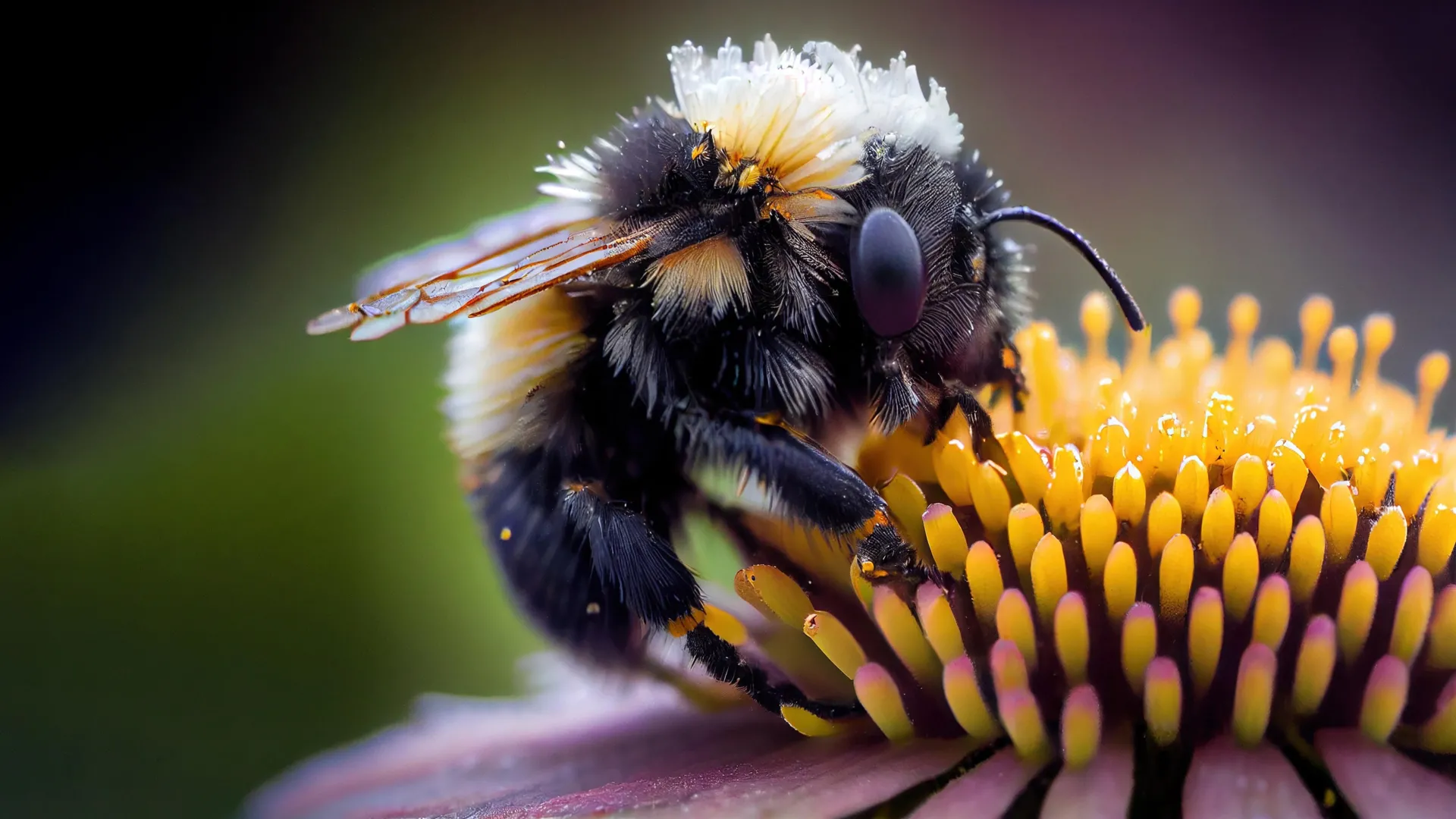
A critical, often overlooked factor is the physical structure of the bee itself. Bumblebees are notoriously "fuzzier" than honeybees. Their bodies are covered in a dense coat of branched hairs, which act as an electrostatic trap for airborne particles. As they navigate dusty or polluted environments, these hairs capture heavy metal-laden particles, which the bee then unwittingly carries back to the nest. This physical "stickiness" increases the rate of ingestion during grooming and the contamination of the stored food supply.
Official Responses and Scientific Perspective
The research has sent a ripple through the entomological community, prompting a re-evaluation of how we monitor environmental health.
Dr. Sarah Scott, the lead researcher on the project, notes that the levels of metals discovered were generally below the threshold for immediate lethality. However, she warns against complacency. "Most metal levels we found were not high enough to kill bees," Dr. Scott explained, "but even low levels can still harm bee health and colony success in subtle but important ways, such as affecting their ability to forage and reproduce."
Professor Lynn Dicks, the study’s senior author, emphasized the geographical reach of the problem. "Even in areas that we usually consider safe or lower risk—typically rural areas, away from industrial or mining zones—bees can pick up toxic metals," Dicks stated. "Bumblebee colonies tend to have fewer workers available to perform tasks, so the loss of individuals can have a big impact on overall colony function."
The study, funded by the Royal Society, serves as a sobering reminder that "rural" does not automatically equate to "pristine."
Implications: The Future of Pollinator Conservation
The implications of this research are twofold: they affect how scientists conduct environmental monitoring and how the public approaches local conservation.
Rethinking Bio-indicators
For decades, policy makers have relied on honeybee health as a proxy for the health of the entire ecosystem. The Cambridge study proves this is insufficient. Future environmental assessments must incorporate data from diverse bee species, particularly those that nest in the soil and have more localized foraging patterns, to get a true picture of soil and air quality.
The "Planting" Paradox
Despite the findings, the researchers are adamant that the public should not stop their efforts to support pollinators. The danger of starvation is far more immediate than the danger of slow-acting heavy metal toxicity.
"Bees play a critical role in both biodiversity and food security," Dr. Scott said. "We’d still encourage people to plant flowers to help them, even if you live in an area more likely to be contaminated. At the end of the day, bees still need food. Even if it carries traces of heavy metals, having some food is better than having no food."
Policy and Industry
The findings also underscore the need for more stringent controls on the use of agricultural fertilizers and the management of sewage sludge, which are often the primary sources of heavy metal contamination in rural soils. If we are to protect our bumblebees, we must address the "invisible" load of pollutants that we introduce into our own backyards.
As the scientific community continues to digest these results, the humble bumblebee stands as a fuzzy, buzzing sentinel—a creature that is, in its own quiet way, telling us that the earth beneath our feet is carrying a burden we are only just beginning to understand. The challenge moving forward will be to clean up the soil, protect the forage, and ensure that our pollinators can thrive in a landscape that has become increasingly laden with the invisible artifacts of human progress.