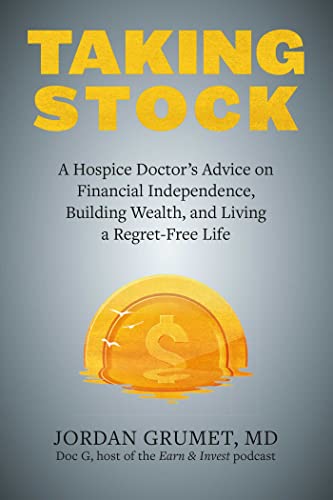
In the quiet, clinical corridors of hospice care, the veneer of modern life tends to peel away. For Dr. Jordan Grumet, an internal medicine physician and author of Taking Stock, these hallways serve as an unlikely boardroom where the most profound financial and life lessons are brokered. Having spent years walking the final, often reluctant, path with his patients, Dr. Grumet has observed a recurring theme: while society obsesses over net worth, the dying rarely recount their portfolio returns. Instead, they talk about what they invested in—or, more hauntingly, what they neglected.
"When the undertaker speaks, you should really listen," Dr. Grumet often says, referencing a former patient who worked in the funeral business. It is a sentiment that underpins his philosophy: the most vital investments one makes have nothing to do with Wall Street and everything to do with the human experience.
The Philosophy of Mortality: A New Perspective on Assets
The traditional view of "investing" is tethered strictly to capital growth. However, Dr. Grumet argues that the proximity to mortality provides a unique, high-definition lens through which we can see the true value of our time and energy. The lessons gathered from hospice patients are not derived from the diaries of the wealthy or the blueprints of venture capitalists; they are distilled from the raw, unfiltered reflections of people at the end of their journeys.
The Chronology of Regret and Redemption
The life-review process often reveals a tragic chronology: a life lived for future rewards that never materialize, or past grievances that fester until they become terminal.
- The Early Phase (The Accumulation Trap): Individuals spend their prime decades solely focused on career advancement and monetary acquisition, often at the expense of family and personal health.
- The Middle Phase (The Dissonance): The realization of lost time sets in. Often marked by burnout or fractured relationships, this phase is where the "cost" of poor non-monetary investment becomes apparent.
- The Final Phase (The Reconciliation): In hospice, the focus shifts to legacy. Those who invested in experiences and relationships find peace; those who prioritized only the balance sheet often grapple with a profound, lingering sense of emptiness.
Investing in the Self: The Foundation of Well-being
If we are to build a life that stands the test of time, we must first account for our internal capital. Dr. Grumet emphasizes that self-investment is not a luxury; it is the infrastructure upon which all other successes are built.
The Currency of Self-Forgiveness
Perhaps the most difficult investment is the act of forgiving oneself. Remorse—the weight of actions taken or opportunities missed—is a common companion in the final days. Dr. Grumet notes that self-blame, while often intended to drive improvement, frequently becomes a paralyzing force.
Consider the case of "Gerald," a patient who struggled with alcoholism after losing his corporate job decades prior. The subsequent estrangement from his daughter was his deepest regret. Through the lens of his final days, Gerald realized that had he prioritized self-forgiveness and mental health earlier, the spiral might have been broken. The lesson is clear: we cannot move forward if we are eternally tethered to the past.
Slowing Down and Incremental Gains
In a culture obsessed with immediate, exponential results, the "turtle and the hare" mentality is a radical act of defiance. Dr. Grumet suggests that progress is rarely linear. By committing to just a one-percent improvement each month in skills, habits, or relationships, we achieve long-term compounding returns that dwarf sporadic, high-intensity efforts.
The Pillars of Intellectual and Social Capital
Beyond the self, the richness of our lives is determined by what we externalize—specifically through education and communal bonds.
Education as an Emergency Fund
Knowledge is the one asset that cannot be liquidated by market crashes or personal crises. It serves as an intellectual "emergency fund." Dr. Grumet encourages a voracious approach to learning: read, debate, take courses, and embrace the discomfort of being a novice. Whether it is mastering financial literacy or exploring a foreign hobby, the act of learning keeps the mind vibrant. As Grumet observes, the most inquisitive patients are often the ones who die as they lived: full of questions and remarkably happy.
The Social Ledger
If you want to measure the success of a life, look at the room of a patient nearing their end. Is it filled with letters, photographs, and friends? Or is it silent? The people we leave behind are the most accurate indicator of our "asset allocation" during our lifetime. Investing in others—through time, vulnerability, and presence—yields dividends that outlive us. When we invest in people, we are effectively planting seeds for a legacy that will survive in the smiles and memories of those who shared in our lives.
Nurturing the Future: The Legacy of Children
"Investing in your children will produce a lifetime of dividends," Dr. Grumet writes. This is not merely about financial inheritance, but about the transmission of values, humility, and character. By serving as a virtuous role model, we create a ripple effect that extends generations beyond our own. The legacy of a parent is found in the habits and kindness of their children, a living, breathing testament to the time invested in their development.
The Synergy of Body and Mind
Financial well-being is a hollow pursuit if the vessel—your body and mind—is neglected. Dr. Grumet stresses that mental and physical health are the framework upon which all other "investments" rest.
- Mental Health: Seeking professional counseling is not a sign of weakness; it is a strategic investment in clarity. Quieting internal noise allows for better decision-making regarding both finances and life purpose.
- Physical Health: "Perfect is the enemy of good enough." One does not need to be an elite athlete to benefit from physical movement. Thirty minutes of walking, chosen for consistency rather than intensity, provides enduring emotional and physical benefits.
The Role of the Market: A Necessary Supplement
While the focus of Taking Stock is on the human element, Dr. Grumet does not ignore the pragmatic necessity of financial security. Getting the money "right" is the prerequisite for having the freedom to pursue these non-monetary investments. A disciplined approach to the stock market—low-cost, broad-based index funds, tax-advantaged accounts, and consistent saving—acts as the foundation. However, he cautions that while financial basics are necessary, they are not sufficient for a well-lived life.
Implications: A Call to Action
The evidence from the bedside suggests that we are collectively over-investing in the wrong things. We optimize for retirement accounts while neglecting our personal relationships; we seek physical comfort while ignoring mental health; we hoard money while starving our curiosity.
The implication is a shift in mindset: The "FIRE" (Financial Independence, Retire Early) movement must expand to include "Life Independence." It is not enough to be financially secure if you have not built a life you actually enjoy living. The goal of financial independence should be to gain the time and resources to invest in the non-monetary assets that truly define our existence.
The Non-Monetary Inventory
To begin this shift, Dr. Grumet proposes an exercise in "Non-Monetary Investment Inventory."
- List your relationships: Who are the ten people you value most? How much time have you invested in them recently?
- List your experiences: What are the ten things you’ve done that shaped your identity?
- List your skills/knowledge: What are the ten things you’ve learned that make your life richer?
By weighing these against your traditional financial net worth, you gain a clearer picture of your total wealth. If the sum total of these assets is sufficient to allow you to pursue your purpose and deepen your connections, you have achieved true financial independence.
Conclusion: The Final Accounting
Ultimately, Dr. Grumet’s message is an urgent one: do not wait for the end to audit your life. The process of building a life of meaning, purpose, and profound connection is a taxing endeavor that requires the same, if not more, effort than building a financial portfolio. It requires the courage to say "yes" to foreign experiences, the humility to learn, and the dedication to prioritize people over profits.
As we navigate the complexities of the modern world, we must remember that we are building a legacy every single day. The goal is not merely to die with the most money, but to die with the most life. Invest in yourself, invest in your community, and invest in the people who matter most. After all, when the time comes to balance the final ledger, it is these investments that will hold their value.