For decades, seismologists operated under a standardized set of assumptions regarding how "megathrust" earthquakes—the most powerful events on the planet—originated. The prevailing theory suggested that the most violent ruptures occurred deep within the Earth’s crust, where immense pressure and heat dictated the mechanics of tectonic failure. However, the catastrophic events of March 11, 2011, in Japan challenged these fundamental tenets, leaving experts grappling with a phenomenon that defied conventional geophysics.
A landmark study, recently published in the journal Science, has finally provided the missing piece of the puzzle. An international team of researchers, led by scientists from Northern Arizona University and Cornell University, has uncovered a "hidden feature" beneath the Pacific Ocean—a thin, hyper-slippery layer of ancient clay that acted as a geologic "tear line," allowing the 2011 earthquake to rupture all the way to the seafloor with unprecedented intensity.
The Mechanics of a Catastrophe: Main Facts
The 2011 Tōhoku earthquake, a magnitude 9.1 event, remains one of the most significant natural disasters in modern history. The rupture, which occurred along the Japan Trench, resulted in a seafloor displacement of between 130 and 200 feet. To visualize the scale of this movement, one need only consider the distance between Los Angeles and San Francisco—an entire geographic region shifting that distance in the span of just six minutes.
"We’ve never seen anything like that in the time we’ve been observing earthquakes," says Christine Regalla, an associate professor in Northern Arizona University’s School of Earth and Sustainability and a co-author of the study. "Based on what we understood, we didn’t think that could happen."
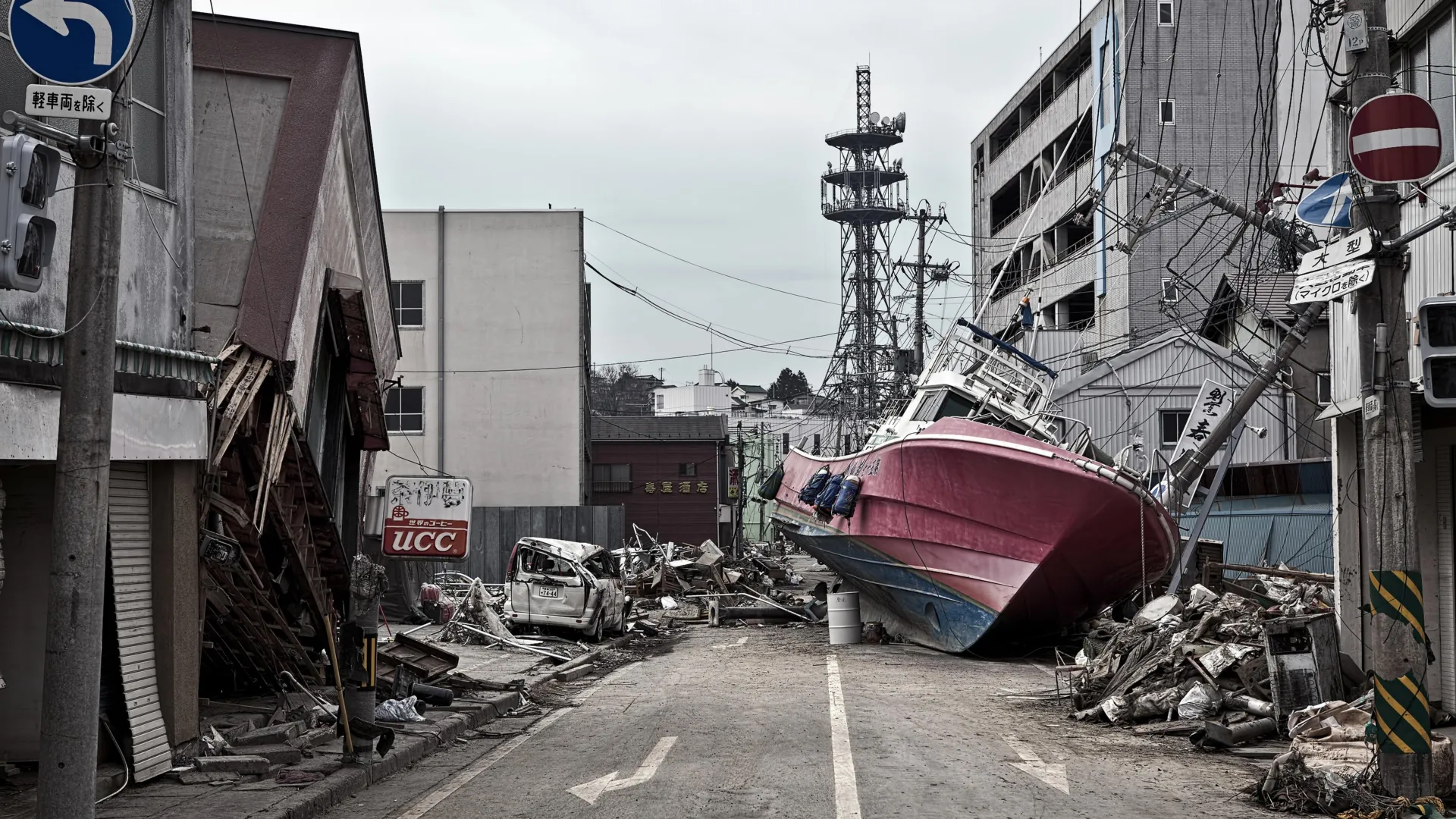
The discovery centers on a 100-foot-thick layer of pelagic clay—an extremely soft, fine-grained sediment formed over millions of years by the slow accumulation of microscopic particles. This layer, sandwiched between significantly more rigid rock, served as a frictionless conduit. When the tectonic plates collided, the fault didn’t just rupture deep underground; it exploited this clay layer to propagate upward, reaching the seafloor and displacing a colossal volume of water, which subsequently generated the devastating tsunami that claimed nearly 20,000 lives and caused over $200 billion in damages.
Chronology: From Disaster to Discovery
The path to this discovery was neither quick nor simple. The scientific investigation was a years-long endeavor that spanned from the immediate aftermath of the disaster to an ambitious, record-breaking expedition.
The 2011 Event
On March 11, 2011, at 2:46 p.m. local time, the Tōhoku earthquake struck off the coast of Japan. Unlike typical megathrust earthquakes, which usually rupture at depths of 20 to 30 miles, the Tōhoku rupture reached as shallow as 15 miles below the seafloor. This proximity to the ocean bottom is precisely what maximized the tsunami’s energy, as the fault break occurred where the water column was most vulnerable to sudden displacement.
The Chikyu Expedition
In the years following the disaster, researchers recognized that the standard seismic models could not explain the shallow, high-intensity rupture. In an attempt to peer into the "black box" of the Japan Trench, an international team embarked on a mission aboard the Chikyu, a state-of-the-art deep-sea drilling vessel.
The team achieved a feat recognized by Guinness World Records as the deepest scientific ocean drilling project ever completed, penetrating approximately 26,000 feet into the ocean floor. By extracting core samples from the fault zone, they were able to reconstruct the geological history of the trench. The analysis of these samples confirmed the existence of the pelagic clay, providing the physical evidence required to prove that the geology of the seafloor dictates the severity of the seismic event.
Supporting Data: Why the Clay Layer Matters
The data retrieved from the Chikyu expedition provides a compelling narrative for how geologic structure influences disaster magnitude. Seismologists traditionally look for "locked" faults—areas where tectonic plates are stuck due to friction, building up stress that is eventually released in an earthquake.
The "Tear Line" Effect
According to study co-author Patrick Fulton of Cornell University, the pelagic clay layer serves as a "predetermined" fault line. "At the Japan Trench, the geologic layering basically predetermines where the fault will form," Fulton explains. "It becomes an extremely focused, extremely weak surface, which makes it easier for ruptures to propagate all the way to the seafloor."
In most seismic zones, the material near the trench is expected to be unconsolidated or "soft," which theoretically should absorb energy and dampen the impact of a rupture. However, the clay in the Japan Trench behaves differently. Because it is highly ordered and saturated with water, it maintains low friction even under extreme pressure, allowing the rupture to travel through it with minimal energy loss. This creates a "tsunami-genic" earthquake, where the energy that would typically be dissipated deep underground is instead focused entirely on the seafloor.
Official Responses and Scientific Consensus
The findings have been met with widespread interest from the global scientific community. Peer reviews of the Science paper indicate that this discovery could fundamentally alter how we map seismic risks in other subduction zones globally.
Governmental agencies, including the Japan Agency for Marine-Earth Science and Technology (JAMSTEC), have signaled that these findings will be incorporated into future seismic hazard mapping. The consensus among experts is that the "clay layer" hypothesis explains why certain regions, despite appearing less active in historical records, may actually be capable of generating unexpectedly large tsunamis.
Global Implications: Preparing for the Next Megathrust
The implications of this discovery extend far beyond the coast of Japan. Because this specific type of pelagic clay layer is present along hundreds of miles of the Japan Trench—and likely exists in other subduction zones worldwide—the research suggests that our current earthquake forecasting models may be underestimating the risks to coastal populations.
Rethinking Global Vulnerability
"An earthquake and tsunami in Japan doesn’t just impact people who live locally; it also impacts people at the ports and people who live across the ocean," says Regalla. "Think about Hawaii: Their most devastating tsunamis come from Japan and Alaska. These are truly global events."
The realization that "shallow-slip" earthquakes can be driven by specific geological features means that scientists must now prioritize identifying where these clay layers exist elsewhere in the world. By identifying these "weak zones," authorities can better predict which fault segments are susceptible to these massive, tsunami-generating ruptures.
Policy and Infrastructure Reform
The researchers emphasize that this knowledge is not meant to incite panic, but to drive better policy. Japan, already a global leader in earthquake engineering, is now tasked with re-evaluating its infrastructure standards based on the reality that "shallow" ruptures can exceed previous worst-case scenarios.
This includes:
- Strengthening Building Codes: Ensuring structures can withstand not just high-frequency tremors, but the long-duration, high-displacement shifts associated with shallow ruptures.
- Infrastructure Hardening: Improving the resilience of undersea cables, coastal breakwaters, and port facilities against massive horizontal displacement.
- Updating Evacuation Plans: Utilizing the new research to refine tsunami inundation maps, which will allow for more precise evacuation zones.
"Japan is one of the world leaders in earthquake and tsunami preparation, but even they weren’t prepared for what happened in 2011," Regalla notes. "We all need to gain a better understanding of where these events might happen in the future. Only then can we make emergency plans that will keep everyone safe."
Conclusion
The discovery of the clay layer beneath the Japan Trench is a stark reminder that beneath the vast, seemingly stable expanse of the ocean floor, the Earth is governed by complex, hidden variables. By looking into the microscopic composition of deep-sea sediment, scientists have uncovered the mechanism behind one of the most destructive events of the 21st century. As research continues, the goal remains clear: to translate these geological insights into tangible safety measures that can protect coastal communities from the next inevitable shifting of the plates. The "tear line" of the Japan Trench has not only explained a past tragedy but has provided a roadmap for building a more resilient future.