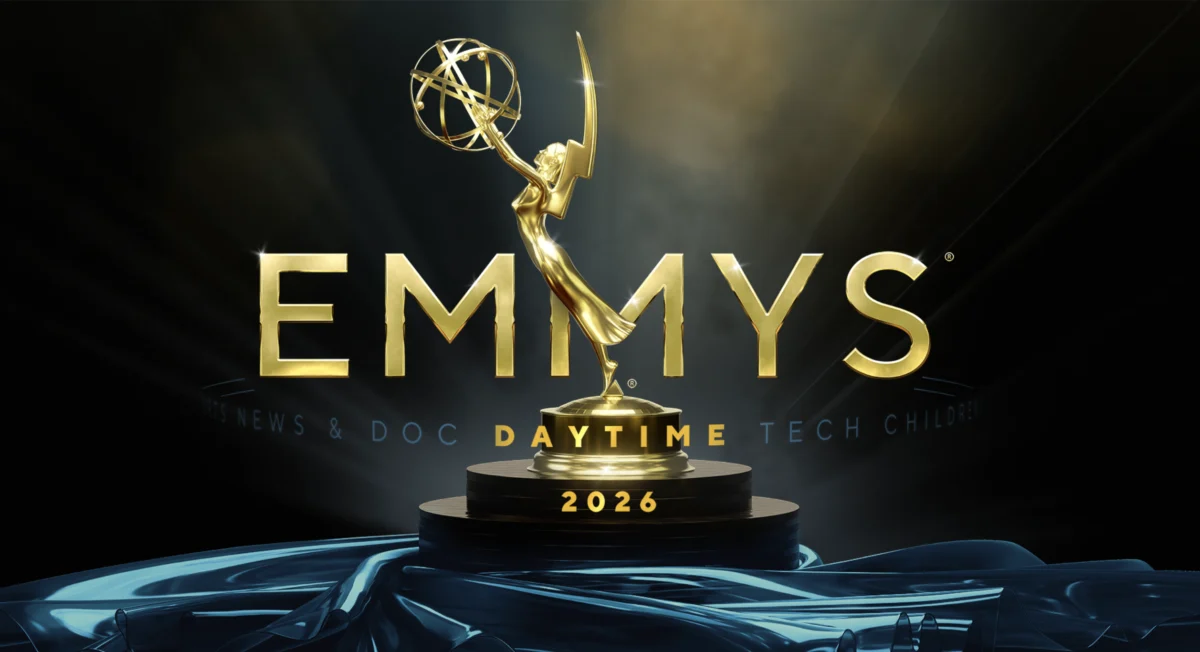
The television industry turned its collective gaze toward Los Angeles this week as the National Academy of Television Arts & Sciences (NATAS) officially commenced the rollout of the 53rd annual Daytime Emmy Awards nominations. As the academy prepares to honor the best in daytime dramas, talk series, entertainment news, and culinary programming, this year’s cycle arrives with a significant shift in tone, structure, and submission criteria.
Among the early highlights capturing industry attention are nominations for high-profile talk shows that have recently concluded their runs. The Kelly Clarkson Show has secured recognition in both the Talk Series and Talk Host categories, while Sherri has earned a competitive nod for its host, Sherri Shepherd. These nominations underscore the enduring impact of these programs even as the daytime landscape undergoes a period of rapid consolidation and transformation.
A Strategic Pivot in Scheduling and Scope
For decades, the Daytime Emmys were a staple of the June calendar, marking the transition into summer. However, in a strategic move to align more closely with industry cycles and awards season momentum, NATAS shifted the ceremony to mid-fall last year. The 53rd Daytime Emmy Awards are officially scheduled for Friday, October 30, 2026, in Los Angeles. This move is viewed by industry analysts as a way to decouple the ceremony from the crowded early-summer landscape, allowing the daytime community to command a more focused spotlight in the autumn.
While the specific honorees for the Lifetime Achievement award, as well as the inductees for the Gold & Silver Circles and the identity of the ceremony’s host, remain under wraps, the academy has promised a star-studded celebration that honors the legacy of daytime television while embracing its modern evolution.
Redefining Excellence: The Impact of New Rules
The 2026 awards cycle is defined by a series of sweeping rule changes announced this past spring. These modifications are not merely procedural; they represent a fundamental shift in how the academy views the act of storytelling.
The most prominent change is the transition to an "episode-based" submission format. By adopting what NATAS describes as a "primetime format," the academy now allows programs to enter multiple submissions for different episodes. This shift is designed to reward specific, high-water mark performances or narrative arcs rather than relying solely on a single representative episode. Proponents of the change argue this provides a more nuanced view of a show’s creative capabilities, potentially allowing for multiple nominations from a single series in categories where previously only one submission was permitted.
Data-Driven Recognition: The New Nomination Scale
Perhaps the most technical, yet consequential, change involves the restructuring of how nominations are tallied. Following the lead of the Primetime Emmys, NATAS has implemented a volume-based scale to determine the number of nominations per category. This ensures that the size of the nominee pool is directly proportional to the level of competition in that specific field.
The new structure is as follows:
- 10–29 submissions: 5 nominations
- 30–59 submissions: 6 nominations
- 60–89 submissions: 7 nominations
- 90–119 submissions: 8 nominations
- 120–149 submissions: 9 nominations
- 150+ submissions: 10 nominations
For smaller categories with fewer than ten submissions, the academy has set a floor: the default number of nominees will be 50% of the total submissions, rounded up to the nearest whole number. In instances where a category receives three or fewer submissions, no formal nominations will be issued, though the National Awards Committee reserves the right to present an award based on an objective standard of excellence. This rigorous approach is designed to preserve the prestige of an Emmy nomination, ensuring that the honor remains a reflection of competitive standing rather than a simple participation metric.
Tightening Eligibility: Guest Stars and Category Mergers
NATAS has also introduced a more stringent definition of "guest" status for daytime dramas. To be eligible for the Guest Actor category, performers must now appear in a maximum of 19% of episodes aired or streamed for the first time during the 2025 calendar year. Those exceeding this threshold are now required to compete in the more heavily contested Leading, Supporting, or Emerging Talent categories. This rule aims to prevent established actors from "dropping in" to shows and dominating categories intended for recurring guest talent.
Furthermore, the academy has officially eliminated the standalone Science and Nature programming category. Programs previously qualifying for this award must now submit within the Primetime, News & Documentary, or Children’s & Family categories, depending on their specific eligibility profiles.
In a move toward efficiency, the academy has also decided that daytime dramas and non-fiction programs will compete alongside one another in most categories, with the notable exceptions of writing and directing. However, the academy has built in a "safety valve": categories will automatically split back into dedicated tracks if both the daytime drama and non-fiction segments reach at least 10 submissions each, ensuring that genre-specific excellence is not lost in the broader pool.
Official Responses and Industry Vision
NATAS leadership remains optimistic about these changes, framing them as a necessary evolution to keep pace with a changing media environment.
"We’re proud to honor the extraordinary talent and creative teams whose work continues to define and elevate daytime television," said Adam Sharp, president and CEO of NATAS. "As the daytime landscape evolves and new forms of storytelling emerge, we remain committed to recognizing the innovation happening across the industry. Our goal is to ensure that the Daytime Emmys reflect the modern reality of how content is produced, consumed, and valued."
Rachel Schwartz, head of the Daytime Emmy Awards, echoed these sentiments. "Each year, the Daytime Emmy Awards celebrate the creativity, passion, and dedication that drive this vibrant community of storytellers. Congratulations to this year’s nominees, whose work continues to entertain, inspire, and connect with audiences every day. We look forward to celebrating their remarkable achievements in Hollywood this October."
The Path to the Ceremony
The production side of the house remains in experienced hands. NATAS Productions is spearheading the ceremony, with Adam Sharp and Lara Gates serving as executive producers. Leon Knoles is set to return as the ceremony director, marking his fifth consecutive year at the helm of the production. His continuity is expected to provide a sense of stability as the ceremony navigates its new, expanded format.
As the nominations continue to roll out throughout the week—following the initial announcements on Extra and Entertainment Tonight—the industry is bracing for a highly competitive season. The inclusion of talk shows like The Kelly Clarkson Show and Sherri signals that even as the industry pivots, the power of personality-driven daytime television remains a pillar of the medium.
Implications for the Future of Daytime
The shift toward a primetime-style submission model and the consolidation of categories suggests that NATAS is moving toward a more streamlined, prestige-focused awards body. By aligning itself with the rigor of the Primetime Emmys, the Daytime Emmys are attempting to shed the "niche" label that has sometimes shadowed daytime programming.
For the nominees, these changes represent both an opportunity and a challenge. While the new rules allow for more granular recognition of creative work, the increased competition—brought about by the merging of drama and non-fiction tracks—means that a nomination in 2026 will carry significantly more weight than in previous years.
As we await the final list of nominees on Tuesday morning, one thing is certain: the 53rd Daytime Emmy Awards will not just be a celebration of the past year’s work, but a statement of intent for the future of the industry. Whether through the lens of a veteran soap opera actor or the host of a viral-ready talk show, the stories being told today are finding a new home in a revamped awards framework, one that demands excellence, rewards innovation, and, above all, continues to connect with the millions of viewers who make daytime television a daily ritual.
The stage is now set for October 30. The industry is watching, the rules have been rewritten, and for the lucky few, the golden statuette is closer than ever.