As the autumn leaves begin to turn, homeowners across the country are facing a pivotal decision: is now the right time to list their property, or is it wiser to wait out the economic turbulence of 2026? With the housing market having favored buyers for the better part of the year, the landscape is defined by near-record costs and a persistent sense of hesitation. For those considering a sale, understanding the macro-economic forces at play—from global conflict to shifting interest rates—is no longer just helpful; it is essential.
Main Facts: The Current State of the Market
The 2026 housing market is characterized by a significant supply-demand mismatch. With the typical monthly housing payment now exceeding $2,600, a threshold that has effectively pushed many prospective buyers to the sidelines, the market has slowed considerably. While housing prices have continued to climb, they have done so at a pace that has consistently outstripped wage growth since the pandemic.
This affordability crisis has created a stalemate. Many sellers, wary of losing their current low-interest-rate mortgages or discouraged by the high costs of entering a new home, have opted to stay put. Meanwhile, buyers who remain active are increasingly cautious, leading to a surplus of inventory in many regions. The result is a sluggish market where the sheer volume of listings has created a buyer’s market, yet the high cost of entry has neutralized the typical enthusiasm associated with such conditions.
Chronology: The Road to Current Economic Volatility
To understand why the market feels so stagnant today, one must look back at the trajectory of the last 18 months.
- Early 2026: The year began with high hopes that mortgage rates might stabilize. However, inflation remained stickier than many analysts anticipated.
- Spring 2026: As is seasonal tradition, listing activity increased in April and May. However, the anticipated "spring surge" in demand failed to materialize with the strength seen in previous years, as buyers began to push back against record-high asking prices.
- Summer 2026: The situation was exacerbated by heightened geopolitical tensions in the Middle East. The conflict sparked fears regarding energy costs and global inflation, which in turn sent shockwaves through the bond market. Because mortgage rates are closely tied to the yields on 10-year Treasury notes, the market saw a sharp and sustained increase in borrowing costs.
- Late Summer/Early Fall 2026: The accumulation of these factors led to a record-high number of homeowners delisting their properties or choosing to pause their selling plans, leading us to the current period of extreme caution.
Supporting Data: By the Numbers
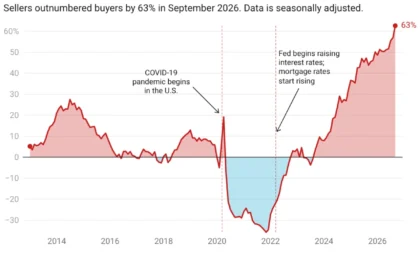
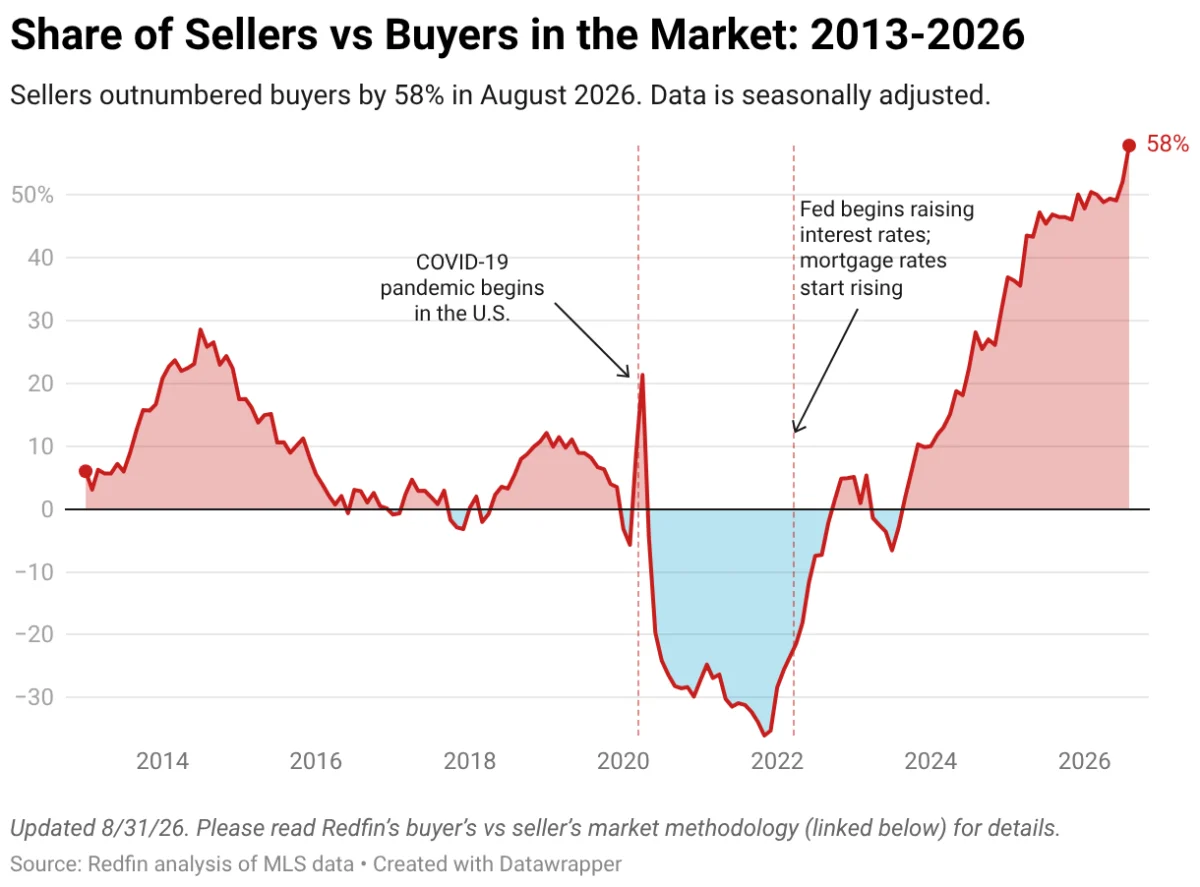
The data paints a clear picture of a market in transition. According to current tracking, there are now over 500,000 more home sellers than active buyers nationwide. This widening gap is the primary driver of the current slowdown.
In terms of pricing, while the national median home price surpassed $398,000 in August, the reality for sellers is that they are increasingly forced to adjust. Asking prices are currently hovering at their lowest levels in a year as sellers attempt to meet the reality of a budget-constrained buyer pool.
Furthermore, the "Days on Market" metric has seen a significant shift. In 2022, homes were selling in under 30 days. Today, the typical home takes approximately 50 days to find a buyer. While this is significantly more efficient than the 60-to-90-day cycle of the 2010s, it represents a substantial increase in holding costs for sellers who expected a rapid sale.
Official Responses: Insights from Industry Leaders
Daryl Fairweather, Redfin’s Chief Economist, suggests that sellers must recalibrate their expectations for the current climate. "Home sellers should prepare for a strong buyer’s market," she notes. "Elevated inventory has given buyers more options, but record costs have made them wary. Volatile mortgage rates and an unstable economy are adding a layer of uncertainty as well, making it harder for buyers to plan and act with confidence."
Chen Zhao, Head of Economics Research at Redfin, emphasizes the role of external factors: "Mortgage rates are reacting to the conflict in the Middle East, as rising energy costs and concerns over inflation and a bond market selloff put pressure on the economy. Unless homebuilding skyrockets or the country falls into a severe recession, buyer activity and housing affordability are unlikely to improve substantially."
Implications: The Seller’s Strategic Playbook
For those who are still determined to sell, the strategy must move beyond the "list and wait" approach that defined the pandemic years.
1. Regional Disparities Matter
It is critical to note that the national average does not tell the whole story. In the Midwest and Northeast, cities like Rochester and Milwaukee are experiencing a relative lack of inventory. In these regions, sellers may still find themselves in a position of strength, with the potential for quick sales and multiple offers. Conversely, the Sun Belt is currently dealing with an oversupply of homes as residents grapple with rising insurance premiums and climate-related risks, creating a much tougher environment for sellers.
2. The Case for "Phased Marketing"
One of the most effective strategies for navigating today’s uncertainty is "phased marketing." This involves listing a home to a limited, private audience—often through an agent’s network or a "coming soon" status—before hitting the Multiple Listing Service (MLS). This allows sellers to test the waters on pricing and gauge genuine interest without the pressure of a public "days on market" clock ticking against them.
3. When to Hold Off
The decision to wait is sometimes the most prudent financial move. If you have recently refinanced your home at a sub-3% rate, the cost of giving up that equity and financing a new home at current, higher rates may prove prohibitive. Additionally, if your property requires significant capital improvements, it is often better to complete those repairs before listing. In a buyer’s market, buyers have the leverage to be incredibly picky; a home that "needs work" will be penalized far more heavily today than it would have been three years ago.
4. Life Events vs. Market Timing
Finally, it is essential to distinguish between a "strategic" sale and a "necessity" sale. If you are relocating for a career change, downsizing for retirement, or moving to accommodate a growing family, the "perfect" market timing becomes secondary to your personal timeline. In these instances, the best strategy is to align yourself with a highly experienced local agent who understands how to price your home to move in a market where buyers are cautious but still willing to act for the right property.
Conclusion: Is Now the Right Time?
If you are financially prepared and have a realistic understanding of current valuations, there is no reason to fear the 2026 market. While it is certainly not the "easy" market of the recent past, it is a functional one.
Success today requires a shift in mindset. Sellers must be flexible with pricing, prepared to offer concessions, and willing to work with their agents to navigate the volatility caused by global economic shifts. By prioritizing transparency and strategic preparation, you can move your property successfully, even in the face of today’s economic headwinds. Whether you choose to sell now or wait for a more favorable interest-rate environment, the most important step is to remain informed, stay patient, and keep a close eye on your specific local market conditions.