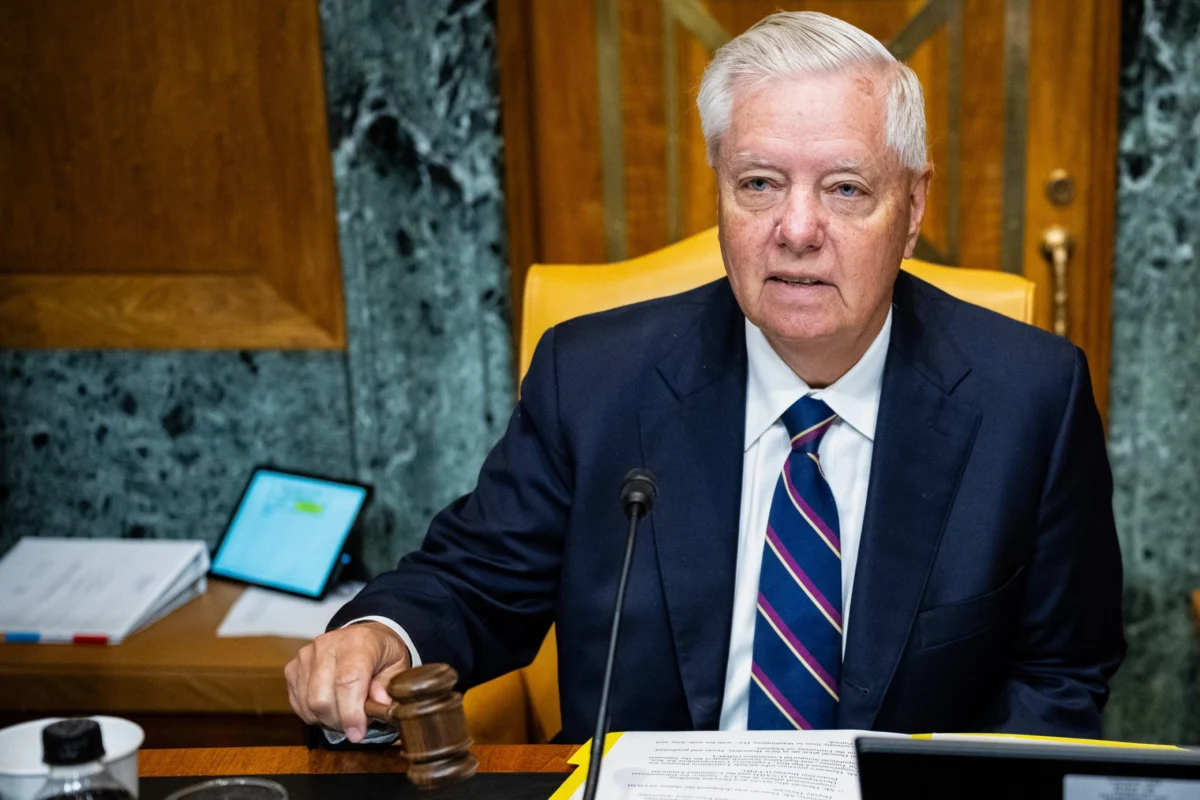
The political landscape of the United States was sent into a state of profound shock this weekend following the announcement of the sudden passing of Senator Lindsey Graham of South Carolina. Graham, a veteran lawmaker and a central figure in the Republican Party for decades, died Saturday morning at the age of 71. His death, occurring less than four months before the pivotal midterm elections, has not only left a vacuum in the Palmetto State’s leadership but has also ignited a high-stakes succession drama that threatens to upend the GOP’s strategy to reclaim the Senate majority.
Main Facts: A Titan Falls, A Race Transformed
Senator Lindsey Graham’s office confirmed his passing late Saturday, attributing the death to a “brief and sudden illness.” The news came as a particular shock to colleagues and constituents alike, as the Senator had celebrated his 71st birthday just two days prior and had been actively campaigning for his seat. Graham, a senior member of the Senate Judiciary Committee and a stalwart of the GOP’s foreign policy wing, was widely expected to cruise to victory in November against his Democratic challenger, Dr. Annie Andrews.
The immediate consequences of Graham’s death are twofold. First, it creates an urgent vacancy in the U.S. Senate at a time when the Republican caucus is already grappling with the prolonged absence of Minority Leader Mitch McConnell, who remains hospitalized in Kentucky. Second, it triggers a complex legal process in South Carolina to determine who will serve the remainder of Graham’s term.
Under South Carolina law, Republican Governor Henry McMaster holds the authority to appoint a temporary replacement to serve until a special election can be held. However, the timing of Graham’s death—so close to the general election—has created a legal and logistical quagmire. State election law necessitates a special primary election to select the party nominees for the seat, a process that political analysts warn could descend into a "scramble" of intra-party rivalries. This internal friction, while common in primary cycles, is viewed as a potential liability for the GOP, as it provides an opening for Dr. Andrews to consolidate support among moderates and independents while Republicans are focused on internal battles.
Chronology: The Final Days and the Immediate Aftermath
The timeline of the past 72 hours reflects a rapid shift from standard campaign posturing to a full-blown political crisis.
- Thursday: Senator Graham celebrated his 71st birthday. Messages of congratulations poured in from both sides of the aisle, and his campaign released a statement looking forward to the "final sprint" toward the November midterms.
- Friday: Reports began to circulate within Columbia, SC, that the Senator had been admitted to a local hospital. His office initially downplayed the severity, citing a "minor health concern."
- Saturday Morning: The Senator’s condition deteriorated rapidly. At approximately 10:00 AM, his office issued the official statement confirming his death due to a "brief and sudden illness."
- Saturday Evening: Tributes began to flood social media from national figures. Governor Henry McMaster issued a brief statement expressing his "profound grief" and asking for prayers for the Graham family.
- Sunday Morning: Former President Donald Trump appeared on NBC’s Meet the Press. While expressing his condolences, the former President quickly pivoted to the political implications, confirming he already has a preferred candidate to fill the vacancy but noting it was "just too soon" to announce a name.
- Sunday Afternoon: Representative Joe Wilson, South Carolina’s senior House member, officially ruled himself out of the running via a social media post, signaling a preference to maintain his seniority in the House of Representatives.
Supporting Data: The Electoral Landscape and Economic Tensions
To understand the weight of Graham’s absence, one must look at the data governing South Carolina’s political identity. While the state is considered "safely Republican"—it has not elected a Democratic governor since 1998 and hasn’t sent a Democrat to the Senate in nearly two decades—the 2024 midterm cycle has introduced new variables.
Senator Graham had been a vocal proponent of the administration’s hawkish stance regarding the ongoing Iran war. This conflict has become a significant point of contention among the South Carolina electorate. According to recent polling, the war’s impact on gasoline prices and domestic inflation has soured its popularity with a broad segment of the GOP base. Gasoline prices in South Carolina have surged by 22% over the last six months, a metric that Dr. Annie Andrews has effectively used to paint Graham as a "career politician" out of touch with the financial realities of his constituents.
Furthermore, the national stakes are incredibly high. Democrats currently require a net gain of only four seats to secure a functional Senate majority. While South Carolina remains a difficult climb for any Democrat, the sudden "chaos factor" introduced by a special primary could disrupt the GOP’s fundraising and messaging. In the 2020 election, Graham’s opponent, Jaime Harrison, raised record-breaking sums of money, proving that South Carolina races can attract massive national attention and funding if the seat is perceived to be in play.
Official Responses: Partisanship vs. Procedure
The reactions from the political establishment have been a mix of somber reflection and strategic positioning.
The Trump Influence:
Former President Donald Trump’s involvement is perhaps the most significant factor in the upcoming succession. During his Meet the Press interview, Trump stated, “I don’t want to even talk about anybody. But I do have somebody that I think is really good.” This cryptic endorsement has set the rumor mill spinning. Trump previously endorsed Lieutenant Governor Pamela Evette during her unsuccessful gubernatorial bid, leading many to speculate that she may be his preferred choice for the Senate seat.
The Democratic Challenger:
Dr. Annie Andrews, the pediatrician challenging for the seat, took a measured and respectful tone on Sunday. In a post on X (formerly Twitter), she called for "setting partisanship aside and offering gratitude" for Graham’s years of service. This approach is seen by many as a strategic move to appeal to the "outsider" sentiment that has gained traction this year, focusing on decorum and community rather than immediate political opportunism.
The Congressional Delegation:
Representative Joe Wilson’s decision to remain in the House was a strategic one. Wilson noted that he had spoken with Trump and "assured" the former President that his goal was to protect the GOP’s slim two-vote majority in the House. This move effectively clears the path for younger South Carolina Republicans to vie for the Senate seat without facing the state’s most senior House member.
Implications: The Succession Scramble and National Stability
The death of Lindsey Graham creates a "rare chance" for South Carolina’s ambitious political class to ascend to one of the most powerful offices in the country. Several names have surfaced as potential contenders for both the Governor’s appointment and the subsequent special primary.
The Frontrunners for Succession
- Nikki Haley: The former Governor and U.S. Ambassador to the United Nations is perhaps the most high-profile name on the list. Despite her recent primary challenge against Trump for the 2024 nomination, her deep roots in South Carolina and international experience make her a formidable, if controversial, candidate.
- Trey Gowdy: The former four-term Representative and Benghazi Committee chairman remains a favorite among the conservative base. His background as a prosecutor and his media presence could make him a "unity" candidate for a party looking to avoid a messy primary.
- Nancy Mace and Ralph Norman: Both current Representatives represent the "new guard" of the GOP. Mace, known for her independent streak, and Norman, a staunch fiscal conservative, would both bring significant legislative experience to the role. As of Sunday evening, neither office had responded to requests for comment regarding their interest.
- Alan Wilson: The State Attorney General and son of Rep. Joe Wilson recently won the Republican gubernatorial primary. His victory there makes him a "likely winner" in any statewide race, and his name is frequently mentioned as a natural successor to Graham’s brand of South Carolina conservatism.
The National Impact
The implications of Graham’s death extend far beyond the borders of South Carolina. In Washington, the Republican Party is facing a leadership vacuum. With Senator Mitch McConnell currently incapacitated due to a prolonged hospitalization, the loss of Graham—a key negotiator and veteran of Senate procedure—leaves the GOP caucus without two of its most experienced members at a time when major legislative battles over the budget and foreign aid are looming.
The GOP’s narrow majority in the Senate is now under threat of further dilution. If the South Carolina primary becomes a "race to the right," it could alienate moderate voters in a year where "affordability" is the primary concern for the electorate. Dr. Annie Andrews, while still a long shot, now finds herself in a race where her opponent is not a 30-year incumbent with a massive war chest, but a yet-to-be-named appointee who must quickly introduce themselves to the state while navigating the shadow of Graham’s legacy.
As Governor McMaster prepares to make his appointment, the eyes of the nation remain on South Carolina. The decision will not only determine who represents the state in the short term but will likely dictate the balance of power in the United States Senate for years to come. For now, the Palmetto State mourns a political giant, even as the gears of the American political machine begin to grind toward an uncertain and chaotic future.