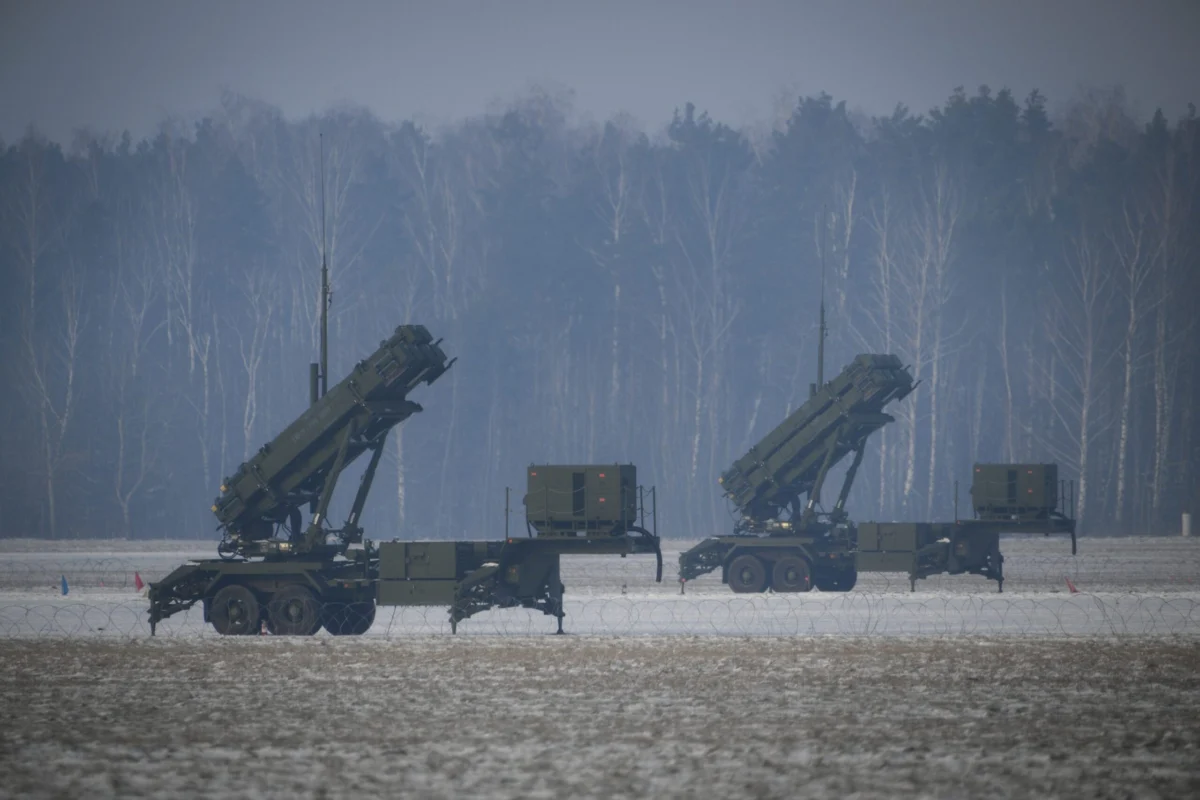
The landscape of international defense cooperation is witnessing a potential paradigm shift as discussions intensify regarding the localized manufacturing of Patriot missile interceptors within Ukraine. This move, recently championed by former President Donald Trump and echoed by senior Republican lawmakers, represents a significant departure from traditional arms transfer protocols. Representative Michael McCaul (R-TX), Chairman of the House Foreign Affairs Committee, has signaled that major U.S. defense contractors—specifically Lockheed Martin Corp. and RTX Corp. (formerly Raytheon)—have every incentive to comply with a potential licensing agreement that would allow Ukraine to produce these sophisticated interceptors on its own soil.
Main Facts: A New Chapter in the "Arsenal of Democracy"
At the heart of this development is a pledge made by Donald Trump to Ukrainian President Volodymyr Zelenskyy during a recent meeting at the NATO summit in Washington. Trump indicated that, under his administration, the United States would grant Ukraine the necessary licenses to manufacture the Patriot Air Defense System’s interceptors locally. This proposal aims to address the critical shortage of air defense munitions that has plagued Ukraine’s efforts to defend its civilian infrastructure and energy grid from Russian ballistic and cruise missile barrages.
The Patriot system, a cornerstone of Western integrated air and missile defense, is a complex ecosystem. While RTX Corp.’s Raytheon division produces the radar and ground equipment, Lockheed Martin is the primary manufacturer of the PAC-3 MSE (Patriot Advanced Capability-3 Missile Segment Enhancement) interceptors. Representative McCaul, speaking from Ukraine after a series of high-level military briefings, emphasized that it is in the "best interest" of these defense giants to cooperate. His reasoning is twofold: first, the political imperative of complying with presidential directives, and second, the potential for American firms to learn from Ukraine’s rapid, combat-tested innovation cycles.
McCaul’s endorsement carries significant weight given his position as a leading Republican voice on foreign policy. He suggested that Ukrainian engineers might not only build the systems faster but potentially improve upon the existing technology by integrating lessons learned from the front lines of a high-intensity, modern peer-to-peer conflict.
Chronology: From Hesitation to Localization
The journey of the Patriot system in Ukraine has been one of gradual escalation and evolving strategic necessity.
- February 2022 – Late 2022: In the early months of the full-scale invasion, the U.S. and its allies were hesitant to provide the Patriot system, fearing it would be seen as an escalatory move by Moscow and citing the immense complexity of training Ukrainian crews.
- December 2022: During President Zelenskyy’s historic visit to Washington, the Biden administration officially announced the first transfer of a Patriot battery to Ukraine.
- May 2023: The first Patriot systems became operational in Ukraine, immediately proving their worth by successfully intercepting Russia’s "invincible" Kinzhal hypersonic missiles over Kyiv.
- Late 2023 – Early 2024: As Russia increased its production of drones and missiles, the global supply of Patriot interceptors began to dwindle. Ukraine repeatedly called for "seven more systems" to protect its major cities.
- July 2024: At the NATO 75th Anniversary Summit in Washington, Donald Trump met with Zelenskyy. During this exchange, the proposal to transition from a "donation-based" model to a "licensing and production" model was discussed, leading to the pledge of a manufacturing license.
- Present Day: Lawmakers like Michael McCaul are now laying the groundwork for how this transition would work, pressuring U.S. defense contractors to prepare for a decentralized manufacturing strategy.
Supporting Data: The Production Bottleneck and the Ukrainian Innovation Factor
The drive toward localized production is fueled by hard data regarding global defense industrial capacity. Currently, the demand for Patriot interceptors far outstrips the supply.
The Scarcity of Interceptors
Lockheed Martin has been working to ramp up production of the PAC-3 MSE to approximately 550 missiles per year, with goals to reach 650 by 2027. However, in a conflict where Russia can fire dozens of missiles in a single night, this global production rate is precariously low. A single Patriot interceptor costs approximately $4 million, making the financial and logistical burden of shipping them from the U.S. to Europe immense.
The "FrankenSAM" Precedent
The feasibility of Ukraine manufacturing Western-grade tech is supported by the success of the "FrankenSAM" program. This initiative, a collaboration between U.S. and Ukrainian engineers, integrated Western missiles (like the RIM-7 Sea Sparrow and AIM-9M Sidewinder) onto Soviet-era launchers (like the Buk and S-300). This demonstrated that Ukraine possesses the technical proficiency to adapt and produce complex systems under duress.
Domestic Drone Superiority
McCaul noted that Ukrainian military officials briefed him on home-grown drone technology that has revolutionized the battlefield. Ukraine currently produces hundreds of thousands of FPV (First Person View) drones and long-range strike drones domestically. The argument is that if Ukraine can scale drone production from zero to a global leader in two years, they can apply similar agile manufacturing techniques to missile components.
Official Responses: Political Pressure and Corporate Caution
The response to this proposal has been a mix of strategic enthusiasm from lawmakers and a more measured, "wait-and-see" approach from the corporate sector.
The Legislative Push
Representative Michael McCaul’s comments on Bloomberg This Weekend serve as a clear signal to the defense industry. "If the president wants this done, it’s in their best interest to comply with that," McCaul stated. He framed the move not as a loss of intellectual property, but as a collaborative opportunity. He posited that Lockheed Martin could "learn something from the Ukrainians" regarding how to manufacture more quickly and how the interceptors perform against the latest Russian electronic warfare tactics.
The Ukrainian Perspective
President Zelenskyy has consistently argued that Ukraine’s future security depends on becoming a "defense hub" for Europe. By manufacturing Patriots locally, Ukraine reduces its reliance on the vagaries of U.S. congressional funding cycles and ensures a steady supply of interceptors that do not require trans-Atlantic shipping.
The Corporate Stance
While Lockheed Martin and RTX have not officially released detailed plans regarding a Ukrainian license, the defense industry generally views such moves through the lens of risk management. Concerns usually include the security of intellectual property (IP), the risk of Russian strikes on manufacturing facilities, and the long-term impact on their own order books. However, with the U.S. government being their primary customer, the "encouragement" from high-ranking officials like McCaul and a potential future president is difficult to ignore.
Implications: A New Era of Defense Industrial Cooperation
The decision to license Patriot technology to Ukraine carries profound implications for the future of global security and the defense industry.
1. The Decentralization of the Defense Industrial Base
For decades, the U.S. has kept its most sensitive military technology "in-house" or restricted to a few close allies with established domestic industries (like Japan or Germany). Licensing the Patriot to Ukraine would signal a new era of decentralized manufacturing, where the "Arsenal of Democracy" is not just a collection of factories in the American Midwest, but a distributed network of production facilities located closer to the point of need.
2. Strategic Autonomy for Ukraine
Localized production would provide Ukraine with a level of strategic autonomy that it currently lacks. It would transform Ukraine from a recipient of aid into a partner in the global defense supply chain. This is crucial for a "long war" scenario where Western political will might fluctuate, but the need for defense remains constant.
3. Accelerated Technological Evolution
The battlefield in Ukraine is the most advanced testing ground in the world. By producing interceptors locally, Ukrainian engineers can implement "hot fixes" and upgrades in real-time to counter evolving Russian threats. This feedback loop could significantly benefit the U.S. military, as Lockheed Martin and RTX integrate these combat-proven modifications back into the global versions of the Patriot system.
4. Economic and Security Risks
The risks remain substantial. Establishing a high-tech missile factory in a country under constant aerial bombardment requires unprecedented levels of physical and cyber security. Furthermore, the U.S. must navigate the complexities of ITAR (International Traffic in Arms Regulations) to ensure that sensitive seeker technology does not fall into enemy hands through espionage or battlefield capture.
5. Political Repercussions in the U.S.
The fact that this proposal is being tied to Donald Trump suggests that a future Republican administration might favor "industrial partnerships" over "direct aid." This could be a way to sustain support for Ukraine within the "America First" framework, emphasizing jobs, licensing fees for U.S. companies, and reducing the direct cost to the American taxpayer.
Conclusion
The potential licensing of Patriot missile production to Ukraine represents a bold fusion of geopolitical strategy and industrial pragmatism. As Representative McCaul suggested, the move is as much about learning from Ukraine’s ingenuity as it is about providing them with the tools for survival. If Lockheed Martin and RTX can navigate the transition, the result may be a more resilient, faster-evolving, and more widely distributed air defense infrastructure—one that not only protects Ukrainian cities but also redefines the relationship between the U.S. defense industry and its most embattled allies. The coming months will determine if the political will in Washington can overcome the logistical and security hurdles of building the world’s most advanced interceptors in the middle of a war zone.