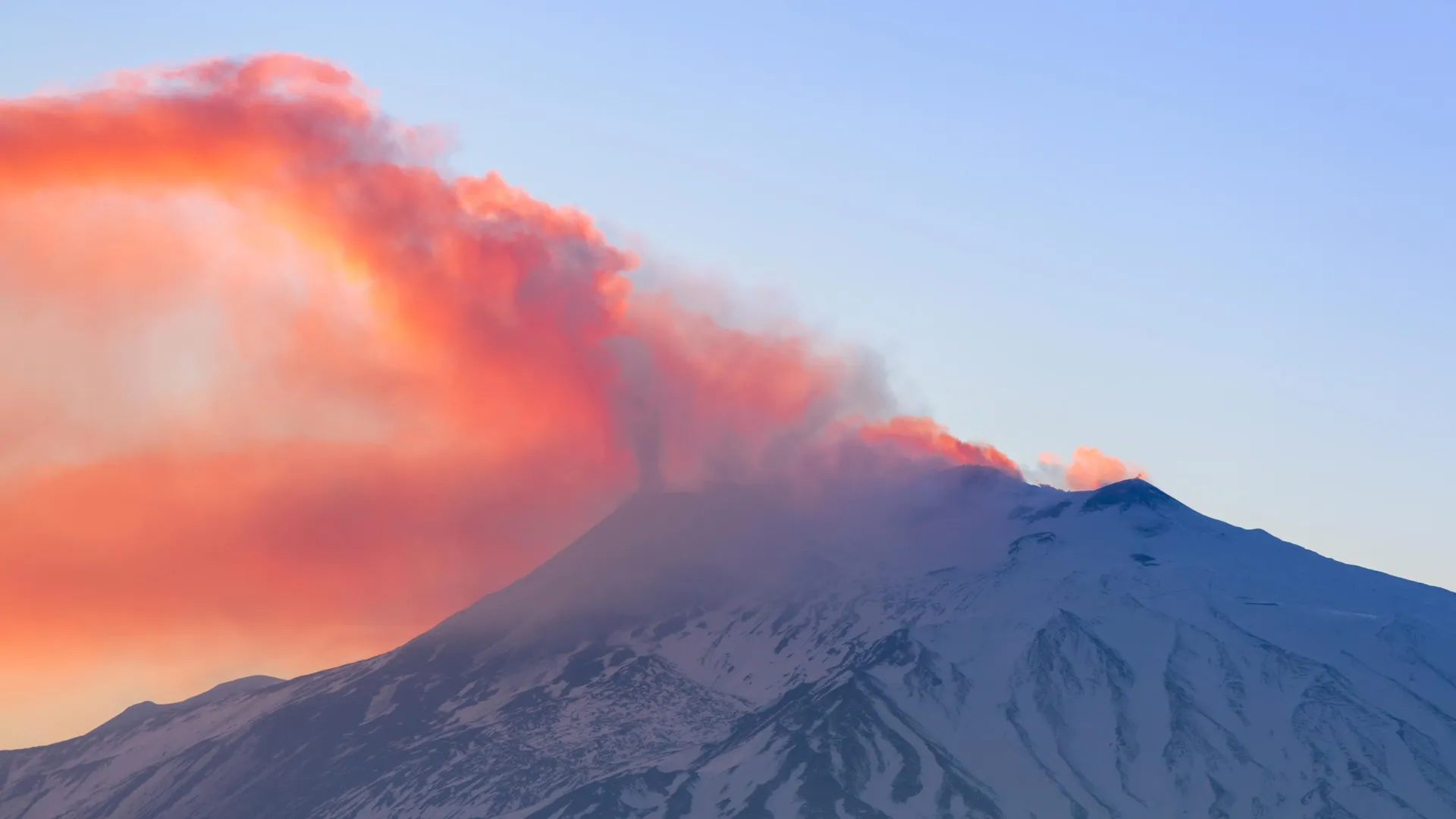
For centuries, Mount Etna has loomed over the island of Sicily like a restless sentinel. As Europe’s most active volcano, its frequent, fiery displays have captivated poets, terrified locals, and confounded the scientific community. Standing at an imposing 3,357 meters (11,014 feet), Etna is not merely a geological landmark; it is a profound scientific mystery. For decades, geologists have struggled to categorize it, as its behavior defies the established "textbook" rules of volcanology.
Now, a groundbreaking study from the University of Lausanne (UNIL), published in the Journal of Geophysical Research: Solid Earth, has proposed a radical new explanation. The research suggests that Etna may be the product of a rare, little-understood volcanic process—a mechanism previously thought to be exclusive to tiny, deep-sea mounds. If the researchers are correct, Mount Etna is not just a volcano; it is the world’s largest example of a "petit-spot" volcano, effectively rewriting the geological rulebook on how the Earth’s mantle breathes.
The Classification Crisis: Why Etna Defies Convention
To understand why this discovery is sending shockwaves through the geological community, one must first understand the traditional framework of volcanology. For years, scientists have categorized the Earth’s volcanoes into three primary buckets based on the source and generation of their magma:
- Subduction Zone Volcanoes: These form where two tectonic plates collide, and one is forced beneath the other. As the subducting plate sinks into the mantle, it releases water, which lowers the melting point of the surrounding rock, creating magma.
- Hotspot Volcanoes: These occur far from plate boundaries, where plumes of intense heat rise from deep within the mantle, burning a hole through the crust (like Hawaii).
- Divergent Boundary Volcanoes: These form where tectonic plates pull apart, allowing magma from the mantle to rise into the gap (like those along the Mid-Atlantic Ridge).
Mount Etna, however, has always been the "black sheep" of this family. Located in a complex tectonic region near the collision point of the African and Eurasian plates, it sits in a subduction zone environment. Yet, its chemical signature—the specific "fingerprint" of the lava—is fundamentally wrong. Instead of exhibiting the characteristics typical of subduction zone volcanism, Etna’s magma more closely resembles the chemistry of hotspot volcanoes. But there is a catch: seismic imaging has failed to identify any hotspot beneath Sicily.
"Etna has long resisted attempts to fit it into existing models," says Professor Sébastien Pilet of the University of Lausanne, the study’s lead author. "It behaves like a hotspot volcano, but it lacks the thermal engine of a hotspot. It resides at a subduction zone, but it ignores the chemical rules of subduction."
A Chronology of a Geological Outlier
To solve the puzzle, the research team—working in close collaboration with Anna Rosa Corsaro of the Istituto Nazionale di Geofisica e Vulcanologia (INGV) in Catania—looked back into the deep time of the Mediterranean.
- 500,000 Years Ago: The activity that birthed the modern Etnean complex began. Geological evidence suggests that this was not a random event, but the result of specific, long-term tectonic stresses.
- The Mid-20th Century: The "petit-spot" hypothesis was first proposed in theoretical models, suggesting that pockets of magma could exist near the top of the mantle, independent of traditional plumes.
- 2006: Japanese geologists finally identified "petit-spot" volcanoes on the ocean floor. These were small, submarine structures—tiny pimples on the crust—that confirmed the existence of this long-theorized magma source.
- Present Day: The UNIL team reconstructed the chemical history of Etna by analyzing rock samples spanning the last half-million years. They discovered a shocking level of consistency. Despite massive tectonic shifts and the evolution of the surrounding landscape, the "recipe" for Etna’s magma has remained remarkably stable. This stability is the smoking gun that suggests a permanent, pre-existing source of magma in the upper mantle.
The "Sponge" Hypothesis: A Hidden Reservoir
The researchers propose that Mount Etna is fed by a hidden reservoir of magma existing in the upper mantle, roughly 80 kilometers (50 miles) below the Earth’s surface. In most volcanoes, magma is generated on-demand as tectonic processes force rock to melt. In Etna’s case, the magma is already there, waiting.
The mechanism is akin to squeezing a saturated sponge. As the African and Eurasian plates collide and grind, the tectonic plate bends. This bending creates fractures and pressure gradients in the underlying lithosphere. These fractures act as conduits, allowing the pre-existing, isolated pockets of magma to rise through the crust.
"We are essentially seeing a tectonic ‘squeezing’ effect," explains Pilet. "The magma doesn’t need to be created by the subduction process itself; it is simply being liberated by the deformation of the plate."
This explains both the chemical consistency of the lava—as it comes from a specific, long-standing mantle source—and the volcano’s erratic, frequent eruption schedule. It is a steady supply chain, regulated by the rhythmic shifting of the plates above.
Implications for Volcanic Hazard Assessment
The shift from viewing Etna as a standard subduction-zone volcano to a "super-sized" petit-spot volcano has profound implications for the safety of the millions of people living in its shadow.
The INGV in Catania, which monitors Etna’s activity, relies on complex models to predict eruptions and assess hazards. If the magma source is not a transient, deep-seated plume, but rather a structural feature of the crustal architecture, the way scientists interpret seismic signals and gas emissions may need to be updated.
"By understanding the true mechanism that feeds the volcano, we can better interpret the signals the volcano sends us," says Dr. Anna Rosa Corsaro. "If we know the magma is already sitting in the upper mantle, our hazard assessments can better account for the volume and composition of the material available for future eruptions."
This shift in perspective is not merely academic. Accurate hazard modeling is the difference between a successful evacuation and a catastrophe. By identifying Etna as a petit-spot volcano, researchers may be able to better anticipate the onset of activity based on tectonic strain data rather than just monitoring the movement of molten rock already inside the volcano’s plumbing system.
Toward a New Paradigm in Geosciences
Perhaps the most significant aspect of this study is that it challenges the universality of volcanic models. For decades, the "three types of volcanoes" model has been the gold standard in introductory geology classes. If Etna—one of the most studied and iconic volcanoes on the planet—can be classified as a fourth type, how many other volcanoes have been misidentified?
The study encourages the scientific community to look for similar patterns in other tectonically active regions. Are there other "petit-spot" giants hidden in plain sight? Could other volcanoes that defy categorization be explained by this mechanism?
"This is unexpected," admits Pilet. "We are talking about a large stratovolcano, an edifice that towers over 3,000 meters above sea level. Previously, we only associated this process with structures that were a few hundred meters tall. Etna is proving to be a giant in every sense of the word."
As the researchers continue to analyze the data, the focus will now shift to other volcanic centers around the world that share Etna’s mysterious chemical profile. The goal is to see if the "Etna Model" can provide a blueprint for a more comprehensive understanding of global volcanism.
Conclusion: The Giant’s Secret
Mount Etna has spent 500,000 years in a state of productive defiance. It has ignored the rules of subduction, refused the label of a hotspot, and carved out its own geological identity. Through the lens of the petit-spot theory, the volcano is no longer a riddle, but a testament to the complexity of the Earth’s mantle.
By looking deep beneath the island of Sicily, scientists have discovered that the power of Etna lies in its longevity and its unique access to a long-hidden reservoir. As the research continues, one thing is clear: our understanding of the planet’s internal architecture is constantly evolving. Mount Etna is not just a landmark of the Mediterranean; it is a vital laboratory that continues to teach us about the violent, creative forces that shape our world from the depths below.
As we move forward, the "petit-spot" hypothesis may well become the new cornerstone of volcanic research, proving that even after centuries of study, the Earth still has secrets waiting to be unearthed.