Hawaii, an archipelago celebrated for its pristine coastlines and rich biodiversity, faces a modern, synthetic adversary: an unrelenting tide of plastic waste. Geography complicates the solution; situated thousands of miles from the nearest continent, the islands face exorbitant costs to ship recyclables to mainland facilities. Consequently, the state’s landfills are nearing capacity, and the surrounding Pacific Ocean has become a collection point for derelict fishing gear and household debris.
In an effort to turn this environmental liability into a structural asset, researchers at the Center for Marine Debris Research (CMDR) at Hawaiʻi Pacific University have unveiled a pioneering solution: incorporating discarded fishing nets and residential plastic waste into asphalt. Presented at the spring meeting of the American Chemical Society (ACS), the study offers a roadmap for a circular economy that addresses waste management and infrastructure durability simultaneously.
The Genesis of the Problem: Geography and Waste
For Hawaii, the challenge of waste is unique. Unlike landlocked states that can utilize extensive rail or trucking networks to move waste to regional processing centers, Hawaii’s isolation creates a "bottleneck" effect. The waste generated by its 1.4 million residents, combined with the thousands of tons of marine debris that wash ashore annually, has created a logistical nightmare.
"By reusing plastic waste that is already in Hawaii, we can reduce the environmental and economic impacts of transporting waste plastics from the islands, incinerating it, or dumping it in Hawaii’s overflowing landfills," says Jeremy Axworthy, a researcher at the CMDR.
The severity of the marine debris issue cannot be overstated. The CMDR’s "Bounty Project," an initiative that provides financial incentives to commercial fishers for returning derelict gear, has already removed 84 tons of heavy-duty nets and ropes from the Pacific. These nets, often made of high-density polyethylene (HDPE), are highly durable—a trait that makes them an environmental hazard in the ocean but a potentially valuable raw material for road construction.
Chronology of a Sustainable Pavement Project
The journey from concept to reality for plastic-infused roads began with a fundamental question: Could synthetic waste replace the virgin petroleum-based polymers currently used in Hawaii’s high-performance roads?
2020: The Shift to Polymer-Modified Asphalt (PMA)
In 2020, the Hawaii Department of Transportation (HDOT) transitioned to using polymer-modified asphalt (PMA) for the majority of the state’s road network. PMA utilizes styrene-butadiene-styrene (SBS), a copolymer, to create a more resilient binder. This modification makes asphalt significantly more resistant to the "three horsemen" of tropical road damage: rutting, cracking, and water-induced stripping.
2023: Bridging the Gap Between Science and Roadwork
Recognizing the potential for a more sustainable supply chain, the HDOT partnered with environmental chemist Jennifer Lynch and her team at the CMDR. The goal was twofold: test the performance of recycled plastics in asphalt and ensure that these roads would not become a source of microplastic pollution.
2024: The Real-World Trial
After processing the recovered fishing nets and household plastics into materials suitable for road binders, the team moved to the field. A local paving company in Oahu was commissioned to resurface a residential street, dividing the project into three distinct test sections:
- The Control: A standard SBS-modified asphalt section.
- The Household Mix: Asphalt containing polyethylene recycled from Honolulu’s residential recycling stream.
- The Marine Mix: Asphalt containing polyethylene recovered from derelict fishing nets.
2025: The Analysis Phase
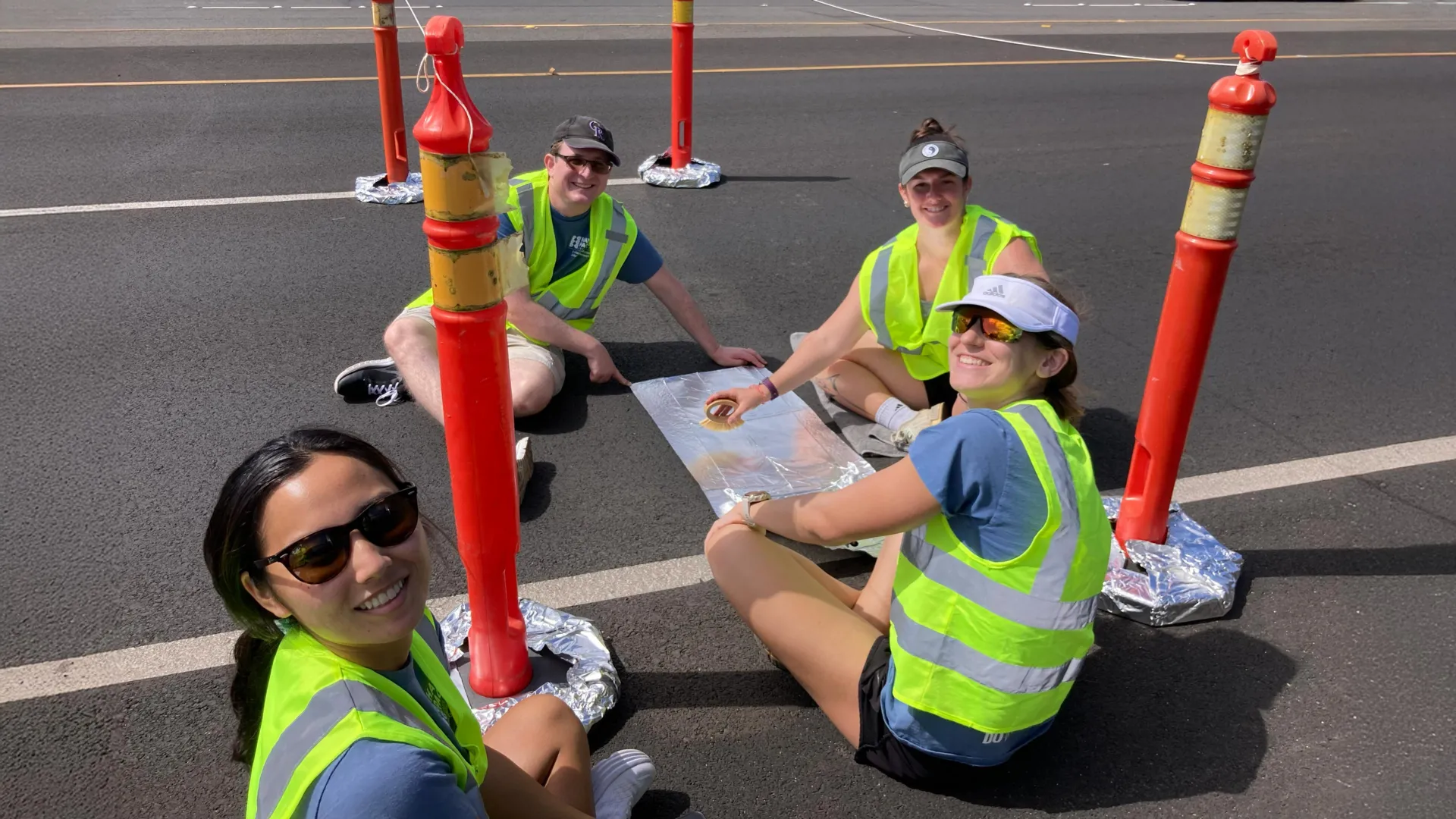
Eleven months after installation, the research team returned to the test site. They collected road dust—the accumulation of surface wear and tire particles—to analyze the chemical footprint of the pavement. By using state-of-the-art pyrolysis gas chromatography-mass spectrometry (Py-GC-MS), the team was able to differentiate between tire rubber, standard asphalt binders, and the specific polymers used in the test batches.
Supporting Data: Debunking the Microplastic Myth
One of the most significant fears regarding the use of recycled plastic in infrastructure is the potential for it to shed microplastics into stormwater runoff, eventually reaching the marine environment. The CMDR study addressed this concern with rigorous empirical data.
The laboratory and field findings were largely reassuring. The researchers discovered that pavement containing recycled polyethylene did not release a higher volume of polymers than conventional SBS-modified asphalt. In fact, the amount of polyethylene detected in the road dust was remarkably low, regardless of the pavement type.
The study suggests that when plastic is integrated into the asphalt binder, it becomes effectively "locked" within the matrix of the road. When the road surface eventually wears down due to vehicle traffic, the particles that break away are not pure plastic; rather, they are complex, composite particles consisting of rock, asphalt binder, and polymer blended together.
Furthermore, the data highlighted the overwhelming prevalence of tire wear. In the chromatogram results, the signal from tire rubber was so significant that it "swamped" the polyethylene signals. As Dr. Jennifer Lynch noted, researchers had to "search the weeds" of the data to find even trace amounts of the recycled material, indicating that the contribution of the road surface to microplastic pollution is minimal compared to the impact of vehicle tires.
Official Responses and Strategic Vision
The project has garnered significant interest from both the scientific community and state regulatory bodies. By demonstrating that "waste" can be "resource," the project aligns with broader sustainability goals.
"Some people think plastic recycling is a hoax—that it doesn’t work; it’s too challenging," says Dr. Lynch. "But this work demonstrates that recycling can work when society prioritizes sustainability."
The HDOT has viewed the collaboration as a potential blueprint for future infrastructure procurement. By sourcing materials locally, the state not only reduces its carbon footprint associated with shipping virgin polymers from the mainland but also creates a tangible "end-of-life" destination for the tons of nets that currently clutter island waste facilities.
The research also provides a unique opportunity to evaluate the long-term viability of these materials. The Hamburg Wheel Tracker Test (HWTT), used in the lab portion of the study, provides a simulation of how these roads will behave under extreme heat and heavy vehicle loads. Early indications suggest that the recycled mixtures perform at parity with, or in some cases exceed, the performance of traditional virgin SBS-modified asphalt.
Implications: A Future Built on Waste
The implications of the CMDR’s findings extend far beyond the borders of Hawaii. If a state as isolated as Hawaii can successfully integrate ocean plastics into its infrastructure, the model could be replicated in coastal cities globally.
1. Reducing Landfill Pressure
With the global crisis of landfill saturation, diverting tons of plastic into durable road infrastructure is a critical strategy. Roads have a lifespan of several decades, meaning that once the plastic is encapsulated in the pavement, it is effectively removed from the environment for the long term.
2. Cleaning the Oceans
The "Bounty Project" model proves that when there is a value proposition for marine debris, the rate of removal increases. If the state creates a steady market for recycled fishing gear, it provides a powerful economic incentive for the fishing industry to continue cleaning the ocean, turning a cleanup operation into a raw-material supply chain.
3. Advancing Analytical Standards
The use of Py-GC-MS to characterize road dust is a major step forward in environmental monitoring. By setting a high bar for the detection and quantification of microplastics, the CMDR team has established a methodology that other researchers can use to test the safety of new, "green" building materials before they are widely deployed.
4. Policy and Economic Sustainability
For policymakers, the project underscores that circularity requires more than just recycling bins; it requires a deep integration of waste streams into the industrial economy. By treating the state’s roads as a "plastic bank," Hawaii is moving toward a model where infrastructure is built not just for transit, but for environmental restoration.
As the research moves into its next phase, the team will continue to monitor the Oahu test site to ensure that the structural integrity of the recycled sections remains stable over several years. If the results hold, Hawaii may soon be known not just for its beaches, but as a global pioneer in transforming the "tide of trash" into the very foundations of the state’s future.