Introduction: A Chance Encounter in the Eastern Peninsula
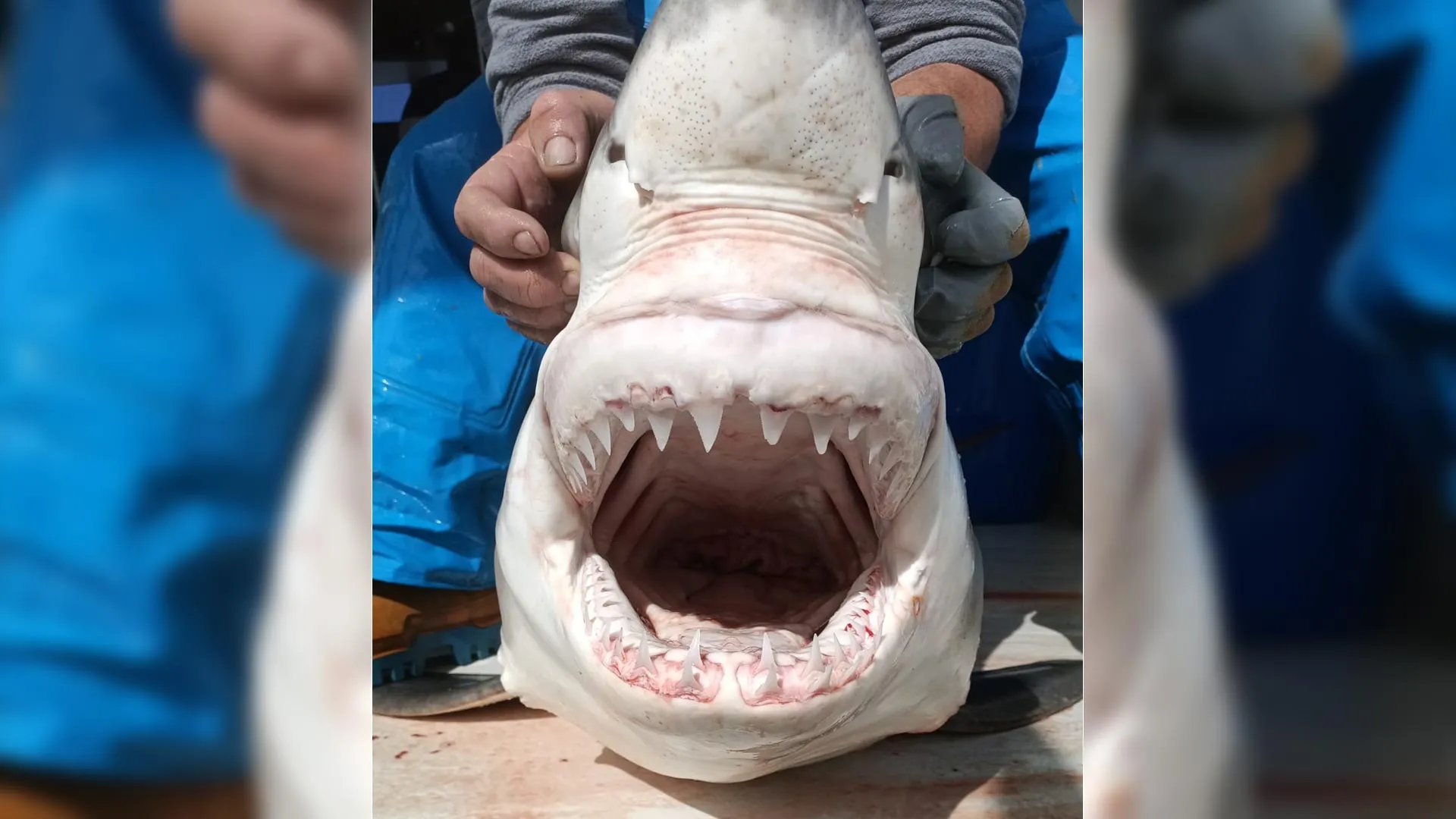
On April 20, 2023, the quiet rhythm of the eastern Mediterranean coastline was interrupted by an event of profound biological significance. Local fishermen, operating off the eastern peninsula, hauled in an unexpected catch: a juvenile great white shark (Carcharodon carcharias). Measuring approximately 210 centimeters (nearly 7 feet) in length and weighing between 80 and 90 kilograms (176 to 198 pounds), the specimen was a stark reminder of the wild, often unseen, life beneath the surface of one of the world’s most heavily traversed seas.
While the great white shark is arguably the most iconic marine predator on the planet, its presence in the Mediterranean has long been relegated to the realm of anecdotal reports and historical curiosities. This particular encounter, however, has served as a catalyst for a sweeping scientific reassessment. A team of researchers has spent the months following the capture diving into 160 years of archives, attempting to decode the status of a population that has earned the moniker of the Mediterranean’s "ghost" predators.
Chronology: A Century and a Half of Records
The recent study, published in the open-access journal Acta Ichthyologica et Piscatoria, represents the most comprehensive review of great white shark occurrences in Spanish Mediterranean waters from 1862 through 2023. By synthesizing historical logbooks, landing records, and modern observational data, the research team sought to determine if the great white is a transient visitor or a resident shadow.
The historical data paints a fragmented but persistent picture. Throughout the late 19th and early 20th centuries, records of large sharks were often imprecise, frequently conflating various species. However, by filtering these through modern taxonomic standards, the research team identified a consistent, if sparse, thread of confirmed sightings.
The timeline reveals a pattern of sporadic appearances. Rather than a steady decline or a sudden re-emergence, the data suggests that these apex predators have maintained a low-density presence in the region for generations. The 2023 capture is not an anomaly in the context of the last century; it is a data point that validates the continuity of the species in these waters. The findings confirm that while the Mediterranean great white population is functionally elusive, it has not been extirpated.
Supporting Data: The Significance of the Juvenile
For the scientific community, the specific characteristics of the 2023 specimen were far more revealing than the simple fact of its presence. Dr. José Carlos Báez, the lead researcher on the study, highlights the importance of the shark’s life stage.
"Determining the presence of juvenile individuals is of particular importance," Dr. Báez explains. "The occurrence of juvenile specimens raises the question of whether active reproduction may be occurring in the region."
In marine biology, the presence of juveniles is often a proxy for the existence of nursery grounds. If adult great whites are merely passing through the Mediterranean during long-distance migrations, one would expect to see mostly mature individuals. The capture of a young shark—a shark that likely had not yet traveled the vast distances common to the species—suggests that the region might provide the necessary ecological conditions for parturition and early development.
This hypothesis shifts the status of the Mediterranean great white from a "migratory visitor" to a "potential resident." If breeding is indeed taking place, it changes the entire conservation calculus for the Mediterranean, necessitating a more localized approach to habitat protection and fisheries management.
Official Responses and Conservation Status
The great white shark is currently classified as "Vulnerable" on the International Union for Conservation of Nature (IUCN) Red List. This status reflects a global population that has faced significant pressure from commercial fishing, bycatch, and the degradation of coastal ecosystems.
The research team emphasizes that the Mediterranean population is likely fragmented and highly sensitive to environmental stressors. Because great white sharks are apex predators, they are inherently low-density species; a healthy ecosystem can only support a small number of these massive carnivores. Consequently, even minor human-induced mortality can have a disproportionate impact on their survival.
The study underscores the necessity of long-term, systematic monitoring. The current reliance on accidental bycatch—fishermen catching sharks while targeting other species—is an insufficient and unethical way to gather data. The authors advocate for the integration of modern tracking technologies, such as satellite telemetry and environmental DNA (eDNA) sampling, to map the movements and habitat preferences of these elusive predators without relying on their capture.
Implications: Challenging the Narrative of Fear
The great white shark has long been burdened by a cultural narrative defined by terror. From literature to cinema, the species has been painted as a mindless, man-eating menace. Dr. Báez suggests that this cultural baggage is a significant barrier to effective conservation.
"The oldest and strongest emotion of mankind is fear, and the oldest and strongest kind of fear is fear of the unknown," Dr. Báez says, echoing the sentiment of H.P. Lovecraft. He argues that scientific literacy is the primary antidote to the hysteria that often surrounds shark sightings. When the public views these animals as monsters rather than vital components of the ecosystem, support for conservation policies wanes.
The reality, as outlined in the study, is that the great white shark is a sophisticated and essential biological actor. As apex predators, they occupy a critical niche at the top of the marine food web. They serve as "ecosystem engineers," influencing the distribution and behavior of prey species, which in turn ripples down to affect the health of seagrass meadows, coral reefs, and fish populations.
Moreover, their role as "nature’s scavengers" is frequently overlooked. By consuming carrion and diseased individuals, they keep the marine environment clean and prevent the spread of pathogens. Even their death serves an ecological purpose; the sinking of a great white carcass to the seafloor creates a "whale fall" effect, providing a concentrated burst of nutrients to deep-sea communities that would otherwise exist in a food-poor environment.
The Future of Mediterranean Research
The path forward for understanding these "ghost" sharks involves a transition from reactive observation to proactive study. The researchers suggest that the "ghost" status of these sharks is not merely a product of their low numbers, but a result of our limited observation methods. The Mediterranean is a massive, complex body of water, and our current monitoring infrastructure is not equipped to detect highly mobile, cryptic species that spend much of their time in deeper, offshore waters.
To bridge this gap, the team proposes a multi-pronged strategy:
- Enhanced Fishery Cooperation: Working with local fishing fleets to implement mandatory reporting and safer release protocols for accidental bycatch.
- Technological Deployment: Utilizing satellite tags on any incidentally captured individuals to gain real-time data on their migration corridors within the Mediterranean.
- Public Education: Launching awareness campaigns that emphasize the ecological value of the shark, aiming to transition the public mindset from fear to stewardship.
- International Collaboration: Because sharks do not recognize maritime borders, data must be shared across the Mediterranean basin to create a unified management plan.
Conclusion: Guardians of the Deep
The discovery of the juvenile shark in 2023 has done more than add a line to a database; it has breathed new life into a conversation that has spanned generations. It is a reminder that even in the most well-studied and heavily populated seas, nature retains the capacity to surprise us.
The great white shark is not an invader in the Mediterranean; it is an ancient resident, a ghost that has been patrolling these waters long before the first nets were cast. The evidence gathered by the research team suggests that these predators have not vanished. Instead, they remain, playing their part in the intricate, fragile balance of the sea.
As Dr. Báez concludes, the goal of modern research is to replace the myths of the past with a genuine, evidence-based understanding of these animals. By shedding light on the biology and ecology of the great white, we do not just protect a single species—we protect the health of the entire Mediterranean ecosystem. The shadow in the deep is not a menace to be feared, but a symbol of the wild, enduring vitality of our oceans, a reminder that there is still much to learn, and much worth saving.