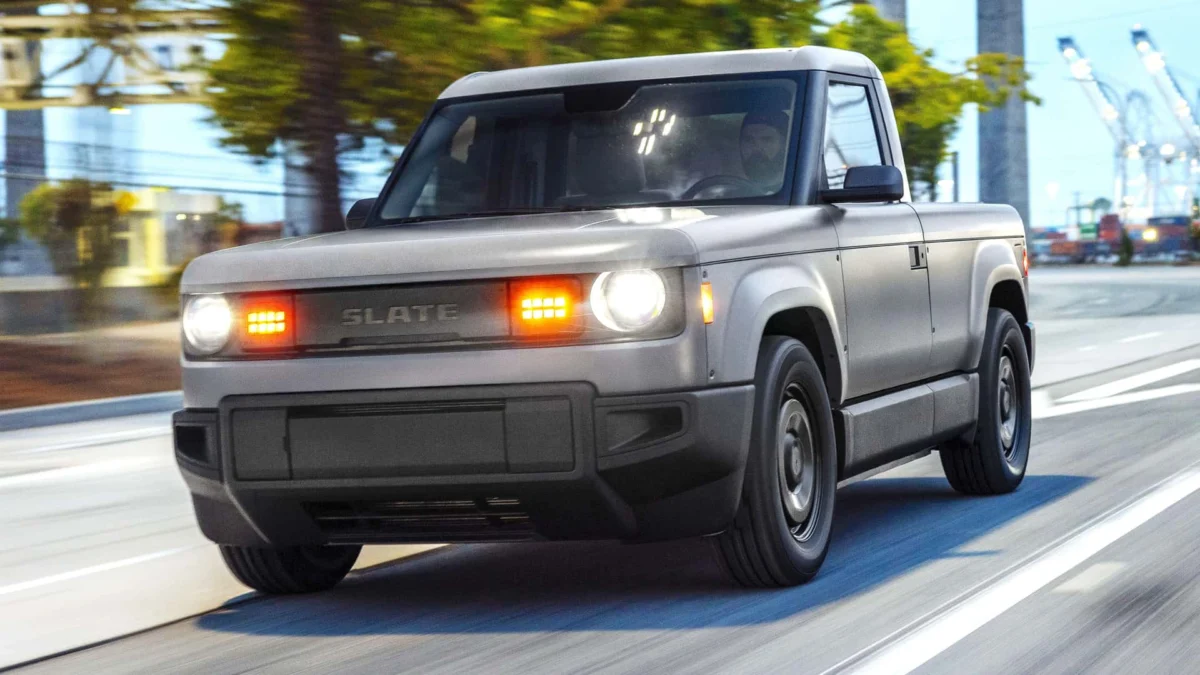
The automotive industry is currently witnessing a paradigm shift, transitioning from the internal combustion engine to electrified propulsion. However, as legacy manufacturers focus on luxury, high-performance, and heavy-duty electric vehicles with eye-watering price tags, a new player is carving out a niche in the "white space" of the market. Slate Automotive is inching closer to the production of its highly anticipated electric pickup truck—a vehicle designed not as a status symbol, but as a modular, customizable tool for the everyday driver.
As Slate prepares to begin initial deliveries later this year, the company is positioning itself to disrupt the traditional vehicle ownership model. By embracing a "minimalist-first" philosophy, the company is betting that consumers are ready to trade opulent, pre-configured luxury for a blank canvas that can be tailored to individual needs over time.
A Chronology of a Disrupted Vision
The journey of the Slate truck has been defined by rapid evolution and the realities of modern manufacturing. Initially, the project captured headlines with an aggressive, headline-grabbing promise: a starting price point of under $20,000. In an era where the average new vehicle price has ballooned well past $45,000, this ambitious goal promised to make electric mobility accessible to the masses.
However, the path to production is rarely linear. As the vehicle moved from concept to reality, economic pressures—including supply chain constraints, inflationary labor costs, and the rising price of lithium-ion battery technology—necessitated a strategic adjustment.
The Price Adjustment
According to reports from The Autopian and corroborated by company statements, the target price has shifted to the mid-$20,000 range. Current data points to a starting MSRP of $24,950, excluding destination charges. While this is an increase from the initial promise, industry analysts note that it remains an outlier in the current EV landscape. Even at this revised price, Slate is aggressively targeting a segment of the market—budget-conscious drivers and small business owners—that has been largely ignored by the current wave of electric trucks like the Ford F-150 Lightning or the Rivian R1T.
The Milestone Roadmap
- Initial Concept Phase: Slate generates industry buzz with a sub-$20k price target.
- Refinement Phase: Engineering focus shifts to modularity and ease of assembly.
- The Price Correction: Reports confirm a shift to a $24,950 starting price to ensure business viability.
- Upcoming Milestone: June 24 marks the official price unveiling and the commencement of $300 reservations.
- Production Launch: Deliveries are expected to begin in late 2025, with a nationwide distribution strategy currently under development.
Modular Engineering: The "Lego" Approach to Automotive Design
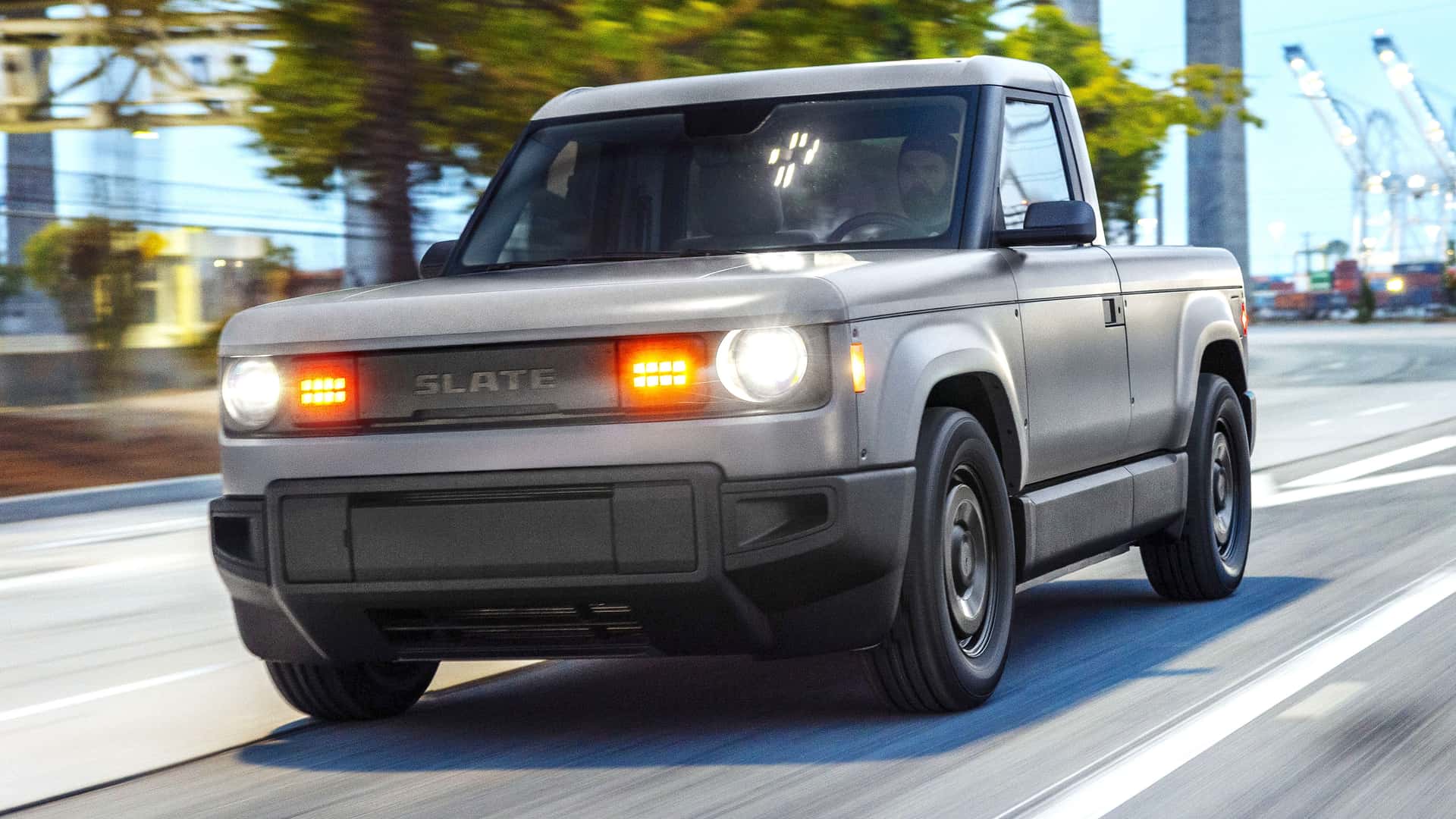
The standout feature of the Slate truck is its extreme modularity. Unlike traditional vehicles that emerge from the factory in a "finished" state, every Slate truck leaves the assembly line with a utilitarian, minimalist aesthetic. The body panels consist of gray, unpainted plastic, serving as a base layer for the owner’s creativity.
Customization via Wraps and Prints
Slate is launching an expansive customization program. Customers can choose from 54 basic vinyl wraps immediately, with an additional 50 options featuring metallic finishes, complex patterns, and bespoke designs. By moving the aesthetic "finish" to a post-production wrap, Slate reduces manufacturing complexity while empowering the consumer. CEO Peter Faricy confirmed that by next year, the company will introduce an advanced printing service, allowing customers to upload custom graphics to be applied to their vehicles.
Component-Level Modularity
The innovation goes beyond cosmetics. The truck is designed to be mechanically modular. Owners can potentially convert their pickup into an SUV-style configuration, or add specialized utility racks, seat configurations, and cabin components after the initial purchase.
To ensure safety in this "DIY" ecosystem, Slate has integrated smart sensors into critical components, such as seat mounts and seat-belt assemblies. These sensors communicate with a proprietary app, which verifies that the installation has been performed correctly. The app also serves as a diagnostic guide, rating the difficulty of various modular upgrades and providing step-by-step instructions for owners or their chosen contractors.
Economic Implications and Market Positioning
The decision to pivot away from a sub-$20,000 price point is a calculated risk. In the automotive world, price sensitivity is high, but so is the demand for value. By positioning the vehicle at $24,950, Slate is entering a "Goldilocks" zone—it is significantly cheaper than any other electric truck on the market, yet it offers enough margin to ensure the company remains solvent.
The "Affordable EV" Gap
The market is currently bifurcated. On one end, we have premium EVs; on the other, a dearth of affordable, entry-level options. Slate is effectively attempting to recreate the "utility truck" segment that once defined the American automotive landscape—vehicles that were meant to be worked hard, maintained easily, and customized for specific tasks.
If Slate succeeds, it could force a wider conversation about whether consumers actually need the luxury features, massive screens, and self-driving suites that currently inflate the price of modern EVs. By stripping away the "frills," Slate is banking on the idea that utility, modularity, and price are the three most important variables for the next generation of truck buyers.
Official Responses and Strategic Outlook
CEO Peter Faricy has been transparent about the company’s challenges. In discussions with the Detroit Free Press, Faricy emphasized that the ownership experience is a journey rather than a single transaction. By allowing customers to "add on" features post-purchase, Slate creates a recurring relationship with the buyer, which is a significant shift from the traditional dealer-customer model.
The 50-State Challenge
One of the most significant logistical hurdles facing the company is its pledge to sell the vehicle in all 50 states. Given that Slate is a new entrant without the massive dealership networks of legacy automakers, the company will likely rely on a direct-to-consumer sales model. While this circumvents the overhead of traditional dealerships, it requires a robust service and delivery infrastructure that the company is currently building from the ground up.
Motor1’s Take: A Necessary Disruption
The reality that the Slate truck will not meet its original sub-$20,000 target is disappointing, but perhaps predictable. However, it is vital that this price adjustment does not discourage potential buyers. The automotive market is crying out for simplicity.
We believe that the true value of the Slate proposition is not in the base price, but in the total cost of ownership. If the modularity works as promised, owners can adapt their vehicle to their life stages. A young contractor can start with a basic flatbed; five years later, they can convert that same chassis into a family-hauling SUV.
The success of this venture will hinge on two factors: the reliability of the modular components and the company’s ability to scale production without further price creep. If Slate can deliver a vehicle that is rugged, truly modular, and keeps the starting price under the $25,000 mark, they may well prove that the future of the electric truck isn’t just about massive batteries and luxury interiors—it’s about providing a tool that evolves alongside its owner.
As we approach the June 24 price announcement and the opening of the $300 reservation window, all eyes will be on whether the market is as hungry for a modular, affordable utility vehicle as Slate believes it to be. The transition to electric is inevitable, but the way we access that technology is still being written. Slate is currently holding the pen.