In Christopher Nolan’s latest cinematic spectacle, The Odyssey, the titular hero—played with weary gravitas by Matt Damon—faces a gauntlet of mythological terrors. While audiences are mesmerized by the visceral terror of the Cyclops or the oceanic fury of Poseidon, a far more grounded, systemic threat looms over the narrative: the "Sea People." Described as a relentless, marauding force, this mysterious collective serves as the geopolitical anvil against which the stability of Ithaca is hammered.
For Queen Penelope (Anne Hathaway), the looming specter of these invaders is not merely a tale of campfire fear; it is a catalyst for the political instability plaguing her kingdom. As she navigates the predatory machinations of suitors eager to seize her husband’s throne, the "People from the Sea" represent a tangible existential dread. But who are they, and how does Nolan’s vision bridge the gap between Homeric legend and the murky, often violent reality of the Late Bronze Age?
The Narrative Function: A Kingdom Under Siege
Within the internal logic of Nolan’s film, the Sea People are portrayed as an amorphous, unstoppable wave of destruction. They are the boogeymen of the Mediterranean, credited with the collapse of neighboring city-states and the widespread disruption of trade routes.
For Penelope, the threat is an urgent political reality. Ithaca, weakened by the absence of its King, is perceived as a "ripe fruit" for these invaders. The suitors justify their presence in the palace not just by claiming the throne is vacant, but by arguing that the island requires a strong, militaristic leader—a king—to mobilize a defense against the coming storm. The Sea People thus serve as the primary justification for the film’s political tension, transforming Odysseus’s homecoming into a race against both internal decay and external erasure.
The ‘Cretan Lie’ and the Origin of the Invader
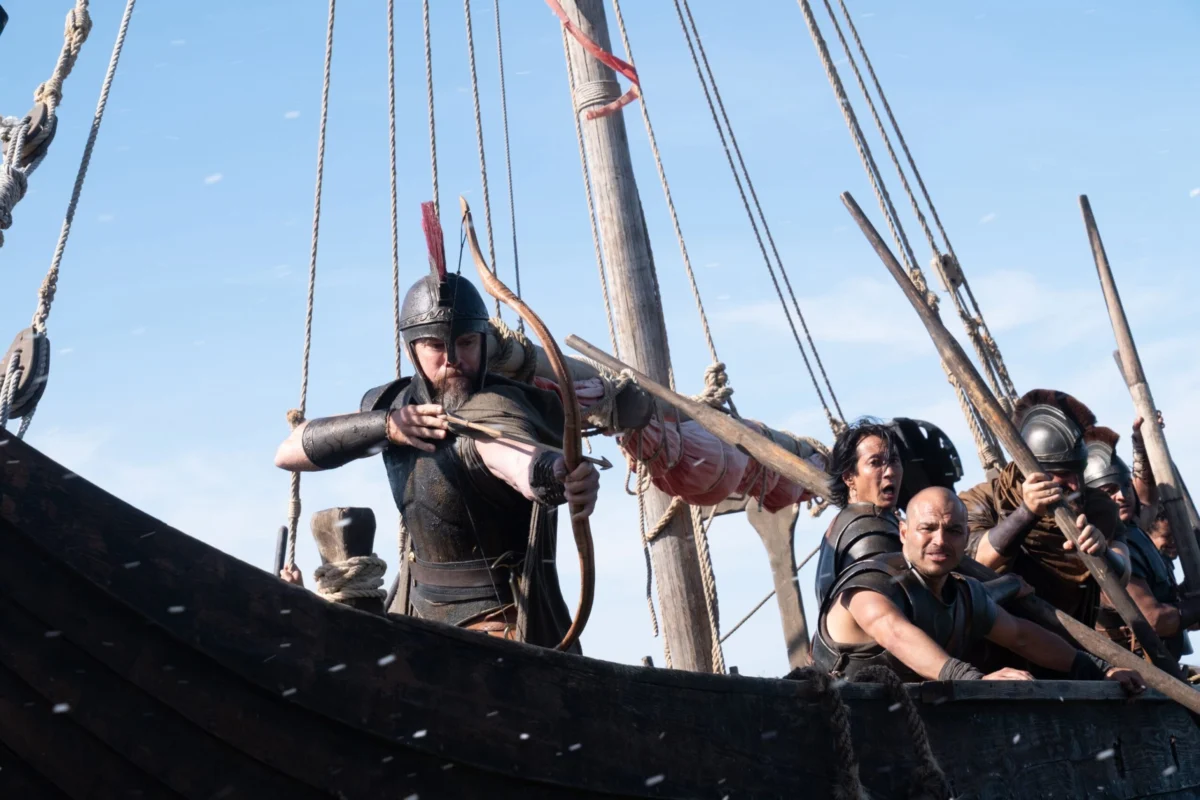
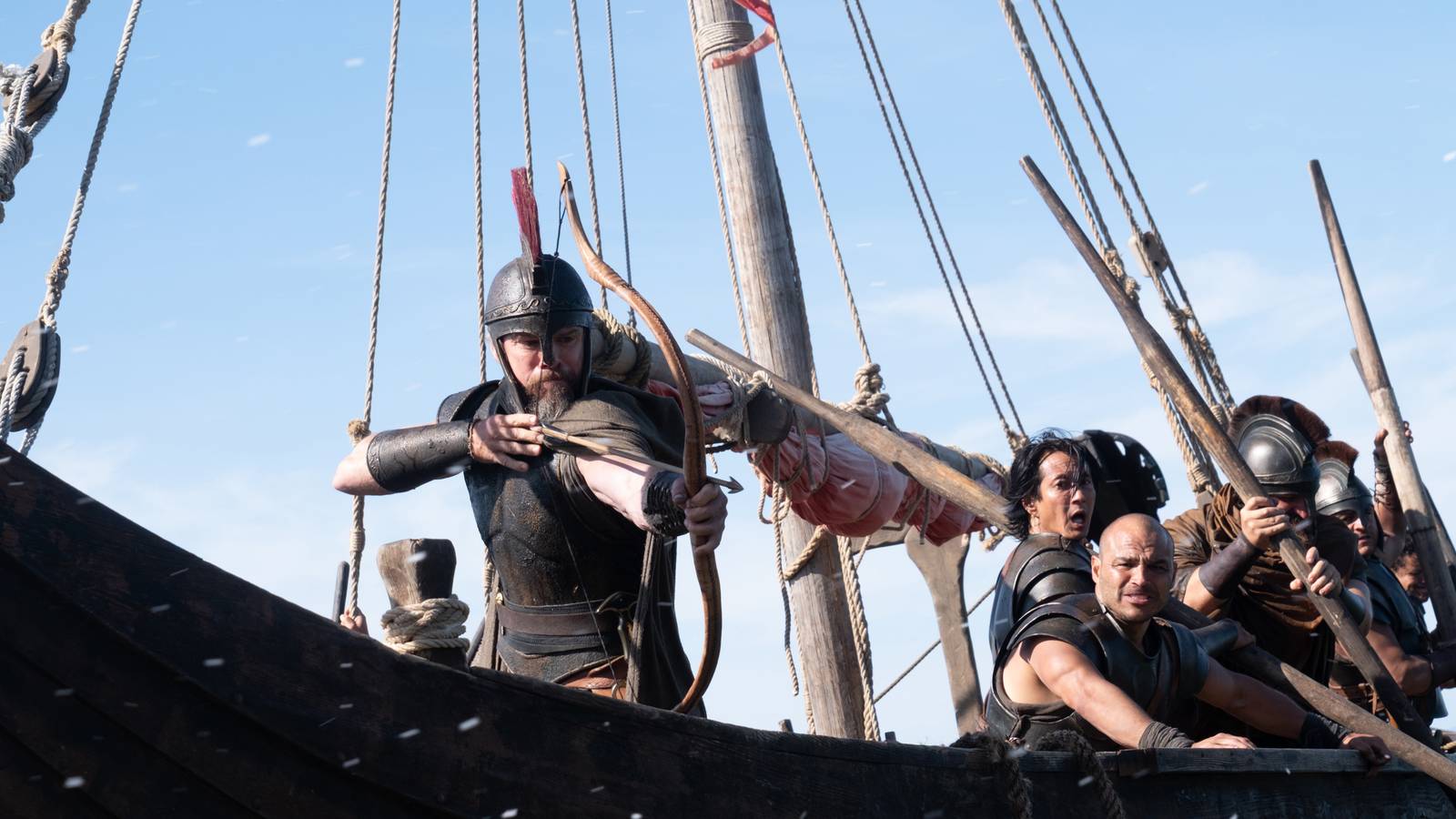
The film takes a bold, interpretive leap in its third act. As the narrative reaches its crescendo, Odysseus reflects on his own role in the collapse of the world he once knew. Through a series of stark, haunting sequences, the film suggests that Odysseus’s own Achaean forces, having laid waste to Troy through the deceit of the wooden horse, have become the very thing they feared.
This interpretation leans heavily into a scholarly theory surrounding the "Cretan Lie." In Homer’s original text, when Odysseus returns home, he adopts a disguise as a beggar to gauge the loyalty of his household. He spins a complex, fabricated backstory to Eumaeus, his loyal swineherd (portrayed by John Leguizamo), claiming to be a Cretan who fought in the wars against Egypt.
Nolan’s film posits that this "lie" contains a kernel of historical truth. By framing Odysseus’s army as a displaced, desperate, and traumatized group of veterans returning to a world that no longer has a place for them, the film paints the Achaeans as the archetypal "Sea People." They are no longer the heroes of legend; they are the wandering predators of a dying era, contributing to the very lawlessness they claim to abhor.
Historical Reality: The Bronze Age Collapse
To understand the weight of Nolan’s narrative choice, one must look at the real-world historical phenomenon of the Late Bronze Age collapse, which occurred roughly around 1200 BC. This was a period of systemic failure across the Eastern Mediterranean, where powerful empires—the Hittites, the Mycenaeans, and the New Kingdom of Egypt—experienced rapid decline, societal fragmentation, and widespread destruction.
The "Sea Peoples" (plural) are the primary historical signifiers of this era. Our knowledge of them comes largely from Egyptian records, most notably the inscriptions at Medinet Habu, commissioned by Pharaoh Ramesses III. These inscriptions depict a desperate struggle against a confederation of seafaring invaders.
The Composition of the Confederacy
Historians have struggled for centuries to identify the specific ethnic or geographic origins of these groups. The Egyptian records list names such as:

- The Peleset: Widely accepted by scholars to be the ancestors of the Philistines.
- The Shekelesh: Often theorized to have origins in Sicily.
- The Lukka: Associated with the Lycians of southwestern Anatolia.
- The Denyen: Often linked to the Danuna, a group possibly connected to the Greeks.
The reality is likely more complex than a single invading army. Current historical consensus suggests the Sea Peoples were a "migration-in-arms"—a collection of displaced populations, mercenaries, and societal refugees forced into piracy and conquest due to a combination of climate change, crop failure, and economic volatility.
Chronology of the Crisis
The collapse did not happen overnight; it was a slow-motion catastrophe that unfolded over decades.
- Early Signs (c. 1250 BC): Increased seismic activity and climate shifts lead to widespread famine in the Mediterranean basin.
- The First Wave (c. 1200 BC): The collapse of the Hittite Empire. Centralized bureaucracy fails, leading to the first recorded reports of "pirate" fleets causing havoc.
- The Great Conflict (c. 1177 BC): The climactic battle depicted in Egyptian records. Ramesses III claims a decisive victory against a massive coalition of Sea Peoples, preventing an invasion of the Nile Delta.
- The Aftermath (c. 1150 BC): The total evaporation of the Mycenaean palace culture. Trade networks disappear, and literacy (Linear B) is lost, signaling the start of the Greek "Dark Ages."
Implications: The Mirror of History
By linking the heroic Odysseus to the historical Sea Peoples, Nolan invites the audience to consider the "cycle of violence" inherent in statecraft. If the heroes of the Trojan War became the marauders of the Mediterranean, then the distinction between "defender" and "invader" is revealed to be a matter of perspective—and proximity.
The Socio-Economic Perspective
The film highlights an important nuance of the historical Sea Peoples: they were not just soldiers. They traveled with families, household goods, and livestock. This confirms the theory that the Sea Peoples were a displaced demographic rather than a professional military unit. Nolan’s depiction of Odysseus’s men—tired, disillusioned, and struggling to reintegrate into a society that no longer functions—mirrors this historical reality. They are the "leftovers" of a great war, a demographic pressure cooker that eventually bursts.
Official Responses and Academic Discourse
While historians continue to debate the exact role of the Sea Peoples—some arguing they were the cause of the collapse, others arguing they were merely a symptom of a crumbling system—Nolan’s film leans into the latter. The "lawlessness" mentioned in the film serves as a catalyst for local warlords and opportunists.
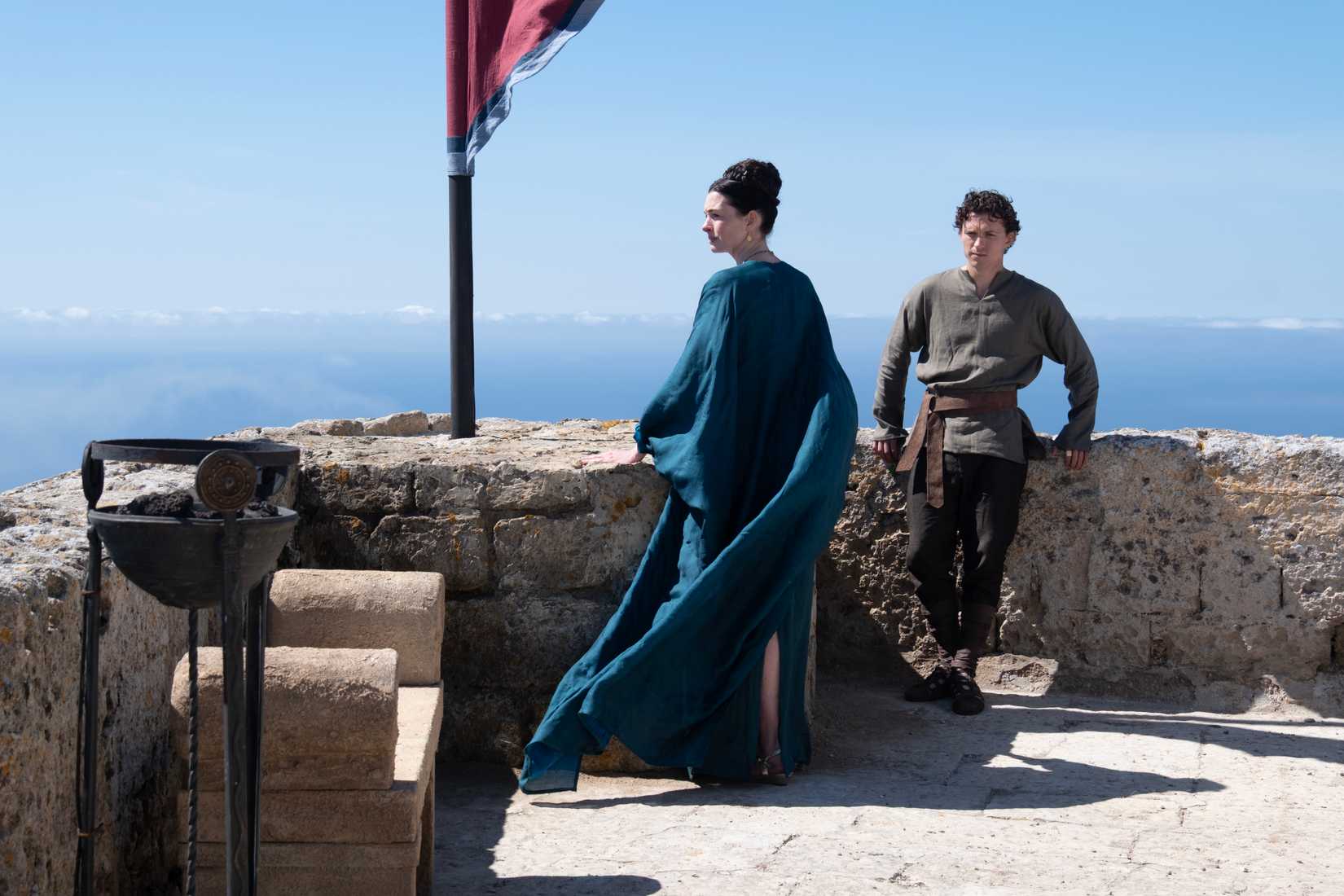
In a recent interview regarding the film’s historical consulting, academic advisors noted that while the specific identification of "Sea Peoples" as Achaean is a "narrative bridge" rather than a hard historical fact, it remains a "legitimate interpretive lens." It forces the viewer to reconcile the romanticism of Homer with the brutal, pragmatic reality of ancient migration and state failure.
Conclusion: The Persistence of the Myth
Christopher Nolan’s The Odyssey succeeds because it refuses to treat its antagonists as mere monsters. By tethering the Sea People to the very men who fought for the honor of Greece, the film creates a compelling cycle of history.
As we see the remnants of the Achaean army returning to a world that has been irrevocably altered by their own actions, we are forced to confront an uncomfortable truth: the difference between a king and a pirate is often merely a matter of time and circumstances. Whether these historical figures were victims of a climate-driven catastrophe or the primary drivers of it, their legacy remains carved in the stones of Egyptian temples and woven into the fabric of our greatest stories.
As the credits roll, the message is clear: when the world begins to burn, the line between hero and villain is the first thing to dissolve. If you ever find yourself staring at a horizon filled with ships, waiting for a savior, remember that in the ancient world, the most dangerous thing you could do was open the gates.