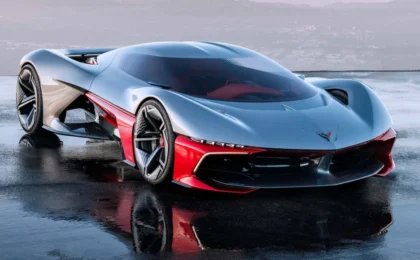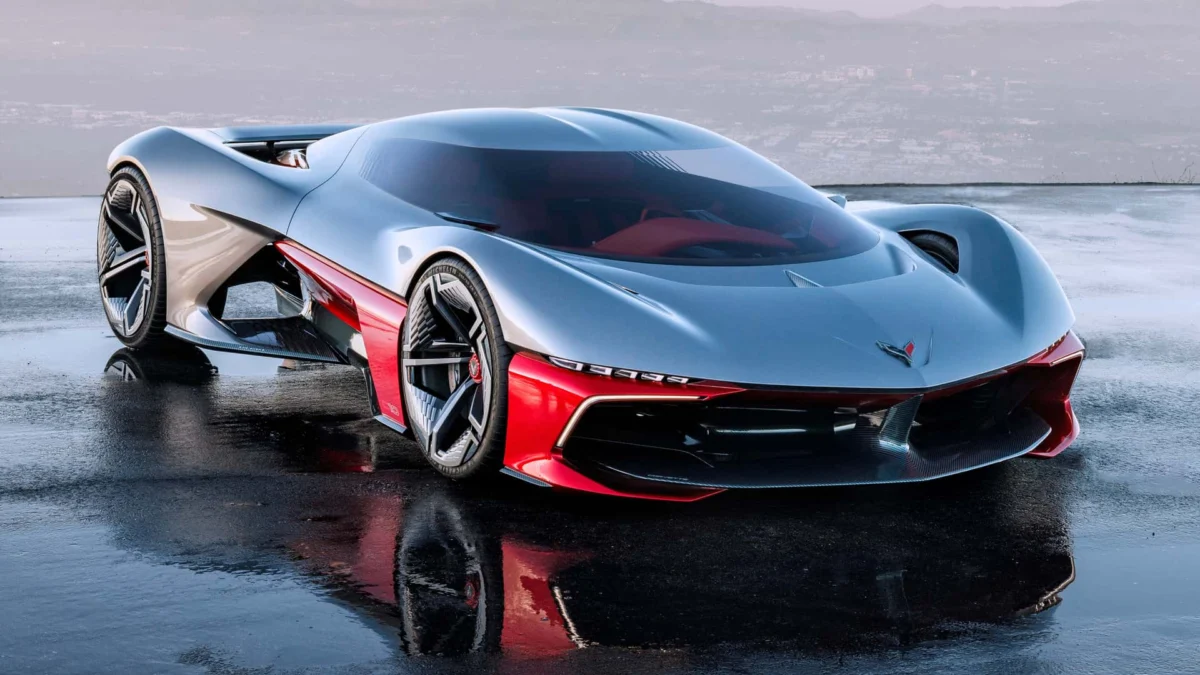
For over seven decades, the Chevrolet Corvette has stood as the quintessential American sports car—a machine that promised, and consistently delivered, supercar-slaying performance at a price point that didn’t require a hedge fund manager’s salary. As General Motors prepares to eventually sunset the highly successful C8 generation and pivot toward the C9, a clear directive has emerged from the top brass: the Corvette must continue to evolve, but it will not abandon its core identity as an accessible performance powerhouse.
Tony Roma, the Chief Engineer for the Corvette, has drawn a definitive line in the sand. In recent discussions with The Drive, Roma emphasized that the mission for the next generation is to achieve superior performance metrics while aggressively resisting the urge to drift into the realm of prestige-priced exotics. For enthusiasts worried that the mid-engine architecture would inevitably lead to a Ferrari-esque price tag, Roma’s comments serve as a much-needed reassurance of the brand’s commitment to its "value-play" heritage.
The C8 Legacy and the Architecture of Growth
To understand the stakes for the C9, one must look at the current trajectory of the C8. The C8 generation represented a seismic shift for Chevrolet, moving the engine behind the driver and officially entering the mid-engine arena. The current lineup is vast and increasingly stratified, stretching from the "entry-level" Stingray, which starts at a relatively accessible $73,795, all the way to the blistering ZR1X, which commands a staggering $227,695.
This price ladder was a strategic masterclass for GM, allowing the Corvette to occupy multiple market segments simultaneously. However, it also sparked internal and external debates about the brand’s ceiling. Could a Corvette legitimately charge $300,000? Could it compete with a Lamborghini Revuelto or a Ferrari SF90 in terms of pricing?
Roma’s stance is clear: the answer is no. The goal for the C9 is not to bridge the gap between the base model and the halo car with a sky-high price floor, but to maintain the range that has defined the C8’s success. The Corvette’s magic has always been its ability to be the car you can buy for a mid-tier luxury sedan price, yet take to the track and outperform vehicles costing three times as much. Abandoning that value proposition to chase "sticker-for-sticker" status with European boutiques would, in Roma’s view, be a betrayal of the nameplate’s DNA.
Chronology of Innovation: From Stingray to Grand Sport X
The engineering roadmap for the C8, which provides the foundation for the upcoming C9, is already showcasing where GM’s priorities lie. The introduction of the Grand Sport and the cutting-edge Grand Sport X indicates that Chevrolet is moving toward a hybrid-integrated future.
The Grand Sport X, which effectively replaces the E-Ray, is a masterclass in hybrid integration. By pairing the formidable sixth-generation LS6 small-block V8 with a front-mounted electric motor, the vehicle achieves all-wheel-drive capability without sacrificing the visceral, raw emotion of a naturally aspirated V8. This move signifies that GM intends to keep electrification as a performance tool—a way to enhance torque and traction—rather than a replacement for internal combustion.
As we look toward the C9, this evolutionary path remains critical. The integration of electric power allows the C9 to remain competitive in a world of tightening emissions regulations and increasing power demands, all while keeping the engineering costs contained within the GM ecosystem rather than outsourcing to expensive, boutique suppliers.
The Manual Transmission Dilemma: A Study in Cost and Complexity
Perhaps the most persistent question among the "Corvette faithful" is the potential return of the manual transmission. On this front, Tony Roma offered a candid, albeit disappointing, reality check for purists. While he personally admits that he would love to see a gated shifter and a clutch pedal in a future Corvette, he questioned the logistical and financial viability of such an endeavor.
The issue is not simply a matter of bolting a transmission to the back of an engine. The C8’s mid-engine transaxle is a sophisticated, integrated unit designed from the ground up for a dual-clutch system. To introduce a manual, Chevrolet would be looking at an entirely new gear case, a bespoke clutch assembly, and a massive investment in durability validation and emissions certification.

Roma’s logic is grounded in the harsh reality of modern automotive production:
- The Cost Stack: Any new driveline component incurs a three-step cost: design, tooling, and validation. In the current automotive landscape, these costs are astronomical.
- The 30-Year Benchmark: Roma pointed out that the manual transmissions used in previous front-engine Corvettes were the product of 30 years of incremental development. Expecting a modern, mid-engine car to adopt a manual without a massive, multi-year engineering cycle is, in his words, a misunderstanding of how the vehicle is built.
- Market Demand: While there is a vocal segment of the enthusiast community that demands a manual, Roma suggests it remains a "cyclical pattern." The volume of potential buyers, while real, is insufficient to justify the hundreds of millions of dollars required to bring a high-performance, mid-engine-compatible manual to market.
Furthermore, Roma expressed deep skepticism regarding aftermarket solutions. He argued that the rigorous production standards required for a vehicle of the Corvette’s caliber cannot be met by simply adapting a Tremec gearbox after the fact. For the C9, the dual-clutch transmission (DCT) is all but guaranteed to remain the sole option, serving as the necessary bridge between raw power and modern performance requirements.
Supporting Data: Why Value Matters
The data supports Roma’s defensive posture regarding the "value proposition." Chevrolet’s dominance in the sports car segment has historically been fueled by the Corvette’s unique position as a "blue-collar supercar." When the price of a performance vehicle moves into the $250,000+ range, the buying demographic shifts from passionate drivers to collectors and status-seekers.
By keeping the C9 firmly grounded in the sub-$200,000 market for its top-tier variants, GM ensures a steady pipeline of buyers. The C8 has proven that when you deliver 90% of the performance of a Ferrari for 30% of the price, you don’t just capture market share—you create a cult-like following that spans generations.
The integration of the hybrid components in the Grand Sport X is the perfect example of how to increase price-to-performance without alienating the base. By using GM’s internal engine family—the proven small-block V8—they avoid the "exotic tax" associated with custom European engines, keeping maintenance costs manageable and the vehicle’s long-term reliability high.
Implications for the Future of the Brand
The implications of Roma’s strategy are profound for the automotive industry. As many competitors move toward fully electric hypercars with seven-figure price tags, General Motors is choosing a different path. The C9 will likely be the last of its kind: a high-performance, internal-combustion-heavy vehicle that embraces hybrid technology to remain relevant, but refuses to become a plaything for the ultra-wealthy.
This strategy forces a trade-off. Enthusiasts will have to accept the death of the manual transmission and the rise of sophisticated, computer-controlled DCTs and hybrid-assisted all-wheel drive. In exchange, they will receive a vehicle that continues to push the boundaries of what is possible in terms of lap times and acceleration, all while remaining an attainable dream for the working professional.
As GM moves forward, the C9 will likely be judged not by how much it costs, but by how much "supercar" it can pack into a platform that still bears the Chevrolet bowtie. By maintaining this balance, Roma and his team are ensuring that the Corvette remains not just a fast car, but a cultural phenomenon. It is a car that remains grounded in the reality of the road, even as it looks toward the future of the track.
Ultimately, the C9 Corvette will stand as a testament to the belief that you don’t need to charge a ransom to deliver a miracle. As long as Chevrolet keeps its focus on the driver rather than the luxury status of the badge, the Corvette will remain the king of the American sports car hierarchy, regardless of how many electric motors or clutches it carries behind the driver’s seat.