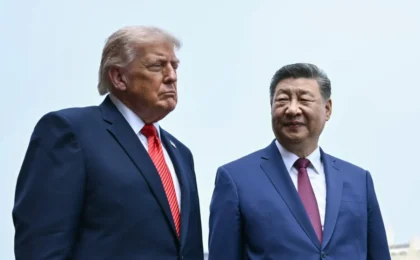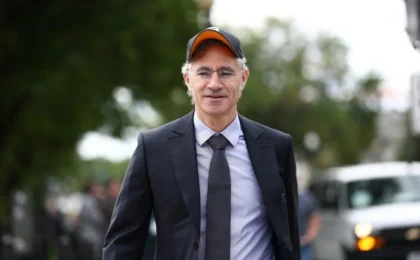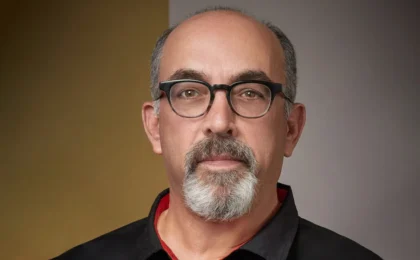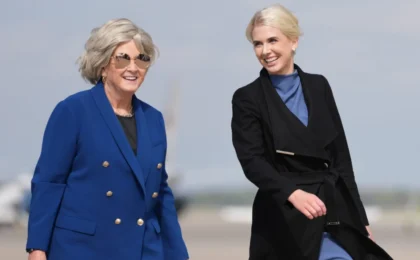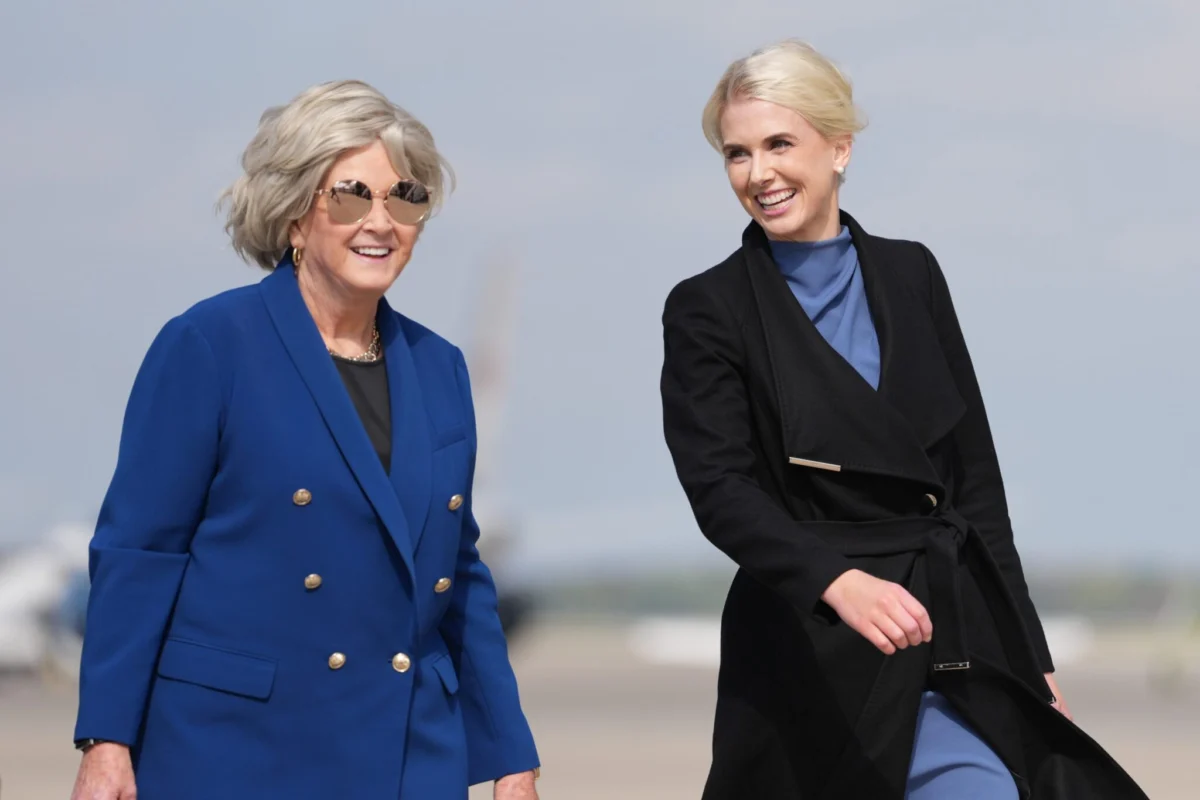
As the 2024 midterm campaign reaches its fever pitch, the most exclusive seat in American politics is not in a boardroom or a legislative chamber, but at 35,000 feet. Air Force One, under the direction of Donald Trump, has transformed into a mobile nerve center of political strategy, celebrity endorsements, and policy formulation. The passenger manifest for the President’s recent "marathon through the sky" offers more than just a list of travelers; it provides a definitive map of who currently holds the ear of the most powerful man in the world.
From aging boxing icons and billionaire Cabinet members to relatively obscure aides who translate the President’s populist instincts into policy, the entourage reflects a unique blend of loyalty, showmanship, and hardline political maneuvering. As the administration pushes through a grueling schedule of 15 rallies in 20 days, the cabin of the presidential aircraft has become the ultimate "room where it happens."
Main Facts: The Architecture of Influence
The composition of the President’s traveling party suggests a dual-track strategy for the upcoming midterms: maintaining the MAGA base through high-octane cultural figures while refining a policy platform centered on immigration, economic nationalism, and direct financial incentives for voters.
Key figures identified in the recent travel cycles include:
- The Power Brokers: White House Chief of Staff Susie Wiles and Commerce Secretary Howard Lutnick.
- The Ideologues: Deputy Chief of Staff Stephen Miller and FCC Chairman Brendan Carr.
- The Enforcers: Personal aides like Natalie Harp and Walt Nauta, who maintain the President’s daily operations and morale.
- The Cultural Vanguard: A rotating cast of sports legends and social media influencers, including Mike Tyson, Floyd Mayweather Jr., and Nicki Minaj.
Political scientists note that the proximity afforded by these flights is invaluable. "It can say what his priorities are," observes David Cohen, a professor of political science at the University of Akron. "Who he surrounds himself with are the people he is going to be listening to. They’re the ones who are going to be whispering in his ear and talking softly in private quarters to the President of the United States."
Chronology: A Marathon Through the Sky
The current travel blitz represents one of the most intense periods of presidential campaigning in modern history. The schedule has been designed to hit "battleground" territory with relentless frequency, often visiting multiple states in a single 24-hour period.
The Early October Push
The month began with a heavy focus on the "Blue Wall" and the Sun Belt. During a swing through Greenville, North Carolina, the President held his 15th rally in less than three weeks. It was during the ascent from this rally that Susie Wiles, the campaign-manager-turned-Chief-of-Staff, signaled the administration’s confidence. Despite recently undergoing treatment for breast cancer, Wiles remains a constant presence, described by Trump as the "most powerful woman in the world."
The West Coast Swing (Oct 13–14)
A notable shift occurred mid-month when the President took a lengthy West Coast swing. This leg of the journey was significant for the presence of FCC Chairman Brendan Carr. Carr’s inclusion on these flights coincided with his public efforts to use regulatory oversight to challenge broadcast networks over their coverage of the administration—a move that critics label as an overreach of agency power but supporters see as a necessary check on "media bias."
The Final Sprint
As the calendar turned toward the final weeks before the November 3 election, the entourage expanded to include more congressional leaders and high-profile celebrities. Recent stops in Alaska, Nevada, Arizona, and Montana saw a rotating door of political strategists and local representatives, all seeking a moment of "cabin time" to secure presidential backing for their respective races.
Supporting Data: Categories of the Manifest
To understand the dynamics aboard Air Force One, one must look at the specific groups that make up the "flying court."
1. The Inner Circle and Cabinet Heavyweights
While many Cabinet members remain in Washington to manage their agencies, Howard Lutnick, the Commerce Secretary, has become a fixture on the trail. A billionaire and former CEO of Cantor Fitzgerald, Lutnick’s role is part-advisor, part-hype man. He is frequently seen highlighting new factory investments at rallies, serving as the primary validator for the President’s economic narrative.
Other key figures include:
- Steve Witkoff: A special envoy tasked with the high-stakes negotiation to end the Iran war, a conflict that has significantly impacted Republican polling in the midterms.
- Stephen Miller: The architect of the administration’s "immigration crackdown," Miller ensures that the President’s rhetoric remains focused on border security, a cornerstone of the GOP platform.
- Scott Bessent (Treasury) and Brooke Rollins (Agriculture): Their presence signals a focus on economic stability and the rural vote, respectively.
2. The "Personal" Government
A secondary tier of influence exists among personal aides. Natalie Harp, an executive assistant, and Walt Nauta, the director of Oval Office Operations, are among the most frequent flyers. Interestingly, Nauta’s deputy, Chamberlain Harris, also serves on the Commission of Fine Arts. This role gives her a say in the review of construction projects, including the White House ballroom—a reminder of how personal and professional interests often overlap in this administration.
3. Policy and Speechwriting
Despite the President’s penchant for ad-libbing, Ross Worthington, the speechwriting director, is a constant presence. Worthington is responsible for codifying the "stump speech," which now includes the controversial promise of $5,000 checks for citizens if Republicans maintain control of Congress. This "checks-for-votes" strategy is a data-driven attempt to capture the undecided working-class demographic.
Official Responses and Expert Analysis
The atmosphere aboard the aircraft is described as a mixture of a high-stakes war room and a relaxed social club. This environment is intentional. Martha Kumar, a professor at Towson University, explains that the stress of a campaign requires a specific kind of support system.
"You want to have people around you that make you feel comfortable," Kumar says. "When you think about it, it is really stressful. You want some relief."
This "relief" often comes in the form of celebrity guests. The presence of Mike Tyson, Floyd Mayweather Jr., and Evander Holyfield provides a sense of "alpha-male" camaraderie that aligns with the President’s public persona. Notably, while both Tyson and Holyfield have been guests, they were reportedly not on the plane at the same time—a nod to their storied and sometimes violent history in the ring.
The White House Communications Director, Steven Cheung, has actively used these celebrity appearances to boost social media engagement. Recently, Cheung posted a video of an interview with rapper Nicki Minaj aboard Air Force One. The administration’s goal is to have at least one major cultural icon at every stop to ensure maximum media "cut-through" in a crowded news cycle.
Implications: The Future of the GOP
The passenger list of Air Force One is not just about the current election; it is a preview of the 2028 presidential landscape.
Congressional Alignment
The inclusion of lawmakers like Senator Ted Cruz (R-TX) and Senator John Barrasso (R-WY) highlights the internal hierarchy of the Republican party. Cruz, who is widely believed to be considering a 2028 presidential bid, uses these flights to demonstrate his proximity to the Trump base. Meanwhile, the presence of House members like Anna Paulina Luna (FL) and Brian Jack (GA) signals which "next-generation" Republicans are being groomed for higher leadership roles.
Policy Shifts
The influence of non-traditional advisors like Bill Pulte, the director of the Federal Housing Finance Agency, has already led to significant—if sometimes short-lived—policy ideas. Pulte’s advocacy for a 50-year mortgage and his pressure campaigns against Federal Reserve officials like Jerome Powell suggest that the President is increasingly willing to entertain radical shifts in financial regulation.
Regulatory Weaponization
The presence of Brendan Carr (FCC) suggests that a second-half term or a post-midterm win could see a more aggressive use of executive agencies to police media content. This has profound implications for the First Amendment and the traditional independence of regulatory bodies.
Conclusion
As Air Force One touches down in Michigan, Ohio, and Georgia, the individuals stepping off the plane represent the core of the modern Republican movement. It is an entourage built on a foundation of absolute loyalty, celebrity appeal, and a shared vision of a populist, interventionist government. In the confined space of the world’s most famous aircraft, the future of American policy is being whispered into the President’s ear, one flight at a time. Whether these "whispers" translate into a midterm victory remains to be seen, but the manifest makes one thing clear: the circle of power has never been tighter, or more eclectic.