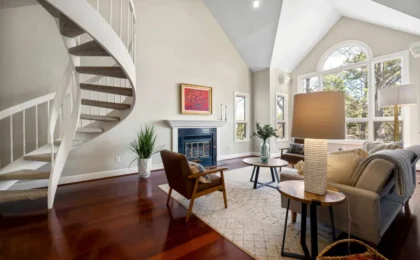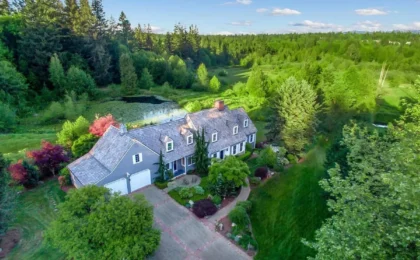
Not long ago, the journey toward homeownership began with a firm handshake, a conversation at a local brokerage, or a drive through a neighborhood looking for "For Sale" signs. Today, the process is fundamentally different. It begins with a scroll.
In the modern real estate landscape, the digital listing is no longer merely an advertisement; it is the property itself. Before a buyer ever steps across a threshold, or a seller receives a serious offer, a complex decision-making process has already occurred in the ether of the internet. Photos are no longer just a component of a listing—in many ways, they are the listing. Whether participants in the market realize it or not, high-quality imagery has become the most vital trust signal in the entire transaction.
Whether you are preparing a historic condo in Nashville or a sprawling three-bedroom family home in Sacramento, professional photography does more than capture square footage. It serves as a narrative tool, creating a powerful first impression and establishing credibility from the very moment a potential buyer clicks on a listing.
The Architecture of Perception: A Chronology of the Modern Search
To understand why photography now dictates market value, one must look at how the buyer’s journey has evolved over the last decade.
Phase 1: The Digital Filtering Process
The modern buyer starts their search on mobile devices, often during commutes or in the quiet hours of the evening. They are bombarded with hundreds of options. In this phase, the brain acts as a high-speed filter. Within seconds of viewing a thumbnail, a buyer makes a subconscious determination about the home’s worthiness.
Phase 2: The Emotional Engagement
If the initial photos pass the filter, the buyer pauses. This is when the "story" of the home takes hold. They look for cues—is there natural light? Is the space decluttered? Does the home look loved? This stage is where the emotional connection is forged, often before a physical tour is ever scheduled.
Phase 3: The Validation of Value
Once the emotion is engaged, the buyer validates the asking price against the visuals. If the photography is professional and polished, the buyer implicitly assumes the home is well-maintained. If the photos are dark, skewed, or amateur, the buyer begins to look for "faults," effectively starting a mental negotiation that drives the offer price down before the seller even receives a contract.
Supporting Data: The High Cost of Poor Presentation
The real estate industry is increasingly data-driven, and the metrics surrounding listing imagery are unequivocal. Industry studies consistently show that listings with professional, high-resolution photography receive significantly higher engagement rates, more tour requests, and, in many cases, higher final sale prices.
Evan Roberts, Founder and CEO of Visually Sold, notes that this speed of judgment is a defining feature of the modern market. "Listing photos are basically the first showing," Roberts explains. "Most buyers start their home search online and decide within seconds of scrolling whether a listing is worth a closer look or a scheduled tour."
When photos fail—due to poor lighting, awkward wide-angle distortion, or cluttered living spaces—buyers do not dig deeper. They simply move on. This "bounce rate" in real estate is a silent killer of potential sales. Even if the home is a structural masterpiece, a poor digital representation acts as a permanent barrier to entry. Conversely, professional photography provides clarity. It allows for natural light representation and accurate spatial awareness, building a foundation of reliability that pays dividends during the in-person inspection.
The Professional’s Perspective: Bridging the Expertise Gap
While many homeowners attempt to use smartphone cameras to save costs, the difference between a mobile snapshot and professional staging is stark. James Mauro of jmaurophoto emphasizes that real estate photography is a specialized discipline that requires both technical skill and an understanding of architecture.
"A professional realtor has specific knowledge and expertise when it comes to buying and selling homes," Mauro says. "What most lack is the expertise and proper equipment for photographing homes for listing purposes. Hiring a qualified and experienced professional photographer fills that gap."
This gap is where the buyer’s perception lives. When a homeowner takes their own photos, they are often too close to the property to see it objectively. They may focus on sentimental details while missing the broader composition that appeals to a buyer. A professional photographer acts as an impartial director, ensuring the home is presented at its absolute best. As Mauro notes, "Often, when a potential buyer sees poor photos, that house is overlooked. Not negotiated down. Not debated. Just overlooked."
The Emotional Factor: Translating Space into a Future
Buying a home is frequently framed as a cold, financial decision—a matter of interest rates, credit scores, and property taxes. However, the decision is deeply, inextricably emotional. Buyers are not just buying a structure; they are buying a vision of their future.
Casey Smith, Photography Director at HomeFX Media, argues that the best photography translates emotion into imagery. "Every home has a story long before the sign goes in the yard," Smith says. "Great real estate photography isn’t about documenting rooms; it’s about translating emotion into imagery, allowing buyers to imagine a life unfolding within the space before they ever step through the front door."
When this translation is successful, a listing stops being just another entry in a database and starts becoming a possibility. For the buyer, this creates momentum; they become more likely to reach out to an agent, ask questions, and commit to the time-intensive process of an in-person tour. For the seller, the result is equally powerful: their home is remembered long after the buyer has closed their browser window.
Consistency and the Professional Brand
For real estate agents, the use of professional photography is also a matter of brand management. Steve Buchanan, Director of Select Property Studios, points out that consistency is the hallmark of a successful agency.
"The most common reasons our clients come to us are time management or brand management," Buchanan explains. "Working with a professional media provider frees up an agent’s limited time for more pressing, profitable work. It also means every listing gets consistently high-quality media, which builds trust with buyers and sellers alike."
This consistency acts as a signal of competence. If an agent presents a property with high-quality media, it signals to the seller that the agent is committed to the highest standards of the industry. This is often the deciding factor in winning a listing in a competitive market.
Implications: The Signal You Send Without Speaking
There is a nuanced layer to the professional photography debate that is rarely discussed: the signal of care.
When a seller hires a professional to capture their home, they are broadcasting a message to the market: This home has been prepared for a new owner. It suggests that the property is well-maintained, that the details have been considered, and that the transaction is being handled with care.
In a market defined by speed, these signals are vital. Buyers, whether consciously or not, look for signs of a "flipped" property versus a "cared-for" property. Professional imagery serves as the primary indicator of the latter. Even if the photography cannot change the physical condition of the walls or the age of the roof, it sets the stage for how the buyer perceives those elements.
Conclusion: Trust Begins Before the Showing
By the time a buyer schedules a physical tour of a property, the battle has largely been won or lost. The buyer has already formed their expectations, compared the property to others in the vicinity, and decided whether the home feels like a promise or a risk.
Professional photography does not guarantee a sale—that still requires a fair price, a competitive market, and a solid negotiation—but it does something equally foundational: it builds early trust. In today’s hyper-digital real estate environment, that trust is the currency that drives the market.
For the buyer, high-quality images act as a filter, saving them from wasted time and allowing them to focus on the properties that truly align with their needs. For the seller, it is the single most controllable factor in how their home is perceived by the world. In an era where the first impression is a digital one, investing in professional photography is not just a marketing expense; it is a vital strategy for anyone looking to make their next move a successful one.