Introduction: A Landscape in Freefall
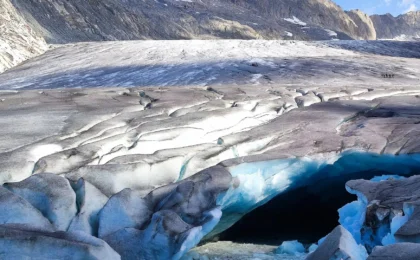
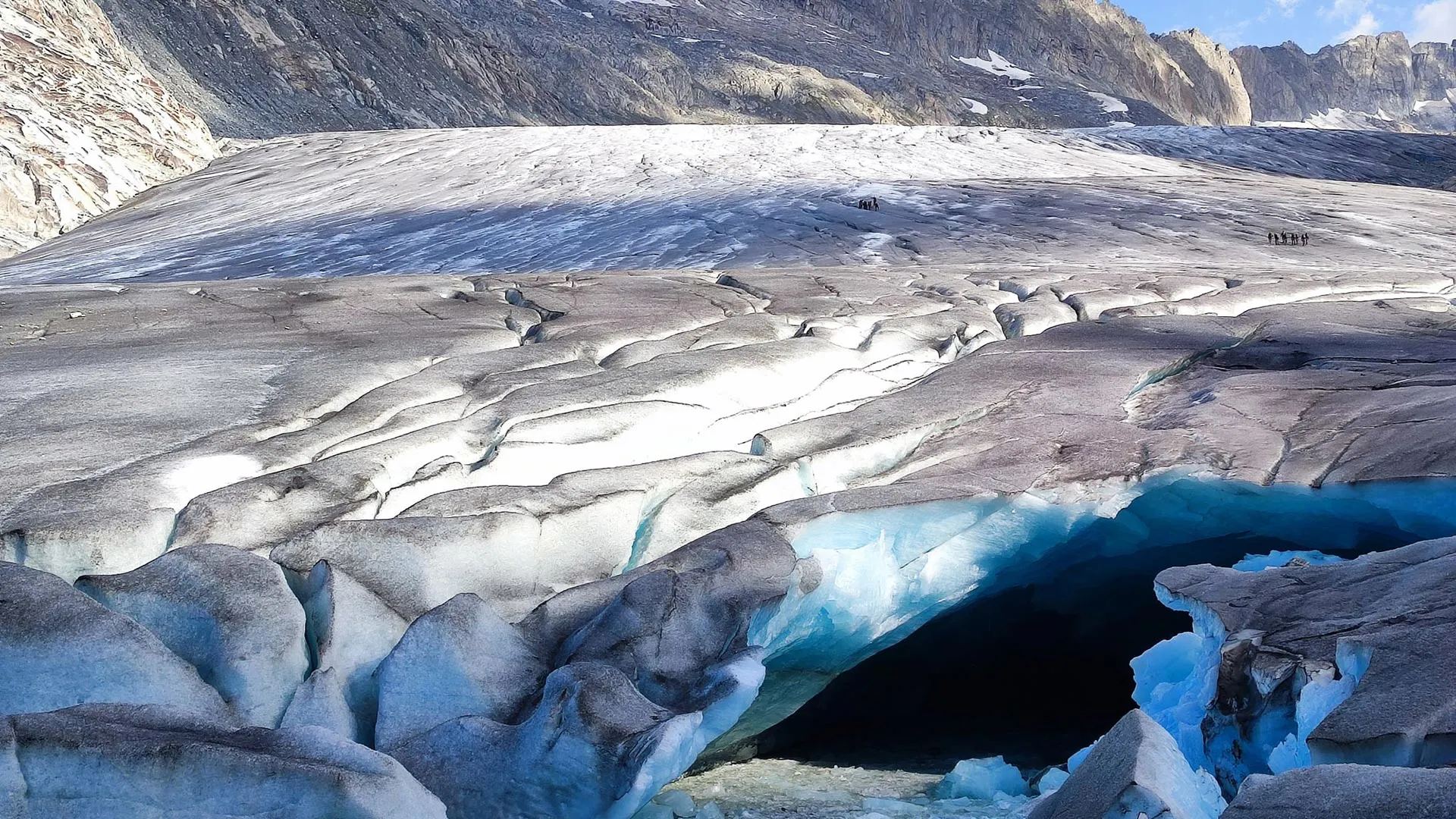
In the high-altitude reaches of the Swiss Alps, a silent, irreversible catastrophe is unfolding. The year 2026 will be etched into scientific records not merely as a warm year, but as a watershed moment for the cryosphere. According to the latest annual report from the Swiss Academy of Sciences (SCNAT), Switzerland’s glaciers—the frozen sentinels of Europe’s climate—lost more than 5% of their total ice volume in a single year. While the 2022 record remains the most severe on record, the 2026 figures confirm a grim trajectory: the glaciers are not just retreating; they are hemorrhaging.
From the iconic Aletsch Glacier to the smaller, fragile ice fields in Glarus, the transformation of the Swiss landscape is happening at a pace that has left even seasoned glaciologists alarmed. As the ice vanishes, it carries with it not just physical mass, but the hydrological security and cultural identity of the alpine nation.
The Facts: A Catastrophic Statistical Decline
The numbers released by the Glacier Monitoring Network (GLAMOS)—a collaborative effort between ETH Zurich and the universities of Fribourg and Zurich—paint a harrowing picture. In 2026, the average thinning of Swiss glaciers ranged from 2.5 to 4 meters. In more vulnerable regions, particularly at lower elevations, some glaciers experienced a staggering 10 meters of vertical ice loss.
The cumulative effect is even more sobering. Over the past five years alone, Switzerland has shed nearly 20% of its total glacier volume. This is not a gradual adjustment; it is a rapid, structural collapse of the alpine environment. Smaller glaciers, which lack the mass to withstand successive years of negative mass balance, have begun to reach their "death point." In 2026, the Bella Tola glacier in the canton of Valais and the Griessfirn in the canton of Glarus disappeared entirely from the maps, marking their permanent extinction.
Chronology of a Heat-Stressed Year
The tragedy of 2026 was not a freak occurrence but the result of a compounding series of meteorological failures.
The Winter Deficit (2025–2026)
The foundation for the 2026 losses was laid in the winter months. Switzerland experienced one of the ten least snowy winters since the commencement of reliable records. Snow acts as a protective "albedo" blanket for glaciers; its bright, white surface reflects solar radiation, keeping the underlying ice cool and insulated. Without this winter replenishment, the glaciers were left "naked" and vulnerable long before the arrival of the summer sun.
The Summer of Extremes (May–September 2026)
As spring turned to summer, the situation deteriorated rapidly. Persistent high-pressure systems parked themselves over the Alps, ushering in waves of heat that reached even the highest mountain peaks. By September, the protective snow cover had vanished even at altitudes as high as 3,500 meters, exposing dark, ancient ice to direct solar radiation.
The most telling metric of this thermal onslaught was the "zero-degree isotherm"—the altitude at which the temperature reaches 0°C. In 2026, this freezing level climbed above 4,000 meters for 76 days. This figure is more than double the historical average and established a terrifying new record for the nation. When the freezing line sits above 4,000 meters, almost every square inch of the Swiss glacier network is subjected to melting temperatures.
Supporting Data: The Anatomy of the Retreat
The GLAMOS report highlights specific "canaries in the coal mine" that serve as indicators for the broader crisis:
- The Rhone Glacier: As one of the most studied glaciers in the world, the Rhone serves as a benchmark. In 2026, its recession rates accelerated, with significant thinning observed across its entire length.
- The Aletsch Glacier: The largest glacier in the Alps, once considered immune to minor climatic fluctuations, is now showing signs of rapid fragmentation. Its lower reaches are thinning at an unsustainable rate, threatening the stability of the valley ecosystems below.
- The Clariden Glacier: Previously a site of extensive research, the Clariden has suffered extreme melting that suggests its lower sections may soon become detached from the main ice body.
These data points are aggregated by the SCNAT using a combination of satellite imagery, aerial photogrammetry, and in-situ field measurements, ensuring the findings are not anecdotal but mathematically rigorous.
Implications: The Double-Edged Sword of Meltwater
A common misconception regarding melting glaciers is that the water they release is a sign of abundance. While it is true that the melting provided a temporary buffer during the 2026 summer drought, it is a "liquidation of assets" that cannot be sustained.
The Short-Term Surplus
Between July and September 2026, the melting glaciers released approximately 2.2 trillion liters of water into the Swiss river systems. To put this into perspective, this volume is more than four times the total annual drinking water consumption of every household in Switzerland combined. This massive influx of meltwater temporarily mitigated the impact of the summer drought on agriculture and hydroelectric power generation.
The Long-Term Deficit
The danger lies in the "peak water" phenomenon. Once a glacier has shrunk past a certain point, its ability to contribute significant volumes of water to the river systems during dry spells diminishes. We are currently witnessing the final stage of this transition. As these glaciers vanish, Switzerland faces a future where the reliable, year-round water supply provided by the Alps will no longer exist. This will have profound consequences for hydroelectric production—a cornerstone of Swiss energy independence—as well as for irrigation in the agricultural valleys and the maintenance of river ecosystems during the height of summer.
Official Responses and Scientific Consensus
The Swiss Academy of Sciences (SCNAT) has issued urgent calls for policymakers to treat the glacial crisis as a core component of national climate policy. The scientific community, including researchers at ETH Zurich, emphasizes that the melting is now largely "baked in." Even if global carbon emissions were halted immediately, the current imbalance between winter snowfall and summer melting is so extreme that the glaciers would continue to shrink for decades due to their thermal inertia.
Government officials have acknowledged the findings with concern, shifting the focus toward climate adaptation strategies. This includes building new reservoirs to store water that was once naturally regulated by glaciers, as well as diversifying energy portfolios to prepare for the inevitable decline in glacial-fed hydropower.
Conclusion: A New Era for the Alps
The year 2026 will be remembered as a turning point in the history of the Swiss Alps. The loss of 5% of ice volume in a single year is not just a statistic; it is a clear warning that the alpine ecosystem is undergoing a fundamental regime shift.
The mountains, which have defined the geography and culture of Switzerland for millennia, are changing before our eyes. The glaciers are the most visible casualty of a warming world, but they are also the most reliable indicators of the health of our planet. As the ice disappears, it leaves behind a landscape that is less predictable, less stable, and less resilient. For Switzerland, the challenge now lies in managing the transition into an era where the "white gold" of the Alps is no longer a permanent feature, but a fading memory of a climate that once was.
The task ahead is two-fold: an urgent, global commitment to mitigating the drivers of climate change, and a local, pragmatic adaptation to a landscape that will never look the same again. The glaciers are vanishing, and with them, the clock is ticking on the stability of the water and energy systems that sustain modern Swiss society.