
Thousands of years after a cataclysmic event that reshaped the geological landscape, one of Earth’s most formidable supervolcanoes is showing signs of renewed life. Deep beneath the waves of the East China Sea, Japan’s Kikai caldera—the site of one of the most significant volcanic eruptions of the Holocene epoch—is slowly refilling its subterranean magma reservoir. This discovery, spearheaded by geophysicists at Kobe University, provides a rare, unprecedented window into the long-term life cycles of the planet’s most dangerous volcanic systems.
The research, published in the journal Communications Earth & Environment, offers more than just a snapshot of a single site. By detailing how fresh magma is being injected into an ancient reservoir, the study provides a critical framework for understanding how other legendary supervolcanoes, including Yellowstone in the United States and Toba in Indonesia, store the massive quantities of molten rock necessary for global-scale eruptions.
The Anatomy of a Super-Eruption: Context and Chronology
To understand the gravity of the Kikai findings, one must first grasp the sheer scale of the events that define "supervolcanoes." When a super-eruption occurs, it is not merely a mountain blowing its top; it is a landscape-altering disaster. The volume of material expelled is often so staggering that it defies conventional comprehension—enough, in some cases, to bury a city the size of New York under 12 kilometers of debris.
The Kikai Legacy
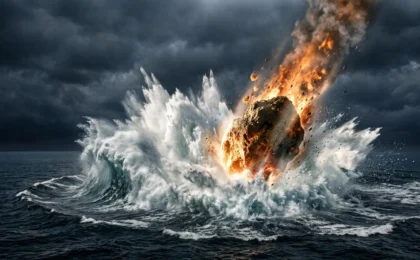
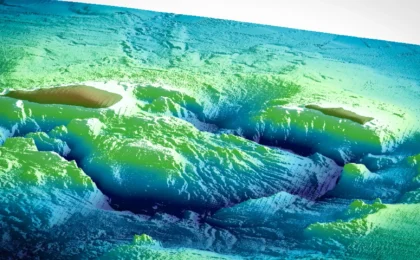
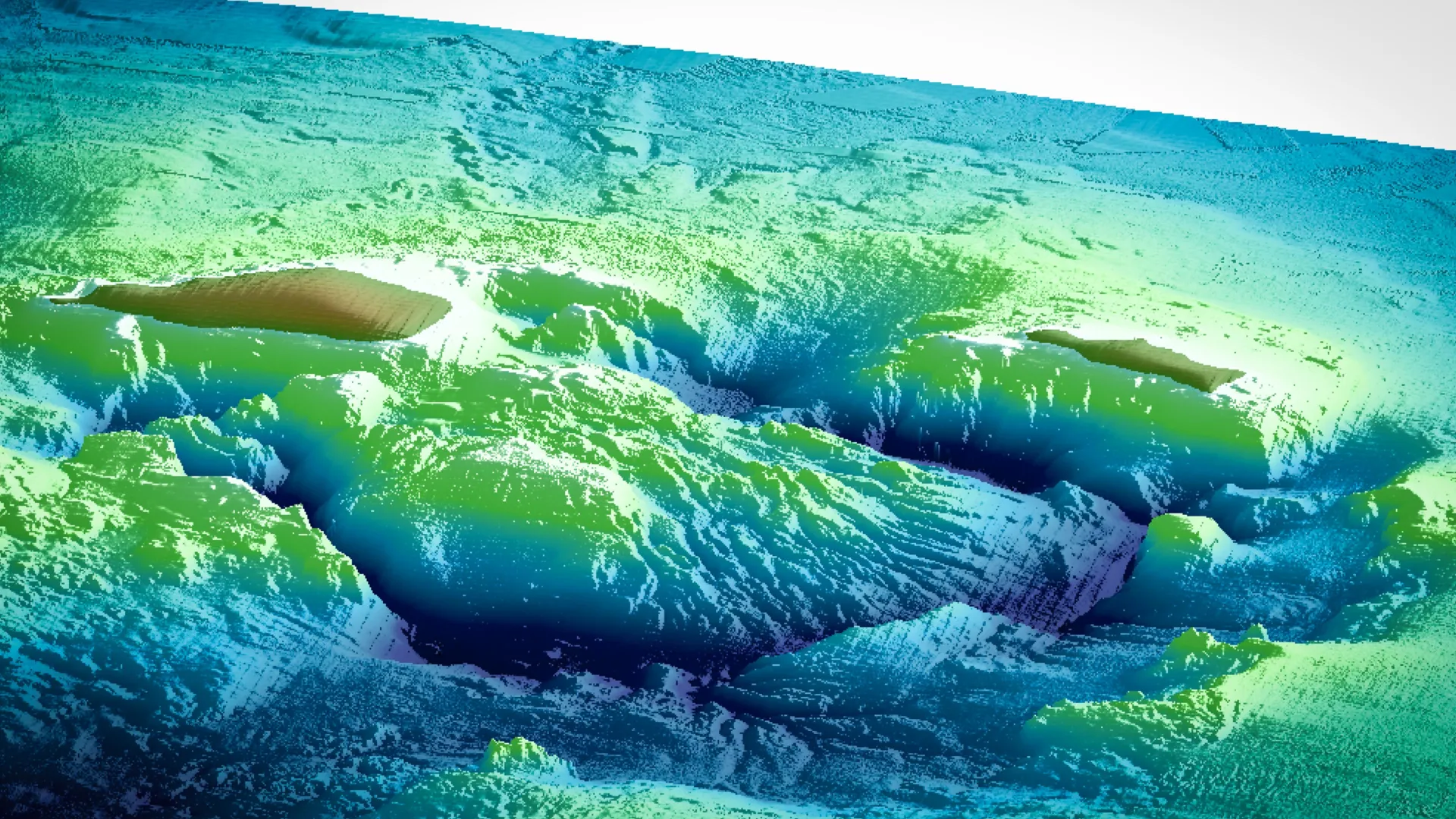
The Kikai caldera is primarily submerged, a feature that often hides its true potential from the casual observer. Roughly 7,300 years ago, Kikai unleashed a catastrophic eruption that stands as the largest volcanic event of the Holocene—the geological epoch spanning the last 11,700 years. This event was not merely a local tragedy; it was a global climate-altering milestone. Following the ejection of such a gargantuan volume of magma, the ground surface above the reservoir collapsed, creating the massive, shallow depression known as a caldera that scientists study today.
The Chronology of Recovery
- 7,300 Years Ago: The Kikai caldera experiences its massive, landscape-altering eruption.
- 3,900 Years Ago: Geological evidence suggests the onset of new activity, characterized by the growth of a lava dome near the caldera’s center.
- The Modern Era: Researchers identify that the reservoir beneath this dome is not merely a "cooling remnant" but a dynamic, recharging system.
The formation of the lava dome over the last four millennia has served as a silent, visible testament to ongoing subterranean activity. Unlike fluid lava that spreads across vast distances, a lava dome forms when thick, viscous magma is pushed upward through a vent, piling into a rounded mass. This dome is the "smoke alarm" that prompted scientists to look deeper into the earth.
Scientific Methodology: Probing the Seafloor
Studying a volcano that lies beneath the ocean presents unique challenges, but as Kobe University geophysicist Nobukazu Seama notes, it also offers distinct advantages. "The underwater location allows us to implement systematic, large-scale surveys," Seama explains. Without the interference of human infrastructure or dense vegetation, the seafloor acts as a clean canvas for geophysical instrumentation.
Seismic Tomography
To map the invisible, the team collaborated with the Japan Agency for Marine-Earth Science and Technology (JAMSTEC). They employed a sophisticated array of airguns to generate controlled, high-intensity seismic pulses. These waves traveled deep into the Earth’s crust, reflecting and refracting off various layers of rock and molten material.
A network of ocean-bottom seismometers recorded these vibrations. The principle behind the study is straightforward yet technically demanding: seismic waves behave differently depending on the medium they traverse. Solid, cold rock transmits these waves with high velocity, while regions containing magma—which is semi-molten or liquid—dampen and slow the waves down. By processing this seismic data, the team was able to reconstruct a three-dimensional model of the reservoir, revealing a substantial, high-magma-density zone directly beneath the ancient vent.
Evidence of Rejuvenation: The "Fresh Injection" Model
Perhaps the most significant finding of the study is the distinction between "leftover" magma and "newly injected" material. Chemical analysis of the lava dome and surrounding geological deposits revealed a distinct chemical signature.
The material currently being pushed to the surface is chemically different from the debris ejected during the giant eruption 7,300 years ago. This discrepancy acts as a "geochemical fingerprint." It confirms that the reservoir is not merely settling or degassing; it is being actively replenished by fresh magma rising from the deeper crust or the mantle.
"This means that the magma that is now present in the magma reservoir under the lava dome is likely newly injected magma," Seama summarizes. This process of re-injection is the vital link in the life cycle of a supervolcano. It proves that these systems are not "dead" after a major eruption; they are simply entering a dormant-to-active phase, slowly gathering the fuel required for their next potential cycle.
Implications for Global Supervolcanoes: Yellowstone and Beyond
The findings at Kikai are reverberating through the global volcanology community, particularly among those tasked with monitoring "high-risk" systems like Yellowstone in the United States and Toba in Indonesia.
The Universal Model
For decades, scientists have debated the internal architecture of supervolcanoes. Why do they contain such large, shallow reservoirs of magma? The Kikai study provides a compelling, evidence-based model: the magma re-injection process. If Kikai is successfully rebuilding its reservoir via deep-earth injections, it is highly probable that Yellowstone and Toba follow a similar, albeit complex, geological roadmap.
This model suggests that the accumulation of magma is a protracted, multi-millennial process. By identifying the chemical markers and seismic signatures of this "refill," researchers hope to create a more reliable diagnostic tool for assessing the health of supervolcanoes worldwide.
Future Directions: Moving Toward Predictive Modeling
The researchers are clear that the discovery of a recharging reservoir does not mean a catastrophic eruption is imminent. "This replenishment process does not mean that another catastrophic eruption is imminent," Seama emphasizes. "Instead, it reveals how a magma reservoir can be recharged over thousands of years."
The goal is not to incite panic, but to move toward predictive accuracy. Currently, our ability to forecast a super-eruption is hindered by a lack of data regarding the "recharge phase." If scientists can determine the rate at which fresh magma enters the system, they can better estimate the timeline for potential eruptive thresholds.
Refined Monitoring
Looking ahead, the Kobe University team plans to refine their seismic techniques to monitor these reservoirs with even greater resolution. By integrating long-term seismic monitoring with real-time chemical tracking, they aim to create a "warning system" that could alert humanity to changes in the volcanic cycle centuries or decades in advance.
The research, funded by the Ministry of Education, Culture, Sports, Science and Technology (MEXT) and the Japan Society for the Promotion of Science, represents a monumental leap in our understanding of planetary processes. By peering beneath the waves at Kikai, we are not just looking at a specific Japanese volcano—we are looking at the fundamental mechanics of the Earth itself, learning how the most powerful natural forces on our planet rebuild their strength in the quiet, dark depths of the crust.
Ultimately, the study serves as a humbling reminder of the Earth’s dynamic nature. While super-eruptions are rare on a human timescale, they are an inevitable part of our planet’s long-term geological story. By deciphering the language of seismic waves and chemical signatures, humanity is slowly learning to read the history—and the future—of these sleeping giants.