The landscape of Magic: The Gathering Arena is set for a seismic shift. In October 2026, Wizards of the Coast officially announced the upcoming retirement of the Alchemy format, scheduled for early 2027. This decision marks the end of a five-year experiment that pushed the boundaries of what a card game could be when unshackled from the physical constraints of cardboard. Since its inception in 2021, Alchemy served as a controversial, innovative, and ultimately polarizing laboratory for digital-native card design. As the format prepares to sunset, it is time to evaluate the impact of a system that introduced mechanics like Conjure, Seek, and Perpetual—and forced a fundamental reckoning with the identity of Magic itself.
The Genesis of Alchemy: A Digital Frontier
When Wizards of the Coast launched Alchemy in late 2021, the intent was clear: create a space where the digital nature of MTG Arena was a feature, not a limitation. In traditional Magic, a card is static; once printed, its text is immutable. If a card proves too powerful, developers are forced to ban it, removing it from the format entirely.
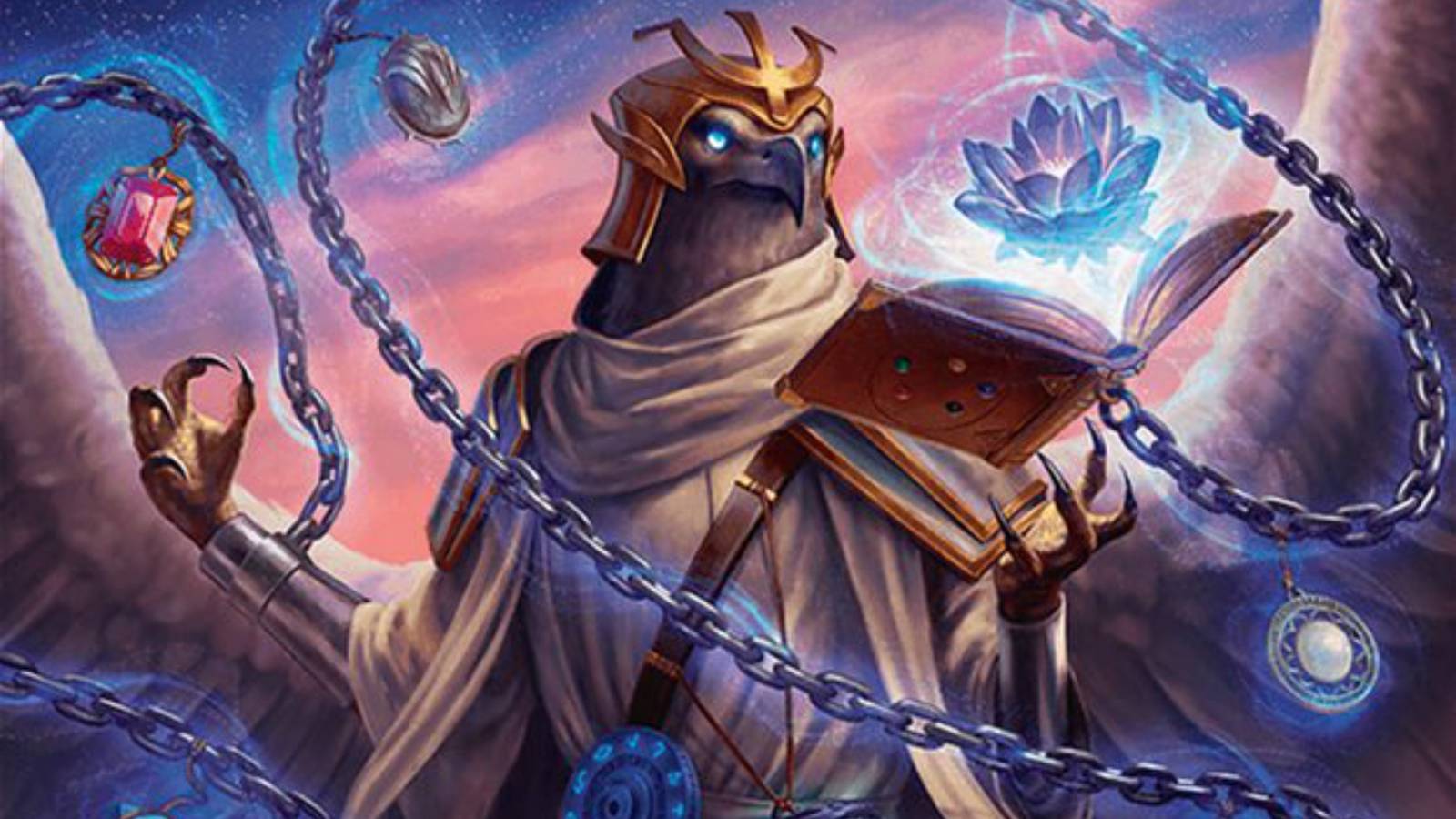
Alchemy proposed a different path. By leveraging the digital infrastructure of Arena, developers could perform "live rebalancing." They could nerf a card’s stats, tweak its mana cost, or adjust its triggers without removing it from the player’s collection. This allowed for a hyper-dynamic metagame that reacted to power-level spikes in real time. For the design team, it was a dream: the ability to test complex mechanics that would be physically impossible to track on a tabletop, such as drafting the "Power Nine" cards out of thin air or permanently altering a card’s properties across zones.
Chronology of a Controversial Format
The history of Alchemy is a timeline of rapid iteration and community friction.

- 2021 (The Launch): Alchemy debuts alongside Alchemy: Innistrad. The introduction of digital-only mechanics like "Seek" (which fetches a random card from your library based on specific criteria) immediately creates a divide in the community.
- 2022 (Expansion and Integration): The format expands into Alchemy: Kamigawa and Alchemy: Dominaria. During this period, cards like Oracle of the Alpha—which injected vintage-tier power into the format—showcased the ceiling of Alchemy’s design potential.
- 2023 (The Peak of Friction): With the release of Alchemy: The Brothers’ War, powerhouse cards like Crucias, Titan of the Waves dominated the landscape. This era saw the most aggressive use of rebalancing, as the development team struggled to keep the "Grixis Midrange" archetypes in check.
- 2026 (The Sunset Announcement): After years of balancing the "purist" desire for paper-faithful experiences against the "digital-first" proponents, Wizards of the Coast announces the retirement of the format, citing a shift in focus toward the growing popularity of formats like Timeless and the long-term sustainability of Arena’s curated queues.
Supporting Data: The Mechanics of Chaos
To understand the Alchemy experiment, one must look at the cards that defined it. These ten cards serve as the primary case studies for how digital-native design shifted the game’s trajectory.
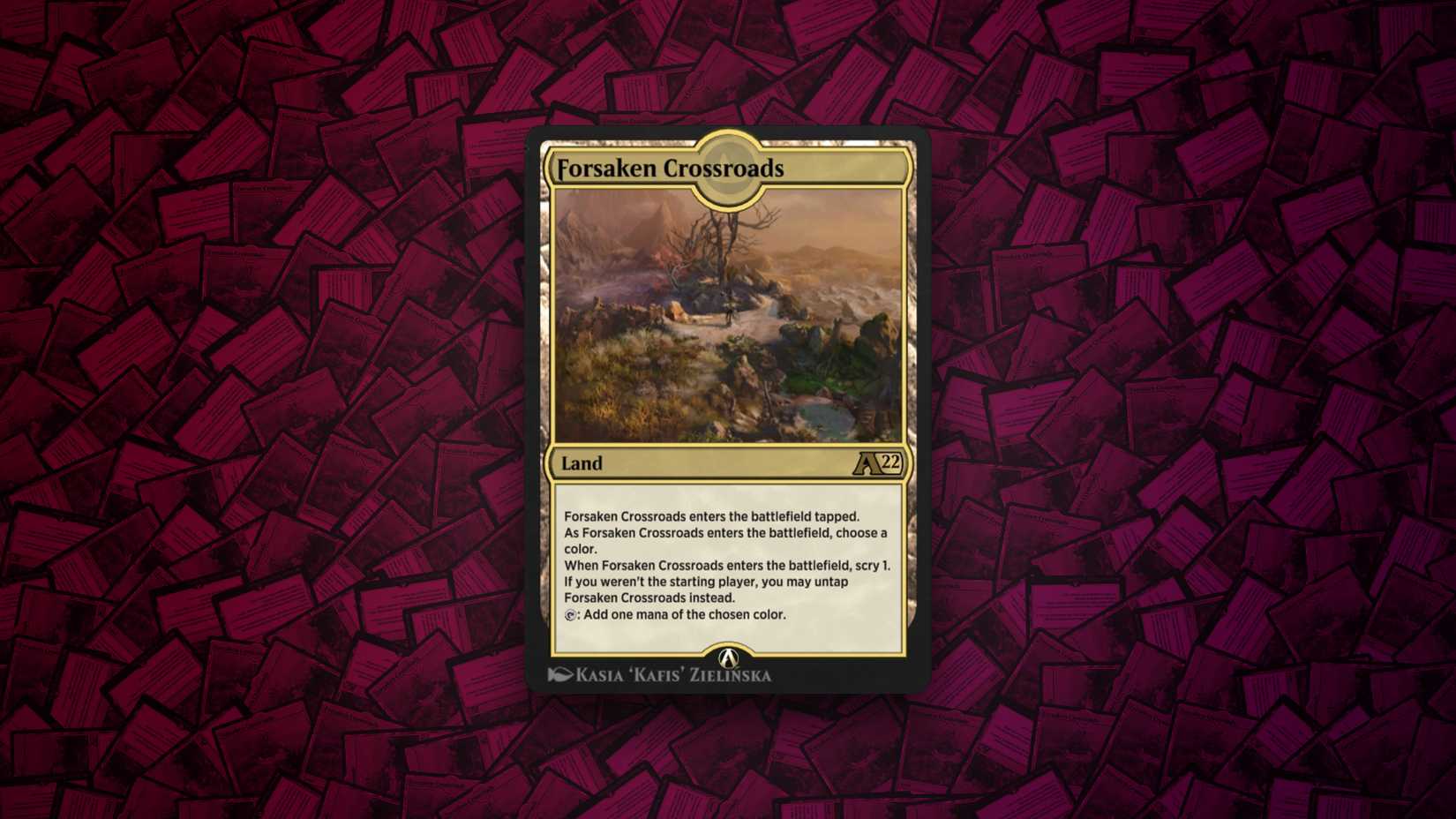
1. Forsaken Crossroads (Alchemy: Innistrad)
Often cited as one of the most elegant designs in the format, Forsaken Crossroads was an admission of a fundamental Magic flaw: the win-rate disparity between the player going first and the player going second. By allowing the player who draws second to untap the land immediately, Wizards acknowledged that digital tools could be used to solve structural imbalances in the game’s core rules.
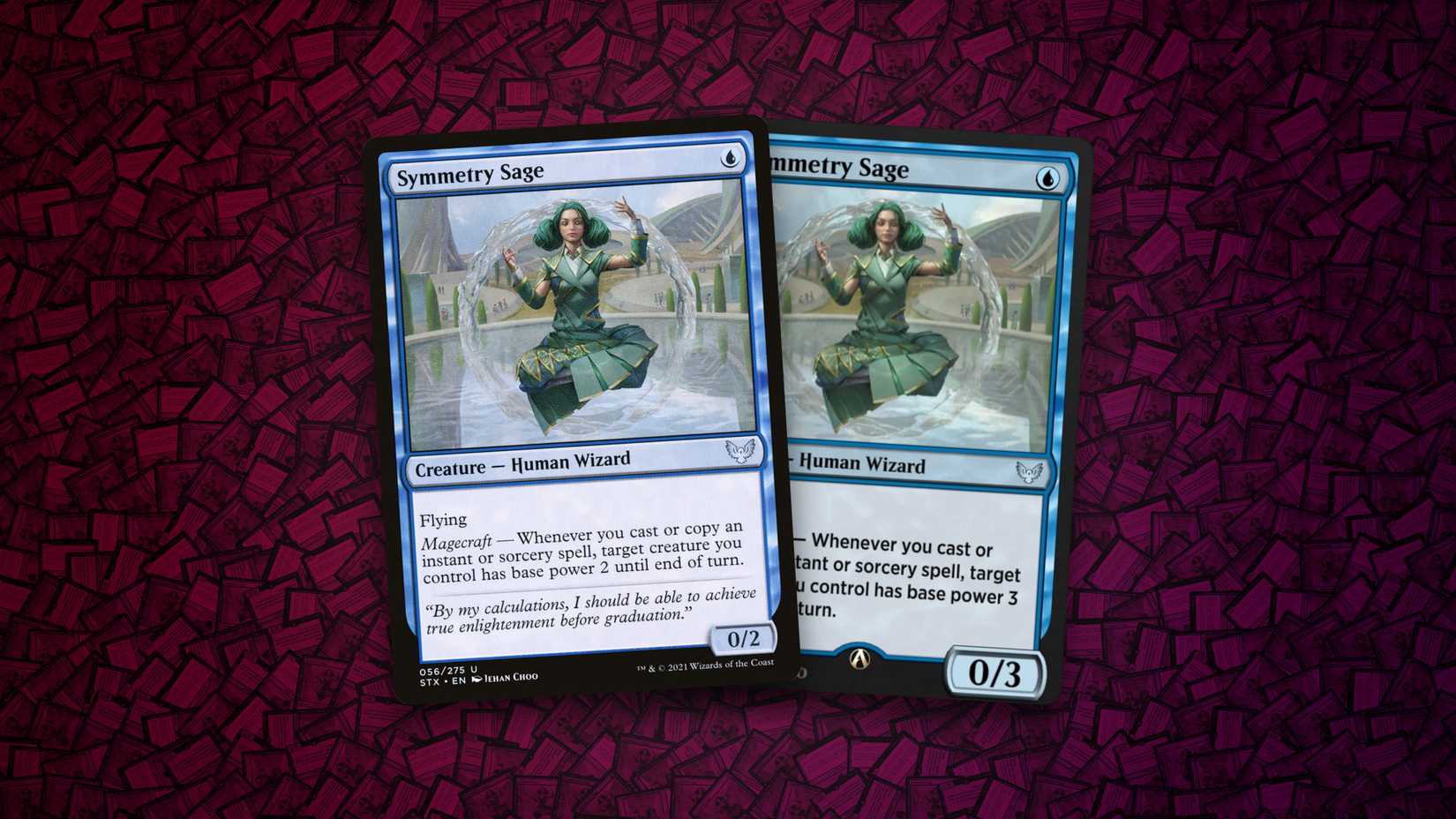
2. Symmetry Sage (Adventures in the Forgotten Realms)
Symmetry Sage represents the rebalancing philosophy. By changing a 0/2 into a 0/3, Wizards turned a fringe card into a cornerstone of aggressive blue strategies. This demonstrated that digital patches could breathe new life into "bulk" cards that would otherwise remain unplayable.
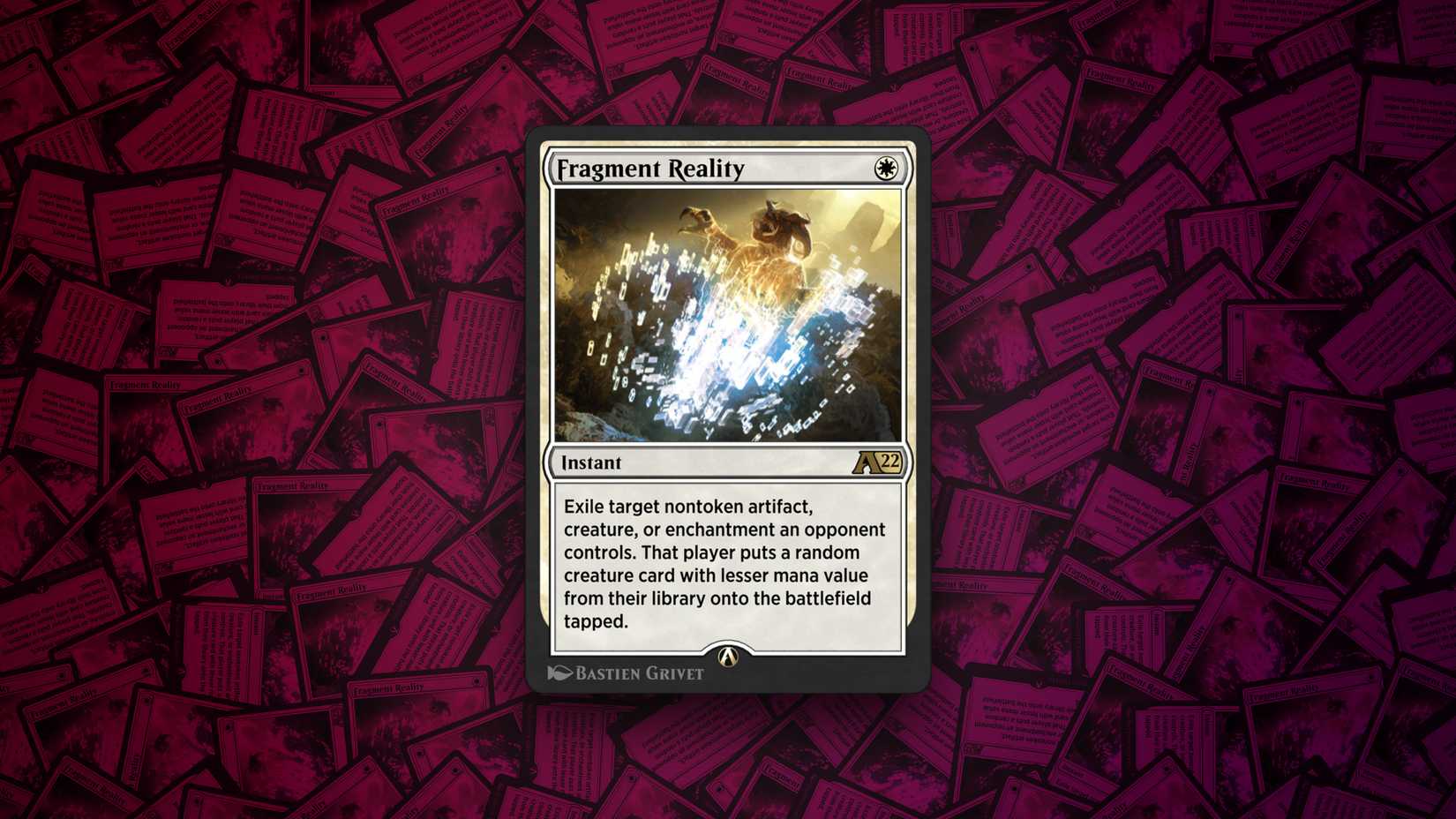
3. Fragment Reality (Alchemy: Kamigawa)
This card highlighted the "gambling" aspect of Alchemy. While powerful, the downside of giving the opponent a random creature from their library forced players to weigh efficiency against risk. It eventually required a rebalance, serving as a perfect example of the "trial-and-error" design loop.
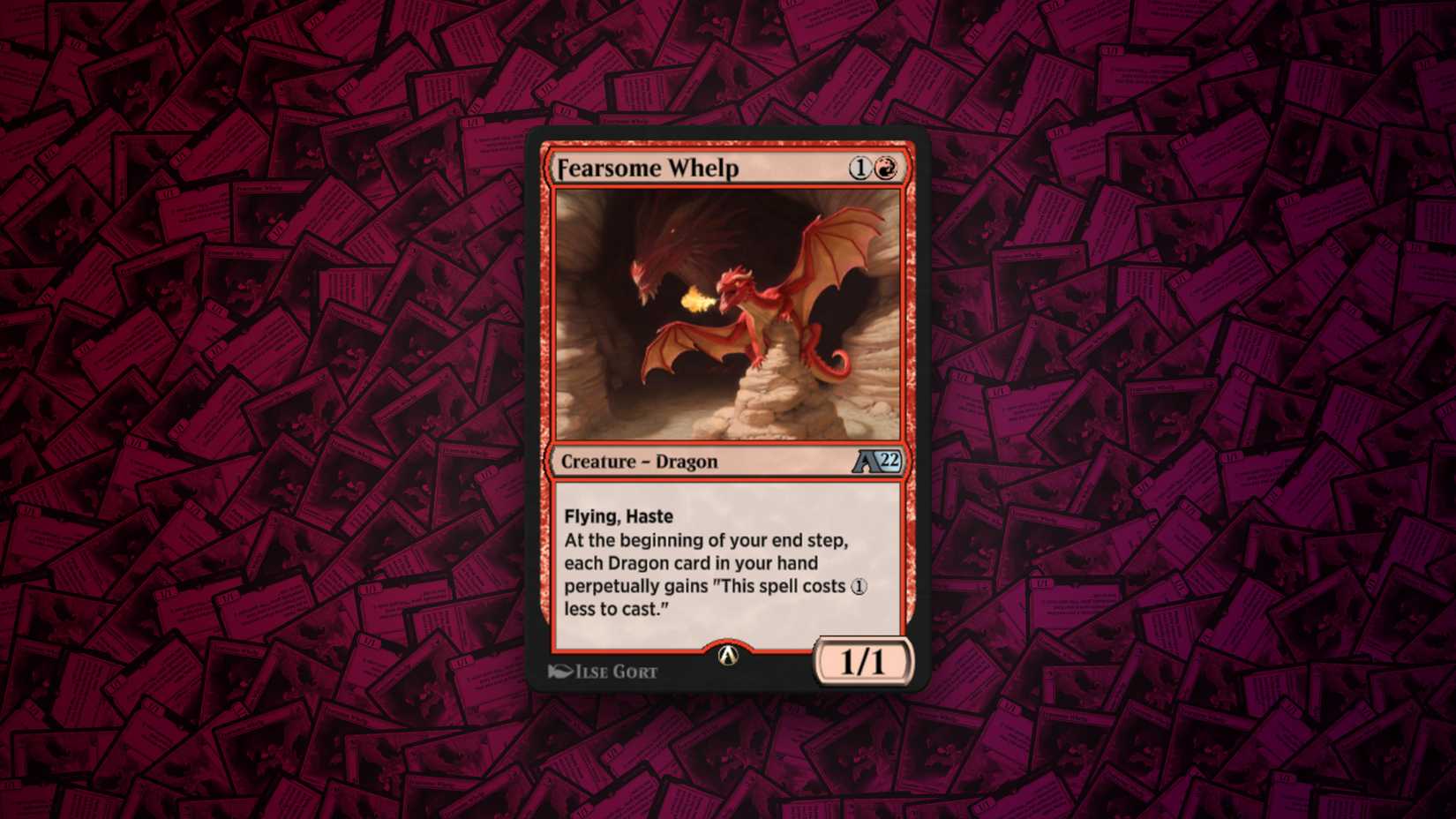
4. Fearsome Whelp (Alchemy: Innistrad)
Tribal decks have always been a staple of Magic, but Fearsome Whelp allowed for a scaling, snowballing effect that became a hallmark of the format. It proved that digital triggers could create "must-answer" threats that evolved in power as the game progressed.
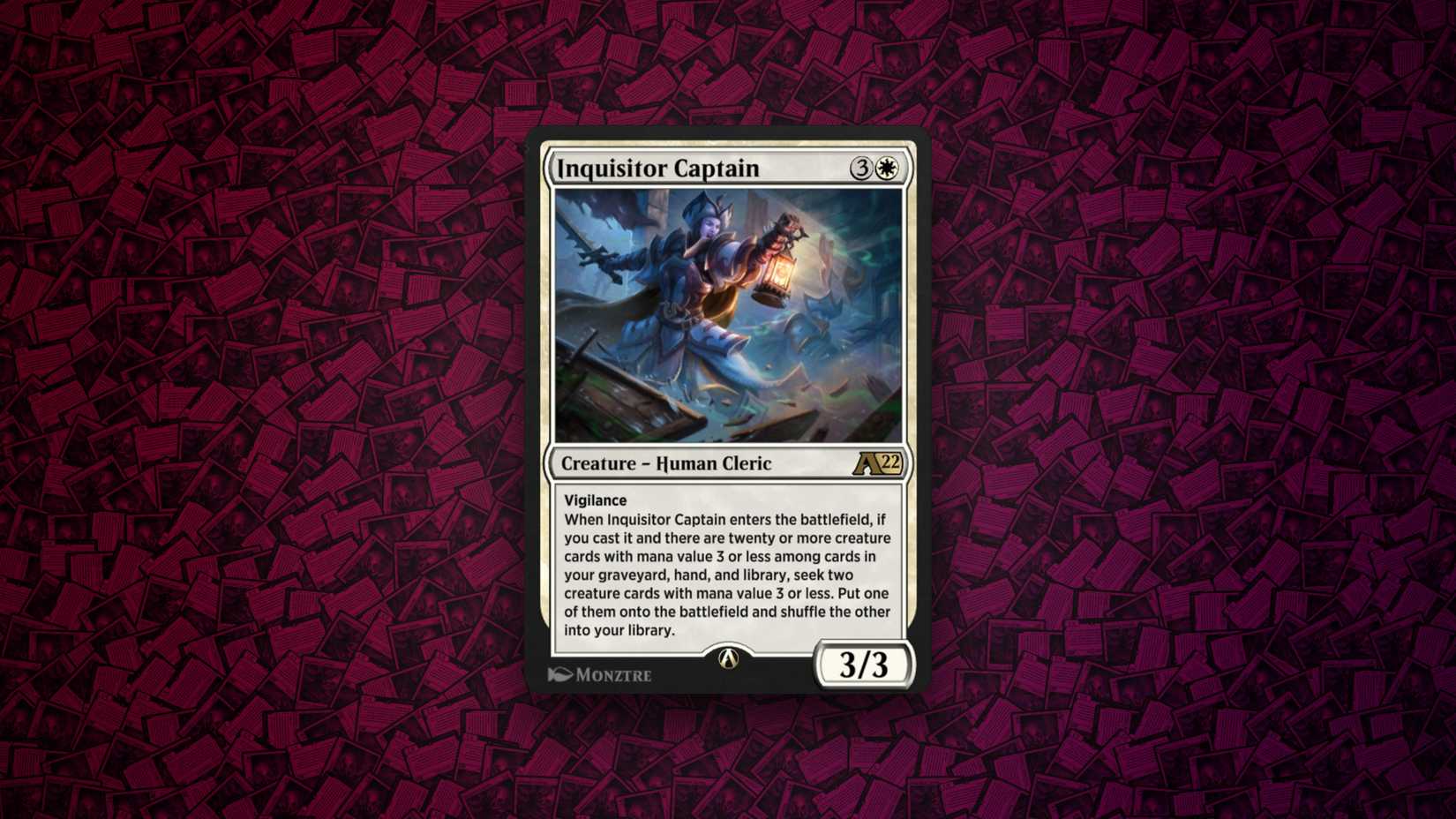
5. Inquisitor Captain (Alchemy: Innistrad)
The Captain was a masterclass in value generation. By using "Seek" to pull creatures from the library, it rewarded deck-building discipline. It showed how digital cards could act as engines that were much more consistent—and thus harder to balance—than their physical counterparts.
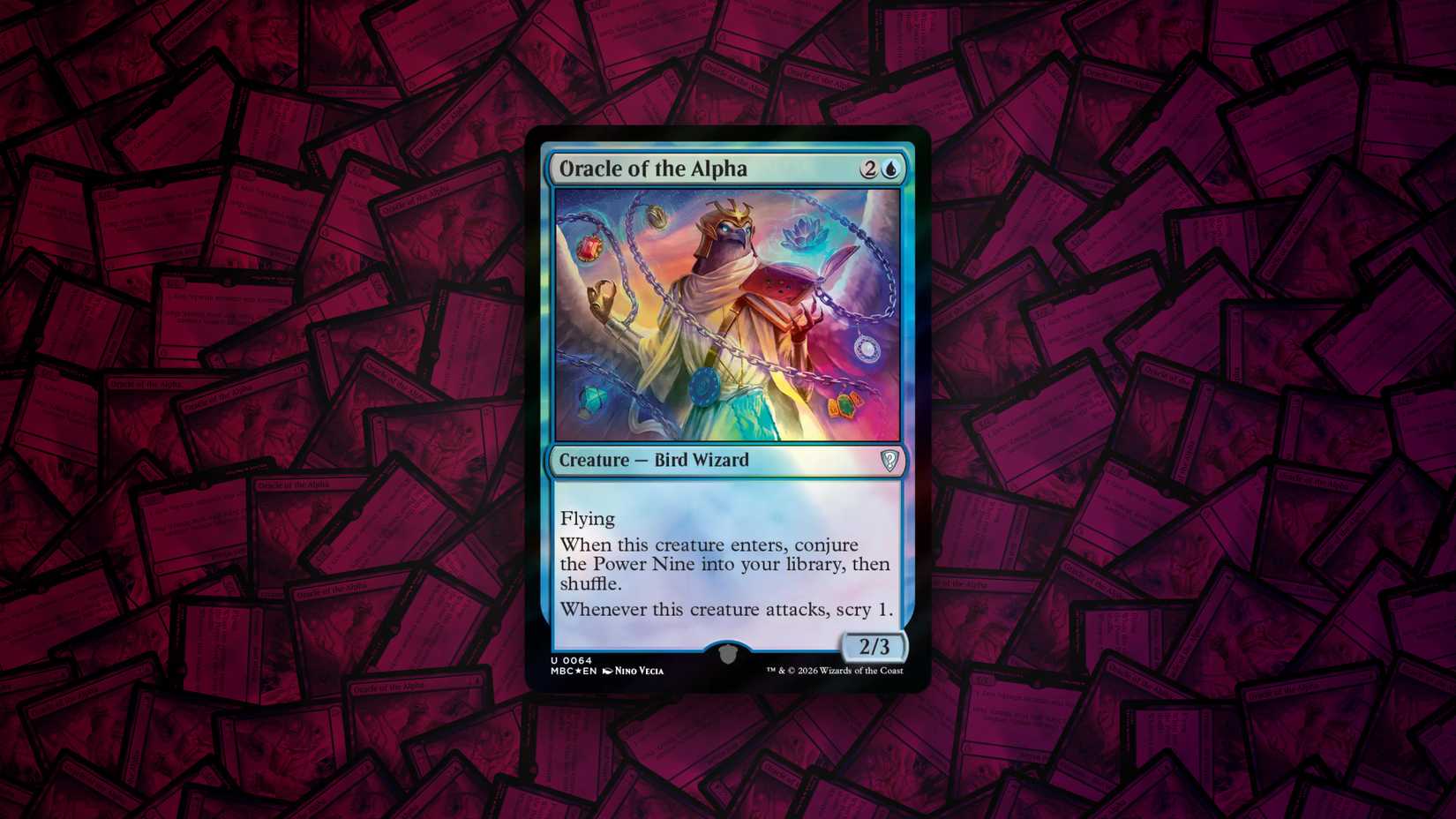
6. Oracle of the Alpha (Alchemy: Dominaria)
Perhaps the most "fun" card in the format’s history, Oracle of the Alpha allowed players to conjure the fabled Power Nine. It served as a reminder that Arena could provide experiences that were forbidden in the tabletop game due to cost and rarity.
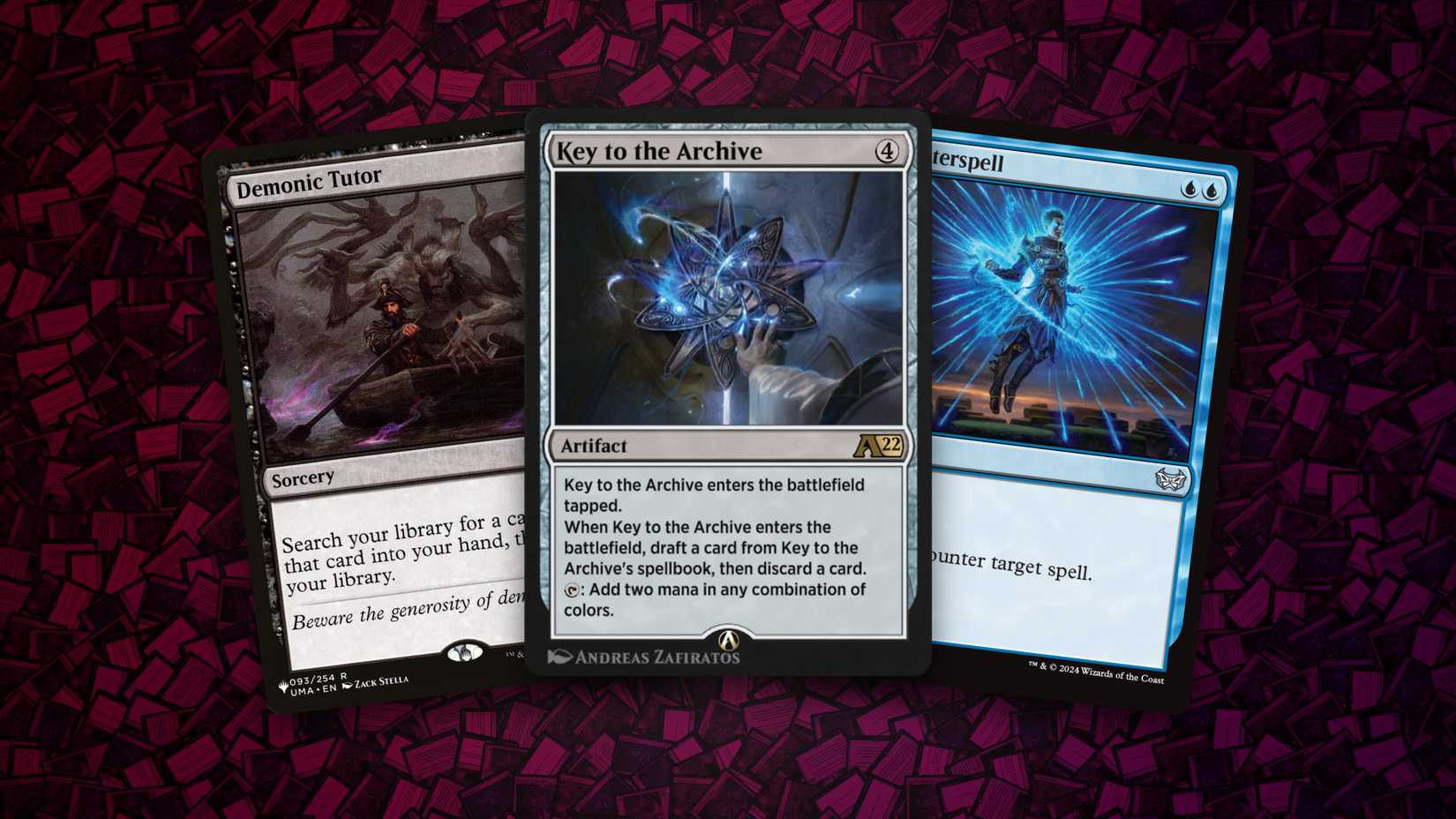
7. Key to the Archive (Alchemy: Innistrad)
This artifact served as a portal to Magic’s history. By giving players access to Demonic Tutor or Time Warp, it demonstrated that digital formats could act as a "greatest hits" compilation of Magic’s most broken spells, contained within a controlled environment.
8. Town-Razer Tyrant (Alchemy: Innistrad)
A nightmare for land-heavy decks, the Tyrant forced players to consider their mana base more carefully than ever before. Its multiple rounds of rebalancing solidified its place as the "poster child" for the need for digital oversight in competitive play.
9. Rusko, Clockmaker (Alchemy: The Brothers’ War)
Rusko was the embodiment of "Alchemy fatigue." A single card that generated mana, gained life, and drained opponents simultaneously, it illustrated how digital-only mechanics could become overwhelmingly complex and oppressive if not checked.
10. Crucias, Titan of the Waves (Alchemy: The Brothers’ War)
The ultimate Grixis engine. Crucias provided unparalleled card selection and resource generation. When it was nerfed from a 3/3 to a 3/1, it signaled the end of the "wild west" era of Alchemy and the beginning of more cautious, refined design.
Official Responses and Strategic Shifts
Wizards of the Coast has framed the retirement of Alchemy as a transition rather than a failure. In their State of the Formats address, the development team emphasized that the lessons learned from Alchemy—specifically regarding the "spellbook" mechanic and the ability to track permanent changes to cards—will be integrated into the broader Arena ecosystem.
"Alchemy was our sandbox," said a lead developer in a recent press statement. "It taught us that players enjoy the speed of digital, but they also value the history and consistency of paper. We are moving toward a future where these digital lessons enhance our permanent formats like Historic and Timeless, rather than existing in a siloed queue."
Implications for the Future of MTG Arena
The end of the Alchemy queue does not mean the end of digital-only cards. Instead, the legacy of this era is likely to live on in "Eternal" digital formats. Players can expect to see digital-only cards continue to appear in Arena, but they will likely be integrated more carefully into formats where the power level is already high, such as Timeless or Brawl.
The most significant implication of the Alchemy era is the normalization of the "Living Card Game" model for Magic. By experimenting with frequent rebalancing, Wizards has shifted the expectation of the player base. Players now expect that a broken interaction will be addressed quickly, and they have become more comfortable with the idea that a card they own might have its text changed overnight.
Ultimately, Alchemy was a bold, necessary, and ultimately polarizing chapter in the story of Magic: The Gathering. It broke the seal on the digital potential of the world’s oldest trading card game. While the specific format may be retiring, the "Alchemy mindset"—the willingness to iterate, to patch, and to experiment with the impossible—is now firmly embedded in the DNA of MTG Arena. As we move toward 2027, the question is no longer whether digital design has a place in Magic, but how Wizards will refine these tools to create a more balanced and exciting experience for the next generation of players.