The intersection of high-technology surveillance and law enforcement ethics has reached a critical flashpoint in Southwest Ohio. A veteran police lieutenant in Sharonville, a suburb of Cincinnati, now faces a felony indictment following allegations that he weaponized a sophisticated license plate reader system to track an individual for personal reasons. The case against Lieutenant Walter Cordes is not merely a local disciplinary matter; it has become a centerpiece in the national debate over the "surveillance industrial complex" and the safeguards—or lack thereof—governing the tools used by modern police departments.
Main Facts: The Indictment of Lieutenant Walter Cordes
On October 13, a Hamilton County grand jury returned a felony indictment against 48-year-old Walter Cordes, a high-ranking officer with the Sharonville Police Department. Cordes is charged with one count of unauthorized use of a computer, cable, or telecommunication property. Under Ohio Revised Code, this is classified as a fifth-degree felony, a serious criminal designation that carries a potential sentence of up to 12 months in a state prison.
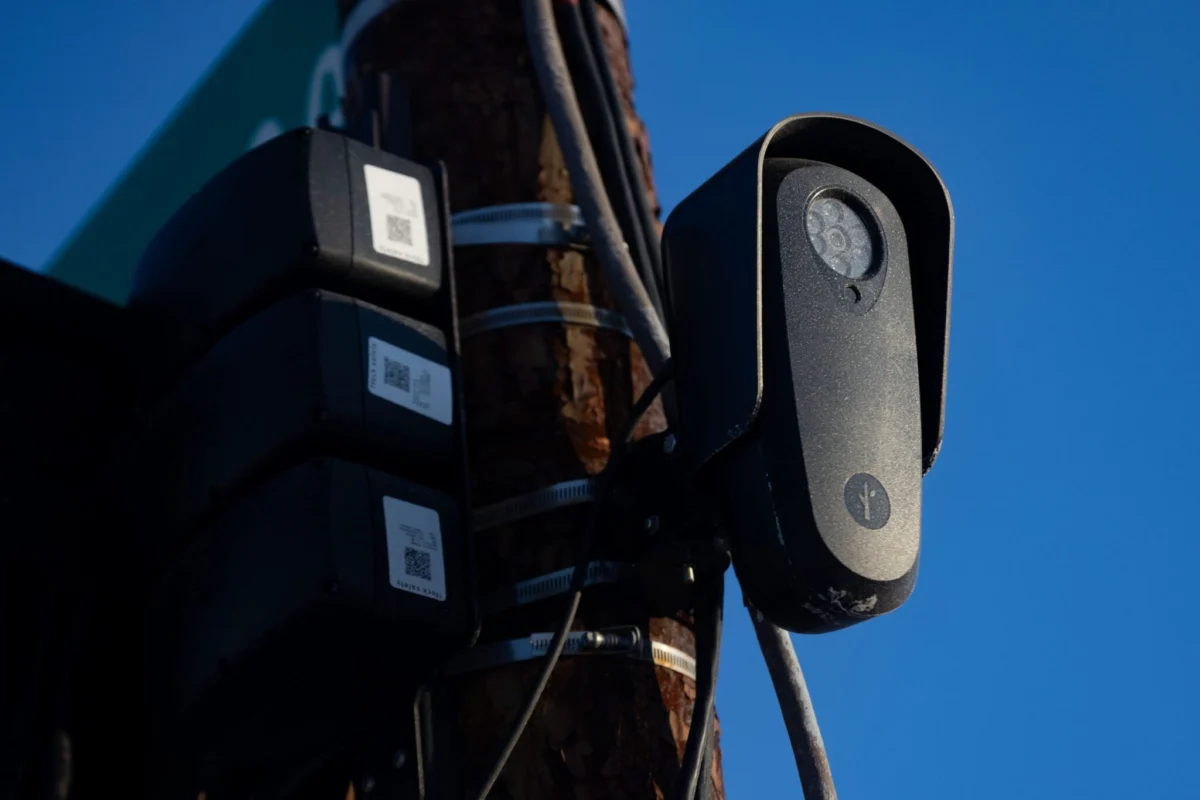
The crux of the prosecution’s case involves the alleged misuse of the "Flock Safety" system—a pervasive network of Automated License Plate Recognition (ALPR) cameras. According to the Hamilton County Prosecutor’s Office, Cordes utilized the department’s access to the Flock database to conduct 29 unauthorized searches over a period of approximately 16 months. Prosecutors allege these searches were conducted to monitor the movements and whereabouts of a specific individual known to Cordes, and were entirely divorced from any legitimate law enforcement objective or active investigation.
While the identity of the person tracked has been withheld by officials to protect their privacy, the frequency and duration of the searches suggest a pattern of persistent digital surveillance. The indictment represents a landmark case for the region; Hamilton County Prosecutor Connie Pillich confirmed that Cordes is the first law enforcement official her office has charged with misusing this specific technology since she assumed her role.
Chronology: From Unauthorized Searches to Criminal Charges
The timeline of the alleged misconduct and the subsequent investigation reveals a slow-burning breach of protocol that eventually collapsed under the weight of internal oversight.
The Period of Misuse (December 2024 – April 2026)
The unauthorized activity began in late 2024. Between December 19, 2024, and April 20, 2026, Cordes allegedly accessed the Flock system repeatedly. During this time, the Sharonville Police Department maintained a contract for 24 Flock cameras, which are strategically positioned to capture the license plates, makes, models, and colors of vehicles entering and exiting the jurisdiction.
The June Audit and Self-Reporting
The breach did not come to light through a victim’s complaint, but rather through an internal administrative check. In June 2026, the Sharonville Police Department conducted a routine audit of its Flock system usage. According to Sharonville Police Chief Jim Nesbit, the audit was designed to ensure that every search performed by officers was tied to a valid case number or a documented investigative purpose.
During this audit, several instances of "improper use" were identified across the department. While most were handled through internal disciplinary measures, the severity of Cordes’ activity stood out. In a surprising turn, Cordes self-reported his actions during the audit process and subsequently admitted to the misuse during an interview with department leadership.
The Investigation and Administrative Leave
Following Cordes’ admission, Chief Nesbit recognized the potential criminal nature of the violations and referred the matter to the Hamilton County Sheriff’s Office to ensure an impartial investigation. As the Sheriff’s Office built the criminal case, the Sharonville Police Department placed Cordes on administrative leave. He remains on leave as the department concludes its own internal affairs investigation, which will determine his future employment status regardless of the criminal trial’s outcome.
The Grand Jury Indictment
After months of review by the Hamilton County Prosecutor’s Office, the evidence was presented to a grand jury. The indictment on October 13 officially moved the case from an internal police matter to the criminal justice system.
Supporting Data: The Rise of Flock Safety and the Scope of Misuse
To understand the gravity of the Cordes case, one must examine the technology at the center of the controversy. Flock Safety is an $8 billion startup backed by prominent venture capital firms including Andreessen Horowitz (a16z) and Tiger Global. The company has revolutionized policing by providing affordable, cloud-based ALPR systems to thousands of small and mid-sized police departments across the United States.
The Power of the "Searchable Universe"
Unlike traditional traffic cameras, Flock’s AI-driven system allows officers to search for vehicles based on specific attributes even if they don’t have a license plate number. An officer can search for a "red pickup truck with a bumper sticker" or a "silver sedan with a roof rack." Furthermore, the system allows for "hot list" alerts, where police are notified in real-time if a specific vehicle passes a camera.
While Flock argues that its technology is a "force multiplier" for solving crimes like amber alerts and stolen vehicle recoveries, privacy advocates argue it creates a "searchable universe" of law-abiding citizens’ movements.
National Patterns of Abuse
The Cordes indictment is part of a troubling surge in ALPR-related criminal charges across the country:
- Indianapolis, Indiana: In September 2026, five police officers were charged with misusing Flock cameras. In one egregious instance, an officer allegedly tracked his ex-wife’s vehicle more than 950 times over a six-month span.
- Joliet, Illinois: In early October 2026, former Lieutenant Jeremy Harrison was charged with computer tampering and official misconduct for similar misuse of the city’s Flock system.
- Arizona Backlash: In August 2026, the cities of Tempe and Cave Creek abruptly terminated their contracts with Flock Safety. Cave Creek officials specifically cited "privacy concerns and cases of misuse" as the primary drivers for their exit.
Local Statistics and Market Penetration
In the Greater Cincinnati area, the adoption of Flock was initially rapid. However, the tide has begun to turn. Investigative reports from WVXU indicate that several local jurisdictions have recently halted or canceled their contracts. Notably, the Hamilton County Sheriff’s Office—the very agency that investigated Cordes—has also moved away from the technology, citing concerns over the potential for abuse and the lack of stringent third-party oversight.
Official Responses: Accountability and Public Trust
The reaction from local leadership has been a mixture of disappointment and a firm commitment to procedural integrity.
Hamilton County Prosecutor Connie Pillich emphasized the symbolic weight of the case. “When technology is misused, it undermines public trust,” Pillich stated. “The public grants law enforcement extraordinary powers and access to sensitive data with the expectation that it will be used solely for the protection of the community. When an officer uses those tools for personal whims or to track individuals, they break that fundamental covenant.”
Sharonville Police Chief Jim Nesbit sought to reassure the public that the department’s internal safeguards worked, even if they revealed uncomfortable truths. He noted that the audit which caught Cordes was a proactive measure intended to maintain the department’s high standards. "Lt. Cordes came forward to share that he too had misused the system," Nesbit told local media, framing the discovery as a success of the department’s "checks and balances" system.
Rich Krummen, President of Fraternal Order of Police (FOP) Lodge 74, expressed the shock felt within the ranks. While he acknowledged the gravity of the charges, he pointed to the audit process as proof that the system is capable of self-regulation. “People I’ve spoken with were shocked,” Krummen told FOX19, “but that’s why we have checks and balances. No one is above the rules, and the system identified the anomaly.”
For its part, Flock Safety has generally declined to comment on specific criminal cases involving its users. However, the company has previously defended its platform by highlighting its "Audit Assistance" tool, which is designed to flag unusual search patterns for administrators. A spokesperson for Flock previously stated that the company is "adding customers far faster than it loses them," maintaining that the benefits of the technology in solving violent crimes outweigh the risks of individual officer misconduct.
Implications: The Future of Surveillance and Privacy
The indictment of Lieutenant Cordes serves as a cautionary tale for the "smart city" era of policing. It highlights several critical implications for the future of law enforcement and civil liberties.
The "Insider Threat" to Privacy
The primary takeaway from the Sharonville case is that the greatest threat to privacy often comes from within the institutions trusted to protect it. While much of the debate around ALPR technology focuses on data breaches from external hackers, the Cordes case proves that "authorized users" are often the ones committing the most invasive breaches. Without strict, real-time auditing and independent oversight, the temptation to use these systems for "off-book" surveillance remains high.
The Erosion of Consent
Unlike traditional police work—such as obtaining a warrant to place a GPS tracker on a car—ALPR systems operate on a "collect everything, ask questions later" model. Most citizens are unaware that their daily commutes are being logged into a searchable database that can be accessed by any officer with a login. The Cordes incident reinforces the argument that the lack of judicial oversight in the initial data collection phase makes the system ripe for abuse.
Legislative and Policy Reform
This case is likely to spark calls for legislative action in the Ohio General Assembly. Current laws regarding "unauthorized use of a computer" were often written before the advent of AI-driven mass surveillance. There is a growing movement to mandate that all ALPR searches be tied to a specific, active criminal case number at the software level, preventing "blind searches" of the database.
The Impact on Recruitment and Retention
For police departments already struggling with recruitment and public image, the felony indictment of a high-ranking officer like a lieutenant is a significant blow. It complicates the narrative of professional modernization and may lead to increased friction between police unions and departments over the implementation of intrusive monitoring of the officers themselves.
In conclusion, the case of The State of Ohio v. Walter Cordes is more than a trial of one man; it is a trial of a system. As the 29 unauthorized searches are parsed in a courtroom, the public will be forced to weigh the convenience of automated policing against the inherent risks of a digital panopticon. Whether "checks and balances" are enough to save the reputation of high-tech surveillance remains an open, and increasingly urgent, question.