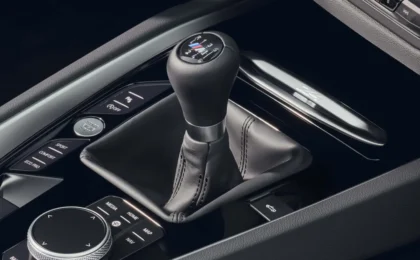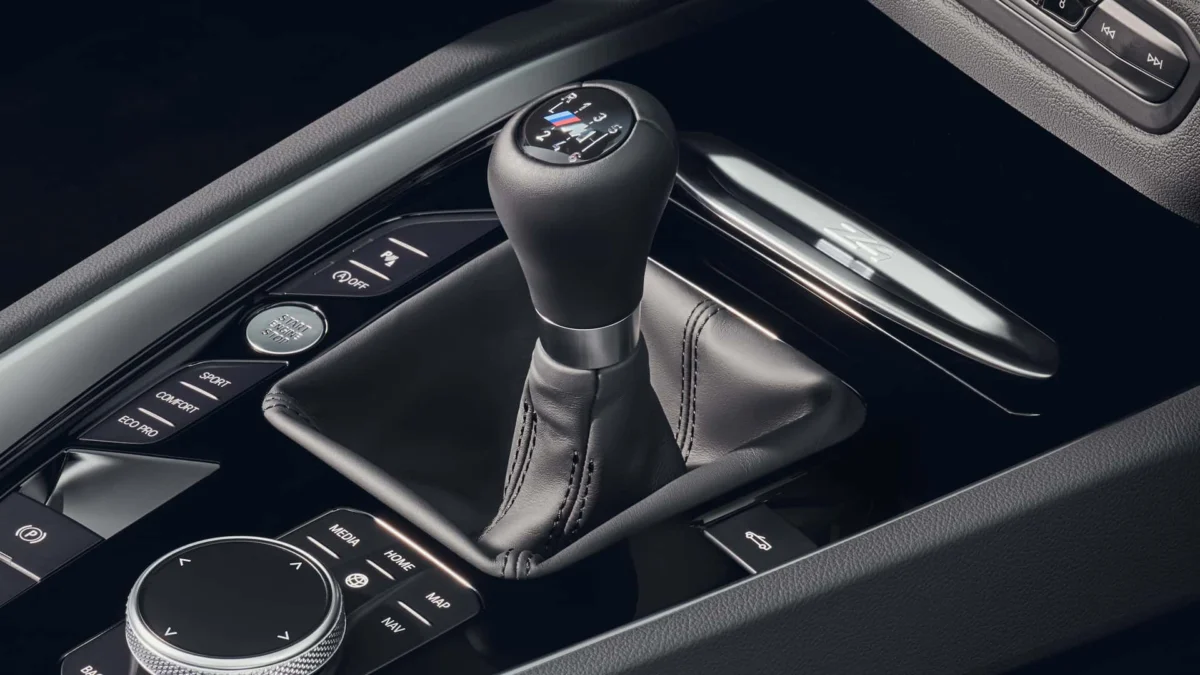
For decades, the manual transmission has been the beating heart of the BMW M division. It is the tactile connection that defines the "Ultimate Driving Machine" for the purist, a mechanical bridge between driver and engine that no lightning-quick dual-clutch or refined automatic can replicate. However, the future of this iconic configuration has reached a critical juncture.
In a recent, candid conversation with BMW Blog, Frank van Meel, the head of BMW M, provided the most nuanced assessment of the manual transmission’s future to date. While he stopped short of issuing a death warrant for the stick-shift, his comments underscored a harsh reality: the era of the three-pedal setup is facing an existential threat driven by tightening emissions regulations, rising torque demands, and the relentless march of hybridization.
The State of the Stick: Not Canceled, Yet Not Guaranteed
When asked about the future of the manual gearbox, Frank van Meel was definitive in his refusal to commit to its survival, yet equally adamant that it has not been officially retired. "No, it is not off the table," van Meel stated. However, he balanced this glimmer of hope with the pragmatic acknowledgment that maintaining the manual in the M-car portfolio is becoming increasingly difficult.
This "will they, won’t they" dynamic reflects a broader struggle within the automotive industry. As manufacturers transition toward electrified powertrains to meet global carbon targets, the manual transmission—a technology that predates the modern electronic architecture of the car—finds itself at odds with the demands of high-performance engineering. Van Meel’s refusal to make promises is a strategic move, allowing BMW to navigate the emotional weight of its enthusiast base while managing the technical constraints of future model development.
A Chronology of the Manual’s Decline
To understand the current precarious position of the manual transmission, one must look back at the trajectory of the M division over the last decade.
- The Golden Era: For years, nearly every M car—from the M3 and M4 to the M5 and M6—offered a manual transmission as a standard or optional feature. It was considered a hallmark of the brand’s driver-focused philosophy.
- The Shift to Performance: As engine outputs grew, particularly with the introduction of the S58 twin-turbocharged engine, the sheer torque produced by modern M engines began to exceed the physical limits of existing manual gearboxes. This necessitated the "Competition" model strategy, where base models offered a stick-shift, while higher-performance variants were paired exclusively with ZF eight-speed automatic transmissions.
- The Hybridization Hurdle: The introduction of 48-volt mild-hybrid systems has introduced a new layer of complexity. These systems, designed to improve fuel efficiency and provide instant torque fill, require intricate integration with the transmission. Syncing these systems with a traditional manual clutch has proven to be an engineering nightmare.
- The Present Day: Today, the manual is a rarity. The M2 remains one of the last bastions of the three-pedal setup. Meanwhile, the limited-production M3 CS Handschalter represents a swan song for the G80 platform, highlighting the company’s desire to honor its heritage even as the writing appears on the wall.
Supporting Data: The Case for the Enthusiast
Despite the engineering hurdles, the data suggests that the market for manual transmissions remains surprisingly robust, particularly in the United States. According to recent sales figures for the G87-generation BMW M2, approximately 50 percent of U.S. buyers are opting for the six-speed manual transmission over the automatic alternative.
This statistic is a powerful argument in favor of the manual’s retention. It suggests that for a significant portion of BMW M’s core customer base, the driving experience—defined by the ability to physically shift gears—is more important than the raw, split-second performance gains offered by automatic transmissions.
Furthermore, the rapid allocation of the 2027 M3 CS Handschalter—a vehicle priced north of $107,000—proves that enthusiasts are willing to pay a premium for the "analog" experience. When dealerships across North America claimed their entire allocation of these manual-exclusive performance cars in record time, it sent a clear signal to BMW headquarters: the manual transmission is not just a legacy feature; it is a high-value commodity.
Official Responses: Navigating the "Emotional Issue"
Frank van Meel has long been a vocal proponent of the manual transmission, yet his rhetoric has shifted from defense to caution. A few years ago, van Meel famously argued that the manual transmission "doesn’t make sense" from a performance and engineering perspective. His latest comments, while still emphasizing the difficulty of the task, acknowledge the "high demand" and the "emotional issue" that the manual represents.
This shift in tone is telling. It suggests that BMW M is caught between two worlds. On one side, the engineering department is tasked with creating the most efficient, powerful, and technologically advanced vehicles possible. On the other, the marketing and brand management teams are acutely aware that the "M" badge carries a heritage that is inextricably linked to the manual transmission.

By refusing to kill the manual outright, van Meel is buying time. He is acknowledging that while the mechanical and regulatory barriers are high, the brand loyalty fostered by these cars is too valuable to discard without a fight.
Engineering Realities: The Technical Squeeze
The reasons for the manual’s potential disappearance are not merely philosophical; they are deeply rooted in mechanical engineering.
The Torque Barrier
The S58 engine, a marvel of modern engineering, produces massive amounts of torque that push the physical limits of traditional manual gearboxes. Strengthening a manual transmission to handle such high loads requires significant R&D investment—an investment that is hard to justify when the global demand for manual gearboxes is shrinking outside of the high-performance niche.
The 48-Volt Challenge
Integrating a 48-volt mild-hybrid system into a powertrain designed for a manual transmission is not a simple "plug-and-play" scenario. The electric motor, the sophisticated battery management software, and the physical space requirements create a packaging conflict. In a modern, highly digitized vehicle, every component must communicate seamlessly with the car’s ECU. A manual transmission lacks the electronic feedback loops required to optimize these hybrid systems for maximum efficiency and performance.
The Shrinking Supplier Base
BMW does not build its own manual gearboxes from scratch; it relies on a dwindling list of Tier 1 suppliers. As other manufacturers move exclusively to electrified platforms, the economies of scale that once made manual transmissions affordable are vanishing. BMW M has less leverage today to commission a bespoke, high-torque manual gearbox than it did a decade ago.
Implications for the Future of BMW M
The implications of this transition are profound. If the manual transmission is indeed phased out, it will mark the end of an era for BMW M, transforming it from a brand defined by mechanical purity to one defined by digital precision and electrification.
The immediate outlook suggests that the manual will persist in the M2 for at least the next few years. However, beyond that window, the future is shrouded in uncertainty. Industry analysts expect the next generation of the M3 to fully embrace the mild-hybrid, automatic-only architecture.
For the collector and the enthusiast, this creates a "last chance" market. We are currently seeing a surge in interest for manual-equipped BMWs, as buyers realize these may be the last of their kind. The "Handschalter" (German for "hand-shifter") branding on recent models serves as both a celebration and a memorial for the technology.
Ultimately, the survival of the manual transmission at BMW M will depend on whether the engineering department can find a way to reconcile the "analog" experience with the "digital" requirements of the future. While the odds are stacked against it, the fact that the head of the division is still talking about it—and still listening to the demand—offers a sliver of hope for those who believe that the best way to drive is by shifting the gears themselves.
As the industry pivots toward an all-electric future, the manual transmission may soon become the "vinyl record" of the automotive world: a niche, high-value, and deeply beloved format that, while technically surpassed, remains the only way to experience the true soul of the machine.