The global financial landscape is currently standing at the precipice of a seismic transformation. For decades, the corridors of wealth management and venture capital were largely homogenous, dictated by traditional models of "charity" and a singular focus on fiscal ROI. However, as the "Great Wealth Transfer" begins to take hold, a new demographic is seizing the reins.
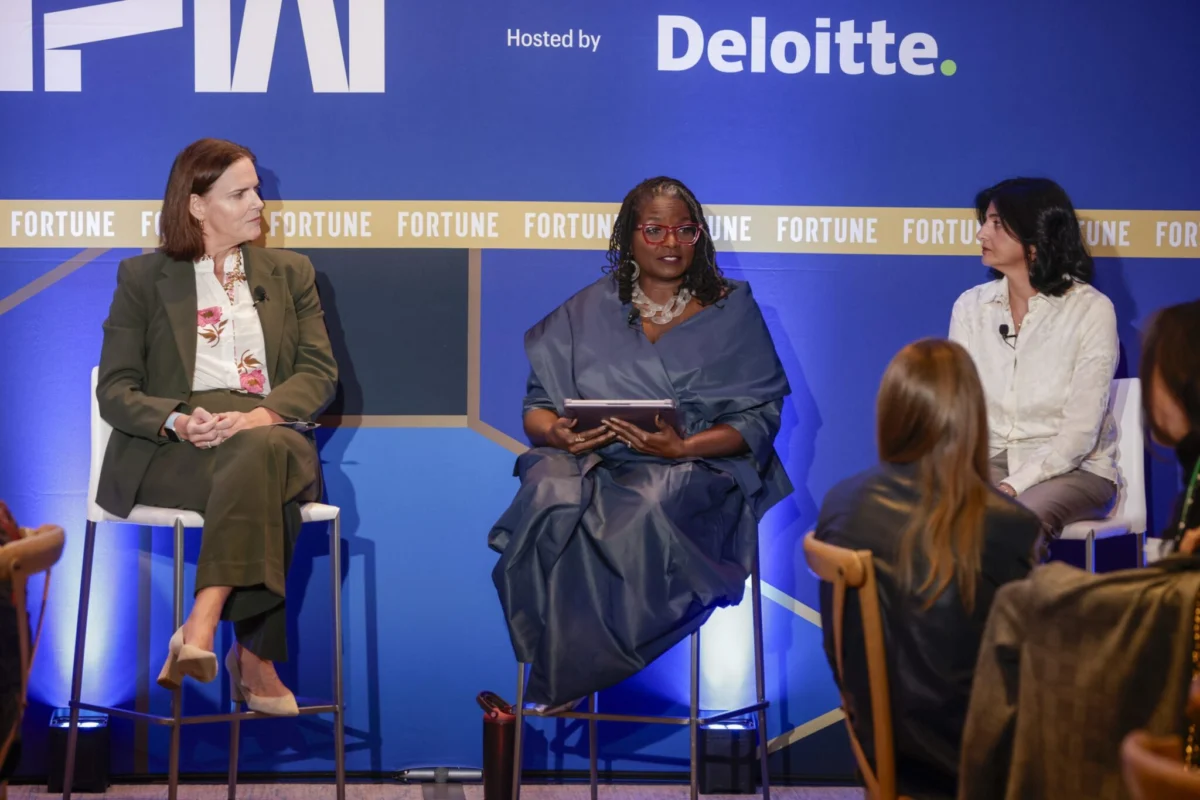
At Fortune’s 26th annual Most Powerful Women conference in Santa Barbara, top executives from Deloitte, Morgan Stanley, and the philanthropic sector gathered to discuss a fundamental shift: women are no longer just participants in the economy; they are becoming its primary architects. With trillions of dollars set to change hands over the next two decades, the way money is invested, deployed, and donated is undergoing a radical, female-led overhaul.
Main Facts: The Trillion-Dollar Handover
The core of this economic evolution lies in the "Great Wealth Transfer," a term used by economists to describe the movement of assets from the Baby Boomer generation to their heirs. While this transfer has long been anticipated, the gendered nature of this movement is only now coming into sharp focus.
According to data from Cerulli Associates, an estimated $124 trillion in wealth will be passed down by the year 2048. Of this staggering sum, women are poised to inherit at least $54 trillion. An additional $52 trillion is expected to go to children—who are increasingly influenced by the values of their mothers—and $18 trillion is earmarked for charity.
This influx of capital into the hands of women is being bolstered by two other significant trends:
- The Rise of the Female Entrepreneur: Women-owned businesses are no longer a niche segment of the market. Beth Meagher, Deloitte U.S. federal health sector leader, noted that female entrepreneurs represent one of the fastest-growing sources of wealth concentration, seeing a growth of over 125% in the last decade.
- The Veteran Surge: Women who have served in the military are also emerging as a powerhouse of economic momentum. This demographic has seen a nearly 300% growth in wealth creation over the past few years, signaling a shift in how veteran-owned enterprises are scaling.
Chronology: From the "Pipeline Myth" to the Modern Era
To understand the current momentum, one must look back at the structural barriers that defined the early 2010s. Seema Hingorani, now a managing director and senior client advisor at Morgan Stanley, recalled her time at the New York City Pension Fund over a decade ago.
In the early 2010s, Hingorani observed a glaring disparity. While asset managers from across the globe vied for the pension fund’s business, their investment teams were almost exclusively male. When questioned about the lack of diversity, these firms frequently cited a "pipeline issue," claiming there simply weren’t enough qualified women to fill high-level investment roles.
Refusing to accept this narrative, Hingorani took action in 2011 by founding Girls Who Invest, a nonprofit dedicated to placing more women in portfolio management and executive leadership roles. Since its inception, the program has seen over 5,000 college women pass through its ranks. Today, the organization receives roughly 4,000 applications annually, supporting 700 women each year.
By the mid-2010s, major financial institutions began to realize that the "pipeline" wasn’t the problem; the culture and recruitment strategies were. For the past seven years, Morgan Stanley has operated an incubator specifically designed to help women-led tech startups scale. As these businesses reach billion-dollar "unicorn" status, the founders are returning to the financial sector not as job seekers, but as high-net-worth clients seeking advisors who understand their specific perspectives.
Supporting Data: Regional Growth and Sector Focus
The shift is not just happening in the boardrooms of New York or the tech hubs of Silicon Valley. One of the most significant frontiers for this new wealth is the American South.
Carmen James Randolph, founding president and CEO of the Women’s Foundation of the South, points out that the South is currently one of the fastest-growing regions in the United States. Crucially, it is home to 41.5% of the nation’s women of color. This demographic intersection—geographic growth combined with the rise of minority-led entrepreneurship—is creating a new center of gravity for wealth creation.
The data supporting this shift in investment priorities is clear. Women are moving away from the "frontier models" of pure speculation and geopolitical hedging, instead focusing on three "pillars of impact":
- Health: Specifically maternal healthcare and emergency medical access.
- Education: Ensuring equitable access to skills and training.
- Justice: Investing in systems that promote social equity and legal fairness.
Furthermore, the demand for "impact-first" investing is manifesting in the real estate sector. Hingorani noted that a growing number of trustees are now prioritizing affordable housing. Even if these investments offer a lower internal rate of return (IRR) compared to high-risk venture funds, the social dividend is viewed as a necessary component of a successful portfolio.
Official Responses: Leading from the Front
The executives at the Fortune conference were unanimous: the financial industry must adapt or risk obsolescence.
Beth Meagher of Deloitte emphasized that this is a leadership opportunity. "I think we spend a lot of time on frontier models, and we probably spend a lot of time on geopolitical [issues]," Meagher told Fortune executive editorial director Diane Brady. "And this shift is something that I think we have a tremendous opportunity to lead from the front of." Meagher’s view is that wealth advisors who fail to integrate health and social services into their offerings will lose out to those who view wealth holistically.
Seema Hingorani’s response was even more direct, highlighting a shift in client demand. "Women are going to have all the wealth," she stated. She posed a rhetorical question to the audience: "Do you want to have a male financial advisor? If you had a choice, would you want to have a woman financial advisor? A lot of firms out there are hiring all my women, because they get it."
Carmen James Randolph spoke to the philosophical change in how wealth is distributed through philanthropy. "Old models see philanthropy as charity, and new wealth recipients do not see philanthropy as charity," Randolph explained. "They want to understand and see firsthand the impact that their dollars can have." Her foundation is currently "making a big bet" on maternal healthcare in Southern states, where medical deserts often leave women without access to routine care.
Implications: A New Mandate for the Financial Sector
The implications of this $124 trillion transfer are profound and multifaceted. We are witnessing the end of "passive" wealth management and the rise of "activist" capital.
1. The Death of the "Charity" Model
As Randolph noted, the traditional view of philanthropy—writing a check to a large endowment and walking away—is being replaced. The new generation of wealthy women views their capital as a "catalyst." They demand transparency, data-driven results, and a seat at the table. This will force non-profits to operate with the efficiency and accountability of a tech startup.
2. Structural Changes in Advisory Services
The financial services industry is facing a talent war. As more women control the world’s assets, the demand for female financial advisors, estate planners, and tax attorneys will skyrocket. Firms that have historically ignored diversity in their senior ranks will find themselves unable to relate to their primary client base. We can expect to see wealth management firms begin to bundle "life services"—such as health navigation and educational consulting—into their traditional investment packages.
3. The Realignment of Risk and Return
The trend toward affordable housing and justice-based investing suggests a fundamental realignment of how "risk" is calculated. For the new generation of investors, the "risk" of social instability, poor health outcomes, or educational inequality is just as significant as market volatility. This "Total Return" approach—measuring both financial gain and social progress—is likely to become the new gold standard for institutional and private portfolios alike.
4. Regional Economic Revitalization
The focus on the American South and women of color suggests that capital may finally begin to flow into historically under-invested communities. By prioritizing tangible impact in their "own backyards," these new wealth holders could trigger a localized economic renaissance that traditional venture capital has overlooked for decades.
In conclusion, the Great Wealth Transfer is more than just a change in balance sheets. It is a cultural and systemic pivot. As women take control of $54 trillion and beyond, they are not just inheriting the world—they are reinvesting in its future with a focus on health, justice, and measurable impact. The message from the stage at Santa Barbara was clear: the future of money is female, and the transition has already begun.