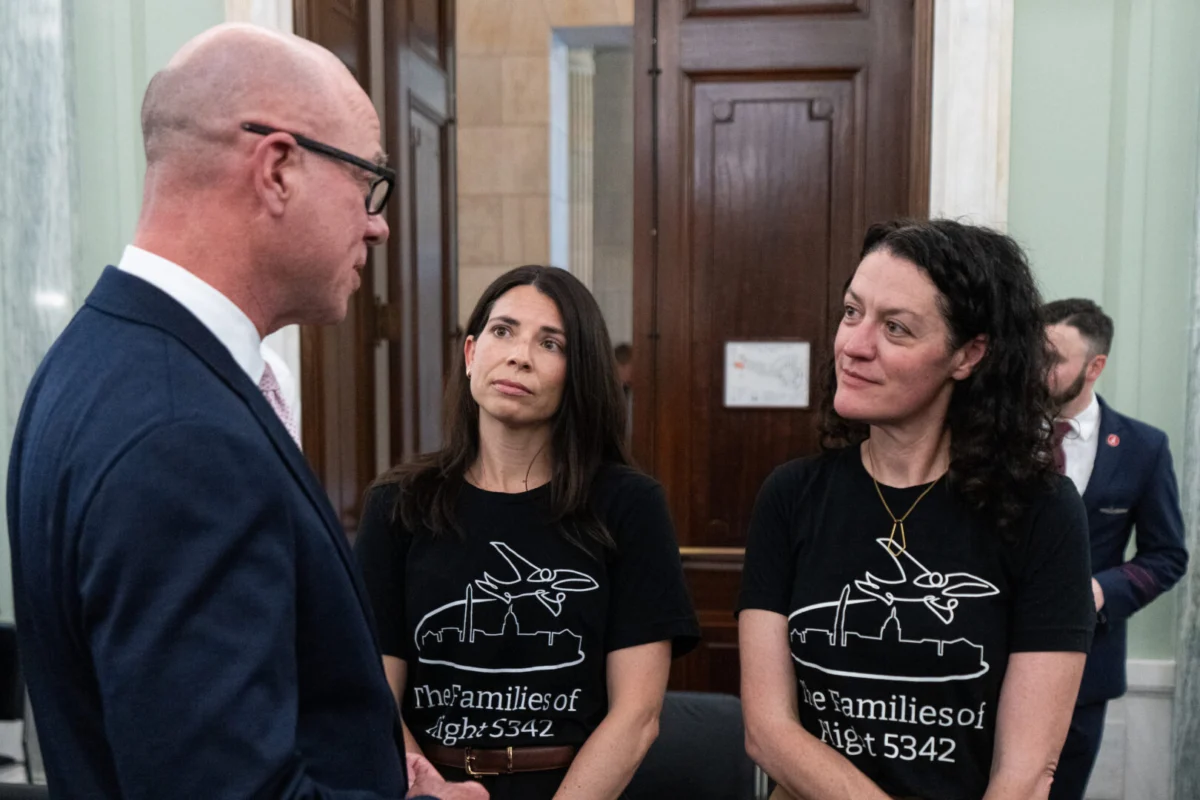
The long-awaited release of a U.S. Army investigation into the catastrophic January 2025 midair collision near Ronald Reagan Washington National Airport (DCA) has ignited a high-stakes legislative showdown in Congress. The tragedy, which claimed the lives of 67 people aboard a commercial passenger jet and a military helicopter, has transformed a technical dispute over aviation transponders into a pivotal battle over civil airspace safety, national security exemptions, and federal oversight.
With congressional negotiators trapped in a bicameral deadlock, supporters of stringent aviation safety reforms argue that the Army’s self-assessment validates a Senate-backed mandate requiring advanced location-tracking technology on all aircraft operating in congested airspace. However, opposition from House leaders concerned with military operational security threatens to stall the legislation as the current legislative session ticks toward its conclusion.
Main Facts: The DCA Collision and Key Investigation Findings
The collision occurred in early 2025 when an Army UH-60 Black Hawk helicopter collided in midair with American Airlines Flight 5342, a passenger jet carrying travelers from Wichita, Kansas, as it approached the highly congested airspace surrounding Reagan National Airport. All 67 passengers and crew members across both aircraft were killed instantly.
The U.S. Army investigation, completed in May but withheld from the public until mid-October, provides a stark assessment of systemic failures preceding the crash. Lead investigator Lt. Gen. Michael C. McCurry concluded in the report that "breakdowns across all layers of conflict management" directly caused the tragedy. Crucially, the investigation revealed that the Black Hawk helicopter was not actively transmitting Automatic Dependent Surveillance-Broadcast (ADS-B) Out data at the time of the impact. This omission was attributed to a combination of onboard equipment malfunction and longstanding regulatory exemptions that permitted military crews to fly without active location broadcasts.
To prevent future catastrophes, the Army report urges the mandatory adoption of modern flight-tracking technology across all military flights operating in heavy urban environments and high-density commercial corridors, known as Class B airspace. Specifically, Lt. Gen. McCurry recommended that the Army:
- Require all aircraft flying in congested urban zones to be equipped with commercial off-the-shelf receivers capable of processing ADS-B In data directly into cockpit electronic management systems (EMS).
- Mandate the active use of ADS-B Out transmitters for military flights operating in and around the Washington, D.C., capital region and Class B airspace nationwide.
- Establish rigorous, standardized maintenance protocols to ensure the continuous functionality of onboard transponder systems.
While the investigation does not represent the official policy of the Department of Defense, its alignment with safety recommendations previously issued by the National Transportation Safety Board (NTSB) has placed significant pressure on federal lawmakers to resolve their legislative impasse.
Chronology of Events: From Regulatory Loophole to Legislative Gridlock
The regulatory and policy choices that contributed to the DCA tragedy spanned nearly a decade, culminating in the current congressional standoff.
+-----------------------------------------------------------------------------------+
| CHRONOLOGY OF EVENTS                                                              |
+-----------------------------------------------------------------------------------+
| 2018         | FAA and DoD sign interagency agreement exempting select military   |
|              | aircraft from ADS-B Out broadcast requirements.                    |
+--------------+--------------------------------------------------------------------+
| Fiscal 2019  | Congress codifies the DoD exemption into law via the National      |
|              | Defense Authorization Act (NDAA).                                  |
+--------------+--------------------------------------------------------------------+
| January 2025 | American Airlines Flight 5342 collides with an Army UH-60 Black    |
|              | Hawk near DCA; 67 lives are lost.                                 |
+--------------+--------------------------------------------------------------------+
| February 2026| House rejects Senate aviation bill under suspension of rules       |
|              | (264-133 vote falls short of two-thirds majority).                  |
+--------------+--------------------------------------------------------------------+
| April 2026   | House passes its own less-prescriptive aviation safety bill       |
|              | (396-10 vote).                                                     |
+--------------+--------------------------------------------------------------------+
| May 2026     | Army completes internal crash investigation led by Lt. Gen.       |
|              | Michael C. McCurry.                                                |
+--------------+--------------------------------------------------------------------+
| October 2026 | Army report made public following distribution to victims'         |
|              | families, reigniting bicameral negotiations.                       |
+-----------------------------------------------------------------------------------+
The Regulatory Background
In 2018, the Federal Aviation Administration (FAA) and the Department of Defense (DoD) reached an interagency agreement granting broad exemptions to military aircraft from mandatory ADS-B transmission rules. The justification centered on national security: standard ADS-B transmissions are broadcast over unencrypted radio frequencies accessible to commercial tracking websites such as FlightAware, potentially exposing military flight paths and tactical operations.
Congress reinforced this policy in the Fiscal 2019 National Defense Authorization Act (NDAA), legally embedding the Defense Department’s carve-out from civil air traffic tracking standards.
The Legislative Impasse
Following the January 2025 collision, the Senate Commerce, Science, and Transportation Committee drafted comprehensive safety legislation designed to roll back the 2018 carve-outs. The Senate bill mandates that all aircraft operating in controlled airspace carry both ADS-B Out and ADS-B In hardware, permitting FAA exemptions only for narrowly defined "sensitive government missions."
However, when the Senate bill reached the House floor in February 2026, it failed to secure the two-thirds majority required under suspension of the rules. The 264-133 vote reflected deep partisan and jurisdictional divides, as House leaders favored a competing measure passed in April (396-10) that grants broad discretion to the FAA and retains wide operational security exemptions for the Pentagon.
Supporting Data and Technical Background
Understanding the legislative conflict requires examining the distinction between two core technologies: ADS-B Out and ADS-B In.
+----------------------------------------------------------------------------------+
| ADS-B TECHNOLOGY COMPARISON                                                      |
+----------------------------------------------------------------------------------+
| Feature                | ADS-B Out                   | ADS-B In                  |
+------------------------+-----------------------------+---------------------------+
| Primary Function       | Transmits aircraft position,| Receives data from other  |
|                        | speed, and altitude.        | aircraft and ground bases.|
+------------------------+-----------------------------+---------------------------+
| Broadcast Target       | Ground radar stations &     | Cockpit Electronic Flight |
|                        | nearby aircraft receivers.  | Displays / EMS.           |
+------------------------+-----------------------------+---------------------------+
| Transmission Rate      | Once per second.            | Continuous real-time feed.|
+------------------------+-----------------------------+---------------------------+
| Primary Safety Benefit | Allows controllers and others| Gives pilots direct       |
|                        | to see the aircraft.        | situational awareness.    |
+------------------------+-----------------------------+---------------------------+
| Current Legal Status   | Mandatory for most civil    | Proposed mandate causing  |
|                        | aircraft; DoD exempted.     | legislative standoff.     |
+------------------------+-----------------------------+---------------------------+
The Military Fleet Context
The scale of implementing these systems across the Armed Forces is substantial. Following the release of the report, the U.S. Army disclosed that it had initiated comprehensive technical inspections across its entire fleet of 3,585 rotary-wing aircraft. These inspections aim to verify transponder configurations, fix software bugs, and ensure proper ADS-B Out functionality across all active airframes.
Congressional Voting Breakdown
The failure of the Senate measure in the House highlighted sharp divisions within the chamber:
- Democratic Support: Virtually all House Democrats joined Ranking Members Adam Smith (D-Wash., Armed Services) and Rick Larsen (D-Wash., Transportation & Infrastructure) to support the strict Senate standard.
- Republican Split: House Republicans split significantly, with 77 voting in favor and 132 voting against. Key committee leaders, including House Transportation and Infrastructure Chairman Sam Graves (R-Mo.) and House Armed Services Chairman Mike D. Rogers (R-Ala.), voted against the Senate bill, citing national security concerns.
Official Responses and Stakeholder Positions
The public release of the Army report generated immediate reactions across Capitol Hill and from aviation safety advocates.
Senate Commerce Leadership
Senate Commerce Committee Chairman Ted Cruz (R-Texas) issued a swift statement asserting that the Army’s findings eliminate any justification for delaying strict transponder mandates:
"The report clearly shows that Army aircraft should be equipped with ADS-B In and ADS-B Out technology when in congested airspace. Had this been in place, 67 lives would have been saved in January 2025."
Senator Jerry Moran (R-Kan.), the chairman of the Commerce Aviation Subcommittee—who represented seven constituents killed aboard Flight 5342—emphasized the urgency of reaching a final deal:
"This long-awaited Army investigation reaffirms what we’ve been calling for all along. Over the summer, productive negotiations have taken place between the House and Senate, and we continue working with the administration to craft a bill that can pass both chambers and be signed into law."
Senator Tammy Duckworth (D-Ill.), the subcommittee’s ranking member, echoed those sentiments, urging House negotiators to adopt the Senate’s framework before the current session expires.
House National Security Leadership
Conversely, key House Republicans maintain that an unyielding mandate exposes national defense assets to unacceptable tracking risks. During the February floor debate, House Armed Services Committee Chairman Mike D. Rogers (R-Ala.) framed the opposition around force protection:
"Requiring our fighters, bombers, and highly classified assets to regularly broadcast their location puts our men and women in uniform at risk by exposing operational planning, aircraft details, and patterns of life to our adversaries. For obvious reasons, we do not want our enemies to know where our bombers or fighters are or where they are headed."
Responding to the released report, Heather Vaughan, GOP communications director for the House Armed Services Committee, argued that the Army’s findings align with the flexible approach proposed by the House:
"The Army’s findings are in line with our aviation safety legislation, and we’re working closely with the Senate to finalize a bipartisan bill to make our skies safer for everyone."
Victims’ Families Advocate for Enforceable Standards
The advocacy group Families of Flight 5342, which spearheaded the public distribution of the Army report after receiving an advance copy, voiced frustration over ongoing delays. In a collective statement, the group urged lawmakers not to create loopholes that weaken air safety:
"Any final legislative agreement must contain an enforceable ADS-B In requirement, firm implementation deadlines, narrowly defined military exceptions, and coordinated reviews of dangerous airspace interactions nationwide."
Implications for Civil Aviation and Defense Policy
The findings of the Army report and the surrounding legislative deadlock carry far-reaching consequences for the future of U.S. airspace management, military-civilian operational integration, and federal legislative strategy.
Civil-Military Airspace Integration
The tragedy near DCA has exposed systemic vulnerabilities in how military flights interact with commercial air traffic hubs. Modern commercial jetliners rely on automated collision-avoidance technology and precise ADS-B data streams to navigate high-density arrival corridors. When military aircraft operate within Class B airspace without broadcasting position data, civil air traffic controllers and commercial flight crews are forced to rely on primary radar, which provides slower updates and lacks rich situational context.
If Congress mandates ADS-B In and Out for military operational flights in urban corridors, the Pentagon will need to invest in encrypted transponder technologies or hardware capable of selective broadcasting to ensure safety without compromising tactical security.
Lame-Duck Legislative Mechanics
Time is running short for lawmakers. Because all pending bills expire at the end of a two-year congressional term, failure to reconcile the House and Senate versions during the post-election lame-duck session will force advocates to restart the legislative process from scratch in the next Congress.
+-----------------------------------------------------------------------------------+
| LAME-DUCK LEGISLATIVE PATHWAYS                                                    |
+-----------------------------------------------------------------------------------+
| PATHWAY A: Senate Framework Adopted                                               |
| - Strict ADS-B In/Out mandates for all aircraft in Class B airspace.              |
| - Military carve-outs limited strictly to "sensitive government missions."        |
| - Requires House Leadership to allow a full floor vote under standard rules.      |
+-----------------------------------------------------------------------------------+
| PATHWAY B: House Compromise Framework                                             |
| - FAA granted broad authority to define transponder technical standards.          |
| - DoD retains discretionary authority for operational security exemptions.        |
| - Includes administrative reviews and phased implementation deadlines.           |
+-----------------------------------------------------------------------------------+
| PATHWAY C: Legislative Expiration (Gridlock)                                      |
| - No bill passed before session adjournments.                                     |
| - Legislation dies; safety advocates must reintroduce measures next year.         |
| - FAA and DoD left to negotiate voluntary administrative policies.               |
+-----------------------------------------------------------------------------------+
Key Senate figures, including Senators Cruz and Moran, have indicated a willingness to negotiate tighter definitions for national security exceptions to secure a compromise. However, safety advocates and victims’ families warn that overly broad exceptions could perpetuate the exact vulnerabilities that led to the fatal midair collision over Washington.
As negotiators meet behind closed doors, the Army report stands as a central catalyst. Whether Capitol Hill can bridge the gap between national defense secrecy and civilian aviation safety will determine the regulatory framework governing American skies for years to come.