For years, potential homebuyers have been trapped in a state of "wait-and-see" paralysis. With home prices sitting nearly 30% higher than they were just five years ago and mortgage rates having undergone a jarring climb, the dream of homeownership has felt increasingly like a luxury reserved for the few. For many, the question is simple: When will prices finally drop?
The reality, according to leading economists, is more nuanced than a simple "yes" or "no." While the era of pandemic-induced hyper-appreciation has ended, a widespread national price collapse is not on the horizon. Instead, the U.S. housing market is navigating a complex, long-term stabilization phase—a "reset" that prioritizes sustainable growth over the volatile swings of the early 2020s.
The State of the Market: Main Facts
The current housing landscape is defined by a paradox: affordability is improving, yet home prices remain elevated. How can both be true?
Since late 2025, wage growth has finally begun to outpace the rise in housing costs. While the raw sticker price of a home may not be dropping in your zip code, the ratio between what people earn and what they pay to house themselves is slowly shifting back into alignment.
Redfin’s Chief Economist, Daryl Fairweather, offers a sobering perspective on why a national price crash would be detrimental rather than beneficial. "House prices aren’t going to fall on a national scale any time soon—and that’s actually a good thing," Fairweather notes. "It’s normal for house prices to rise gradually over time, just as a mild inflation rate is healthy for most economies. The difference is when prices jump all at once like they did during the pandemic."
A Chronology of the Crisis: From Boom to Correction
To understand where we are, we must look at how we arrived here.
- 2020–2021 (The Pandemic Surge): Record-low mortgage rates and a desperate scramble for space fueled a massive surge in demand. Inventory was decimated as buyers locked in rates under 3%.
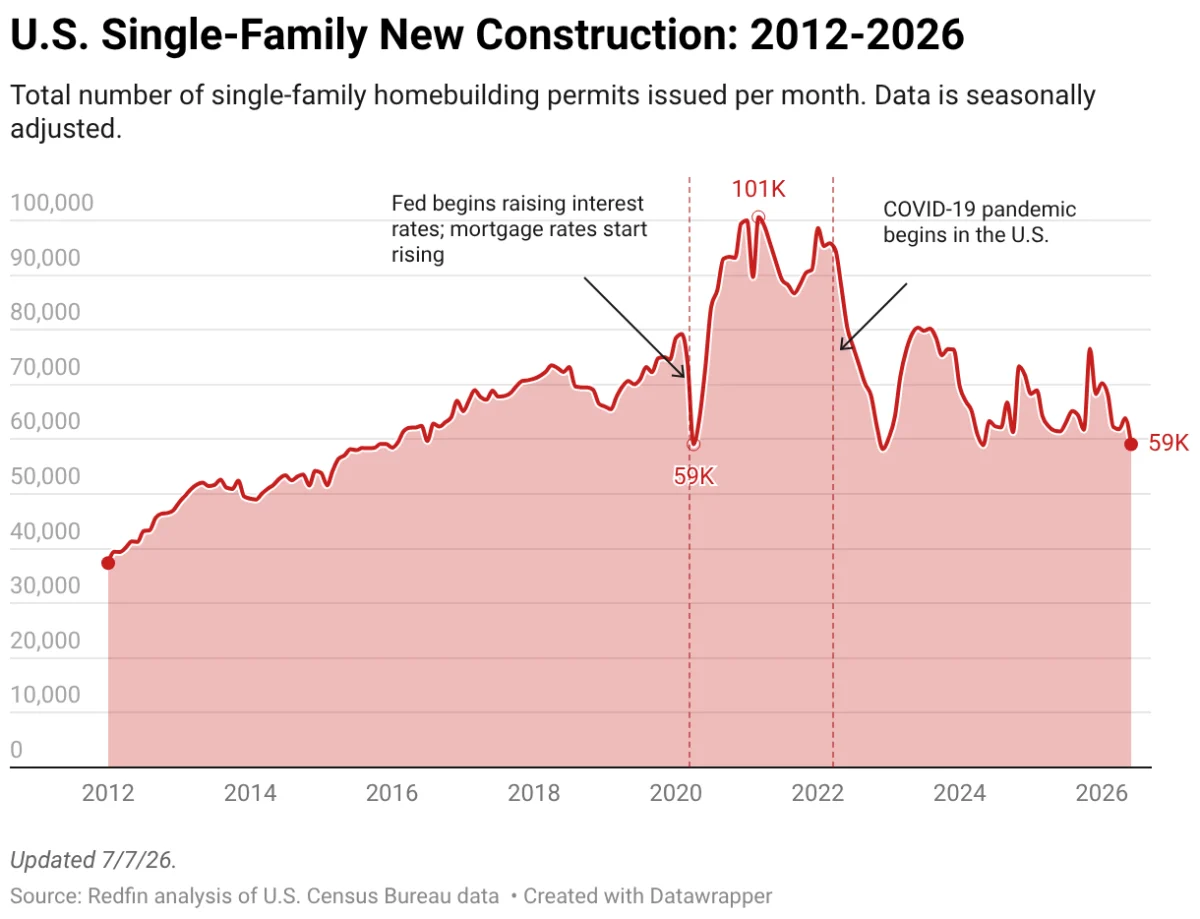
- 2022–2023 (The Interest Rate Shock): To combat record-high inflation, the Federal Reserve began an aggressive campaign of interest rate hikes. This effectively "froze" the market; homeowners who had locked in ultra-low rates were unwilling to sell and trade their 3% mortgage for a 7% one.
- 2024–2025 (The Plateau): The market entered a state of stagnation. Prices remained stubbornly high due to a chronic lack of supply, while buyers were sidelined by the combination of high prices and high borrowing costs.
- 2026 (The Reset): We are now seeing the beginning of a long-term recalibration. While inventory is slowly creeping upward, volatility—fueled by geopolitical tensions and lingering inflationary concerns—continues to dictate the pace of recovery.
The Pillars of High Costs: Why Prices Refuse to Drop
Why haven’t prices collapsed under the weight of high interest rates? The answer lies in the fundamental laws of supply and demand.
1. The Chronic Housing Inventory Shortage
The U.S. faces a systemic undersupply of homes, with estimates ranging from 1.5 million to as many as 7 million units. This deficit did not happen overnight; it is the culmination of fifteen years of underbuilding following the Great Recession. Because there are simply not enough physical structures for the number of households looking to form, the floor for prices remains high.
2. The Homebuilding Lag
Construction rates, which ramped up briefly post-pandemic, have cooled due to the rising costs of materials and labor. Without a sustained, high-volume injection of new construction—specifically at entry-level price points—the supply-side pressure that keeps prices high will persist.
3. Mortgage Rate Volatility
Mortgage rates are the primary lever of affordability. When they rise, purchasing power drops. However, because so many existing homeowners are "locked in" to low rates, the supply of resale homes remains artificially low. This lack of "churn" in the market prevents the kind of inventory buildup that would typically force sellers to lower their prices.
Official Perspectives: The Expert Consensus
Economists largely agree that the "crash" narrative is a myth. A crash, by definition, requires a sudden, catastrophic loss of value often triggered by mass foreclosures or a massive economic contraction.
Current indicators point elsewhere. The Federal Reserve’s mandate to maintain inflation near 2% has a direct impact on shelter costs, which remain a primary driver of the Consumer Price Index (CPI). As shelter inflation stabilizes, the broader economy benefits from a more predictable, albeit more expensive, real estate market.
"The best way to meaningfully lower costs nationwide is to build more homes at price points consumers can afford," says Fairweather. "We expect the current trend of wages growing faster than housing costs to continue as the market undergoes a prolonged reset."
Geographical Anomalies: Where Prices Are Falling
While the national market is not crashing, localized corrections are occurring. Specifically, the "Sun Belt" cities—such as Austin, Nashville, and San Antonio—are experiencing meaningful price declines.
These regions were the epicenter of the pandemic-era migration boom. As remote work trends evolved and prices hit an unsustainable "ceiling," buyer demand in these areas shifted. In Austin, for instance, the market has pivoted from a seller’s paradise to a buyer’s market, with prices dropping significantly from their 2022 peaks. These are not signs of a national crash, but rather a "market correction" in cities that grew too fast, too soon.
Implications for Buyers and Sellers
If you are currently sitting on the sidelines, the advice from the experts is changing.
For the Buyer: The Strategy of Negotiation
Waiting for a "crash" is a high-risk, low-reward strategy. In most markets, prices are not going to plummet, and waiting only delays the opportunity to begin building equity. Today’s market is increasingly favorable for buyers who are willing to negotiate. With competition lower than it was during the peak pandemic years, buyers have more leverage to demand repairs, closing cost concessions, or price adjustments.
For the Seller: The Reality of Valuation
Homeowners who expect to sell at the height of the pandemic frenzy may need to adjust their expectations. The current market rewards sellers who price their homes based on current reality rather than past peaks. For those who bought at the height of the market, selling at a loss is a genuine risk—a trend observed in approximately 6% of recent sales in overheated markets.
The Path Forward: Stability vs. Uncertainty
The 2026 housing market is not defined by the speed of its growth, but by the stability of its structure. The market is slowly shedding the erratic behaviors of the past five years.
While external factors—including international conflicts, shifts in trade policy, and the ongoing integration of AI into the economy—continue to introduce uncertainty, the core mechanics of the housing market are beginning to normalize.
For the average American, the next few years will likely be defined by a slow, methodical improvement in affordability. We are not returning to the ultra-cheap housing of the 2010s, nor are we entering a period of free-falling prices. Instead, we are entering a new, more balanced era. For those prepared to navigate the landscape with a long-term perspective, the path to homeownership remains open, provided they prioritize patience and realistic expectations over the dream of a market crash.