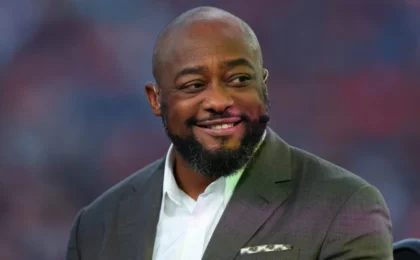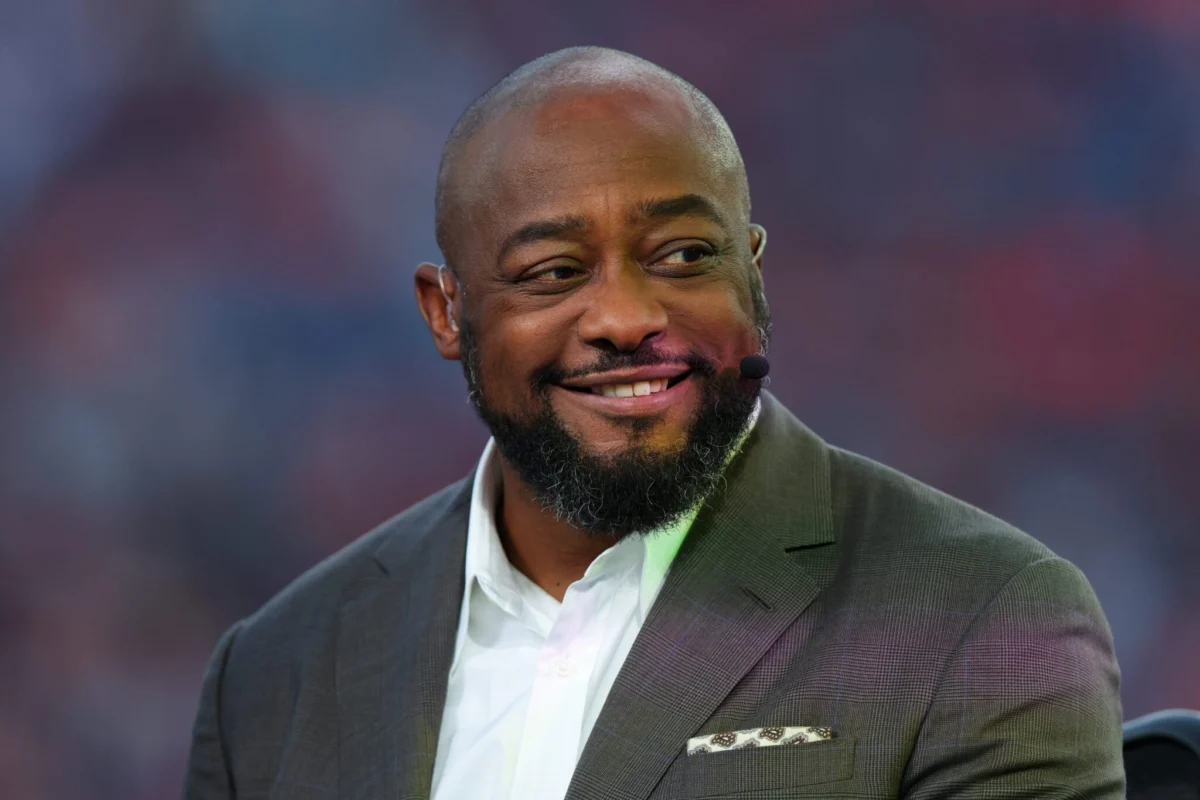
In the high-stakes world of the National Football League, where professional reputations are forged in the crucible of Sunday afternoons and destroyed by a single losing season, Mike Tomlin has long been an anomaly. For 19 years, as the head coach of the Pittsburgh Steelers, Tomlin stood as a pillar of consistency, famously never recording a losing season—a feat that stands as an NFL record. He brought a Super Bowl trophy to the Steel City and became synonymous with a "no-nonsense" brand of leadership.
However, a recent revelation has added a startling new dimension to the man known for his "Tomlinisms" and steely sideline gaze. It appears that while Tomlin was navigating the complexities of the zone blitz and managing some of the biggest personalities in professional sports, he was also meticulously constructing a sprawling, sophisticated metropolis within the digital sandbox of Minecraft.
The disclosure, which came via the launch of Tomlin’s personal YouTube channel, has sparked a national conversation about the intersection of high-performance leadership, digital escapism, and the psychological necessity of "unplugging" from the pressures of a $16 million-a-year career.
The Virtual Metropolis: From Playbooks to Penthouses
The narrative shifted last week when Tomlin, now 54 and having recently stepped away from his role with the Steelers in January, uploaded his first video to YouTube. Titled “ROOFTOPS, PENTHOUSES, AND URBAN LIVING,” the debut episode quickly went viral, amassing over 3.4 million views in a matter of days.
Viewers expecting football insights were instead treated to a guided tour of a massive virtual city that Tomlin had been building in secret for 12 years. The scale of the project is staggering. The virtual metropolis includes a fully realized skyline of high-rise luxury apartments, a detailed aquarium, a functioning baseball stadium, and even a hidden speakeasy tucked away in the city’s "historic district."
“I really got obsessed with rooftop penthouses,” Tomlin admitted in the video. His tone was not that of a casual gamer, but of a meticulous architect, describing the aesthetic choices behind glass-walled balconies and the urban flow of his digital streets. The project represents thousands of hours of work, a fact that has polarized both the sports world and the general public.
A Chronology of Construction: 12 Years in the Making
To understand how a Super Bowl-winning coach became a master Minecraft builder, one must look at the timeline of his tenure in Pittsburgh. Tomlin’s journey into the world of blocks began not as a hobby, but as a parenting tool.
According to an interview on Late Night with Seth Meyers, Tomlin originally picked up the game over a decade ago to connect with his then-teenage sons. “I got interested because I just was mesmerized by what could occupy their attention for such large periods of time,” he explained.
As the years passed, the chronology of the city’s development mirrored the highs and lows of his NFL career:
- The Early Years (Circa 2013-2015): While the Steelers were rebuilding their defense, Tomlin was laying the foundations of his first virtual neighborhoods. As his sons grew older and their interest in the game waned, Tomlin found himself continuing the project alone.
- The Middle Years (2016-2020): This period saw the construction of the city’s most complex structures, including the stadium and the aquarium. This coincided with some of the Steelers’ most competitive seasons, suggesting that as the pressure on the field mounted, the complexity of the virtual escape increased.
- The Final Push (2021-2024): In his final years with the Steelers, Tomlin focused on the "Urban Living" aspects—the penthouses and high-rises—honing the therapeutic ritual that allowed him to decompress after grueling game days.
“I kind of stumbled into the therapeutic component of it,” Tomlin noted, describing the game as a way to clear his mind and find a sense of control that is often elusive in the chaotic world of professional football.
Supporting Data: The High Cost of Consistency
The debate surrounding Tomlin’s hobby is rooted in the perceived conflict between his professional duties and his leisure time. Critics point to the sheer volume of time required to build such a city.
However, the data suggests that Tomlin’s performance remained elite throughout the duration of his "secret" hobby:
- The Winning Streak: Tomlin holds the NFL record for the longest unbroken streak of non-losing seasons (19).
- Financial Stakes: In 2025, his salary was reported at $16 million, making him one of the highest-paid coaches in the league.
- Digital Engagement: His YouTube debut outperformed most established gaming influencers, proving that the public is deeply invested in the "human side" of legendary figures.
Despite these accolades, the criticism has been sharp. Former Steelers running back Le’Veon Bell became a vocal critic, suggesting that the coach’s focus on "building worlds" may have come at the expense of "making plays." Bell specifically cited the Steelers’ historical struggles against the New England Patriots as evidence that Tomlin might have been distracted.
Official Responses and Expert Perspectives
While Tomlin declined a request for comment from Fortune, his public statements suggest he views the hobby as a vital component of his mental health. This sentiment is backed by experts in the field of industrial-organizational psychology.
Charles Calderwood, director of the Work Stress and Recovery Lab at Virginia Tech University, emphasizes that hobbies like Minecraft are not just "games" but essential tools for recovery. “As you face more demands and are more stressed out, you need recovery more, but you’re less able to get it,” Calderwood told Fortune. He warns that high-stakes professionals who do not find a way to "unplug" often fall into a self-perpetuating cycle of exhaustion and burnout.
Calderwood argues that for someone in a job as unpredictable as an NFL head coach, the structured, creative, and controllable environment of a sandbox game provides a "psychological detachment" that is necessary for long-term performance.
The Executive Escape: A Growing Trend Among Global Leaders
Tomlin is far from the only high-profile leader to embrace an unconventional pastime to manage the pressures of the C-suite or the sidelines. The narrative of the "24/7 grind" is increasingly being replaced by a more nuanced understanding of work-life integration.
- Warren Buffett: The legendary investor and billionaire spends his evenings watching YouTube. His viewing habits are reportedly eclectic, ranging from vintage 1950s commercials to international versions of talent shows like Uzbekistan’s Got Talent. For Buffett, this passive consumption acts as a mental palate cleanser.
- Elon Musk: The Tesla and SpaceX CEO is an avid gamer, frequently posting about his sessions in Diablo IV and World of Warcraft. Musk has often used gaming as a way to maintain cognitive flexibility and unwind from the complexities of aerospace engineering.
- David Solomon: Perhaps the most famous example of the "Executive Hobbyist," the Goldman Sachs CEO spent years performing as a DJ (under the name D-Sol) at high-profile events. Solomon, who earned $47 million in 2025, has spoken extensively about how DJing allowed him to be "100% present," clearing his mind for the difficult financial decisions he faced the following day.
Solomon eventually stepped back from public performances in 2023 due to the media scrutiny—a challenge Tomlin is now navigating as his private virtual world becomes a public spectacle.
Implications: Redefining Professionalism in the 21st Century
The revelation of Mike Tomlin’s Minecraft city carries significant implications for how we view leadership and professional dedication.
1. The Humanization of the "Hard-Nosed" Leader
For decades, the ideal image of an NFL coach was a man who slept in his office and had no life outside of film study. Tomlin’s hobby shatters this archetype. It suggests that even the most successful leaders are multi-dimensional and that vulnerability—admitting to a "therapeutic" need for gaming—can be a form of strength.
2. The Gamification of Stress Management
As digital natives move into leadership roles, the stigma surrounding video games is evaporating. Tomlin’s city serves as a case study for "productive play." Unlike the "5 AM club" routines touted by many CEOs, which can lead to further physical and mental strain, gaming offers a low-impact way to achieve "flow state," a psychological condition associated with deep satisfaction and mental clarity.
3. The Work-Life Balance Debate
The criticism from figures like Le’Veon Bell highlights a lingering societal bias: the idea that any time not spent on one’s primary career is "wasted" time. However, the "Tomlin Model" suggests the opposite—that his 12-year building project may have been the very thing that allowed him to maintain his 19-year winning streak. By creating a world where he could not lose, he found the mental resilience to keep winning in a world where losing is inevitable.
Conclusion: A New Legacy
As Mike Tomlin transitions into the next phase of his career, his legacy will no longer be defined solely by Super Bowl rings and defensive schemes. He has become a symbol for a new generation of professionals who refuse to be defined by their job titles alone.
Whether he returns to the NFL or continues to expand his virtual empire on YouTube, Tomlin has proven that even in the most demanding careers, there is room for a little bit of play. For the millions of fans who watched his "Rooftops" video, Tomlin isn’t just a coach anymore; he’s a master builder who reminded the world that sometimes, to stay at the top of your game, you have to be willing to get lost in another world entirely.
As one commenter on his viral video aptly put it: “This is my Super Bowl.” For Tomlin, it seems, the virtual city was the victory he needed to survive the seasons that never ended in a loss.