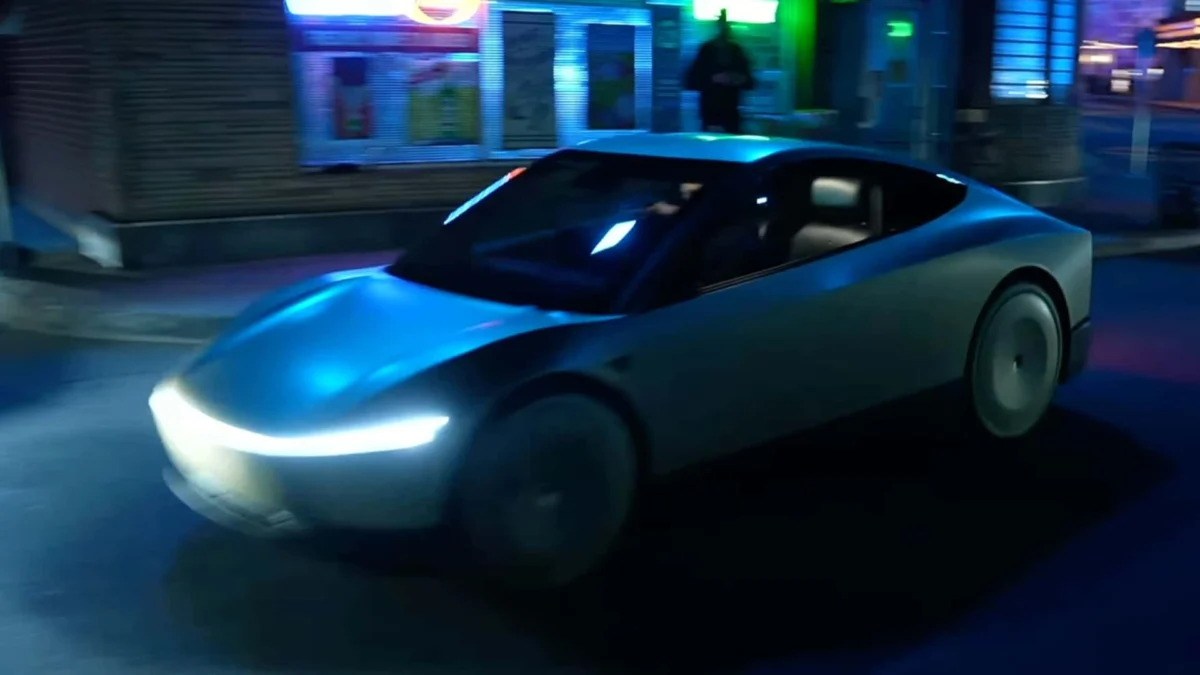
The quest for fully autonomous, 24/7 ride-hailing services has reached a critical juncture in Austin, Texas. Tesla, the electric vehicle giant led by Elon Musk, recently announced a modest expansion to its Robotaxi service hours, pushing the nightly cutoff from 10:00 p.m. to 11:00 p.m. While an extra hour of operation may seem like a minor logistical adjustment, it highlights a profound technical and philosophical divide in the autonomous vehicle (AV) industry.
For Tesla, the primary obstacle to true nocturnal autonomy isn’t the lack of complex navigation or high-traffic density; it is the fundamental challenge of object detection in low-contrast environments. As Elon Musk candidly admitted on the social media platform X, the fleet’s current inability to safely operate through the night stems from a struggle to distinguish small, low-contrast obstacles—specifically pets—against dark, asphalt surfaces.
The Chronology of the Austin Robotaxi Pilot
The journey of Tesla’s Robotaxi in Austin began in earnest in June 2025, marking a significant milestone in the company’s pivot from a hardware-focused automaker to an AI-driven mobility provider. Initially, the pilot program operated with a restricted scope, offering service to a select group of invited users between the hours of 6:00 a.m. and midnight.
However, the reality of deploying "Full Self-Driving" (FSD) in a real-world, high-stakes environment quickly necessitated a more conservative approach. The service hours were subsequently trimmed to a 10:00 p.m. cutoff across all of Tesla’s active markets, including the Austin testbed. This rollback reflected a broader corporate caution following various incidents, including a notable collision with a bollard in Austin that raised questions about how the vehicle’s sensor suite perceives stationary, non-human obstacles.
The October 3rd announcement of the shift to an 11:00 p.m. closing time represents a slow, measured expansion. Yet, despite the incremental progress, the service remains far from the promised "always-on" utility that Tesla has long touted as the ultimate goal of its Cybercab ecosystem.
Nighttime Visibility: The "Gray Kitten" Dilemma
The technical limitation described by Musk is a classic problem in computer vision: the challenge of low-contrast detection. Tesla’s approach relies exclusively on a vision-based system, utilizing cameras to interpret the world. In daylight, these cameras excel, capturing the texture, depth, and color required for the neural network to identify pedestrians, cyclists, and vehicles.
At night, however, the "photon count" drops significantly. When a gray-colored animal—or any low-contrast object—is positioned against gray pavement under inconsistent street lighting, the visual data available to the onboard computer becomes sparse. Musk’s phrasing, "trying to avoid gray kittens on gray tarmac in the dark," serves as a stark illustration of the edge cases that haunt AV developers.
The Vision-Only vs. Sensor Fusion Debate
This limitation brings the industry’s most contentious debate back to the forefront: the necessity of LiDAR (Light Detection and Ranging).

- Tesla’s Stance: Elon Musk has remained steadfast in his rejection of LiDAR, labeling it a "fool’s errand" as early as 2019. His argument centers on the belief that human drivers navigate primarily using vision, and therefore, an AI should be capable of doing the same. Musk maintains that advancements in software and AI training—specifically regarding how the system processes light at the photon level—will eventually bridge the gap, rendering expensive additional sensors unnecessary.
- The Competitor Consensus: Conversely, major players like Waymo, which now manages a commercial fleet exceeding 4,000 driverless vehicles, have adopted a "sensor fusion" strategy. By pairing 13 cameras with four LiDAR units and six radars, these systems create a redundant, three-dimensional map of the environment that is independent of ambient light levels. Dmitri Dolgov, a key figure in the development of Waymo’s technology, has argued that camera-only setups face a "safety curve" that flattens prematurely, suggesting that without the depth-sensing capabilities of LiDAR, the system’s incremental improvements in safety will eventually stall.
While Musk argues that LiDAR is "economically dead weight," manufacturers like Rivian have begun to challenge this narrative. With the cost of high-performance sensors falling to just "a few hundred dollars" per vehicle, the financial argument against redundant sensor suites is losing its luster, leaving the debate purely focused on engineering philosophy.
Regulatory and Safety Implications
The extension of the Austin service hours occurs under a cloud of regulatory scrutiny that threatens to derail Tesla’s rollout of driverless technology. The National Highway Traffic Safety Administration (NHTSA) is currently conducting an extensive investigation into approximately 3.2 million Tesla vehicles. The core of this probe involves instances where Full Self-Driving (FSD) systems struggled in poor visibility conditions—the exact same operational environment that currently keeps the Robotaxi fleet off the streets after 11:00 p.m.
Furthermore, the legal status of the Cybercab remains a point of contention. The vehicle is designed without steering wheels or pedals, a configuration that defies current federal safety standards meant for vehicles operated by humans. Whether a vehicle that lacks a manual "fail-safe" can be legally deployed on public roads is a question currently being debated in courts and government hearings.
These challenges are compounded by the public nature of recent failures. The bollard incident in Austin was more than just a fender-bender; it was a PR setback that underscored the difficulty of teaching an AI to respect the physical boundaries of urban infrastructure. For regulators, the question is not just whether the car can avoid a "gray kitten," but whether it can navigate the unpredictable, chaotic environment of a city without human intervention.
The Road Ahead: Can Tesla Solve the Night?
Tesla’s goal of achieving full overnight, driverless operation is contingent on whether its AI can overcome the limitations of the visible spectrum. If, as Musk suggests, the system can be trained to "see" better than a human eye by optimizing photon processing, then the current 11:00 p.m. cutoff is merely a temporary safety measure.
However, if the physical constraints of camera-only vision prove insurmountable, Tesla may find itself at a crossroads. The company will either have to accept that its vision-only platform has a hard limit on its utility, or it will have to reconsider its stance on auxiliary sensors—a move that would require a massive redesign of its hardware architecture.
For now, the Austin Robotaxi service remains a high-tech experiment in incremental progress. The one-hour extension is a nod to the fact that the company is gathering data, refining its neural networks, and testing the limits of its current hardware. Yet, the existence of a "pet-detection" ceiling serves as a sobering reminder that while software can learn, the physics of light and the unpredictable nature of the real world remain the ultimate arbiters of autonomous safety.
As the industry watches, the "gray kitten" problem serves as the perfect metaphor for the broader challenge of autonomy: it is rarely the large, obvious obstacles that trip up the technology, but the subtle, low-contrast realities of the world that remain the final frontier for the self-driving car. Until these systems can navigate the shadows with the same confidence they exhibit in the sun, the dream of a true, 24/7 autonomous taxi service will remain, for now, just an hour out of reach.