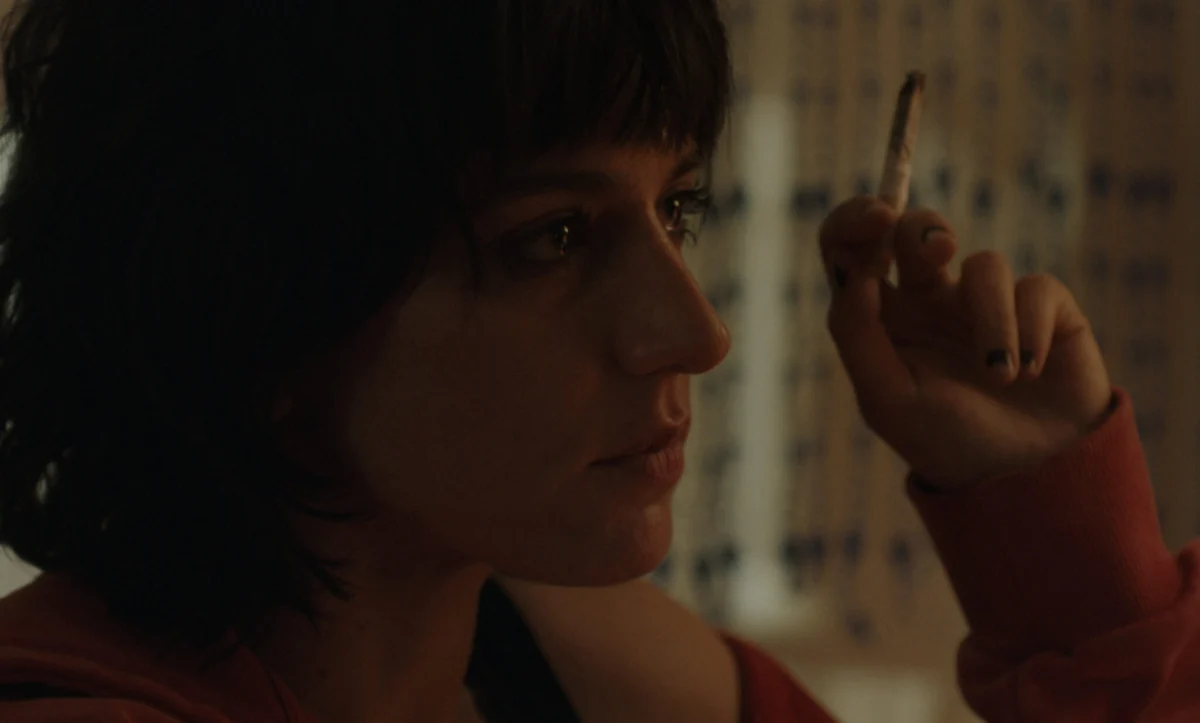
Basque filmmaker Javier Giner, fresh off the critical and international success of his Emmy-winning series I, Addict, has returned to the spotlight with his latest feature, This Solitude (Esta Soledad). The film, which held its world premiere at the prestigious San Sebastián Film Festival on September 23, marks a significant evolution in Giner’s directorial voice, shifting from the explicit, singular focus of his autobiographical work to a broader, more atmospheric meditation on the human condition.
As the industry turns its gaze toward the San Sebastián competition, This Solitude stands out not merely as a character study, but as an evocative exploration of the disconnect inherent in the modern era. By reuniting with his frequent collaborator, lead actor Oriol Pla—whose performance in I, Addict garnered the International Emmy for Best Actor—Giner has crafted a narrative that is as much about the physical geography of Bilbao as it is about the internal landscapes of its protagonists.
The Anatomy of a Breakup: Plot and Character Dynamics
This Solitude chronicles the immediate aftermath of a five-year relationship between two individuals, Leo and Lorea. Their split serves as the inciting incident that forces both characters into a state of involuntary re-evaluation of their lives.
Leo, portrayed with raw, transformative intensity by Oriol Pla, is a struggling actor whose professional aspirations are tethered to the mundane reality of working as a grocery clerk. His life is further complicated by the quiet, heavy responsibility of caring for his disabled father—a duty that highlights the intersection of personal grief and domestic obligation. Opposite him is Lorea, played by Marina Salas, a writer battling her own internal demons. Her journey is defined by a search for intimacy in unconventional places, including a tenuous connection with a former prison inmate.
The narrative arc of the film is not one of catharsis or traditional resolution. Instead, it captures the messy, often paralyzing period of transition that follows the dissolution of a partnership. Set against the backdrop of Bilbao, the characters must navigate a world that feels increasingly alien, even while the streets remain unchanged. It is a film about the "democratic" nature of loneliness—the idea that while anyone can experience isolation, the tools available to combat it are dictated by one’s socioeconomic position and emotional bandwidth.
Chronology and Production Context
The development of This Solitude follows a rapid and highly focused production cycle. Following the monumental success of the Disney+ adaptation of his book I, Addict, Giner sought to pivot toward a narrative that, while still deeply personal, allowed for a more abstract exploration of emotion.
- Pre-Production: Throughout 2025, Giner and co-writer Luisa Matienzo developed the script, focusing on the sensory details of Bilbao and the "emotional vocabulary" of the protagonists.
- Principal Photography: Filmed in various locations throughout the Basque region, the production aimed to capture the industrial, moody, and volatile weather patterns of the city to serve as an objective correlative to the characters’ mental states.
- Premiere: The film’s selection for the New Directors section at the San Sebastián Film Festival provided a global stage for its debut on September 23, 2026.
- Theatrical Release: International sales agent Filmax has confirmed a widespread theatrical release in Spain, scheduled for October 30, 2026.
The production represents a collaborative effort between Balance Media Entertainment, Fuga de Cuerpos, La Embajada TV, and Basajaun Filmak. This consortium of producers highlights the growing strength of Basque cinema within the European market.

The "Stradivarius" Actor: The Giner-Pla Partnership
A pivotal element of the film’s success is the established creative synergy between Javier Giner and Oriol Pla. In interviews, Giner describes their relationship as one built on a foundation of profound professional and personal trust.
"Oriol can be explosive, physical, unpredictable, almost animalistic, and five seconds later he can do something tiny that breaks your heart," Giner told Variety. "As an actor, he’s a Stradivarius."
This trust is central to the film’s aesthetic. In many sequences, the duo bypassed lengthy verbal rehearsals, opting instead for a shorthand communication style developed during their work on I, Addict. This allows for the nuanced, almost silent performances that define the film’s most poignant moments, where the weight of the story is carried not by dialogue, but by the physical exhaustion of the characters.
The City as a Silent Protagonist
One of the most striking features of This Solitude is its treatment of Bilbao. Rather than presenting the city through a tourist-friendly lens, Giner leans into its "industrial memory."
"I wanted to film what almost never gets filmed anymore: not the postcard, but the humidity, the noise, the architecture," Giner explained. For the director, Bilbao serves as a mirror for the characters’ internal state. As Leo and Lorea undergo profound personal shifts, the city remains indifferent, a static entity that highlights the characters’ feeling of being "left behind" by the world. By filming the city as a living, breathing, and sometimes oppressive force, Giner successfully grounds the abstract concept of loneliness in physical reality.
Official Perspectives: The Philosophy of the Film
In his conversation with Variety, Giner addressed the thematic weight of his film, distancing himself from the notion that he set out to produce a social commentary on the "loneliness epidemic."
"I’m a little wary of starting a film with a theme," Giner noted. "This began with the desire to create, more than a film, an emotional state that would stay with the audience."

Giner’s perspective on generational trauma is particularly salient in the film’s treatment of the parents of the protagonists. He argues that the modern generation is grappling with an inherited emotional vocabulary that is often insufficient for their needs. "The parents in Esta Soledad are not monsters," he explained. "Even when they cause pain, they love their children and they do the best they can. But loving someone and knowing how to love someone are two very different things."
Implications for Modern Cinema
The release of This Solitude arrives at a time when global audiences are increasingly receptive to stories that interrogate the paradoxes of the digital age—a time where we are hyper-connected via technology yet increasingly isolated in our personal lives.
The film’s focus on the lack of "democratic resources" to combat loneliness is a significant contribution to the current cultural discourse. While the film is specifically rooted in the Basque experience, its exploration of the exhaustion that accompanies a "full life" (jobs, social media, constant communication) resonates universally.
By opting for a raw, emotionally honest approach, Giner is challenging the industry’s tendency toward sanitized portrayals of mental health and social isolation. This Solitude does not offer a cure for the loneliness it depicts; instead, it offers validation for the experience.
Looking Ahead
As This Solitude prepares for its October 30 theatrical release, industry analysts are keeping a close eye on its trajectory. With the backing of Filmax and the momentum generated by its San Sebastián premiere, the film is poised to be a major contender in the upcoming European film awards season.
For Javier Giner, the film is a testament to the idea that true autobiography—the kind that transmits "emotional truth"—is the most compelling path for a storyteller. Whether it is through the lens of addiction or the quiet, gnawing pain of a broken heart, Giner has established himself as a director capable of turning the most private, uncomfortable corners of the human experience into deeply public, resonant art.
As the audience leaves the theater, the film’s lingering effect—the "emotional state" Giner so meticulously crafted—serves as a reminder that while loneliness may be a universal human condition, the act of witnessing it through film can be a bridge back to connection.