PARIS – The French education system is bracing for widespread disruption this Monday, as Education Minister Édouard Geffray confirmed that up to 500 schools across the country are expected to shutter their gates. The closures are the direct result of a rapidly escalating protest movement led by students, who are demanding urgent structural reforms to address chronic teacher absenteeism, the burden of excessive school hours, and the deteriorating state of national educational infrastructure.
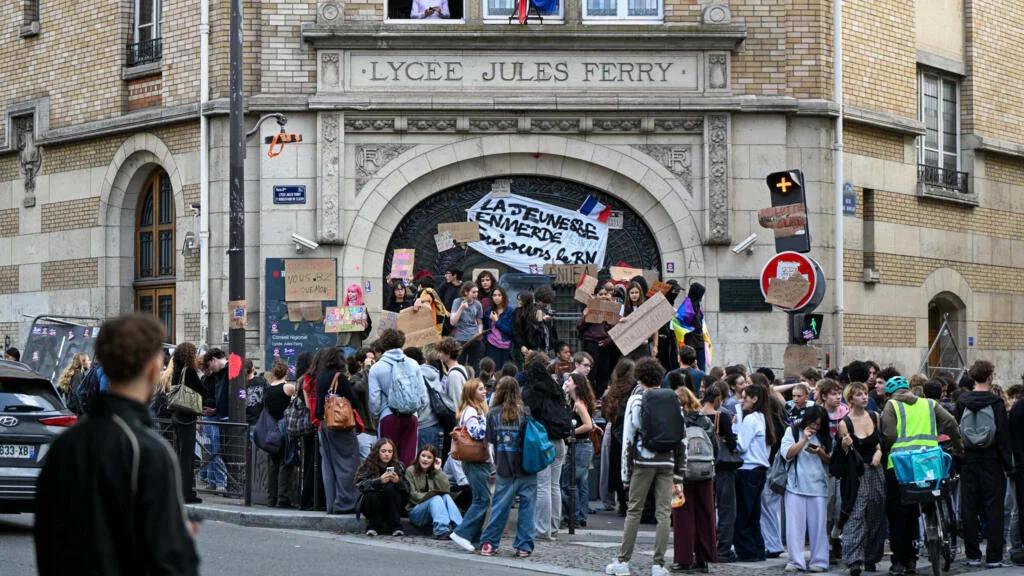
What began as a localized act of defiance at the Lycée Jules Ferry in Paris on September 17 has, in less than three weeks, morphed into a significant national challenge for the French government. As banners are raised and corridors blocked from Marseille to Lille, the movement has captured the frustration of a generation of students who feel the state has failed to provide the basic environment necessary for learning.
The Genesis: From Localized Discontent to National Uprising
The roots of the current unrest trace back to mid-September, when students at the Lycée Jules Ferry in Paris initiated a blockade. Initially, the students’ grievances were focused on the localized impact of dilapidated facilities—specifically, crumbling classrooms and inadequate safety measures that made the learning environment feel neglected.
However, the localized strike quickly struck a chord with student bodies nationwide. By the final week of September, what were isolated incidents of civil disobedience began to coalesce into a unified front. The movement’s momentum surged as social media amplified images of students staging sit-ins and blockading school entrances. By the first week of October, the protests had moved beyond individual school boards to represent a systemic challenge to the Ministry of National Education.
The demonstrators have identified three "pillars of failure" that define their struggle:
- Teacher Absenteeism: Students report that a lack of substitute teachers has led to weeks of "dead time," where students are left in study halls without instruction, jeopardizing their preparation for national examinations.
- The "Endurance" Curriculum: There is widespread outcry against the extension of school days, which students argue leads to mental exhaustion, burnout, and a decline in the quality of education.
- Infrastructure Decay: Many schools, some of which are centuries-old, suffer from heating failures, outdated technology, and structural hazards that officials have reportedly ignored for years.
Chronology of the Escalation
- September 17, 2026: The first major blockade begins at the Lycée Jules Ferry in Paris. Students demand an audience with regional education authorities regarding maintenance backlogs.
- September 21, 2026: Protests spread to neighboring institutions in the Île-de-France region. The Ministry of Education issues a statement calling for "calm and dialogue."
- September 25, 2026: Student unions formally align with the protest movement, issuing a list of demands that includes a national audit of school infrastructure and a cap on daily teaching hours.
- October 1, 2026: Images of widespread blockades in Paris gain international media attention. The government acknowledges the movement’s growth but remains firm on existing policy.
- October 5, 2026 (Today): Education Minister Édouard Geffray confirms that 500 schools are set to close, marking the most significant disruption to the French academic calendar in recent memory.
Supporting Data: A System Under Strain
The current crisis did not emerge in a vacuum. Data from the Ministry of Education and independent teachers’ unions highlights a system under extreme pressure.
The Absenteeism Gap: According to recent figures, the rate of unreplaced teacher absences has increased by 14% compared to the 2024 academic year. When a teacher is absent due to illness or personal emergency, the lack of a standardized, rapid-response substitute system means that students often go days or even weeks without specific subject instruction. In low-income districts, this gap is significantly wider, raising concerns about the widening inequality in academic achievement.
Infrastructure Investment: A 2025 report by the National Audit Office suggested that nearly 20% of France’s public high schools require "major structural renovations." The report highlighted issues ranging from lead-based paint and asbestos to modern-day connectivity failures. Despite these warnings, budget allocations for school maintenance have seen a stagnant growth rate, failing to keep pace with the rising costs of construction and energy.
The "Long Day" Phenomenon: French secondary students are among those with the longest school days in the OECD. Critics argue that the current structure—often running from 8:00 AM to 6:00 PM—is antiquated and does not align with modern cognitive science regarding adolescent attention spans and mental health.
Official Responses and Political Maneuvering
Education Minister Édouard Geffray has faced mounting pressure to provide a concrete solution. In his latest press briefing, Geffray expressed sympathy for the students’ concerns but warned against the tactics of blockade.

"We recognize that the infrastructure in some of our older institutions is not up to the standards of the 21st century," Geffray stated. "However, blockading schools is not a constructive way to advance the discourse. It denies the right to education for thousands of students who wish to be in their classrooms."
The Ministry has proposed a "National Round Table on Educational Environment," inviting student representatives, teacher unions, and regional authorities to Paris later this month. Yet, many student leaders have expressed skepticism, viewing the invitation as a stalling tactic. "We have been asking for dialogue for months," said one student representative from the blockade at Lycée Jules Ferry. "They only invite us to the table once we force them to close the doors."
Opposition politicians have sought to capitalize on the government’s perceived inaction. Some have called for an emergency budget appropriation to address the most urgent infrastructure hazards, while others have demanded the resignation of the Minister, citing his inability to manage the growing unrest within his own department.
Implications: The Long-Term Outlook
The current crisis represents a pivotal moment for French social policy. If the government fails to address the students’ demands, the movement could potentially merge with broader labor union strikes, which would cause paralysis across multiple sectors of the French economy.
1. The Reform Dilemma: If the government bows to pressure to shorten the school day, it faces a massive logistical challenge in reconfiguring childcare and parent work schedules. Conversely, maintaining the status quo risks a permanent erosion of trust between the state and the youth.
2. Academic Continuity: The most immediate concern is the impact on student performance. With national exams looming, the loss of classroom time in 500 schools could force the Ministry to postpone or modify testing schedules, potentially impacting university admissions.
3. The "Civic Awakening": Beyond the logistical impact, there is a sociological shift occurring. This generation of French students is showing a high level of political literacy and organizational capability. Even if the protests subside, the political consciousness sparked by this movement is likely to influence future student-led campaigns on issues such as climate change and economic policy.
As Monday progresses, all eyes remain on the gates of the 500 schools. The government is banking on a swift dissipation of the protests, while the students remain dug in. The outcome of this standoff will not only determine the state of France’s classrooms in the coming year but may also set the tone for the remainder of the current administration’s tenure.
Follow our liveblog throughout the day for real-time updates on school closures, protest locations, and any further statements from the Ministry of Education.