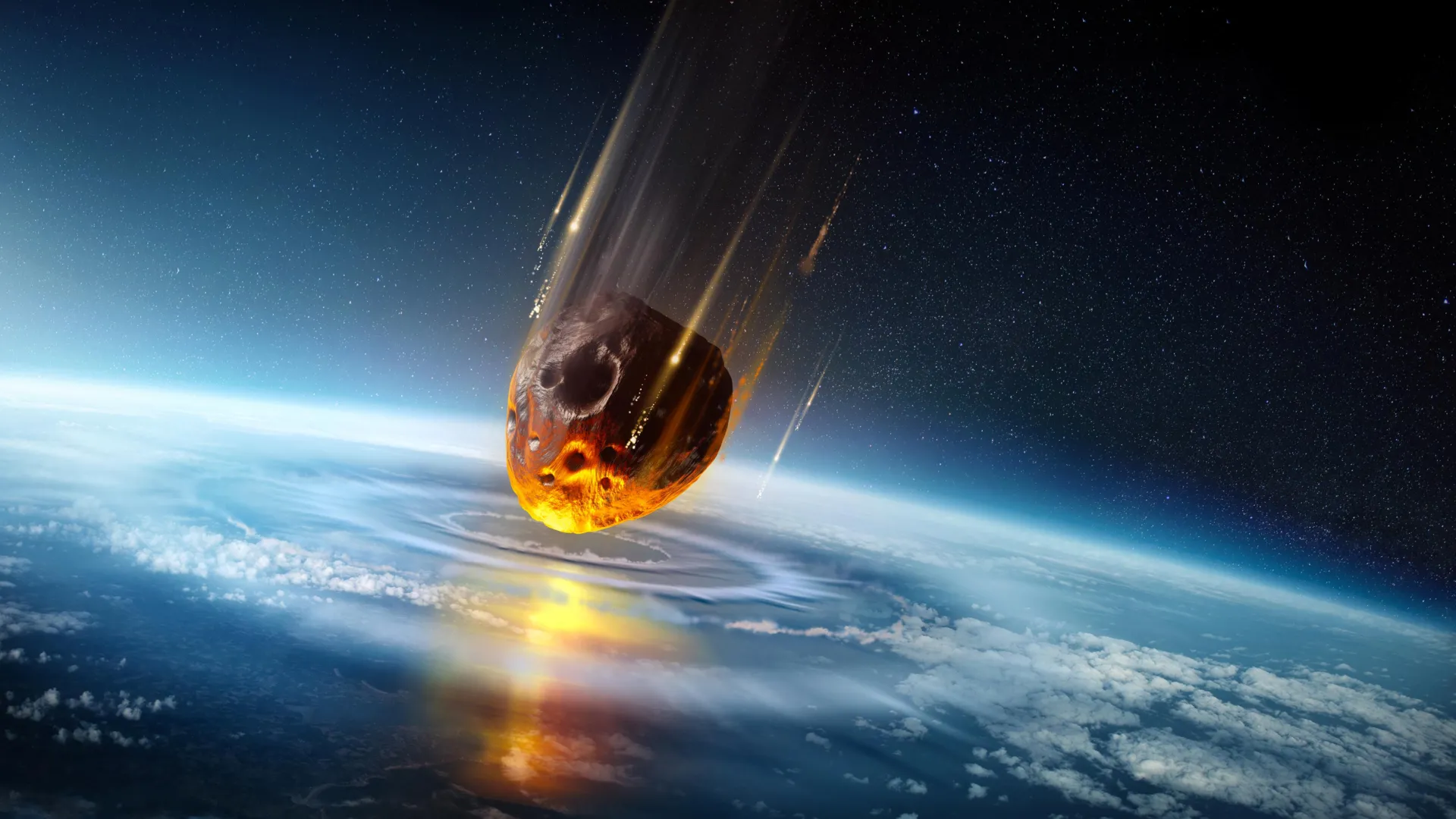
Deep beneath the pastoral landscape of Ames, Oklahoma, lies a secret buried under millions of years of sediment. For decades, geologists believed this massive subterranean scar—the Ames impact structure—was a definitive piece of a cosmic puzzle: the Ordovician Meteor Event. However, groundbreaking research from The University of Texas at Austin has fundamentally rewritten this chapter of geologic history, shifting the crater’s origin by nearly 100 million years and forcing scientists to re-evaluate the triggers of ancient mass extinctions.
A Legacy of Misinterpretation
For years, the scientific consensus regarding the Ames crater was built upon the presence of conodont fossils—tiny, tooth-like remains of ancient, eel-like marine creatures. Because these fossils were characteristic of the Ordovician period, researchers logically concluded that the meteorite impact that formed the crater occurred during that same window, roughly 467.5 million years ago.
This dating seemed to fit perfectly into a broader, provocative theory: that Earth had been pelted by a cluster of asteroids, perhaps even surrounded by a Saturn-like ring of debris, during the Middle Ordovician. The Ames structure was long considered a pillar of this hypothesis. But as new, high-precision dating techniques emerged, the reliance on biological "guestimates" began to show its flaws. The UT Austin team, led by Associate Professor Elizabeth Catlos of the Department of Earth and Planetary Sciences, discovered that the fossils were, in fact, "stowaways"—older material churned up and redeposited by a much later, more violent event.
Chronology of a Collision: From Ordovician to Devonian
The investigation into the true age of the Ames crater represents a triumph of modern geochronology. By shifting the timeline from the Ordovician (467 million years ago) to the Late Devonian (approximately 370 million years ago), the researchers have moved the impact from one geologic epoch to another.
The transition is not merely a matter of semantics; it is a fundamental recalibration of Earth’s timeline. The Devonian period was a time of immense biological transformation and, eventually, profound tragedy. By identifying the impact as a Late Devonian event, the research team has inadvertently linked the Ames structure to the Frasnian-Famennian extinction, one of the "Big Five" mass extinctions in Earth’s history. This event, occurring roughly 372 million years ago, devastated marine ecosystems, leading to the collapse of vast coral reef systems and the loss of a significant percentage of oceanic life.
By removing the Ames impact from the Ordovician cluster and placing it squarely within the vicinity of the Frasnian-Famennian boundary, the study invites a new line of inquiry: Could this impact have been a contributing factor to, or even a catalyst for, the biological collapse of the Late Devonian?
The Science of Zircons: Nature’s Time Capsules
The accuracy of this new timeline rests upon the shoulders of a microscopic mineral: zircon. Zircon crystals are renowned among geologists for their durability and their propensity to incorporate radioactive uranium into their crystal lattice as they form. Over time, this uranium decays into lead at a known, constant rate, providing an incredibly precise "atomic clock."
"No matter what technique we used, it was coming back to this younger signal," Catlos explained, noting that the consistency of the data was undeniable.
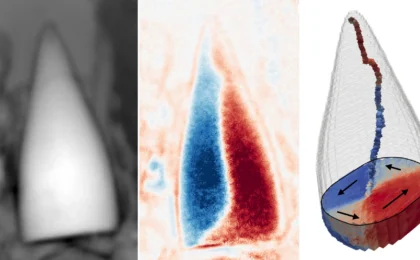
To ensure the zircons were indeed recording the impact rather than the age of the surrounding granite, the team utilized advanced imaging technology in collaboration with NASA. Using cathodoluminescence and electron backscatter diffraction, they mapped the internal structure of the crystals. When a meteorite strikes, the extreme pressure creates distinctive lattice defects and recrystallization patterns that are invisible to the naked eye. By confirming these signatures, the researchers proved that the zircons were physically altered by the heat and pressure of the collision, effectively locking in the exact date of the impact.
Danny Stockli, dean of the Jackson School of Geosciences and a co-author of the study, emphasized the significance of this method. "These small crystals allow us to go back in time and learn about the major changes to Earth’s ancient landscapes," Stockli said. "It would be great to do this for more of the meteor impact sites across the continent so we could get a more accurate timeline for these major events."
Implications: A New Piece of a Mass Extinction Puzzle
The implications of this discovery ripple far beyond the borders of Oklahoma. One of the most enduring debates in paleontology and planetary science is the relative role of "inner" versus "outer" triggers for mass extinctions. Were these global catastrophes driven primarily by Earth-bound processes—such as massive, continent-sized volcanic eruptions—or by external, extraterrestrial events like large-scale asteroid impacts?
By reclassifying the Ames impact, the researchers are effectively shifting a major pawn on the board of Earth’s history. "We’re basically taking a major pawn out of the Ordovician Meteor Event and dumping it into the Frasnian-Famennian event, and saying, ‘This is where this impact belongs,’" Catlos said.
This recalibration suggests that the Late Devonian was a more chaotic period than previously thought. If a significant impact event occurred in tandem with other stressors—such as shifting ocean oxygen levels or climate cooling—it provides a more nuanced model for how complex life can be pushed to the brink of annihilation.
A Tribute to the Scientific Process
The journey to this discovery was not without personal cost. The research project was initiated by Andrew Parisi, a dedicated graduate student at the Jackson School of Geosciences. It was Parisi who first traveled to Oklahoma, secured the core samples from the Oklahoma Geological Survey, and performed the initial extraction and dating work. Parisi, who graduated in 2018, passed away before he could see the full realization of his findings.
The study, published in the journal Meteoritics & Planetary Science, also honors the memory of co-author Michael Brookfield, an affiliated researcher who passed away before the paper’s publication. Their work, supported by the expertise of Research Professor Sean Gulick and Professor Emeritus Mark Cloos, serves as a poignant reminder that scientific progress is a cumulative, intergenerational endeavor.
The Future of Impact Geology
The Ames crater is more than just a historical footnote; it is a major producer of oil and gas, demonstrating that the structural changes caused by massive impacts can create the perfect conditions for hydrocarbon reservoirs. By better understanding the timing and mechanics of these craters, the geological community can improve its predictive models, not only for oil exploration but for understanding the long-term stability of the Earth’s crust.
As the team looks ahead, they hope this study will serve as a catalyst for a broader, continent-wide re-examination of known impact sites. Many of the impact structures currently categorized in older geological clusters may, like the Ames crater, be victims of faulty dating based on indirect evidence.
"We are constantly refining our understanding of the past," Stockli concluded. "Every time we use these precise radiometric techniques, we find that the history of our planet is more complex, more dynamic, and often more violent than we previously dared to imagine."
As the scientific community digests these findings, the "Ames case" stands as a testament to the power of technological evolution in geology. By looking closer—at the microscopic level of the zircon crystal—we have managed to look further back, clearing away the fog of misinterpretation to reveal a clearer, more accurate image of our planet’s deep-time history. The story of Earth is being rewritten, one impact at a time, and it is clear that the Devonian period may have been far more punctuated by cosmic violence than the textbooks once claimed.