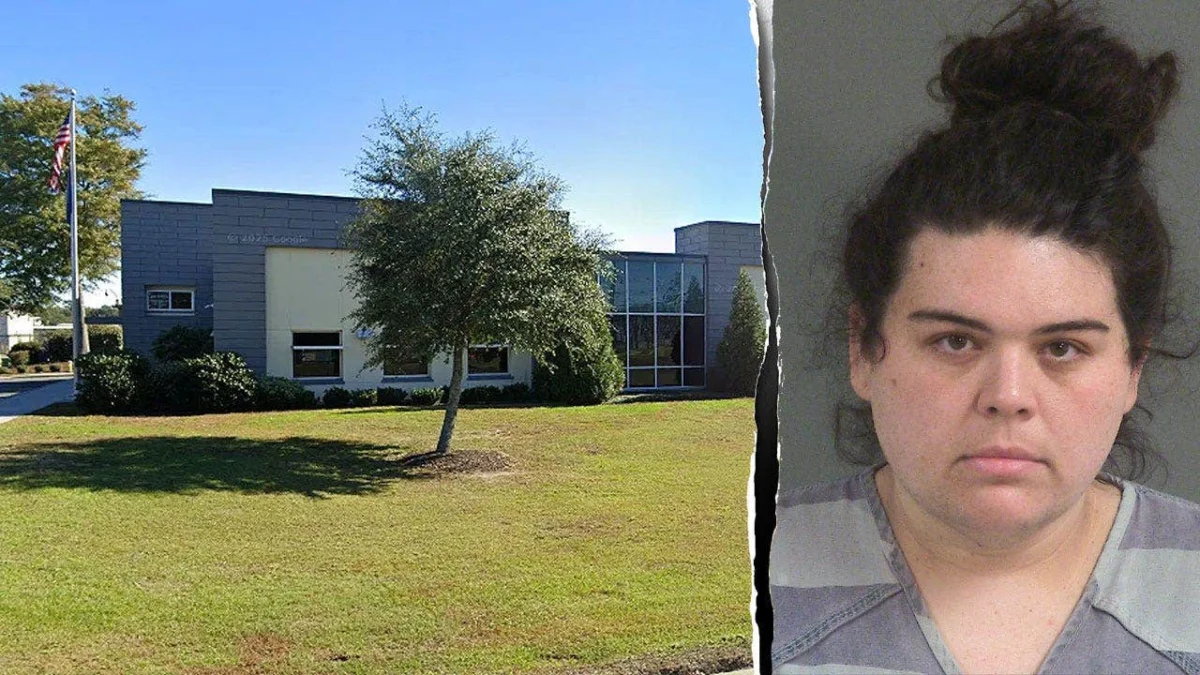
A South Carolina community is demanding answers following the tragic discovery of two young sisters found dead inside their Ladson home on September 29. Their mother, 31-year-old Justine Marie May, has been arrested and charged with two counts of homicide by child abuse.
According to investigative affidavits, May admitted to detectives that the weeks leading up to her daughters’ deaths were a "blur" and confessed that she could not recall the last time she had provided them with food or water.
The case has ignited intense public scrutiny, particularly after revelations that sheriff’s deputies had made contact with May and her children five times in the two months preceding the tragedy, reporting no visible signs of distress during those encounters.
1. Main Facts of the Case
On September 29, deputies from the Charleston County Sheriff’s Office (CCSO) responded to a residential address in Ladson, an unincorporated community located just outside Charleston, South Carolina. The deputies were dispatched to conduct a routine welfare check on the residence.
Upon arriving at the scene, law enforcement officers encountered Justine Marie May outside the home. According to court documents, May was visibly distraught, crying, and "speaking incoherently." Driven by concern for the occupants of the home, deputies entered the residence to check on May’s two young daughters. Inside, they discovered both children deceased.
The victims, identified in court records as being approximately 1½ and 2½ years old, had succumbed to severe, prolonged neglect. May was immediately detained and subsequently charged.
+-----------------------------------------------------------------------+
|                            CASE OVERVIEW                              |
+-----------------------------------------------------------------------+
| Suspect:          Justine Marie May (Age 31)                          |
| Charges:          Two counts of Homicide by Child Abuse               |
| Victims:          Two female children (Ages approx. 1.5 and 2.5)       |
| Location:         Ladson, Charleston County, South Carolina           |
| Discovery Date:   September 29                                        |
| Primary Cause:    Severe nutritional and hydration deprivation        |
+-----------------------------------------------------------------------+
During post-arrest interrogations, May reportedly painted a chaotic picture of her household’s final weeks. She told investigators that the preceding fortnight had passed in a state of cognitive disorientation, describing the period as a "blur." Most critically, she admitted to detectives that she could not remember when she had last fed her toddlers or given them liquids.

Investigators concluded that May exhibited an "extreme indifference for human life" by failing to provide the basic sustenance necessary for the survival of her young children. Warrants state that this severe deprivation was the "main contributor to their death."
2. Chronology of Events
The timeline of law enforcement interaction with the May household reveals a series of contacts that failed to prevent the ultimate demise of the two young girls.
   [August]
      │
      ├── First Contact: CCSO deputies conduct wellness/welfare check.
      │   No immediate actionable concerns noted.
      │
      └── Second Contact: CCSO deputies interact with May and children.
          Family appears stable; no intervention initiated.
      │
   [September]
      │
      ├── Third Contact: CCSO deputies make contact with the family.
      │
      ├── Fourth Contact: CCSO deputies interact with May and children.
      │
      ├── Fifth Contact (Sept 20): Final wellness check while children are alive.
      │   Deputies report no obvious signs of concern.
      │
      └── Final Contact (Sept 29): Deputies respond to a welfare check.
          May found incoherent outside; children discovered deceased inside.
          May arrested and booked into Charleston County Jail.
August: Initial Law Enforcement Contacts
During the month of August, Charleston County Sheriff’s deputies made separate contact with Justine Marie May and her two daughters on two distinct occasions. According to subsequently published reports, these interactions did not result in any formal reports of neglect, abuse, or safety concerns. Deputies noted that the children appeared to be in acceptable health and did not show obvious outward signs of severe endangerment.
September: Escalating Interventions
In September, the frequency of law enforcement contact increased. Deputies interacted with May and her children on three separate occasions within a span of less than three weeks.
- September 20: The final contact with the children while they were still alive occurred on this date. Deputies conducting the check reported that they did not observe any immediate indicators of severe malnutrition, physical abuse, or life-threatening neglect.
- September 20 to September 29: During this nine-day window, the children were left without basic care, leading to their deaths. May later described this period to investigators as a total cognitive "blur."
- September 29: Deputies returned to the Ladson residence for another welfare check. They discovered May in a state of emotional and cognitive collapse outside the home. Upon entering, they confirmed the deaths of the 1½-year-old and 2½-year-old girls. May was arrested at the scene and booked into the Charleston County Detention Center.
3. Supporting Data and Evidence
The prosecution’s case against Justine Marie May rests on physical evidence recovered from the home, medical assessments of the victims, and May’s own admissions to law enforcement.
Physiological Vulnerability of Toddlers
The ages of the deceased children—18 months and 30 months—are critical to understanding the rapid onset of fatal neglect. Pediatric medical literature emphasizes that infants and toddlers possess highly vulnerable physiological profiles:
- Metabolic Demands: Young children have high metabolic rates relative to their body mass and possess very limited glycogen and fat reserves.
- Dehydration Risks: Toddlers are exceptionally susceptible to rapid, life-threatening dehydration. While healthy adults can survive for several weeks without food, toddlers can suffer fatal organ failure in a matter of days if denied fluids, particularly in unventilated or warm indoor environments.
- Inability to Self-Advocate: Children under the age of three are entirely dependent on adult caregivers to access food and water, leaving them unable to seek help when abandoned within a residence.
Legal Framework: Homicide by Child Abuse in South Carolina
May has been charged under South Carolina Code of Laws Section 16-3-85, which defines homicide by child abuse.

+-----------------------------------------------------------------------------+
|               SOUTH CAROLINA CODE § 16-3-85: KEY PROVISIONS                 |
+-----------------------------------------------------------------------------+
| A person is guilty of homicide by child abuse if they:                      |
|                                                                             |
| 1. Cause the death of a child under the age of eleven                       |
| 2. While committing child abuse or neglect                                  |
| 3. Under circumstances manifesting an "extreme indifference to human life"  |
|                                                                             |
| Penalty: Imprisonment for life, or for a mandatory minimum term of 20 years |
+-----------------------------------------------------------------------------+
The state must prove that the defendant’s conduct was not merely negligent, but rose to the level of "extreme indifference." The arrest warrants explicitly incorporate this language, citing May’s failure to provide basic sustenance as the direct, primary cause of her daughters’ deaths.
4. Official Responses and Investigations
The discovery of the children’s deaths has triggered a multi-agency response, focusing not only on the criminal prosecution of Justine Marie May but also on potential systemic oversights by local law enforcement.
Internal Review by Charleston County Sheriff’s Office
The Charleston County Sheriff’s Office announced that its Office of Professional Standards has launched an internal administrative review. The inquiry will scrutinize the five prior contacts deputies had with May and her children in August and September.
Investigators will examine:
- The specific nature of the calls that prompted each of the five visits.
- The training and protocols utilized by the responding deputies to assess child welfare.
- Whether any subtle signs of maternal instability, cognitive decline, or domestic neglect were missed or minimized during the visits.
- Whether the deputies complied with state mandates regarding the reporting of potential child welfare issues to social services.
State-Level Interventions
Because the case involves child fatalities, South Carolina law requires independent oversight. The South Carolina Law Enforcement Division (SLED) Special Victims Unit, in coordination with the state’s Department of Child Fatalities, is actively assisting in the investigation.
These state entities are tasked with conducting an independent review of the home environment, analyzing toxicology and autopsy reports, and evaluating the history of any prior interactions between the family and the South Carolina Department of Social Services (DSS).
5. Systemic Implications and Broader Context
This case highlights a critical gap in the safety nets designed to protect vulnerable children. It raises urgent questions about the effectiveness of law enforcement welfare checks and the challenges first responders face when identifying severe neglect.

The Limits of Law Enforcement Welfare Checks
Welfare checks conducted by patrol deputies are often brief, transactional interactions. Officers are trained to look for immediate signs of physical danger, obvious abuse, or hazardous living conditions. However, they may lack the specialized clinical training required to recognize the early stages of severe neglect, maternal psychological breakdown, or nutritional deprivation.
Without a mandate to inspect food supplies, interview parents extensively, or consult child development specialists, responding officers can easily misinterpret a clean or quiet home as a safe environment.
The Statistics of Fatal Neglect
National child welfare data indicates that child neglect is often more lethal than active physical abuse, though it frequently receives less public attention.
+-----------------------------------------------------------------------+
|                 U.S. CHILD FATALITY DATA BY CAUSE                     |
|                      (National Averages)                              |
+-----------------------------------------------------------------------+
| Neglect Only (e.g., Starvation, Abandonment)      ■■■■■■■■■■  (approx. 70%)|
| Physical Abuse Only                               ■■■         (approx. 20%)|
| Combined Abuse and Neglect                         ■           (approx. 10%)|
+-----------------------------------------------------------------------+
According to the U.S. Department of Health and Human Services, nearly three-quarters of all child abuse and neglect fatalities are attributed to neglect alone. Infants and toddlers under the age of three represent the vast majority of these victims.
Calls for Reform
In the wake of the Ladson tragedy, child advocacy groups in South Carolina are calling for systemic reforms. Key recommendations include:
- Mandatory Cross-Reporting: Implementing protocols that require law enforcement to automatically notify the Department of Social Services (DSS) whenever multiple welfare checks are requested for the same household within a short period, regardless of whether deputies observe immediate concerns.
- Enhanced Interdisciplinary Training: Providing police officers with advanced training on how to identify subtle indicators of chronic neglect, food insecurity, and parental substance abuse or mental health crises.
- Community-Based Intervention: Strengthening local social support systems to identify isolated parents before their cognitive or emotional state deteriorates into severe, fatal neglect.
As the criminal case against Justine Marie May moves forward in the Charleston County judicial system, the parallel administrative and state investigations will seek to determine how two young children could perish from starvation and dehydration in a home that was visited five times by law enforcement in the weeks leading up to their deaths.