By Editorial Staff
October 1, 2026
The film adaptation of Colleen Hoover’s polarizing bestseller Verity, directed by Michael Showalter, has officially hit theaters, and audiences are reeling. Starring Anne Hathaway, Dakota Johnson, and Josh Hartnett, the psychological thriller promises a high-stakes narrative filled with sexual tension and domestic unease. However, the film’s most significant achievement is its closing act—a pivot so sharp it effectively reframes the entire preceding two hours, turning a seemingly straightforward story of toxic obsession into a harrowing meditation on perception, gaslighting, and the monstrous capabilities of the human psyche.
Warning: This article contains major spoilers for the plot and ending of Verity.
The Premise: A Gothic Trap in the Vermont Woods
The narrative trajectory of Verity begins with the classic tropes of the "trapped in a house" thriller. Lowen Ashleigh (Dakota Johnson), a struggling author on the brink of financial ruin, is offered a life-changing opportunity. Jeremy Crawford (Josh Hartnett), the grieving and handsome husband of the world-famous author Verity Crawford (Anne Hathaway), recruits Lowen to finish his wife’s lucrative book series. Verity, having suffered a catastrophic car accident, is now permanently paralyzed and unable to continue her work.
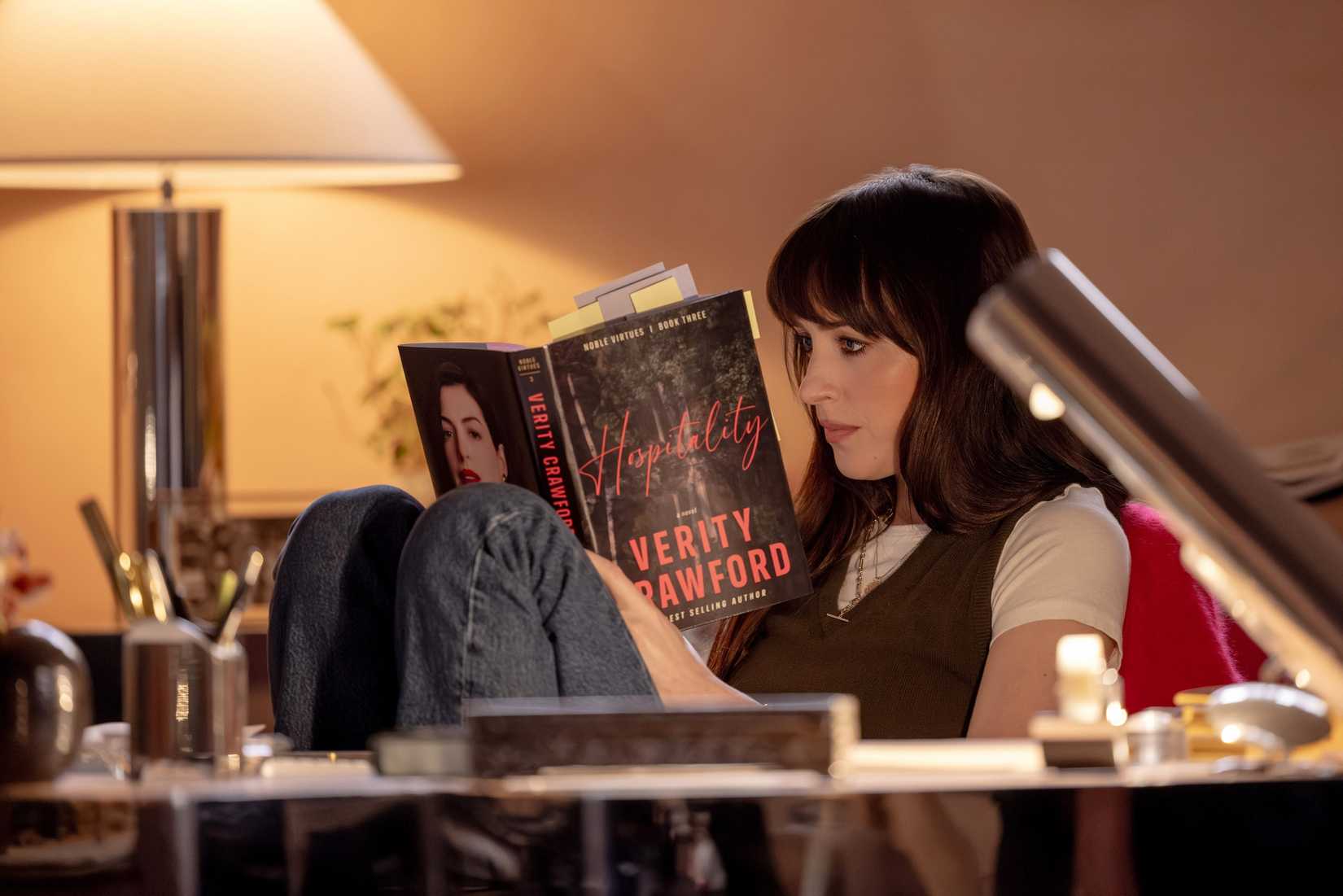
Lowen moves into the Crawfords’ remote, glass-walled mansion in Vermont, a setting that functions as the film’s silent, claustrophobic antagonist. As Lowen begins to fall for Jeremy, she discovers a hidden manuscript in Verity’s office. This manuscript, written in the first person, chronicles Verity’s most depraved thoughts. It details a profound resentment toward her children, Harper and Crew, and, most chillingly, describes her role in the boating accident that led to her daughter Harper’s death.

For the majority of the film, the audience is conditioned to view the manuscript as the "truth." We are led to believe that Verity is a sociopathic mastermind who has been feigning her paralysis while secretly manipulating those around her. When Lowen and Jeremy eventually kill Verity—convinced she is a danger to them and their future—the audience is encouraged to view the act as a desperate, justified measure of self-defense.
A Chronology of Deception
To understand why the final twist is so effective, one must look at the timeline of the film’s central deception:
- The Arrival: Lowen enters the household, establishing the power dynamic. Jeremy is the "grieving protector," and Verity is the "unresponsive patient."
- The Discovery: Lowen finds the manuscript. The audience is shown vivid, traumatic flashbacks that seemingly corroborate the manuscript’s claims, cementing Verity as the villain.
- The Escalation: Lowen installs a baby monitor, a classic trope of surveillance. She catches Verity showing signs of movement, which acts as the "smoking gun" that justifies the eventual murder.
- The Climax: Jeremy and Lowen conspire to dispose of Verity, hiding her body in the lake. The narrative framing suggests that justice has been served.
- The Resolution: A year later, the couple is settled, successful, and expecting a child. The final scene, however, introduces the "loose floorboard" trope, where Lowen discovers a hidden letter that destroys the established reality.
Supporting Data: The Psychology of the Twist
The effectiveness of Verity lies in its manipulation of the unreliable narrator. Psychological thrillers often rely on the audience trusting their eyes, but Showalter’s adaptation forces us to question the nature of "evidence."
The manuscript, which the audience spends most of the film reading through Lowen’s eyes, is revealed to be an example of "antagonistic journaling." In professional writing circles, authors often draft from the perspective of their villains to heighten the realism of their prose. The twist suggests that Verity was simply doing her job, and her "darkest secrets" were merely fiction—a craft that, ironically, led to her demise.
Furthermore, the data points regarding Jeremy’s character shift dramatically. Throughout the film, he is the sympathetic victim. By the final act, he is revealed to be a calculating abuser who drugged his wife to cause the car accident that led to her paralysis. The "evidence" of her faking paralysis is recontextualized: she wasn’t faking to trap them; she was paralyzed because of him and was hiding her recovery in a desperate attempt to survive until she could escape with her son, Crew.

Official Responses and Creative Direction
Director Michael Showalter has noted in recent interviews that the goal of this adaptation was to lean into the ambiguity of the source material. By casting Anne Hathaway, a performer known for her nuance, the film ensures that even when Verity is "paralyzed," she is an active, albeit silent, participant in the scene.
"The challenge was making the audience feel like they were reading a book," Showalter stated during a recent press junket. "We needed to build a visual language for the manuscript that felt as real as the ‘real life’ happening in the house. If the audience doesn’t believe the manuscript is real, the movie doesn’t work."
Josh Hartnett’s performance has also been lauded for its dual nature. His ability to switch from the charming, vulnerable romantic lead to the cold, murderous antagonist in the final moments of the film serves as the linchpin for the entire project.
The Implications: A Shift in Genre
The ending of Verity has profound implications for how we view the "woman-in-peril" genre. By revealing that the hero (Jeremy) is the true villain and the victim (Verity) was an artist whose work was misinterpreted, the film subverts the traditional domestic thriller.
1. The Death of the Reliable Narrator
The film forces the viewer to confront their own biases. We assumed Verity was a "bad mother" because of her writing, ignoring the possibility that a woman’s artistic output is not a direct reflection of her morality. This invites a larger conversation about how we treat female creators in media—often equating their dark, creative minds with inherent evil.
2. The Cycle of Gaslighting
The most haunting implication of the film is the final shot. Lowen discovers the truth, realizes she has helped a murderer, and instead of going to the police, she wipes away her tears, hides the letter, and chooses to stay. This is not a "happy ending"; it is a descent into complicity. Lowen is now a permanent part of the cycle of abuse that Jeremy cultivated. She has become the new Verity—a woman living in a house of secrets, tethered to a man who has proven he is capable of destroying anyone who challenges his narrative.
3. The Power of Written Word
The film serves as a meta-commentary on the power of the written word. Verity’s manuscript was the weapon that killed her, but the hidden letter is the ghost that haunts the survivors. It highlights the dangers of misinterpreting creative work and the consequences of weaponizing fiction against its author.
Final Thoughts: Why It Resonates
Verity works because it refuses to offer the audience a clean resolution. In most thrillers, the discovery of the truth would lead to a confrontation or a quest for justice. Here, the discovery leads to silence. By choosing to stay with Jeremy, Lowen acknowledges that she has "won" the life she wanted—the successful career, the man, the family—but at the cost of her own moral clarity.
The film serves as a chilling reminder that, in the world of the Crawfords, the truth is merely a matter of perspective. As the credits roll, the audience is left to ponder the fate of the next person who might move into that Vermont mansion, and whether any of them will ever truly escape the web of stories spun by the woman who was silenced.
Verity is currently playing in theaters nationwide. Whether you are a fan of the original novel or a newcomer to this twisted tale, the film provides an experience that demands multiple viewings to fully parse the layers of its dark, concluding transformation.