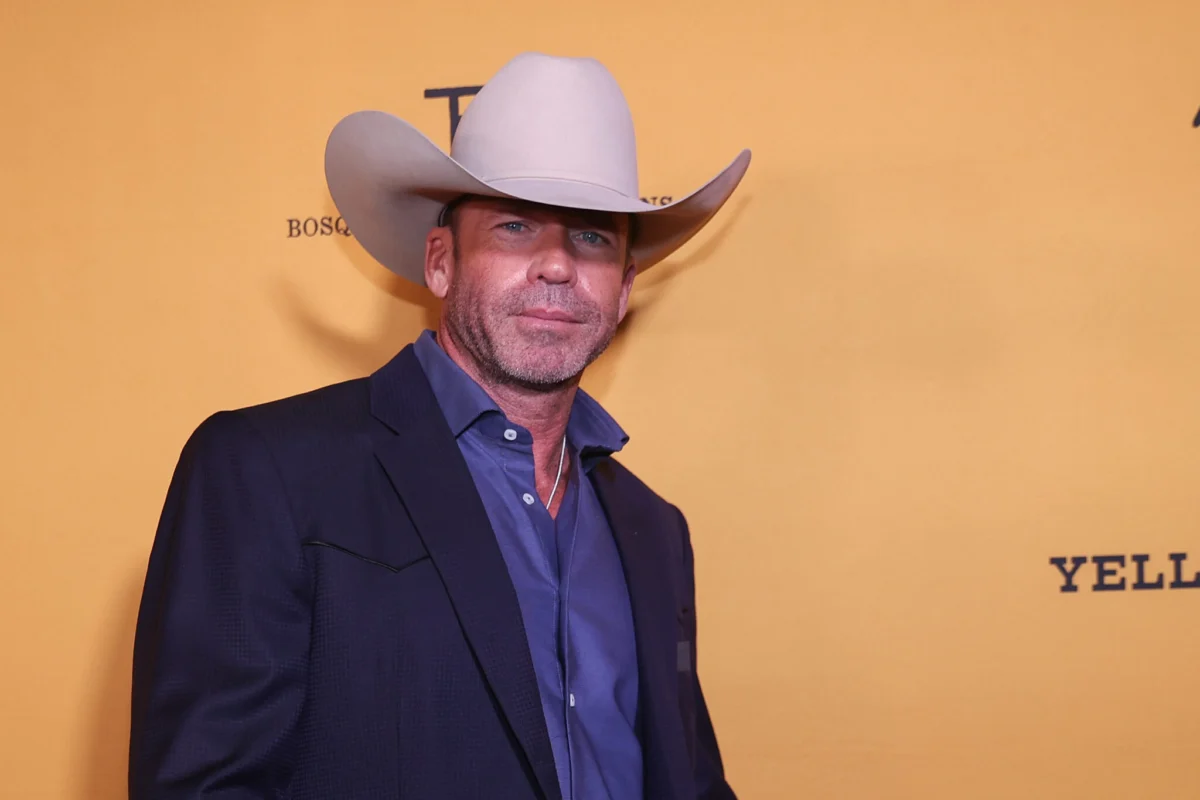
In a seismic shift for the entertainment landscape, NBCUniversal has successfully recruited Taylor Sheridan—the prolific creative force behind the modern Western renaissance—away from his decade-long home at Paramount. The move, confirmed in late 2025, represents a significant victory for NBCUniversal Entertainment Chair Donna Langley, who orchestrated the poaching by identifying a unique vulnerability in Paramount’s corporate armor.
The deal, which bridges both the television and film sectors, marks a homecoming of sorts for Sheridan, who originally gained industry acclaim as a screenwriter before pivoting to build a monumental television empire. For Langley, the acquisition is more than just a talent grab; it is a calculated bet on the future of franchise-building in an increasingly fractured media ecosystem.
Identifying the Fracture: The Strategy Behind the Move
Donna Langley’s pursuit of Sheridan was not a impulsive play, but a surgical strike initiated during a period of profound uncertainty for Paramount. During an appearance at Bloomberg’s Screentime event on Thursday, Langley offered a rare glimpse into the corporate diplomacy that facilitated the shift.
"There’s just a moment to kind of look around the marketplace and see if there’s a competitive advantage," Langley explained. "I saw an opportunity created by the disruption and instability at Paramount."
While Langley remained diplomatically vague regarding the specific catalysts for this "instability," industry insiders recognize she was referencing the protracted and often chaotic merger process involving Paramount, Skydance, and the subsequent high-stakes battle for Warner Bros. The atmosphere at Paramount, marked by executive turnover and strategic indecision, provided the ideal opening for a competitor to offer a more stable, growth-oriented environment.
Langley noted that her initial conversations with Sheridan were not centered on his sprawling television slate, but on his roots in cinema. "Where I started talking to Taylor was about film," she revealed. "I knew he had a film deal at Paramount, but it was a first-look deal. It didn’t have as many teeth to it as his television deal. That’s how it started, and then we just got to talking."
A Chronology of a Creative Titan
To understand the magnitude of this move, one must look at the decade of momentum that led Sheridan to this crossroad.
The Screenwriting Breakthrough (2015–2017)
Before he was the master of the "Dutton-verse," Sheridan was one of Hollywood’s most sought-after screenwriters. His early work defined a gritty, neo-Western aesthetic that captivated critics and audiences alike.
- Sicario (2015): A taut, visceral thriller that established Sheridan’s reputation for moral complexity.
- Hell or High Water (2016): An Academy Award-nominated masterpiece that showcased his ability to blend social commentary with genre thrills.
- Wind River (2017): His directorial debut, cementing his status as a triple-threat creator.
The Paramount Empire (2018–2025)
In 2018, Sheridan shifted his focus to the small screen, launching Yellowstone on Paramount Network. What began as a singular drama quickly evolved into a multi-generational powerhouse.
- 2018: Yellowstone premieres, becoming a cultural phenomenon.
- 2021–2024: The rapid expansion of the universe, including 1923, The Madison, and Dutton Ranch.
- Diversification: Sheridan concurrently launched Mayor of Kingstown, Lioness, Marshals, and Landman, effectively becoming the most productive showrunner in television history.
The Transition (2025–2028)
The transition is structured in two distinct phases:
- 2026: The film component of the NBCUniversal pact takes effect, allowing Sheridan to focus on cinematic storytelling under the Universal banner.
- 2028: The television component activates once Sheridan fulfills his remaining contractual obligations to Paramount.
The "Teeth" of the Deal: Why Film Mattered
Langley’s insight regarding the "lack of teeth" in Sheridan’s Paramount film deal speaks to a broader frustration often felt by top-tier creators. In the current studio model, many talent contracts are structured as "first-look" deals, which give a studio the right to bid on a project first, but offer little in the way of production guarantees or creative autonomy.
By offering a more robust, integrated film deal, NBCUniversal has signaled to Sheridan that his cinematic aspirations will be treated with the same priority as his television output. For Sheridan, who is currently working on high-profile projects like the Call of Duty film adaptation and the long-awaited Sicario 3, this level of commitment is paramount. It allows him to return to his roots with the full weight of a studio that is eager to turn his scripts into tentpole theatrical events.
Official Responses and Industry Implications
The industry reaction has been one of shock, followed by a sober assessment of what this means for Paramount’s future. Paramount, which has long relied on the "Sheridan Industrial Complex" to drive subscriptions and ratings, now faces a multi-year wind-down of its most valuable asset.
While Paramount officials have maintained a public posture of business-as-usual—emphasizing that Sheridan remains under contract for several more years—the subtext is clear: the studio is losing its primary architect.
For NBCUniversal, the implications are profound. By securing Sheridan, they are not just adding a talented writer; they are acquiring a brand-builder capable of launching multiple successful series and film franchises simultaneously. This move aligns with Universal’s broader strategy of capitalizing on "prestige IP" and "creator-led" content to compete with streamers like Netflix, which was notably outmaneuvered in the recent battle for Warner Bros.
The Future of the "Dutton" Universe and Beyond
As Sheridan prepares for his eventual move to NBCUniversal, the immediate future remains tied to his existing obligations. Fans of Yellowstone and his other series can expect the final chapters of his Paramount tenure to maintain the high production values and narrative intensity that have defined his career.
However, the industry is already looking ahead to 2026. With the film component of the NBCUniversal deal approaching, speculation is mounting regarding what kind of "universal" stories Sheridan will tell outside of the Western genre. Will he apply his penchant for gritty realism to new, expansive intellectual properties? Or will he continue to refine the American mythos he has spent the last decade building?
Conclusion: A New Era of Talent Management
The defection of Taylor Sheridan is a watershed moment that highlights the shifting power dynamics in Hollywood. In an era of mergers, acquisitions, and platform volatility, the "human capital"—the visionary creators capable of moving the needle—has become the ultimate currency.
Donna Langley’s ability to recognize the "moment" and capitalize on the "instability" of a competitor demonstrates a masterclass in executive leadership. By focusing on the specific creative needs that were being underserved elsewhere, she has secured not just a writer, but an entire ecosystem of storytelling that will likely define the next decade of NBCUniversal’s cinematic and television portfolio.
As the industry watches the clock wind down on Sheridan’s Paramount tenure, one thing is certain: the landscape of Hollywood is changing, and the architects of that change are the ones who can see opportunity where others only see chaos.