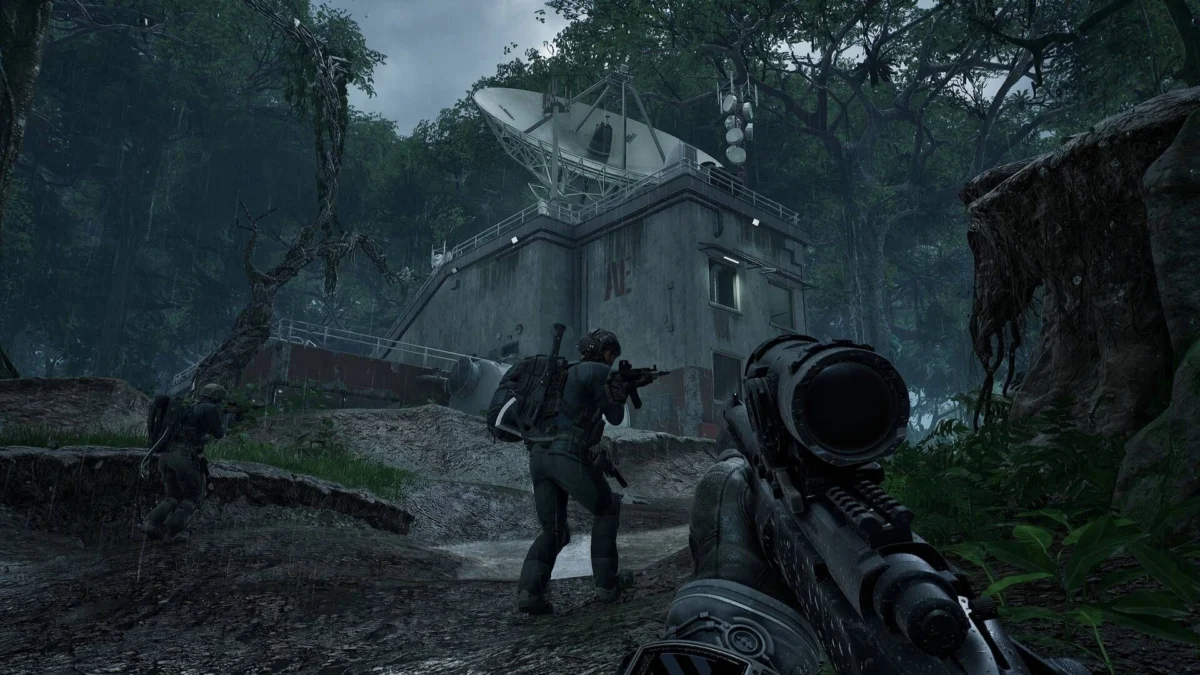
In a strategic shift that marks a significant pivot for PUBG Studios, parent company Krafton has officially announced the cancellation of PUBG: Black Budget. The project, which was intended to be the studio’s flagship entry into the burgeoning extraction shooter genre, has been shelved just over a year after its inception. The decision underscores the brutal reality of the modern live-service market, where even established franchises struggle to capture the lightning-in-a-bottle success of their predecessors.
The Rise and Fall: A Brief Chronology
The genesis of PUBG: Black Budget was rooted in a market observation. Following the massive industry shift toward extraction-based gameplay—spurred by the viral success of titles like Escape from Tarkov and the 2025 breakout hit Arc Raiders—Krafton sought to leverage its most valuable IP to remain competitive.
- Late 2024: Internal development begins at PUBG Studios to adapt the PUBG formula into an extraction-heavy format, focusing on high-stakes looting, risk-reward mechanics, and persistent gear management.
- December 2025: The first Closed Alpha test is conducted. Initial feedback highlights the promise of the gunplay but points to significant friction in the extraction loop.
- June 2026: A second, more extensive Closed Alpha test takes place. While technical performance improves, player retention metrics and core loop engagement fail to meet internal benchmarks.
- October 2026: Krafton officially announces the termination of the project, citing an inability to deliver a sustainable long-term experience.
The Mechanics of Failure: Why Black Budget Missed the Mark
To understand why a company as experienced as Krafton would pull the plug, one must look at the "Extraction Shooter" landscape. This genre relies on a delicate balance between tension and fairness. Players enter a map, scrounge for resources, and must reach an extraction point before time runs out.
Industry analysts suggest that PUBG: Black Budget faced a "genre identity crisis." The original PUBG defined the Battle Royale genre through a shrinking circle and a singular goal: survival. The extraction genre, however, requires a complex economy of loot, hideouts, and persistent progression that Black Budget struggled to integrate seamlessly.
Furthermore, the market has become increasingly crowded. With Escape from Tarkov dominating the "hardcore" demographic and Arc Raiders capturing the more accessible, stylish side of the genre, Black Budget found itself in a "no-man’s-land"—too familiar to existing PUBG players to feel fresh, yet too experimental to compete with established extraction titles.
Official Stance: The Developer’s Perspective
In a candid statement released via the game’s official Steam community hub, the developers at PUBG Studios expressed the difficulty of the decision. They noted that the development process was an exhaustive effort to bridge the gap between their legacy gameplay and new, trend-driven mechanics.

"After reviewing the project’s development status and future direction, we concluded that its current direction would not allow us to deliver an experience players could enjoy over the long term," the statement read.
This admission is rare in the high-stakes world of AAA gaming, where projects are often "zombie-walked" through development despite internal failures. By cutting the project now, Krafton is signaling a commitment to quality over quantity, attempting to avoid the "sunk cost fallacy" that has plagued other developers in the industry. The studio emphasized that the data and "lessons learned" from the alpha tests would be folded into future projects, rather than being discarded.
A History of Experimental Risks
PUBG: Black Budget is not an isolated incident in Krafton’s recent history. The company has been aggressively testing the limits of its brand, often resulting in swift cancellations. The closure of PUBG: Blindspot earlier in the development cycle served as an early warning that the studio was willing to terminate underperforming assets quickly.
For investors, these cancellations are a double-edged sword. While they demonstrate a lack of project longevity, they also prevent the "bloat" that occurs when a studio is forced to support a game that lacks a dedicated player base. Krafton’s ability to pivot—and to accept failure—is a hallmark of a company that is trying to evolve beyond its 2017 hit, PUBG: Battlegrounds.
Implications for the PUBG Franchise
The cancellation leaves the PUBG brand in a precarious position. The original Battlegrounds remains a global juggernaut, but its age is showing. The industry has shifted away from the simple "last man standing" format, and PUBG has struggled to find a secondary pillar to support the brand.
All eyes are now on PUBG DED.NET. Revealed at Gamescom’s Opening Night Live, DED.NET is a roguelite multiplayer experience that promises to take the gunplay of the original title and place it into a more dynamic, procedurally generated environment. If DED.NET can succeed where Black Budget failed, it could revitalize the franchise’s image as an innovator rather than a legacy act.

The Future of Extraction Shooters
The cancellation of Black Budget serves as a case study for the entire industry. The "Extraction Shooter" gold rush of 2025 and 2026 has begun to stabilize. Developers have learned that copying the formula of Escape from Tarkov or Arc Raiders is not a guarantee of success. Players today demand more than just a map and a gear-loss mechanic; they demand a robust social ecosystem, meaningful progression, and a "hook" that distinguishes them from the competition.
For the gaming community, the death of Black Budget is a reminder that the transition from a Battle Royale developer to a multi-genre studio is fraught with challenges. The industry is currently in a correction phase, where massive, expensive projects are being re-evaluated for their long-term viability.
Conclusion
While the end of PUBG: Black Budget is undoubtedly a disappointment for those who participated in the alpha tests and hoped for a new way to experience the PUBG gunplay, it is a necessary evolution for Krafton. By pruning the projects that don’t meet their high standards, the studio is clearing the path for more focused, experimental titles.
As we move toward 2027, the focus for Krafton shifts back to their core strengths. Whether DED.NET will be the hit that bridges the gap for a new generation of players remains to be seen. For now, the "Black Budget" file is closed, and the lesson is clear: in an era of infinite content, only the most refined and unique experiences survive the extraction.