For the first time in four decades, Volkswagen is seriously contemplating a return to the segment that defines the American automotive landscape: the pickup truck. Since the discontinuation of the original Volkswagen Pickup—a quirky, rabbit-derived hauler that left showrooms in 1984—the German automaker has remained conspicuously absent from the North American light-truck market. However, as part of a sweeping "North American reset" announced on September 3, the brand has formally confirmed it is exploring the development of a body-on-frame vehicle to regain its foothold in the United States.
While the announcement is far from a promise of immediate production, it marks a significant departure from Volkswagen’s previous strategy of focusing strictly on unibody crossovers and electric sedans. The move signals an acknowledgment from Wolfsburg that to truly compete in North America, a brand must offer the utility, ruggedness, and presence that only a traditional truck chassis can provide.
The Evolution of a Long-Awaited Return
The story of Volkswagen’s relationship with American trucks is one of missed opportunities and "what-ifs." The original Volkswagen Pickup (1979–1984) was produced at the brand’s Westmoreland, Pennsylvania facility. Based on the first-generation Golf/Rabbit platform, it was a unibody front-wheel-drive vehicle—a far cry from the ladder-frame, rear-wheel-drive heavyweights that dominate American driveways.
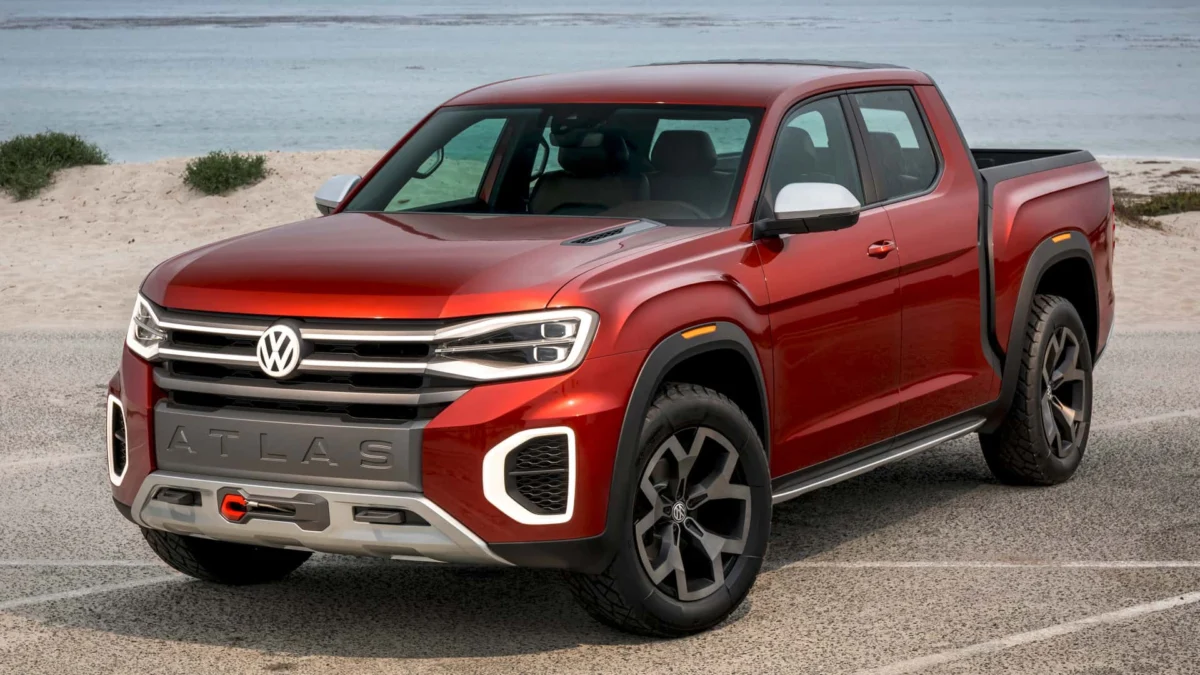
Following the departure of that model, Volkswagen left the segment entirely, opting instead to build its U.S. presence through sedans like the Jetta and SUVs like the Tiguan and Atlas. The appetite for a Volkswagen truck, however, never truly vanished. In 2018, the brand teased the Atlas Tanoak concept, a rugged-looking midsize pickup based on the Atlas SUV’s architecture. The concept was met with overwhelming enthusiasm from dealers and enthusiasts alike, yet it never made the leap to the assembly line.
More recently, reports surfaced that Volkswagen had secretly developed a truck-based SUV prototype, further fueling speculation that engineers were experimenting with chassis configurations outside of the standard unibody platforms. Today, that curiosity has transitioned from the R&D basement to the executive boardroom, with leadership officially placing "body-on-frame" opportunities on the corporate roadmap.
Understanding the "Body-on-Frame B-Segment"
In the official release, CEO Thomas Schäfer outlined the brand’s interest in the "body-on-frame B-segment." This terminology has caused some confusion among industry analysts, as the "B-segment" typically denotes small, subcompact cars. However, in the context of Volkswagen’s new strategy, it refers to a specific, rugged architectural class—robust SUVs and pickup trucks designed for off-road capability and heavy-duty utility.
Volkswagen has remained tight-lipped regarding the specific dimensions of these vehicles. Will they challenge the midsize segment currently occupied by the Toyota Tacoma and Ford Ranger, or will they aim for the full-size throne? Given the current market trends, a midsize platform appears the most logical starting point for a brand attempting to re-enter a segment it has been absent from for 40 years.
The Scout Connection: A Potential Technological Anchor
Perhaps the most critical piece of the puzzle is Scout Motors. Volkswagen is currently funding the revival of this legendary American off-road brand, which is developing its own dedicated body-on-frame platform for its upcoming Traveler SUV and Terra pickup. Both vehicles are slated for production in 2028.
While the two companies have maintained a careful distance, the synergy is impossible to ignore. A modern truck requires a sophisticated, high-torque chassis, and the architecture being developed for Scout is perfectly suited for such a task. Whether Volkswagen will share this platform remains the multi-billion-dollar question. Utilizing the Scout architecture could significantly reduce development costs and provide Volkswagen with a proven, American-engineered foundation for its own truck-based products.
The North American Reset: A Business Imperative
The truck study is not an isolated experiment; it is a vital cog in a larger, more aggressive restructuring of Volkswagen’s North American business. The brand is currently facing a "perfect storm" of market challenges, including high interest rates, shifting consumer demand away from pure battery-electric vehicles (BEVs) toward hybrids, and ongoing geopolitical trade tensions that threaten import margins.
To combat these headwinds, Volkswagen has set an ambitious target: achieving a 10 percent profit margin by 2030. Reaching this milestone will require more than just selling existing models; it necessitates entering high-margin segments where demand remains resilient. In the United States, that segment is trucks.
This strategy is being executed alongside a painful internal reorganization. The brand has announced deep job cuts and a move to streamline its global model lineup to reduce complexity. The focus is shifting toward "regionalization"—the idea that products should be designed, developed, and manufactured closer to the markets they serve.
Manufacturing in Chattanooga
If a Volkswagen-badged truck does move toward production, the industry consensus points to the company’s existing facility in Chattanooga, Tennessee, as the most likely assembly site. Chattanooga has served as the heartbeat of Volkswagen’s American manufacturing operations for years, successfully producing the Passat, Atlas, and ID.4.
The plant is already undergoing preparations for future regional products, including the next-generation Atlas Cross Sport. Adding a pickup truck to the assembly line would require significant capital investment in tooling and heavy-duty logistics, but it would also demonstrate a long-term commitment to the American workforce and the U.S. market.
The Dealer Perspective: A Long-Standing Demand
For Volkswagen dealers, the prospect of a truck is not just exciting—it is a competitive necessity. For years, dealers have urged the German automaker to provide them with a product that can compete with the high-profit, high-volume pickups that fill the lots of their domestic and Japanese rivals.
The Tanoak concept in 2018 proved that the "Volkswagen look" translates well to the truck segment. Dealers believe that a truck with the brand’s signature clean design, high-quality interior materials, and reputation for engineering could carve out a unique niche, appealing to buyers who want utility without the overly aggressive, "macho" styling prevalent in the current truck market.
Implications and Future Outlook
The current situation is one of "cautious optimism." Volkswagen has moved the needle from "never" to "maybe," but significant hurdles remain. The company has yet to commit to a specific platform, a production timeline, or a target price point.
For industry observers, the lack of a defined timeline is the most telling detail. While the brand is studying the feasibility of a truck, it is also balancing the immense costs of the transition to electrification. The risk for Volkswagen is that by the time a truck is ready for the showroom, the market may have shifted again. However, the potential rewards—a significant boost in brand relevance, increased dealer profitability, and a stronger footprint in North America—make the study a risk worth taking.
Summary of Strategic Considerations:
- Platform Selection: Will they leverage the Scout architecture or develop an in-house solution?
- Hybrid Integration: As part of the broader reset, any new truck will likely need to offer a hybrid powertrain to meet both consumer preferences and tightening emissions regulations.
- Market Positioning: How does a VW truck differentiate itself from the established players (Ford, Chevy, Toyota) while remaining true to the "People’s Car" heritage?
- Financial Discipline: Can the brand produce a competitive truck while maintaining its 10 percent margin target?
As Volkswagen continues its North American reset, the automotive world will be watching closely for any sign of a green light. Until then, the dream of a new Volkswagen pickup remains in the design studio—a tantalizing possibility that has finally moved to the top of the agenda.
Motor1’s Take: The announcement marks a critical turning point for Volkswagen’s American ambitions. By publicly acknowledging the study, the brand has validated the long-held desires of its dealer network and recognized that a robust North American strategy requires a presence in the pickup segment. However, the lack of a confirmed platform or production facility suggests that we are still several years away from seeing a badge-engineered or standalone VW truck on the road. Suppliers, investors, and enthusiasts should watch for the next major milestone: the announcement of a specific production platform or a confirmed investment in the Chattanooga manufacturing facility.