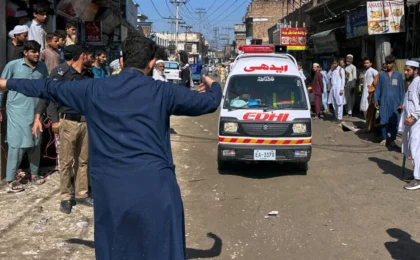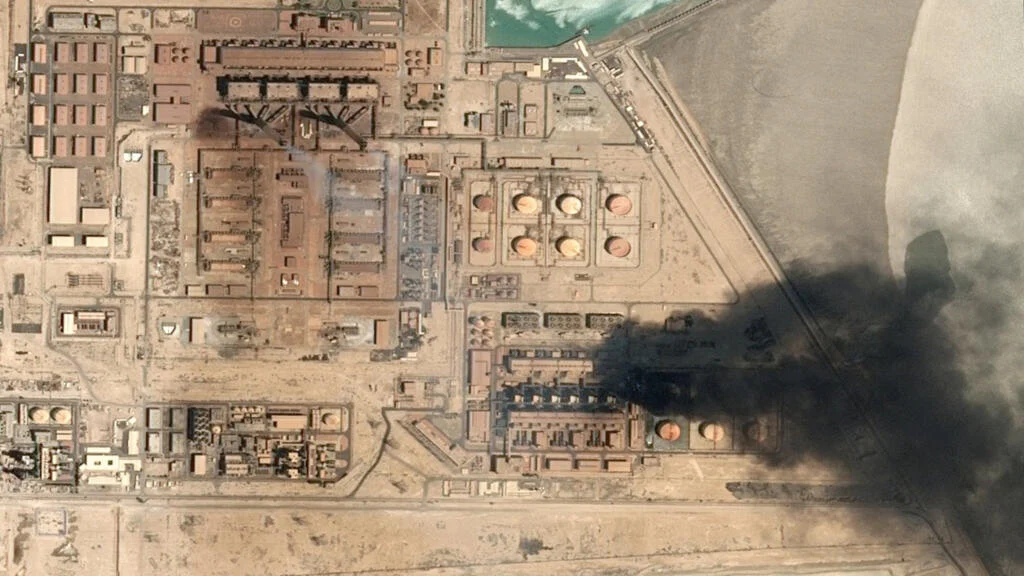
The scorching summer heat of the Persian Gulf has long been a challenge for Kuwait, but this year, the oppressive climate has been eclipsed by a more sinister threat. As Iranian forces continue a sustained campaign of strikes against critical infrastructure, the tiny, oil-rich nation finds itself at the epicenter of a new, terrifying form of warfare: the weaponization of water. For the fourth consecutive day, power stations and seawater desalination plants—the very arteries that sustain life in the desert—have been targeted, leaving the Kuwaiti population in a state of deepening anxiety and forced austerity.
The Fragile Lifeline: A Nation Without Water
Kuwait, a nation with virtually no natural freshwater resources, exists as a miracle of modern engineering. Over 90 percent of its drinking water is produced through energy-intensive seawater desalination. This process is inherently tied to electricity production; most facilities operate on a cogeneration model, where the same plants generate power to drive the desalination units.
When a missile strikes one of these plants, it is not merely an attack on a facility—it is a double-edged sword that simultaneously severs the supply of electricity and clean water. With temperatures frequently exceeding 50 degrees Celsius, the loss of air conditioning and running water is not just an inconvenience; it is a direct threat to the habitability of the country. In response to the latest wave of strikes, Kuwaiti authorities have issued urgent pleas for citizens to slash electricity consumption, fearing that the grid may collapse under the strain of the damaged infrastructure.
Chronology of Escalation: A Pattern of Attrition
The current crisis did not emerge in a vacuum. It is the latest chapter in a broader, escalating conflict that has roiled the Middle East since February 2026, when the United States and Israel initiated military operations against Iran.
- Late January 2026: Iranian media outlets begin broadcasting reports hinting at plans to target regional cogeneration infrastructure, signaling a shift in strategic focus.
- February 28, 2026: The onset of the broader war in Iran triggers a series of tit-for-tat strikes across the region.
- March 2026: Initial strikes against desalination plants in Bahrain and Kuwait occur, serving as a warning shot to Gulf states harboring American military assets.
- March 7, 2026: The United States strikes a desalination plant on Iran’s Qeshm Island, an act which Tehran characterizes as an unprovoked assault on civilian infrastructure.
- July 18, 2026: Iran conducts retaliatory strikes, reportedly hitting the Bonji desalination plant near Djask and inflicting further damage on Qeshm Island facilities, allegedly leaving 10,000 residents without water.
- July 20-24, 2026: The current four-day stretch of attacks on Kuwaiti infrastructure marks the most intense period of targeting yet, pushing the nation toward a breaking point.
Geopolitical Vulnerability: Why Kuwait?
Experts point to Kuwait’s unique geopolitical position as the primary reason for its victimization. Despite the presence of some 13,000 American troops—one of the largest US contingents in the region—Kuwait lacks the indigenous military depth to effectively retaliate against Iran.
"Kuwait suffers the consequences of its geography," says Raphaël Le Magoariec, a specialist in Gulf geopolitics. "Located just a few hundred kilometers from Iranian territory, it is an easy target. Iran can strike with high frequency and low cost, without needing to employ sophisticated technology."
This vulnerability allows Tehran to impose significant costs on the US-aligned state without triggering a massive conventional conflict on Iranian soil. Researchers like Clément Therme of the International Institute for Iranian Studies note that there is little correlation between a country’s specific political rhetoric and the likelihood of being targeted. While Kuwait has avoided the overt hostility toward Tehran displayed by some of its neighbors, it remains a soft target precisely because it is seen as a conduit for the "Great Satan"—a term Tehran uses to describe the United States.
The Psychological War: Beyond Physical Destruction
The strategic intent behind these attacks extends far beyond the physical destruction of pipes and turbines. By consistently targeting life-sustaining infrastructure, Tehran is engaging in a sophisticated psychological campaign. The objective is to demonstrate that the American "security umbrella," which has protected Gulf monarchies for decades, is neither absolute nor infallible.

For the average Kuwaiti, the reality is a paralyzing sense of uncertainty. Nasser al-Dhafiri, a local civil servant, reflected on the current climate: "What Kuwait is experiencing today is something we did not experience even during the 1990 Iraqi invasion in terms of psychological pressure and not knowing where events are headed."
The Iranian leadership, represented by figures like President Masoud Pezeshkian, has attempted to soften the blow with rhetoric claiming that their regional neighbors are "brothers" and that only US military interests are being targeted. However, these reassurances ring hollow when it is the civilian population that bears the brunt of the water shortages. As researcher Rachida-Chachida Ababsa notes, "When a desalination plant is targeted, the first victim is not Washington, but the civilian population."
Supporting Data: A Region Facing a Dry Future
The current conflict highlights a deeper, systemic crisis regarding water security in the Middle East. According to the Defence and Climate Observatory, the per capita volume of naturally occurring freshwater in the Gulf Cooperation Council (GCC) countries is projected to plummet from 95 cubic meters to 59 cubic meters by 2050—a contraction of nearly 38 percent.
This reliance on technology to "manufacture" habitability in an inhospitable desert environment is the Achilles’ heel of the Gulf states. The skyscrapers, the artificial cooling systems, and the vast urban centers were all built on the assumption of cheap energy and stable infrastructure. Climate change, which many regional regimes have historically been hesitant to address, is now intersecting with geopolitical instability to create a "perfect storm."
Implications for the Future
The targeting of desalination plants has redefined the parameters of regional warfare. Pierre Blanc, a lecturer at Sciences Po Bordeaux, argues that while this is not the "great water war" once theorized by doomsday analysts, it is a war "fought through water." The infrastructure is not being destroyed to control water flow, but to leverage the fear of thirst to alter the political calculus of the region.
For Kuwait, the path forward is precarious. The country is caught between its reliance on the American military presence and the undeniable reality of its proximity to an increasingly aggressive Iran. As the conflict drags on, the ruling Al-Sabah dynasty faces a dilemma: continue to host US forces and risk further bombardment, or pivot toward a more neutral stance that could alienate their Western security partners.
Ultimately, the attacks represent a war against the "very habitability of the region," as Le Magoariec puts it. By turning the basic necessity of water into a bargaining chip, Iran has successfully signaled to the Gulf states that their modern, energy-dependent way of life is profoundly fragile. Whether this realization leads to a diplomatic breakthrough or further escalation remains the most urgent question in Middle Eastern security. As the summer heat intensifies, the citizens of Kuwait wait, hoping that the next strike does not bring the total collapse of the system that keeps their desert home alive.