In the world of restorative dentistry, zirconia has long been heralded as the "gold standard." Renowned for its exceptional mechanical strength, biocompatibility, and aesthetic versatility, it is the material of choice for crowns, bridges, and veneers. Yet, for decades, patients requiring these durable restorations have been tethered to a multi-visit workflow, often waiting weeks for a laboratory to produce their custom-fitted hardware.
A team of researchers at the University of Texas at Dallas (UT Dallas) is poised to disrupt this status quo. By pioneering a novel 3D-printing technology that drastically reduces the post-processing time required to harden zirconia, the team has paved the way for "chair-side" production. This innovation promises to turn a process that historically took days into a streamlined, same-day dental experience.
The Bottleneck: Why Zirconia Has Remained Elusive
To understand the significance of the UT Dallas breakthrough, one must first understand the limitations of current dental manufacturing. While 3D printing has revolutionized many industries, dental restorations have largely remained in the realm of subtractive manufacturing—specifically, milling.
In a traditional milling workflow, a dentist creates a digital scan of the patient’s mouth, and a computer-controlled machine carves the restoration out of a solid block of pre-sintered zirconia. While effective, this method is inherently wasteful. The process is limited by the geometry of the milling burrs, which cannot navigate complex internal angles or extremely delicate features. Furthermore, the mechanical stress of milling can introduce micro-cracks into the zirconia, compromising the long-term structural integrity of the final crown.
3D printing, or additive manufacturing, theoretically solves these problems by building the restoration layer-by-layer. However, the chemistry of the process has presented a stubborn obstacle: debinding.
When a ceramic part is 3D printed, it is suspended in a polymer resin binder. To transform this "green" part into a dense, permanent ceramic, the binder must be removed through a process called debinding, followed by high-temperature sintering. In conventional industrial settings, debinding is a slow, painstaking process that can take anywhere from 20 to 100 hours. If the heat is applied too quickly, the expanding gases trapped within the resin cause the crown to fracture or warp. For a dentist, this multi-day wait has made 3D-printed permanent zirconia commercially unviable—until now.
A Chronology of Innovation
The journey to this breakthrough began with a fundamental reassessment of thermodynamics and material science. The research team, led by Dr. Majid Minary, professor of mechanical engineering in the Erik Jonsson School of Engineering and Computer Science at UT Dallas, focused on the physics of gas escape.
- Early Phase: The team analyzed the failure points of rapid debinding. They identified that the pressure build-up of gaseous polymers was the primary culprit for structural failure.
- The Design Phase: Researchers experimented with various porous materials and heating elements to see if they could facilitate gas evacuation without damaging the structural integrity of the ceramic.
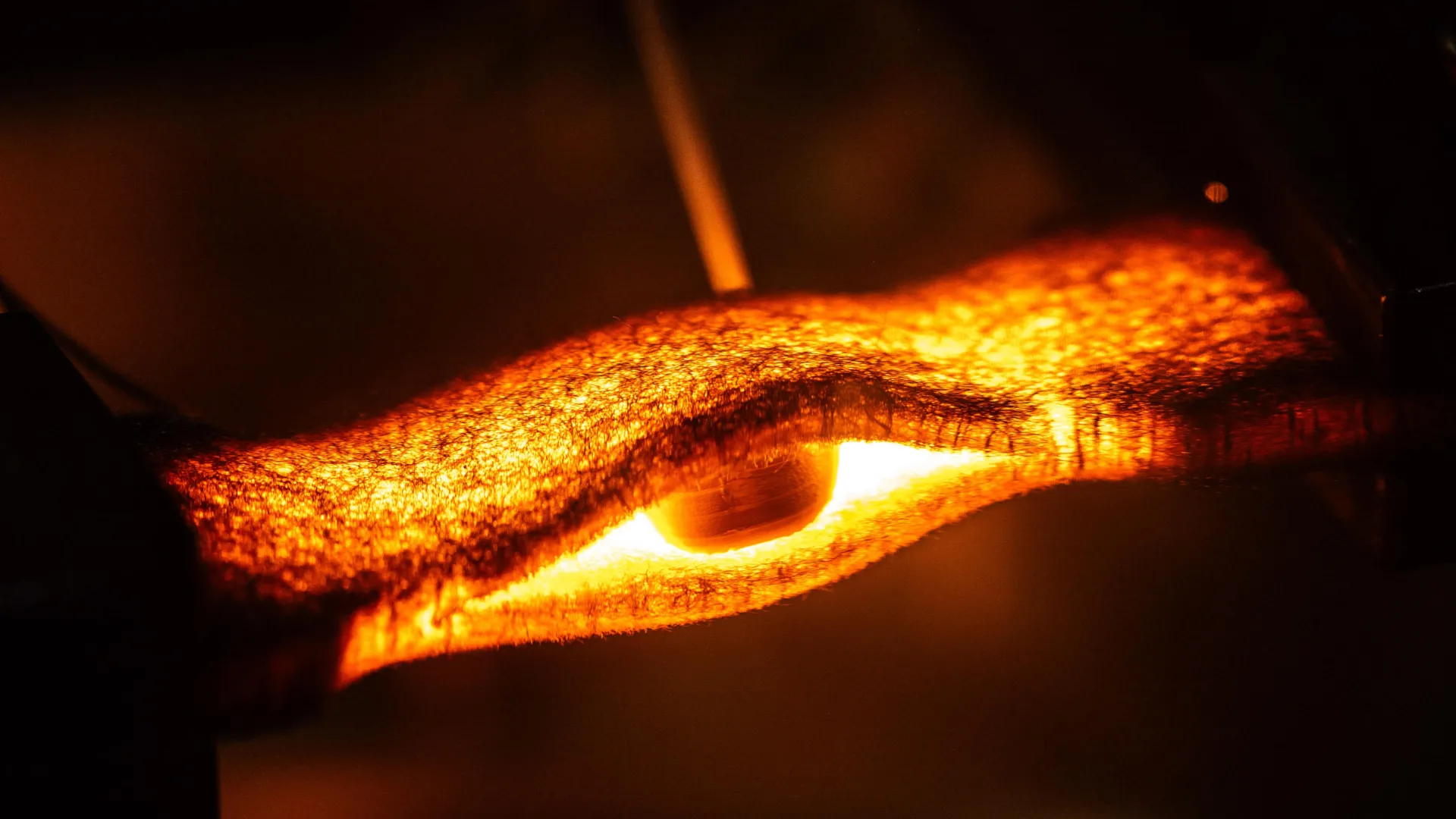
- The Breakthrough: The team developed a system utilizing porous graphite felt capable of reaching extreme temperatures—exceeding 2,550 degrees Fahrenheit. This system, paired with a specialized vacuum mechanism, allowed for the rapid extraction of gases.
- Validation: The findings were formally documented in the journal Ceramics International, marking a pivotal step in proving that the debinding stage could be compressed from days to under 30 minutes.
Technical Specifications and the Science of Speed
The secret to the UT Dallas technology lies in the synergy between heat transfer and atmospheric control. Traditional furnaces heat parts uniformly, which is safe but slow. The UT Dallas apparatus, however, creates a controlled, high-temperature environment that surrounds the 3D-printed restoration with porous graphite felt.
This felt serves a dual purpose. It acts as an insulator to maintain the high temperatures necessary for sintering, while its inherent porosity provides a "path of least resistance" for the vaporized binder to exit the crown. Simultaneously, the vacuum system actively draws the gas away from the restoration, preventing the pressure spikes that cause micro-fracturing. By decoupling the heating rate from the risk of mechanical failure, the researchers have effectively "hacked" the timeline of ceramic production.
Official Responses and Expert Perspectives
The academic and professional dental communities have responded to the discovery with significant interest. Dr. Majid Minary, who has spearheaded the effort, emphasized the patient-centric nature of the project.
"We are excited to be advancing the commercialization of chair-side 3D-printed, all-ceramic zirconia permanent dental restorations," Dr. Minary stated. "Because the crowns can be custom-printed for each patient on the same day, this approach offers greater personalization, faster treatment, and the convenience of receiving a permanent restoration in a single visit."
The potential for this technology has already caught the eye of the National Science Foundation (NSF), which has provided critical support to move the research from the laboratory to the marketplace. The collaboration is not merely an academic exercise; it includes industrial partners such as Pan-AM Dental Laboratory and 3DCeram Sinto Inc., a leading manufacturer of ceramic 3D printers.
Dr. Amirali Zandinejad, a prosthodontist in Arlington, Texas, who is collaborating on the commercialization efforts, underscores the clinical demand. "For a clinician, the ability to deliver a permanent, high-strength zirconia crown in a single appointment changes the entire patient experience. It reduces the need for temporary crowns and follow-up visits, which improves patient satisfaction and office efficiency," Dr. Zandinejad noted.
Implications for the Future of Dentistry
The successful commercialization of this technology would have far-reaching implications for both dental practitioners and patients.
1. Enhanced Precision and Aesthetics
Unlike milling, which is limited by the diameter of the cutting tool, 3D printing allows for nearly unlimited geometric complexity. This means dentists can create crowns that better mimic the intricate natural contours and occlusal anatomy of a patient’s tooth. Furthermore, 3D printing allows for a more consistent distribution of material, reducing the risk of "high spots" or ill-fitting restorations.
2. Economic Efficiency
While the initial investment in 3D-printing equipment may be significant, the long-term savings are substantial. The reduction in material waste—compared to the "carving" method of milling—lowers the cost per unit. Additionally, the labor savings realized by avoiding multiple patient appointments can increase the throughput of a dental practice, allowing clinics to serve more patients without sacrificing quality.
3. Sustainability
The dental industry is under increasing pressure to reduce its environmental footprint. The traditional milling process generates a significant amount of zirconia dust and waste ceramic blocks. Additive manufacturing is inherently "green," as it utilizes only the exact amount of material needed to print the part.
The Road Ahead: Clinical Validation and Beyond
While the results in Ceramics International are promising, the team is aware that the path to a dentist’s office is paved with regulatory requirements. Before the system can be integrated into standard practice, it must undergo rigorous clinical validation and receive approval from regulatory bodies, such as the U.S. Food and Drug Administration (FDA).
The current $550,000 award from the NSF’s "Partnerships for Innovation—Technology Translation" project is specifically earmarked for this transition. The team is currently refining the software interface to ensure that the printing process is intuitive for dental staff, who may not have backgrounds in mechanical engineering.
The research team, which includes PhD students Mahdi Mosadegh, Moein Khakzad, and Zahra Sepasi, along with Dr. Golden Kumar, represents a multidisciplinary approach that is becoming the hallmark of modern medical engineering. Their work is also bolstered by support from the U.S. Air Force Office of Scientific Research, highlighting the potential for these ceramic technologies to have applications beyond the dental chair—perhaps in aerospace or high-heat industrial components.
Conclusion
As the dental industry moves toward a future defined by digital workflows, the UT Dallas team’s breakthrough stands as a cornerstone of the next generation of care. By tackling the chemistry-based bottlenecks that have long stifled 3D-printed zirconia, they have unlocked the door to a truly same-day, high-performance restorative experience.
If successful in the commercial market, this technology will not only provide patients with stronger, more durable, and more aesthetic crowns but will also fundamentally redefine what it means to visit the dentist. The era of the "two-week wait" for a permanent crown may soon be coming to an end, replaced by the precision and efficiency of the 3D-printed future.