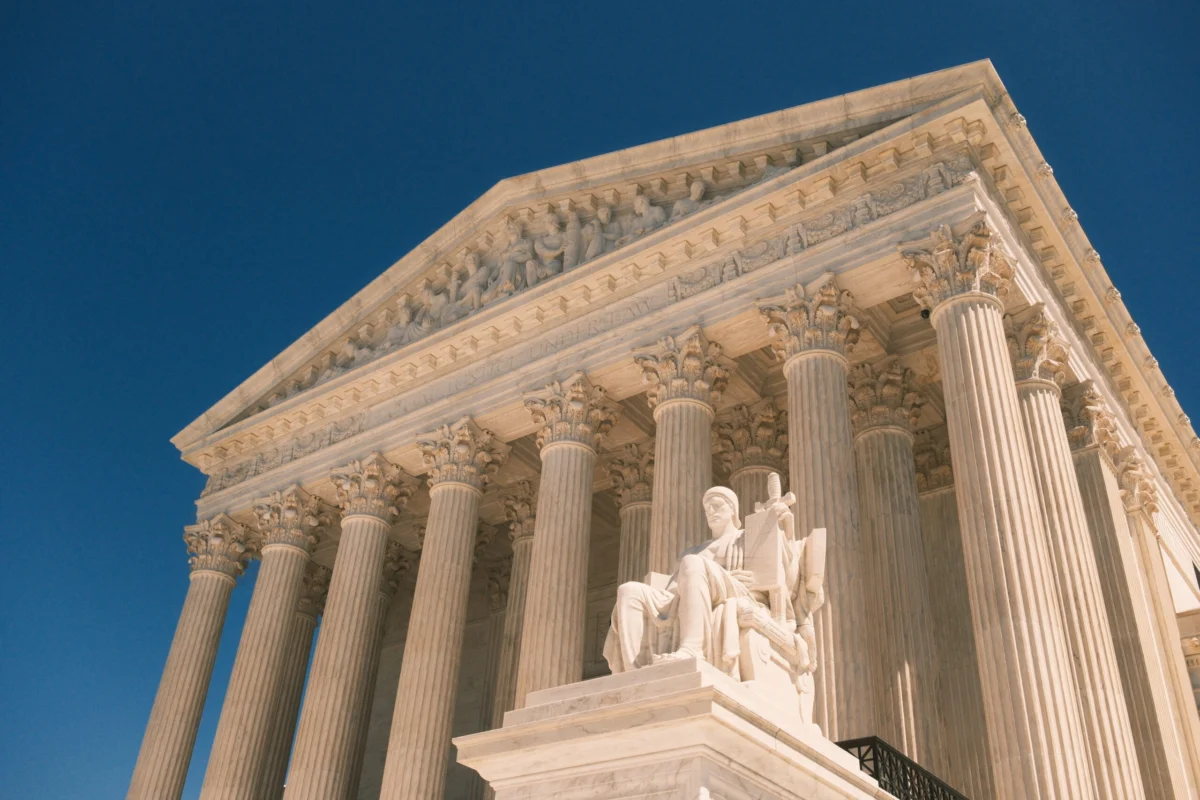
In a landmark ruling that fundamentally alters the landscape of American electioneering, the U.S. Supreme Court on Monday struck down federal caps on the amount of money political parties can spend in coordination with their candidates. The 6-3 decision in National Republican Senatorial Committee v. Federal Election Commission effectively dismantles a pillar of the Federal Election Campaign Act (FECA), ruling that these long-standing restrictions infringe upon the First Amendment’s protection of political speech.
The decision represents a significant shift in judicial philosophy regarding the intersection of money and political expression, continuing a trend of deregulation that has defined the Roberts Court’s approach to campaign finance over the last two decades.
The Core Ruling: Redefining Free Speech in Politics
Writing for the majority, Justice Brett Kavanaugh asserted that the coordinated-expenditure limits imposed by the government were “disproportionate” and failed the constitutional requirement of being “narrowly tailored” to prevent corruption. The Court’s majority maintained that existing safeguards—such as base contribution limits, strict earmarking regulations, and mandatory public disclosure—are more than sufficient to prevent quid pro quo corruption without stifling the ability of political parties to communicate with the electorate.
The Court leaned heavily on the precedent established in the 1976 case Buckley v. Valeo, which famously held that because the dissemination of ideas in a modern society requires the expenditure of money, any restriction on political spending is, by extension, a restriction on the quantity of speech. By removing the caps, the Court has cleared the way for national party committees to act as unrestricted financial partners to their candidates, theoretically amplifying the reach and depth of campaign messaging.
Chronology: From Legislative Restriction to Judicial Reversal
To understand the magnitude of this decision, one must look at the legal trajectory of campaign finance regulation:
- 1976 (Buckley v. Valeo): The Supreme Court first articulated the link between money and speech, setting the stage for decades of litigation.
- 1971–1974 (FECA): The Federal Election Campaign Act was enacted and amended, creating the framework that limited coordinated spending to prevent parties from becoming conduits for illegal influence.
- 2001 (FEC v. Colorado Republican Federal Campaign Committee): Often referred to as "Colorado II," this decision upheld the constitutionality of coordinated-expenditure limits, finding them to be a vital anti-corruption mechanism. The current ruling explicitly overrules this precedent.
- 2014 & 2022 (McCutcheon and Ted Cruz for Senate): These cases eroded the state’s ability to justify spending limits based on the desire to prevent "undue influence" or to achieve broader egalitarian goals in political participation.
- 2022 (Initiation of Case): The National Republican Senatorial Committee, the National Republican Congressional Committee, JD Vance, and Steve Chabot filed suit, challenging the constitutionality of the limits.
- 2024 (Supreme Court Decision): The Court reverses the Sixth Circuit’s judgment, clearing the path for unlimited party-candidate coordination.
Supporting Data: The Impact of the Expenditure Caps
Under the now-defunct FECA provisions, national party committees were subject to strict, tiered limits on their ability to coordinate spending with candidates. These caps were designed to ensure that party resources were focused on infrastructure and party-building rather than functioning as a direct extension of a specific candidate’s campaign treasury.
The specific limits included:
- House Candidates: Coordinated spending was limited to between $65,300 and $130,600.
- Senate Candidates: Limits ranged from $130,600 to approximately $4 million, depending on the state’s voting-age population.
- Presidential Candidates: Spending was capped at roughly $32 million.
By removing these ceilings, the Court has essentially uncapped the financial relationship between a party and its standard-bearers. Proponents of the ruling argue this allows for more efficient and robust campaigning, while opponents warn it creates a massive "loophole" that swallows the entire regulatory framework of campaign finance.
Official Responses and Judicial Dissent
The legal battle featured a unique dynamic, as the U.S. government—the entity responsible for defending the FEC’s regulations—ultimately declined to defend the constitutionality of the limits. The federal government conceded that Colorado II no longer carried the same legal weight given the evolving jurisprudence of the Court. Consequently, the Court appointed attorney Roman Martinez to serve as amicus curiae to defend the lower court’s judgment. The Democratic National Committee and various Democratic campaign committees also intervened to argue for the preservation of the limits.
The Dissenting View
Justice Elena Kagan, writing for herself and Justices Sonia Sotomayor and Ketanji Brown Jackson, issued a stinging dissent. She characterized the majority’s opinion as a dangerous expansion of money in politics that ignores the practical reality of how funds are moved in modern campaigns.
Kagan highlighted that joint fundraising committees already permit a single donor to write a check exceeding $550,000 to a victory fund. Previously, the coordinated-expenditure limits functioned as a structural firewall, forcing most of that money into general party operations. "With no limits on coordinated expenditures, the party can serve as the candidate’s checking account," Kagan wrote. She further criticized the majority for its disregard of stare decisis, noting that this decision is yet another instance of a new judicial majority discarding established law to suit a different constitutional outlook.
Implications: A New Era of Party-Centric Politics
The ramifications of this decision are profound and likely to materialize in the immediate upcoming election cycles.
1. The Death of the "Firewall"
The primary implication is the blurring of lines between the candidate and the party. Historically, party committees operated with a degree of separation from the candidate to prevent corruption. With that separation removed, parties can now directly fund a candidate’s advertising, messaging, and digital operations without regard to previous caps.
2. The Shift to "Party-Centric" Fundraising
Donors who were previously capped in their direct contributions to candidates may now redirect those funds toward party committees, knowing those funds can be funneled directly into the candidate’s campaign efforts. This could lead to a massive influx of cash into national party infrastructure, further cementing the role of parties as the primary vehicles for national political power.
3. Disparity Between Parties and PACs
It is critical to note that the ruling applies only to political parties. Outside groups, such as Super PACs and corporate entities, remain bound by existing regulations regarding coordination. This creates a dual-track system: parties now have a distinct advantage in coordination, while outside groups remain restricted. This may lead to a consolidation of power back into the hands of traditional party structures, potentially weakening the influence of independent outside groups.
4. The Future of Disclosure
While the Court noted that disclosure requirements remain in place, critics argue that the sheer volume of money now allowed to flow through party accounts will make it increasingly difficult for the public to track the influence of individual wealthy donors. The "earmarking" rules, which the majority claims will prevent corruption, are seen by skeptics as easily bypassed through the complex web of joint fundraising agreements that Justice Kagan highlighted in her dissent.
Conclusion: A Regulatory Shift
The Supreme Court’s decision in NRSC v. FEC is a watershed moment that completes a long-term project to dismantle the campaign finance regulations of the 20th century. By prioritizing the First Amendment rights of political parties to spend as they see fit, the Court has signaled that it views the regulation of political money as an inherently suspect activity. As the legal community and election experts digest the ruling, one thing is certain: the 2026 and 2028 election cycles will be the most heavily funded in American history, characterized by a level of party-candidate integration that was previously deemed illegal under federal law.
The case has been remanded to the U.S. Court of Appeals for the Sixth Circuit, but the substantive debate over the influence of this ruling is only beginning. For voters, the decision raises fundamental questions about the nature of representation and whether the removal of financial guardrails will lead to a more robust democracy or a system dominated by the largest institutional checkbooks.