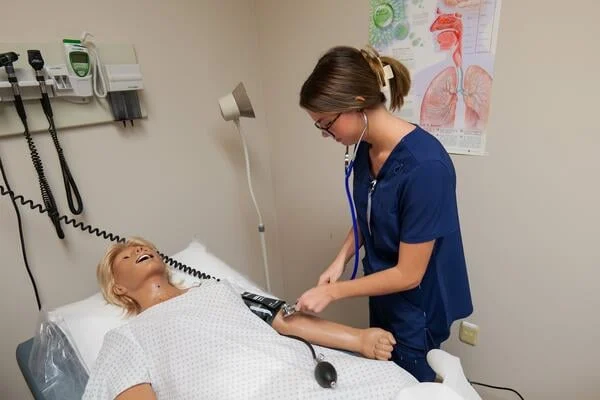
In a landmark shift for American higher education, the long-awaited "Workforce Pell" initiative is moving from legislative concept to tangible reality. Later this month, Ivy Tech Community College in Indiana will initiate the distribution of federal financial aid to students enrolled in its eight-week clinical medical assistant program. This rollout marks a significant milestone, as Ivy Tech becomes one of the first institutions nationwide to utilize federal Pell Grant funding for short-term, career-focused credentials.
For decades, the federal Pell Grant—a cornerstone of financial aid for low-income students—was strictly tethered to programs requiring at least one year of study. This rigid structure left a massive demographic of students, those seeking rapid workforce entry through intensive, short-term training, largely ineligible for federal assistance. The implementation of Workforce Pell, born from hard-won legislative compromise in the summer of 2025, represents a fundamental reimagining of how the federal government supports economic mobility and vocational agility.
A Chronology of Change: From Legislative Debate to Implementation
The journey toward Workforce Pell was characterized by years of intense policy debate regarding the efficacy and oversight of short-term credentialing. Historically, critics of expanding Pell Grants to shorter programs argued that it could lead to the proliferation of low-quality, for-profit programs that leave students with debt but few career prospects. Proponents, however, argued that in an era of rapid technological and economic change, the traditional multi-year degree is not the only path to a middle-class wage.
The Legislative Sprint
Following the passage of the 2025 legislation, which authorized Pell dollars for programs spanning eight to 15 weeks, the U.S. Department of Education (ED) and state agencies were thrust into a yearlong "sprint." The challenge was not merely writing regulations but creating a robust oversight mechanism to ensure quality control. States and the federal government had to collaborate to define which programs would qualify for approval, balancing the need for rapid workforce development with the imperative of protecting student interests.
The Gradual Rollout
Since the policy officially took effect on July 1, 2026, the progress has been deliberate rather than explosive. As of mid-autumn, the Department of Education has approved only 21 programs across six states: Florida, Indiana, Iowa, Nebraska, North Carolina, and Texas. While the number may seem modest, stakeholders view this as a prudent beginning.
Colby Shank, vice president of financial aid and student accounts at Ivy Tech, encapsulates the industry sentiment. Ivy Tech submitted its application on July 7 and received federal approval on August 19. "We were very excited," Shank remarked, "but then we also recognized that that’s just kind of the beginning. There were a lot of questions on how we take approval to implementation."
The Operational Reality: Behind the Scenes at Financial Aid Offices
While the policy goal is to provide financial relief, the administrative reality is significantly more complex. For colleges, approval is merely the first hurdle. Financial aid offices—already stretched thin by the recent, chaotic implementation of the revamped FAFSA—are now tasked with integrating Workforce Pell into existing, often antiquated, software infrastructures.
The Software Struggle
Ivy Tech’s experience serves as a case study for the administrative burden accompanying this policy. The college’s existing financial aid software was not built to accommodate short-term, non-traditional program cycles. Consequently, the institution is forced to rely on manual processing.
"Right now, we expect it will be a lot of manual work," Shank explained. Financial aid officers at the college must identify eligible students, manually calculate award amounts based on both the student’s demonstrated financial need and the specific duration of the program, and execute disbursements. This is an labor-intensive process that risks error and delays if not carefully managed. Despite these challenges, Shank emphasizes that the college is committed to "doing quite a bit of this work manually just so that we can serve students as quickly as possible."
Comparative Success: The Iowa Central Experience
Not all institutions have faced the same friction. Iowa Central Community College, which secured the first national approval for a Workforce Pell program (an emergency medical technician certification), found the transition smoother. According to Stacy Mentzer, the college’s vice president of instruction, the institution’s existing infrastructure for a commercial driver’s license (CDL) program—which already functioned on "clock hours" rather than "credit hours"—made the adjustment easier. Because their system was already equipped to handle the math of non-semester-based aid, the pivot to the EMT program was less of an administrative overhaul and more of a configuration change.
Implications for Student Access and Equity
The primary objective of Workforce Pell is to remove the "secret" nature of short-term financial aid. Historically, students entering short-term vocational programs rarely considered federal aid, assuming it was unavailable. This cultural barrier is now a primary focus for college administrators.
Communicating the Opportunity
Janet N. Spriggs, president of Forsyth Technical Community College in North Carolina, is at the forefront of this messaging campaign. With six approved programs—ranging from welding and fire academy to electrical line work—Forsyth Tech is preparing for a January enrollment cycle.
"The most important part is not letting this wonderful opportunity be a secret," Spriggs noted. The college is deploying a multi-pronged communication strategy, partnering with high school career coaches, regional employers, and community-based organizations. The goal is to reach students who may be hesitant to engage with the federal aid system because they have been told, for years, that it does not apply to their career path.
Workforce Pell as a Mobility Engine
The broader implication of this policy is the potential to democratize access to high-demand, high-wage careers. By lowering the cost of entry, institutions like Forsyth Tech hope to provide a "pathway forward" for individuals who need to upskill or pivot into trades that offer "family-sustaining and family-thriving wages."
Iris Palmer, director of the community college initiative at New America, views the policy as a "substantial policy change" that requires a major lift from institutions. She warns that while the potential for impact is high, the sustainability of the program will depend on how effectively colleges can scale their financial aid operations. "This is going to take a huge lift from [college] financial aid offices," Palmer noted.
Future Outlook: Scaling the Solution
As the first wave of Workforce Pell students begins their clinical and technical training, the eyes of the higher education sector are fixed on these early adopters. The success of these initial programs will likely dictate the speed of future approvals and the potential for Congress to expand the policy further.
For Ivy Tech, the plan is to move from the initial dozen students on one campus to a broader, automated rollout. "We’re starting to explore what it will take with our software systems to scale this," Shank said. The aspiration is to move from a "manual" startup phase to a streamlined, integrated system that can handle hundreds, or even thousands, of applicants annually.
Final Thoughts
The introduction of Workforce Pell represents a significant, albeit complex, evolution in the American social contract with education. It acknowledges that the "college experience" is no longer defined solely by four-year degrees and that federal support must be as agile as the economy it serves. While financial aid offices across the country grapple with the "huge lift" of implementation, the potential reward—a more skilled, more mobile, and more financially secure workforce—is a goal that justifies the growing pains.
As states continue to submit programs for federal review, and as institutions like Ivy Tech, Iowa Central, and Forsyth Tech refine their delivery mechanisms, the "Workforce Pell" experiment will serve as a definitive test of whether federal policy can truly keep pace with the modern labor market. The success of this initiative will be measured not just in dollars disbursed, but in the number of students who, for the first time, see a clear, funded path to a stable and prosperous career.