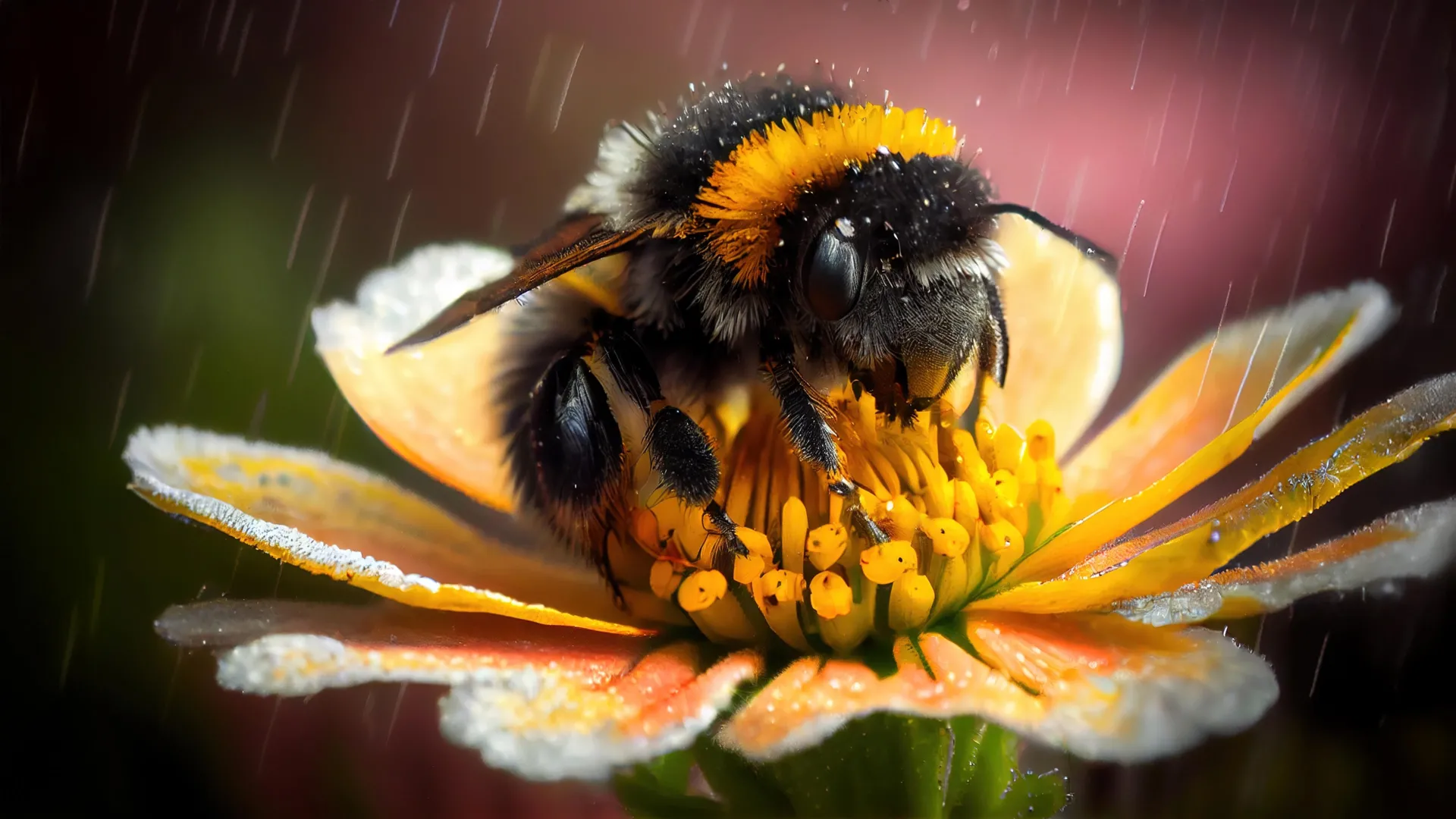
In the intricate tapestry of global food security, the humble bumblebee—measuring a mere inch in length—acts as an essential thread. Despite their diminutive stature, these insects are the linchpins of terrestrial ecosystems, facilitating the reproduction of flowering plants and supporting approximately one-third of the world’s total food production. However, this critical biological service is under siege. As modern industrial agriculture pushes for ever-higher yields, the chemical armaments deployed to protect crops are increasingly encroaching upon the very pollinators required to sustain them.
A groundbreaking study led by researchers at the Georgia Institute of Technology has cast a stark light on this conflict, revealing that sulfoxaflor—a next-generation pesticide—is doing more than just killing pests; it is fundamentally altering the genetic expression and reproductive viability of bumblebees.
The Molecular Battlefield: Understanding Sulfoxaflor
Introduced to the global market in 2013, sulfoxaflor was hailed as a tactical breakthrough in agricultural pest management. Designed specifically to target sap-feeding insects like aphids, which can devastate staple crops such as soybeans, corn, and cotton, it operates by disrupting the nervous systems of these pests. By the mid-2010s, it became a cornerstone of integrated pest management (IPM) strategies for farmers looking to mitigate the damage caused by rapidly evolving, insecticide-resistant insects.
However, the efficacy of sulfoxaflor in the field has been shadowed by mounting ecological concerns. Because the chemical is systemic—meaning it is absorbed into the tissues of the plant, including the nectar and pollen—it is effectively ingested by any insect visiting the crop. While regulators initially approved the chemical under the assumption that it could be used safely, entomologists have long suspected that "sub-lethal" exposure—doses not high enough to kill a bee outright—might still be inducing long-term harm.
Chronology of a Scientific Investigation
The recent investigation by the Georgia Institute of Technology, funded by the U.S. Department of Agriculture (USDA), represents a significant leap in understanding these sub-lethal effects. The research process was meticulous, spanning several stages of analysis:
- Initial Exposure: Researchers exposed worker bumblebees to low, field-relevant doses of sulfoxaflor in a controlled environment to simulate the conditions a foraging bee might encounter in an agricultural landscape.
- Molecular Sampling: Following exposure, the team utilized flash-freezing techniques to preserve the integrity of the bees’ biological tissues.
- RNA Sequencing: By analyzing the ribonucleic acid (RNA) within these tissues, the researchers were able to pinpoint exactly which genes were being "switched on" or "switched off" in response to the pesticide.
- Computational Modeling: The team fed their data into sophisticated computational models to map the biological pathways most heavily impacted by the chemical intervention.
- Reproductive Assessment: The final stage involved correlating these molecular shifts with observable physical changes in the ovarian tissue of the bees, identifying a clear causal link between pesticide exposure and diminished reproductive health.
Supporting Data: The Genetic Cost of Agriculture
The findings of the study are as sobering as they are clear. The most significant genetic disruptions were observed in the ovarian tissue of the worker bees. When these tissues were examined, researchers found that the expression of genes responsible for egg production and healthy development was significantly suppressed.
For a bumblebee colony, which relies on a constant, healthy output of workers to forage and maintain the hive, a decline in reproductive output is catastrophic. Because bumblebee colonies are social units, the health of the individual is inextricably linked to the survival of the collective. If the workforce is genetically compromised, the colony’s ability to thrive, gather food, and pollinate surrounding crops diminishes rapidly.
"What makes this study exciting is that it connects molecular changes in gene expression to real-world consequences for individual bees and their colonies," says Michael Goodisman, a professor in the School of Biological Sciences at Georgia Tech. "That type of connection is rare and gives us a much clearer picture of how pesticides affect bees."
The Expert Perspective: Balancing Innovation and Preservation
The dilemma facing modern agriculture is a classic "wicked problem." Farmers are operating on thin margins, facing immense pressure to feed a growing global population while battling increasingly resilient pests. Yet, as Sarah Orr, who led the research as a postdoctoral fellow at Georgia Tech and is now an assistant professor at the University of Tampa, points out, the current path is self-defeating.
"We need pesticides to control crop pests, but they can also harm essential non-target insects like bumblebees," Dr. Orr explains. "As a scientist, my goal is to identify practical solutions that support pest management while also protecting beneficial insects and the food systems that depend on them."
Dr. Orr’s work highlights the urgent need for a shift in agricultural policy. The assumption that an insect’s survival is the only metric of "safety" is outdated. If a pesticide allows a bee to survive but prevents it from reproducing, the result is the same: a silent, collapsed colony that can no longer perform the essential labor of pollination. "We need many bees for successful pollination," Orr notes. "If they’re not producing enough offspring, pollination will decline. We are essentially eroding the foundation of our own food security."
Broader Implications: A Multi-Front Crisis
The impact of sulfoxaflor cannot be viewed in a vacuum. Bumblebees are currently facing what ecologists describe as a "synergistic stressor" environment. In addition to chemical exposure, these insects are grappling with:
- Climate Instability: Rising global temperatures are forcing bees to shift their geographical ranges. Increasingly frequent and severe heatwaves disrupt the delicate timing between the emergence of pollinators and the blooming of the plants they depend on.
- Habitat Fragmentation: As urban and agricultural expansion continues, the corridors of wild meadows and forests—the natural refuges for bees—are being dismantled.
- Pathogen Spread: Global trade and the movement of commercial bee colonies for agricultural services have inadvertently spread diseases and parasites across continents, further weakening wild populations.
The Georgia Tech study suggests that pesticide exposure acts as a "force multiplier" for these existing threats. A bee population already stressed by heat and lack of habitat is far less resilient to the genetic disruptions caused by chemicals like sulfoxaflor.
Toward a Sustainable Future
The findings provide a clear mandate for future agricultural research and regulation. If we are to maintain the integrity of our food systems, the following steps are increasingly viewed as essential by the scientific community:
- Refining Regulatory Standards: Regulatory bodies must move beyond simple "lethal dose" testing and incorporate molecular and reproductive health markers into the approval process for new pesticides.
- Precision Agriculture: Investing in technologies that allow for the highly targeted application of pesticides, minimizing the drift and systemic uptake by non-target flowers and plants.
- Integrated Pest Management (IPM): Expanding the use of natural predators and habitat-based pest control methods to reduce the overall reliance on chemical inputs.
- Pollinator-Friendly Farming: Encouraging farmers to maintain non-sprayed "buffer zones" of native wildflowers to provide safe foraging areas for bumblebees.
The research conducted by the team at Georgia Tech serves as a vital bridge between the laboratory and the field. By uncovering the molecular mechanisms through which pesticides undermine life, they have provided the evidence needed to advocate for more sustainable farming practices.
As we look toward the future of agriculture, the goal must be a harmonious integration of science and ecology. The bumblebee, in its small but mighty role, serves as a bellwether for the health of our planet. Protecting them is not merely an act of environmental conservation—it is an act of economic and nutritional necessity. As Dr. Orr aptly summarizes, the health of our food systems is fundamentally tied to the health of our pollinators. To ensure the prosperity of one, we must secure the safety of the other.