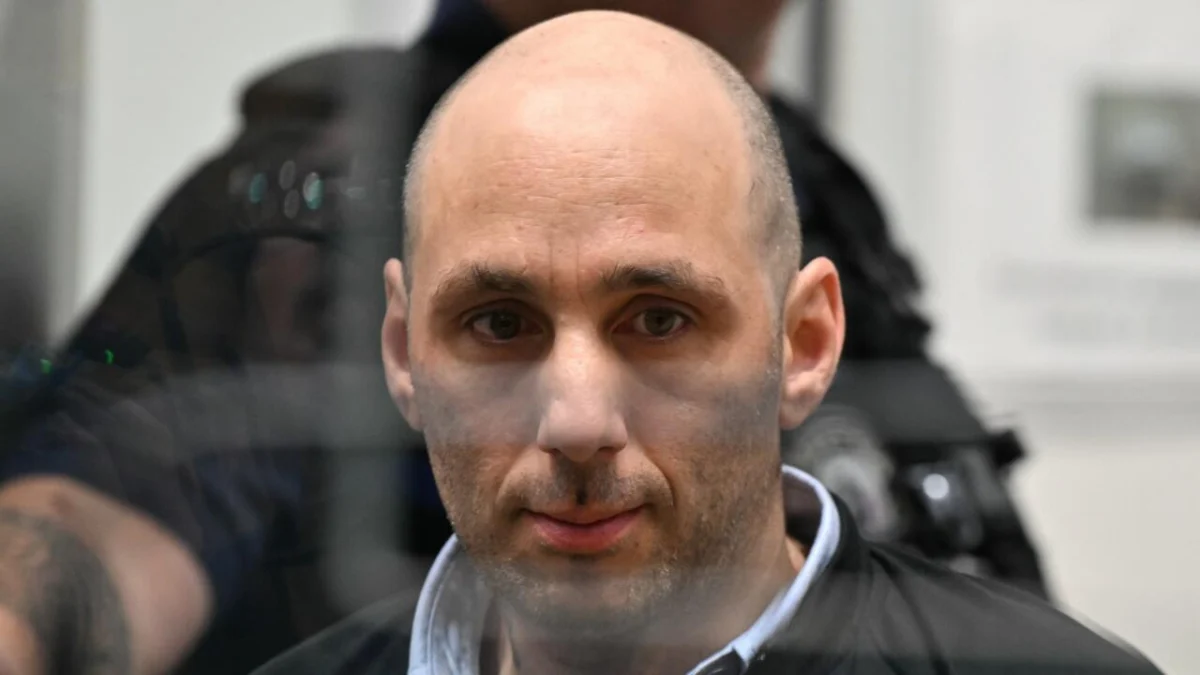
In a stunning reversal that has sent shockwaves through the French legal system and the nation at large, Cédric Jubillar, the 38-year-old man convicted of the 2020 murder of his wife, Delphine Jubillar, has confessed to the crime. After five years of steadfastly maintaining his innocence—a period defined by an exhaustive, high-profile trial and a relentless media frenzy—Jubillar has admitted to killing his wife, whose body remained missing throughout his initial prosecution.
The confession, delivered from his prison cell, marks the end of one of the most enigmatic "no-body" murder cases in contemporary French history. As his lawyers prepare to cooperate with judicial authorities to locate the remains of the 33-year-old nurse, the nation is forced to reckon with the chilling reality of a crime that has haunted the public imagination since the height of the COVID-19 pandemic.
A Chronology of a Tragedy
The disappearance of Delphine Jubillar remains etched in the collective memory of France as a symbol of domestic tragedy during a time of global isolation.
- December 15–16, 2020: Delphine Jubillar, a mother of two, disappears from the family home in the rural village of Cagnac-les-Mines, southern France. Her husband, Cédric, reports her missing, claiming he awoke to find her gone.
- Early 2021: A massive search operation is launched. Despite the deployment of drones, canine units, and hundreds of volunteers, no trace of Delphine is found.
- June 2021: Cédric Jubillar is arrested and indicted for the murder of his wife. Investigators cite a lack of physical evidence but point to a "totality of circumstances."
- October 2025: Following a marathon trial that captivated the nation, Jubillar is found guilty and sentenced to 30 years in prison. He continues to deny the charges.
- December 2025: Just two months before his scheduled appeal trial, Jubillar issues a written confession admitting his involvement in the killing.
The Circumstances of the Crime
The trial, which concluded in October 2025, relied heavily on circumstantial evidence. Prosecutors painted a picture of a marriage in terminal decline, characterized by infidelity and resentment. Delphine, a mother of two, had reportedly initiated divorce proceedings and was involved in an affair with another man. This, according to the prosecution, served as the primary motive for Cédric’s actions.
Throughout the legal proceedings, the prosecution presented testimony from those closest to the couple. Perhaps most damning was the testimony of Jubillar’s own mother, who claimed that just weeks before the disappearance, her son had explicitly threatened to kill Delphine and hide her body in a place where "no one would ever find her." Further, two of his former partners testified that he had previously bragged about the possibility of committing the perfect murder, mentioning, with chilling specificity, the burial of a body at a local burned-out farm.
Despite the absence of a murder weapon, a crime scene, or DNA evidence directly linking him to the act, the court found the cumulative weight of his behavior, the threats he had made, and the breakdown of his domestic life sufficient for a conviction.
The Confession: A Strategic About-Turn
The sudden admission of guilt, delivered through his attorney Pierre Debuisson during a recent press conference, represents a profound strategic shift. Mr. Debuisson stated that his client now "clearly regrets" his actions, describing the murder as "the worst thing he did in his life."
The confession is not merely an admission of guilt; it is a promise of cooperation. Jubillar has expressed his readiness to disclose the location of his wife’s remains, a development that legal experts believe is aimed at providing closure to the couple’s two young children.
"It was the worst thing he did in his life," Debuisson remarked, emphasizing that his client is now prepared to tell investigators exactly where he hid the remains on that fateful night in December 2020. This cooperation is expected to halt the appeal process, which was originally scheduled for September 2026. The legal team has acknowledged that the trial cannot proceed as planned, as the investigation must now pivot toward the recovery of the body and further interrogation of the defendant.

Official Responses and Legal Implications
The legal landscape surrounding the "Jubillar Affair" has shifted overnight. Malika Chmani, the lawyer representing the interests of the couple’s two children, expressed a cautious sense of relief. "We are relieved for the children," Chmani stated. "Now it is important that he tells us where the body is. I believe that is what will happen—at any rate, that is what we hope for."
For the judicial authorities, the challenge now lies in validating the confession. Investigators are tasked with locating the remains in a terrain that has been scrutinized for half a decade. If the location matches the confession, it will provide the final, definitive piece of evidence in a case that was previously built on inference and circumstantial testimony.
The implications for the French judiciary are significant. The Jubillar case has often been cited as a test of the French legal system’s ability to convict in the absence of a corpse. With the confession, the conviction is retroactively validated, but questions remain as to why it took five years of incarceration for the truth to emerge. Some legal analysts suggest that the impending appeal, and the threat of an even harsher sentence or a public re-examination of the evidence, may have forced Jubillar’s hand.
Beyond the Verdict: The Human Toll
While the legal machinations of the case have dominated headlines, the human tragedy remains the core of the story. Delphine Jubillar was a nurse and a mother whose life was cut short at 33. The "Jubillar Affair" became a proxy for larger discussions in France regarding domestic violence and the difficulties of protecting women who seek to leave abusive or controlling relationships.
The discovery of the body, should it occur, will provide the only mercy left to offer: the ability for the family to hold a funeral and for the children to finally bury their mother. As the investigation moves toward this final, somber conclusion, the nation looks on, waiting for the site of the burial to be revealed.
Looking Forward: What Happens Next?
The scheduled appeal trial, once the focal point of the French justice system’s next calendar year, is effectively in limbo. With the defense now aligned with the prosecution on the question of guilt, the focus shifts from proving the crime to documenting the details.
Investigators are expected to bring Jubillar to the site of the alleged burial, where he will be required to demonstrate the sequence of events. This process is essential not only for the closure of the investigation but for the formal record of the crime. Once the remains are recovered and forensic analysis is conducted, the judicial authorities will have a complete picture of how Delphine Jubillar died—a detail that, even after the confession, remains officially unknown.
For the public, the "Jubillar Affair" serves as a stark reminder of the complexity of criminal justice in cases of intimate partner violence. It is a story of a long-denied truth finally coming to light, and the slow, agonizing process of seeking justice when the most vital piece of evidence has been hidden in the shadows for over five years. As the investigation enters its final chapter, the focus remains on the dignity of the victim and the hope that, at long last, the truth will allow for a measure of peace.