In the heart of western Turkey, nestled at the intersection of the Mediterranean world and the Anatolian plateau, lies the ancient city of Sardis. For thousands of years, this site served as a pivot point for history, a stage where the rise and fall of empires—from the Lydians and Persians to the Greeks, Romans, Byzantines, and Ottomans—played out in succession. Yet, amidst the shifting tides of political power, one constant has emerged in the modern era: the unwavering presence of the Harvard-Cornell Exploration of Sardis.
Since 1958, this institutional collaboration has maintained an unbroken annual presence at the site, cementing its status as one of the world’s longest-running archaeological projects. This summer, that dedication reached a zenith when UNESCO officially added Sardis to its prestigious World Heritage List, a recognition of both its profound historical value and the meticulous stewardship that has defined the modern era of its excavation.
A Chronology of Empires: The Layers of Sardis
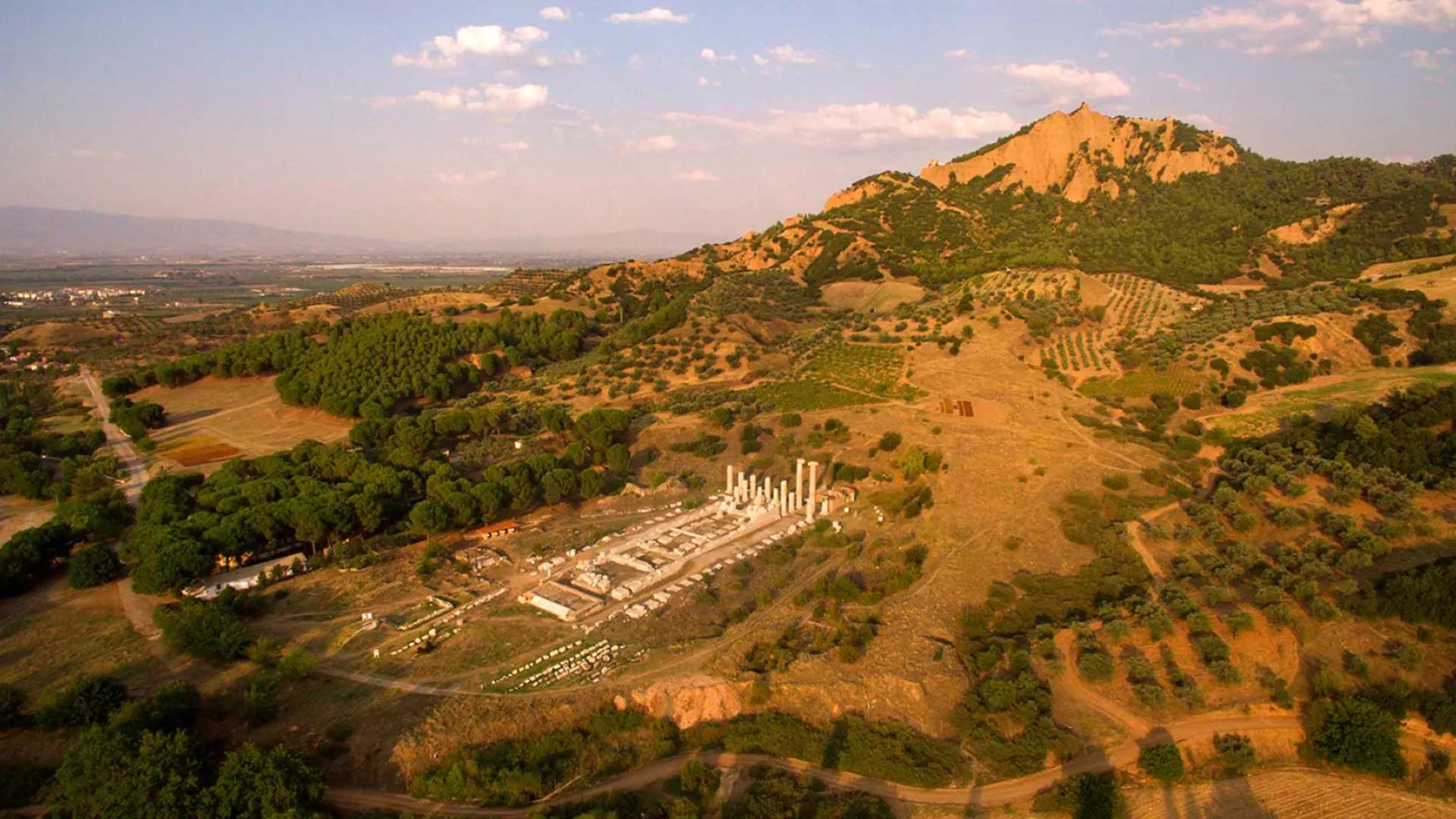
To walk through Sardis is to peel back the layers of human civilization. Once the illustrious capital of the Iron Age Kingdom of Lydia, the city occupies a landscape that is remarkably preserved, largely because it was never entirely superseded by a major modern metropolis.
The Lydian Dawn and the Birth of Coinage
The Lydian era remains the city’s most legendary period. It was here, under the rule of the fabled King Croesus—a monarch whose name became a global shorthand for immense wealth—that the Lydians are credited with inventing coinage. This technological leap, combined with Sardis’ strategic position on vital trade routes, transformed the city into a cosmopolitan hub. As Annetta Alexandridis, associate professor of the history of art and classics at Cornell, notes, Sardis served as a premier "place of cultural encounter between the East and West."
From Conquest to Continuity
The subsequent centuries saw a revolving door of imperial authority. Following the conquest by Alexander the Great, Sardis was absorbed into the Roman Empire, eventually transitioning into a Byzantine stronghold and later an Ottoman center.
"Because it was not overbuilt by a modern city—it’s only a little village—Sardis gives you a really long history, from the Bronze Age in the third millennium BCE to basically today," says Alexandridis. This vertical stacking of history presents a unique challenge to researchers. The layers are not neatly stratified; they interfere with one another, creating a complex, entangled record of human habitation that spans thousands of years.
The Evolution of Archaeological Practice
The modern iteration of the Sardis project, inaugurated in 1958 by Harvard archaeologist George M. A. Hanfmann and Cornell architect Henry Detweiler, represented a paradigm shift in how Western institutions approached archaeology in the Middle East.
Shifting from Exploitation to Stewardship
The early 20th century was a darker chapter for the site. An American-led excavation in the early 1900s was, by modern standards, a large-scale exploitation. While researchers uncovered the monumental Temple of Artemis and the sprawling necropolis, the process was fraught with ethical failings. Artifacts were damaged, disappeared, or were removed from Turkey under questionable legal circumstances. The presence of a massive, salvaged column from the site still on display at the Metropolitan Museum of Art serves as a lingering reminder of that era’s colonial-style archaeology.
The modern project was designed as a direct counter-narrative. "If you went to Sardis in 1950, there were a few things sticking up above ground, but there was nothing really to see," says Benjamin Anderson, associate professor of history of art and visual studies at Cornell. The post-1958 team prioritized responsible reconstruction, using newly manufactured pieces to supplement excavated materials to provide a "total experience" for visitors, rather than merely extracting objects for publication.
Pioneering Restoration
During the 1960s, the team reconstructed the monumental bath-gymnasium complex and the largest ancient synagogue ever discovered. These restorations were not just acts of preservation; they became influential models for archaeological management globally. In recent years, the project has continued to reveal the city’s domestic and industrial heart, including mud-brick city walls, a Persian-era garbage pit—a goldmine for environmental history—a gold refining workshop, and a sanctuary plaza that required 15 years of continuous excavation to document fully.
Official Perspectives: The Value of Long-Term Commitment
The significance of the Harvard-Cornell partnership lies in its "institutional continuity." For Benjamin Anderson, the project is unique because it has generated a "critical mass of data" that a short-term, five-year grant-funded project could never achieve.
"It’s really important that it has institutional continuity," Anderson says. "Many of us know and have been mentored by colleagues of the previous generation of excavators. We are the inheritors of that data, and we are responsible for its ongoing interpretation."
This sentiment is echoed by the project’s leadership regarding the UNESCO designation. The World Heritage status acknowledges that understanding a culture requires more than a single dig; it requires the decades-long commitment to making results legible to the public. From the beginning, the project has sought to communicate its findings not just to the ivory tower of academia, but to tourists, local residents, and the international community.
Implications: Training, Preservation, and the Future
Sardis today acts as an essential training ground for the next generation of archaeologists. It is one of only three global sites that most students pursuing careers in American classical archaeology will visit during their formation.
The Local Connection
The project is no longer a Western endeavor imposed upon a landscape; it is a collaborative effort. Over half of the current researchers are Turkish experts and students. Leyla Uğurer, a doctoral student who grew up near the ruins, represents the new guard of researchers. Her journey from a local child admiring the "foreign" excavators to a Ph.D. student leading the excavation of a late Roman site underscores the project’s success in community integration.
"You were raised there, so you have the same culture going on in you and around you," Uğurer explains. "To be familiar with those archaeological works going on also helps you understand the archaeological importance more." For Uğurer and her colleagues, the UNESCO recognition is not just a badge of honor; it is a mechanism for survival.
The Looming Threats
Despite the glory of its history, Sardis faces existential threats. The landscape is fragile, prone to natural erosion, and the vast tumuli that define the horizon are increasingly vulnerable to modern agricultural expansion. More dangerously, looting has evolved into an industrial-scale threat.
"Treasure hunters now operate on an industrial scale," Alexandridis notes, describing the use of explosives, bulldozers, and weaponry to breach ancient burial mounds in search of sellable antiquities. The UNESCO designation is expected to bring increased visibility and, crucially, the potential for greater international funding and legal protection to combat these illicit activities.
Conclusion: An Unfinished Story
After nearly 70 years of continuous digging, one might assume that the secrets of Sardis have been exhausted. Yet, the researchers remain convinced that they have only scratched the surface.
"One season’s work, you’ll learn how to do the thing," Anderson reflects. "But you’re not necessarily going to find something that will be especially significant for the history of the site until, maybe 10 years later, you find something else a little bit further away, and the pieces start to add up."
As the Harvard-Cornell team prepares for the next cycle of excavation, the story of Sardis continues to evolve. It remains a testament to the resilience of human civilization and the vital importance of protecting our collective past. Through the lens of this ancient city, we see not just the broken pots and crumbling walls of the past, but a mirror reflecting the complexities of stewardship, politics, and the enduring human desire to understand where we come from.