We live in a culture obsessed with keeping score. From the time we enter the education system, we are conditioned to view our existence through the lens of rankings, benchmarks, and competitive hierarchies. We hear the phrase “the game of life” tossed around in casual conversation, yet we rarely pause to consider the psychological and societal implications of treating our existence as a series of levels to be conquered.
From the enduring popularity of Milton Bradley’s 1860 board game—the first of its kind in the United States—to the shelves of Amazon, which groan under the weight of self-help literature promising the "secret" to winning, we have internalized a metaphor that may be fundamentally corrosive to human happiness.
The Anatomy of a Cultural Metaphor
The "Game of Life" is no longer just a board game; it has evolved into a cognitive framework. Many individuals, driven by an acute obsession with professional status, social media optics, and the academic pedigree of their children, have internalized this concept. They view life not as an unfolding experience to be savored, but as a high-stakes competition to be won.
A Chronology of the "Winning" Mindset
- 1860: Milton Bradley releases The Checkered Game of Life. Unlike modern iterations, the original version was starkly moralistic, focusing on virtues and vices rather than wealth accumulation.
- The Mid-20th Century: As the post-war middle class expanded, the game shifted toward the "American Dream" aesthetic—a focus on salary, marriage, and home ownership.
- The Digital Age (2000s–Present): The rise of social media transformed the "Game of Life" into a 24/7 spectator sport. Success is now quantified by "likes," follower counts, and the public curation of one’s lifestyle.
The Philosophical Trap: Why Life is Not a Game
To understand why this mindset is so damaging, one must first deconstruct what a game actually is. A game is an activity defined by arbitrary rules, competitive constraints, and a clear distinction between winners and losers. In a game, the goal—putting a ball through a hoop or reaching a finish line—has no intrinsic value. It is the agreement to participate in the struggle that gives the game meaning.
However, life lacks these predefined parameters. When we impose a competitive structure on life, we fundamentally misunderstand the human experience.
The Problem of Quantifiable Success
In a game, you can easily determine who is winning. In life, the metrics we use to track "winning"—such as the size of a home, the prestige of a job title, or the brand of a car—are merely proxies for success. They are objective, measurable, and easily compared.
Conversely, the things that truly constitute a "good life"—integrity, meaningful relationships, intellectual curiosity, and vocational fulfillment—are inherently subjective. You cannot rank your capacity for empathy against your neighbor’s, nor can you calculate the "value" of a friendship using a scoreboard. By prioritizing the measurable, we systematically ignore the meaningful.
Supporting Data: The Cost of Comparison
Psychological research consistently demonstrates that social comparison is a primary driver of anxiety and depression. When we treat life as a competitive arena, we inadvertently shift our internal locus of control to external validators.
The Paradox of Comparison
- The Inferiority Trap: When individuals perceive themselves as losing the "game" of life, they experience profound feelings of inadequacy. This leads to chronic stress and a sense of "failure" that is not based on actual life outcomes, but on the perceived gap between themselves and their peers.
- The Arrogance Trap: When individuals perceive themselves as "winners," it often breeds ego-centrism and a detachment from the common human struggle. This creates a psychological distance that hinders the development of empathy.
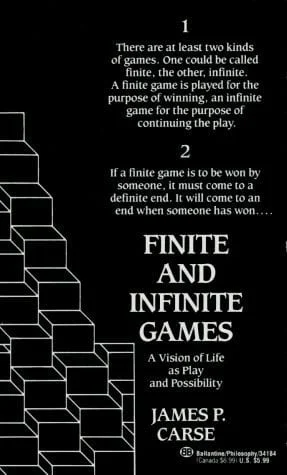
In both scenarios, the result is a failure to connect. As the philosopher James Carse noted in his seminal work, Finite and Infinite Games, we must distinguish between games played to be won and games played for the sake of continuing the play. Life is an "infinite game." When we treat it as a "finite" one, we inevitably end up exhausted and isolated.
Implications for Modern Relationships
The most devastating consequence of the competitive mindset is the erosion of genuine human connection. A healthy, fulfilling relationship is built on mutual support—the sincere desire to see the other person flourish.
If you view your peers as competitors in the "game of life," your ability to celebrate their success is compromised. Their promotion, their travel, or their children’s achievements become markers of your own stagnation. This turns friendships and family ties into arenas of subtle, often subconscious, rivalry. You stop rooting for the people you love because their victory feels like your defeat. This adversarial dynamic is the death knell of intimacy.
Redefining Autonomy: Playing by Your Own Rules
The moment you adopt society’s definition of "winning," you surrender your autonomy. You are no longer living; you are performing.
The Pyrrhic Victory
Many people spend decades chasing goals they did not choose. They climb corporate ladders they don’t care about to buy houses they don’t have time to enjoy, all to impress people they don’t even like. This is what historians call a Pyrrhic victory—a win that inflicts such a devastating toll on the victor that it is equivalent to a defeat.
True autonomy requires the courage to define your own parameters for success. This might mean prioritizing time with family over a career advancement, or valuing creative expression over financial accumulation. When you define your own "rules," you cannot lose, because the game is no longer about beating someone else—it is about honoring your own values.
Final Reflections: The Courage to Opt-Out
Does this mean we should abandon competition entirely? Certainly not. There is profound value in sports, in healthy workplace challenges, and in the pursuit of excellence. But we must maintain a firewall between these activities and our personal identity.
When you finish a game of chess, a golf match, or a fantasy football season, you put the board away. You shake hands. You recognize that the game was a simulation. We must learn to treat the "Game of Life" with the same level of detachment.
The next time you find yourself measuring your life against an arbitrary standard—be it a salary bracket, a social media feed, or a neighborhood reputation—ask yourself: Whose game am I playing?
Life is not a competition to be won. It is an experience to be navigated. By refusing to play by the rules of others, you reclaim the one thing that actually matters: the freedom to live a life that is authentically your own. When you stop worrying about who is ahead, you finally gain the perspective required to appreciate the view. In the end, the only true "loser" is the person who spent their entire life trying to win a game that never existed in the first place.