For most people, the scent of lemon, lavender, or pine wafting through a home is a sensory shorthand for hygiene. It is the olfactory hallmark of a freshly scrubbed kitchen or a sanitized bathroom—a sign that the environment is safe, clean, and healthy. However, groundbreaking research from Purdue University suggests that this association may be dangerously misplaced.
While we diligently wipe away bacteria and viruses, we may be inadvertently triggering a complex, invisible chemical reaction in our own living rooms. A new study, led by Assistant Professor Brandon Boor of Purdue’s Lyles School of Civil and Construction Engineering, reveals that the fragrance compounds found in both conventional cleaners and botanical, essential-oil-based products react rapidly with indoor air to generate trillions of nanoparticles. These ultrafine particles, often invisible to the naked eye, can penetrate deep into the human respiratory system, raising significant concerns about the hidden consequences of modern cleaning habits.
The Chemistry of a "Clean" Smell
The research, which was presented at the American Chemical Society’s (ACS) fall meeting during the "Healthy Indoor Spaces" symposium, challenges the fundamental assumption that a "clean" scent is synonymous with clean air.
"Clean air should not smell like highly concentrated citrus fruit," says Boor. "It should not really smell of anything."
The phenomenon Boor’s team discovered is rooted in the chemistry of terpenes. Terpenes are naturally occurring organic compounds found in plants—the same compounds that give pine trees their scent or lemons their zesty aroma. Atmospheric scientists have long understood that when these compounds are released in nature, they can react with ozone to form tiny airborne particles. In a forest, this process is slow and contributes to the formation of clouds.
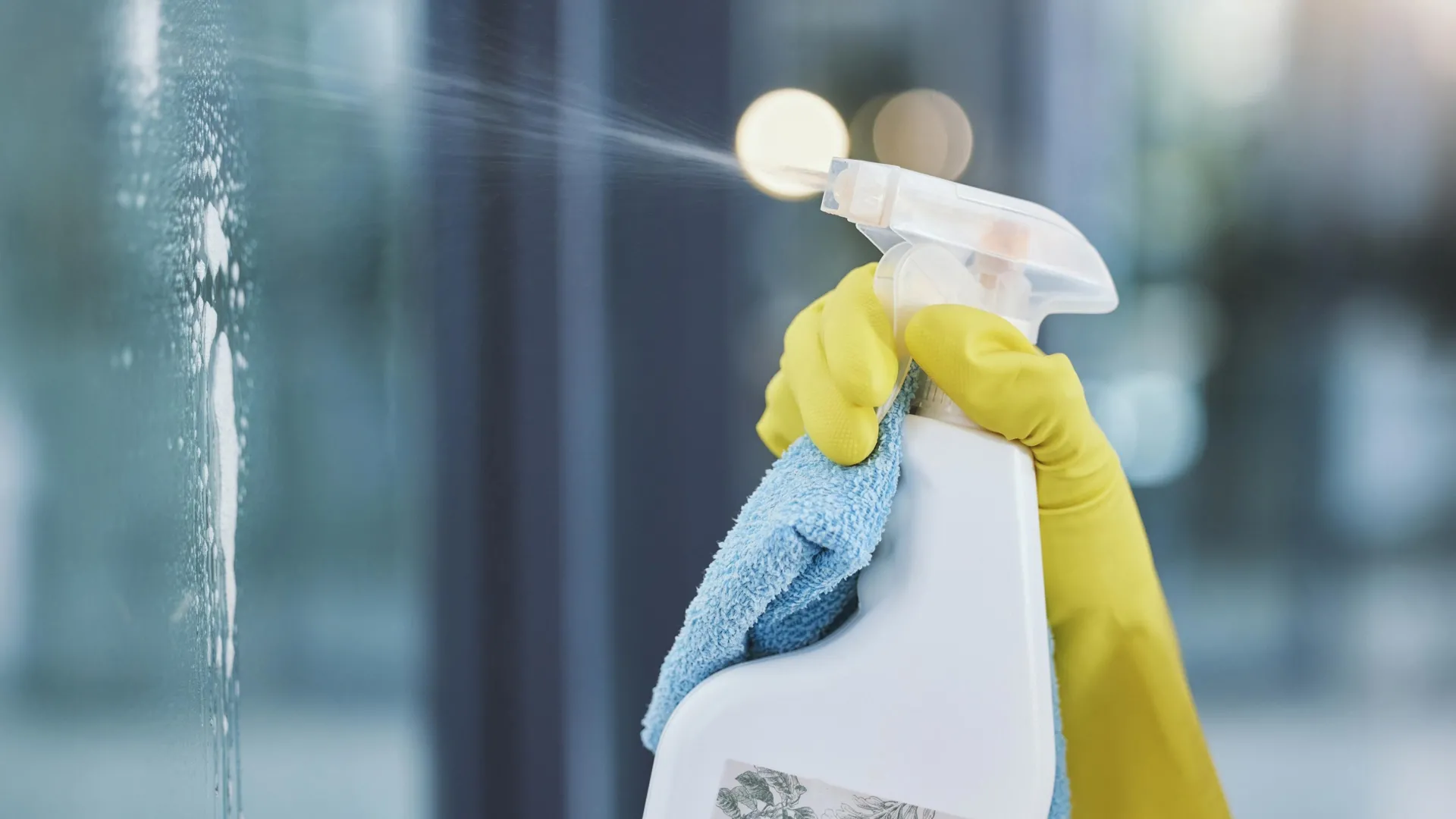
However, inside a home, the environment is fundamentally different. When we use a scented cleaner, we are releasing these terpenes in a confined space at concentrations tens or even hundreds of times higher than those found in a forest. As these compounds evaporate from sprayed surfaces, they encounter ozone—an oxidant present in almost all indoor environments—and trigger a rapid chemical transformation. The result is the formation of billions, and sometimes trillions, of nanoparticles, often within minutes of starting a routine cleaning task.
A Chronology of Discovery: From Pandemic Cleaning to Particle Analysis
The investigation into this phenomenon began during the height of the COVID-19 pandemic, a period when the use of chemical disinfectants and scented cleaning agents surged globally. Boor and his colleague, Assistant Professor Nusrat Jung, began observing how these products altered the chemical composition of indoor environments.
The researchers quickly noted a pattern: the products marketed for their "fresh" scents were fundamentally changing the indoor "smellscape." To understand the impact, the team moved their experiments into a specialized model home on the Purdue campus. This "tiny house" facility, equipped with a functional kitchen, wood flooring, and a bathroom, allowed the researchers to simulate real-world cleaning activities—mopping, spraying countertops, and wiping surfaces—under controlled conditions.
Phase 1: Identifying the Reaction
Initial measurements in the test home confirmed that routine tasks were not just moving dirt; they were initiating significant indoor atmospheric chemistry. High-resolution instruments detected massive spikes in terpene and terpenoid mixing ratios (10 to 1,000 parts per billion). These levels far exceeded anything typically measured in outdoor forested environments.
Phase 2: The Particle Surge
The researchers observed that the chemical reaction produced intense "nucleation" events. The particles formed were primarily in the ultrafine range—measuring between 1 and 30 nanometers across. Because these particles are so small, they do not appear as smoke, dust, or haze. They are entirely invisible, which is precisely why they are so deceptive. A homeowner might finish cleaning a kitchen, satisfied by the pleasant scent, entirely unaware that they have just filled their breathing zone with a high concentration of secondary organic aerosols.
Phase 3: The Impact of Ozone
In subsequent studies, Boor and Professor Ernest Blatchley examined the intersection of cleaning and new air-disinfection technologies. They specifically looked at what happens when scented cleaners are used in rooms equipped with germicidal far-UV (UV-C) lamps. These lamps, designed to neutralize airborne pathogens, inadvertently generate ozone as a byproduct. When combined with the high concentrations of terpenes from cleaners, the production of nanoparticles became even more intense, creating a "perfect storm" for indoor air pollution.
Supporting Data: The Magnitude of Exposure
The data produced by the Purdue study is staggering in its implications for human health. The researchers found that the inhalation dose of these nanoparticles can be comparable to, or even exceed, what a person would experience while standing on a busy roadside filled with vehicle exhaust.
While the chemical composition of the particles formed by cleaning is different from that of traffic exhaust, the total "respiratory dose" is alarmingly high. The study identified:
- Nucleation Rates: Reached approximately $10^5$ particles per cubic centimeter per second.
- Growth Rates: Particles grew as fast as 300 nanometers per hour, allowing them to quickly reach sizes that deposit efficiently in the lungs.
- Total Concentrations: Transient indoor concentrations of $10^5$ to $10^8$ particles per cubic centimeter were recorded during cleaning activities.
Because these particles are so small, they possess a unique ability to bypass the body’s natural filtration mechanisms. Larger particles are often trapped in the nose or throat, but these ultrafine nanoparticles can travel deep into the alveolar regions of the lungs. Once there, they can trigger inflammation and respiratory irritation. Emerging research suggests that particles of this size may even have the potential to translocate into the bloodstream, posing risks that extend beyond the respiratory system.
Official Responses and Expert Perspective
The scientific community has reacted to these findings with significant concern, emphasizing that while hygiene remains a pillar of public health, the "scent" component of cleaning is unnecessary and potentially harmful.
"Importantly, cleaning removes viruses and bacteria from surfaces, but it can also generate invisible air pollution," Boor reiterates. "There’s no visible dust or smoke in the air, but these particles are forming."
The researchers stress that their work is not intended to discourage cleaning. The removal of pathogens from high-touch surfaces remains a critical aspect of home and workplace safety. Instead, the goal of the study is to provide consumers and public health officials with the information needed to make smarter, less risky choices.
The study has also drawn attention to the regulatory gap in indoor air quality. While outdoor air is strictly monitored and regulated for particulate matter (PM2.5 and PM10), indoor environments—where humans spend approximately 90% of their time—remain largely unregulated. The "Healthy Indoor Spaces" symposium highlighted the urgent need for a shift in how we perceive indoor pollutants, specifically those we introduce into our own homes through consumer products.
Implications: A New Approach to Household Hygiene
The implications of the Purdue study are far-reaching, suggesting that the "scent" industry needs a fundamental overhaul, and that consumer habits must change.
1. The Call for Unscented Products
The most effective way to reduce the formation of these nanoparticles is to eliminate the source of the terpenes. Consumers are encouraged to opt for fragrance-free cleaning products. By removing the chemicals responsible for the "pleasant smell," one effectively eliminates the precursor to the nanoparticle reaction.
2. Improving Ventilation
If scented products must be used, the study highlights the necessity of active ventilation. Simply opening windows or utilizing high-quality exhaust fans during and after cleaning can significantly reduce the concentration of these reactive compounds. Ventilation helps clear the air of both the terpene gases and the newly formed nanoparticles before they can be inhaled in high doses.
3. Avoiding Ozone-Generating Devices
The study provides a clear warning regarding air-cleaning technology. Devices that generate ozone—often marketed as air purifiers—should not be operated in conjunction with the use of scented cleaning products. The synergy between ozone and fragrance chemicals is a major driver of nanoparticle formation, and using these two in tandem creates an unnecessary health hazard.
4. Policy and Formulation Reform
Beyond individual actions, the study points to a need for reform in how cleaning products are formulated and labeled. If manufacturers are aware that their products facilitate rapid nanoparticle formation, there may be a responsibility to disclose these risks or to reformulate products to rely on less reactive chemical alternatives.
Conclusion: Redefining "Clean"
The research from Purdue University serves as a necessary wake-up call. We have been conditioned to equate the smell of artificial citrus or floral extracts with safety, but the reality is that we may be trading pathogen removal for chemical pollution.
As we move forward, the definition of a "clean home" must evolve. It should no longer be defined by the heavy, artificial scent of a disinfectant, but by the absence of unnecessary volatile organic compounds. By choosing unscented products, ensuring robust ventilation, and being mindful of the chemistry occurring within our four walls, we can protect our respiratory health while maintaining the hygiene standards required for a healthy life. The most effective way to ensure our air is clean, it turns out, is to stop trying to make it smell like anything at all.