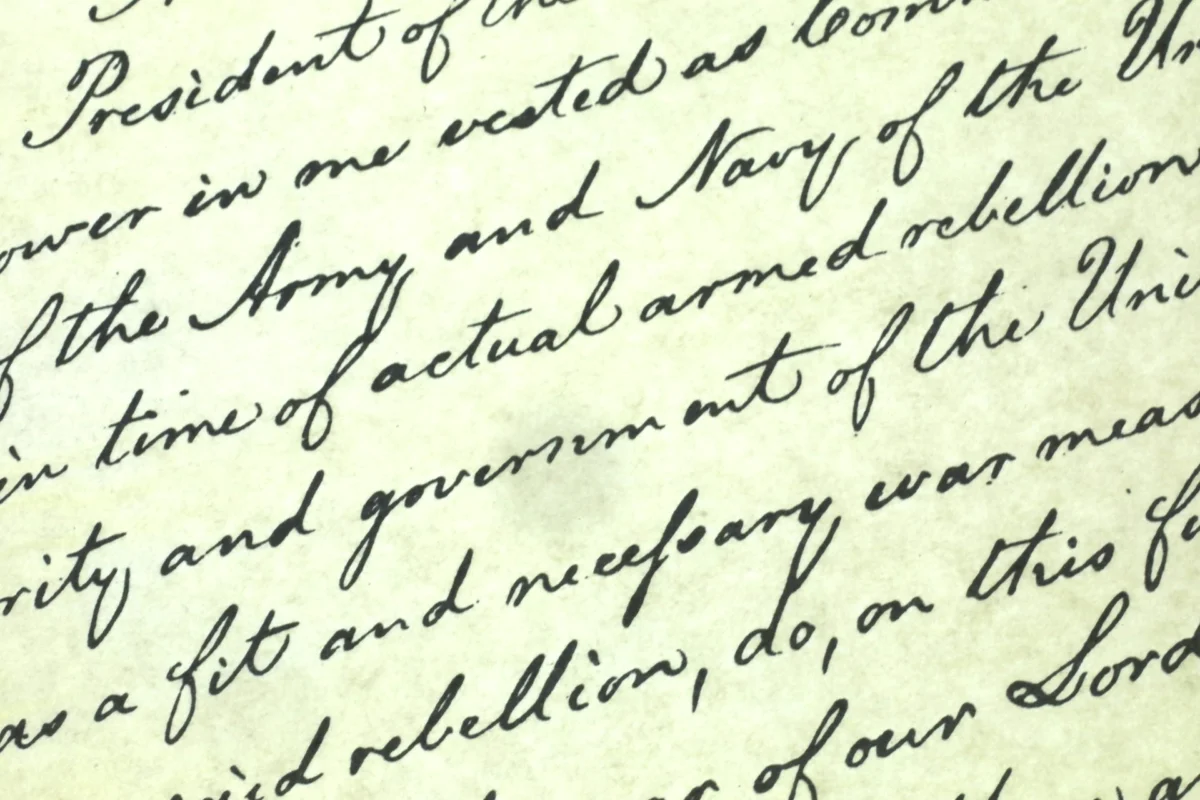
In an era dominated by rapid-fire thumb-typing and voice-to-text technology, the rhythmic, connected loops of cursive handwriting were once thought to be headed for the scrapheap of history. However, a significant legislative movement across the United States is breathing new life into this traditional skill. As of 2024, more than half of U.S. states have enacted mandates requiring cursive instruction, sparking a national debate over whether penmanship is a relic of the past or a vital cognitive tool for the future.
This report explores the main facts of the cursive revival, the chronological evolution of handwriting instruction, the scientific data supporting its benefits, and the complex implications for the modern American education system.
Main Facts: The Current State of Cursive Education
The landscape of American primary education is currently witnessing a "back-to-basics" revolution. While the 2010 adoption of the Common Core State Standards notably omitted cursive—focusing instead on keyboarding and print—the subsequent decade has seen a dramatic reversal.
- Legislative Momentum: As of late 2024, over 25 states, including populous hubs like California, Florida, and Pennsylvania, have passed laws requiring cursive instruction in elementary schools.
- The Grade-Level Standard: Most state mandates target the third through fifth grades as the critical window for cursive acquisition, arguing that this is when fine motor skills are sufficiently developed to handle the complexity of connected script.
- The "AI" Factor: In a surprising modern twist, some educators and lawmakers are advocating for cursive as a safeguard against the misuse of Artificial Intelligence. Handwritten assignments, they argue, provide a layer of academic integrity that digital submissions lack.
- Historical Literacy: A primary driver for the revival is the concern that future generations will be unable to read foundational documents of the American republic, such as the Constitution or the Declaration of Independence, in their original forms.
Chronology: From Ornamental Status to Digital Obsolescence
The history of handwriting in the United States is a mirror of the country’s shifting social and technological values.
The 18th and 19th Centuries: Character and Class
Until the early 20th century, children were rarely taught "print" (manuscript) writing. Instead, they began immediately with script. During the 1700s and 1800s, handwriting was viewed as a window into an individual’s soul. Elaborate, ornamental scripts—like the Spencerian Method—were seen as a mark of discipline, intelligence, and social standing. If a person’s cursive was messy, it was often assumed their character was similarly flawed.
1900–1950: The Golden Age of Penmanship
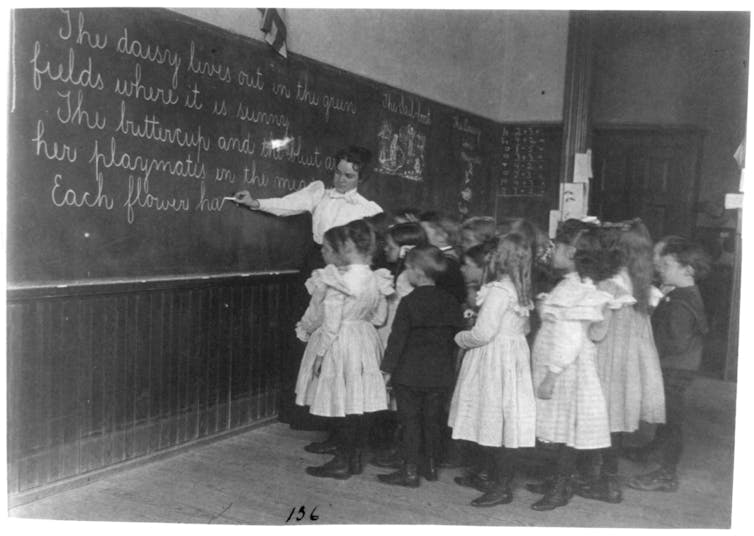
In the first half of the 20th century, penmanship became a formalized, distinct subject. The "Palmer Method" replaced the more flowery Victorian styles with a focus on speed and efficiency for the business world. Students would often spend 45 minutes a day practicing "ovals" and "push-pulls" to build muscle memory. It was during this time that researchers suggested young children should learn print first (in Kindergarten through 2nd grade) because it mirrored the fonts in their reading books, with cursive introduced later as a more "mature" form of writing.
1980–2000: The Squeeze of Standards
By the 1980s, the time dedicated to handwriting began to dwindle. The "standards-based movement" of the 1990s introduced a more crowded curriculum. To make room for expanded mathematics (including data analysis) and a more global social studies curriculum, schools cut penmanship down to 30–60 minutes per week.

2000–2013: The Digital Eclipse
The rise of the personal computer and the internet made keyboarding seem like the only essential transcription skill. When the Common Core standards were released in 2010, they reflected this digital priority. By omitting cursive, the standards sent a signal to schools that the skill was no longer a priority.
2013–Present: The Pendulum Swings Back
North Carolina broke the silence in 2013 by passing the "Back to Basics" law, requiring cursive and the memorization of multiplication tables. This set off a domino effect. California joined the movement in 2023 with Assembly Bill 446, and Michigan and Pennsylvania followed shortly thereafter, cementing cursive’s comeback in the 2020s.
Supporting Data: The Neuroscience of the Loop
The arguments for cursive are not merely nostalgic; they are increasingly supported by neuroscientific and pedagogical research.
Cognitive Development and Memory
A landmark 2020 study conducted in Norway utilized high-density electroencephalograms (EEG) to monitor the brain activity of 12 adults and 12 preteens. The researchers found that writing in cursive—which involves complex, fluid movements—activated significantly more brain areas than typing. Specifically, the synchronization of brain waves in the parietal and central regions was linked to improved learning and memory retention.
The "Burst" Theory of Fluency
Research conducted on first graders in Portugal suggested that cursive writing might improve "writing bursts"—the amount of text written before a pause. Because cursive is an unbroken flow, it allows the writer to translate thoughts to paper without the micro-interruptions required to lift the pen between every letter in print. This continuity is believed to help students maintain their "train of thought" during composition.
Literacy and Reading Acceleration
A 2019 study of 141 first graders revealed a surprising correlation: children taught cursive early in the year showed better reading word-recognition skills by the end of the year compared to those who only learned print. Experts theorize that because cursive forces the brain to process words as continuous units rather than a series of disconnected sticks and circles, it reinforces the "chunking" of letters into recognizable morphemes.
Support for Learning Disabilities
For students with dyslexia or dysgraphia, cursive can be a transformative tool. Because many cursive letters (like ‘b’ and ‘d’) look very different from one another compared to their print counterparts, the "mirroring" effect that often confuses dyslexic students is reduced. Furthermore, the multisensory nature of cursive—the feeling of the pen’s movement—provides a "motor memory" that helps students who struggle with traditional letter formation.
Official Responses: Lawmakers and Educators Weigh In
The return of cursive has been met with a mix of political fervor and practical skepticism.
The "Citizenry" Argument
In Pennsylvania, Representative Brenda Watros and other sponsors of the state’s cursive mandate argued that the ability to read original historical documents is a prerequisite for an informed citizenry. "If our future leaders cannot read the documents that founded this nation, they are at the mercy of translators," proponents argued during house sessions.
The "Family Legacy" Defense
In Michigan, lawmakers highlighted the emotional and personal importance of the skill. State Representative Brenda Carter shared a moving anecdote about her granddaughter, who was only able to read a letter from her late father because her school had voluntarily maintained cursive instruction. This "link to the past" has become a powerful emotional argument for the mandates.
The Skeptical View
However, not all educational experts are convinced. Many pedagogical researchers point out that while handwriting is superior to typing for memory, the evidence that cursive is superior to print is less robust. Critics argue that the 70 minutes a week required to teach cursive could be better spent on coding, financial literacy, or emotional intelligence.
Furthermore, the National Association of State Boards of Education has noted that "curricular crowding" remains a primary concern. Teachers are already struggling to meet benchmarks in literacy and STEM; adding a mandatory penmanship block creates a zero-sum game where something else must be cut.
Implications: Challenges in the Modern Classroom
The mandate to bring back cursive carries several long-term implications for the American school system.
1. The Teacher Training Gap
Perhaps the most significant hurdle is that many teachers currently entering the workforce—those in their early 20s—were themselves victims of the "cursive hiatus." There is now a generational gap where the instructors are being asked to teach a skill they never mastered. This will require new investments in professional development and "teacher-the-teacher" programs.
2. Equity and the Digital Divide
There is a concern that cursive mandates might inadvertently widen the equity gap. In well-funded districts, cursive is an "added bonus." In under-resourced schools struggling with basic literacy rates, a cursive mandate might be seen as an unfunded burden that distracts from core reading intervention.
3. The Future of Assessment
As more states require cursive, the way we assess students may change. If students are writing more fluently in script, standardized testing—which has moved almost entirely online—may need to reconsider "paper and pencil" options to capture the full cognitive output of students who perform better via handwriting.
4. A Cultural Shift Toward "Slow Learning"
The resurgence of cursive may signal a broader cultural shift away from the "instant" nature of digital life. Cursive requires patience, fine motor control, and repetitive practice. By reintroducing it, schools are inadvertently teaching "mindfulness" and the value of a slow, deliberate craft—a rare commodity in the 21st century.
Conclusion
The return of cursive is more than a nostalgic nod to the past; it is a complex reaction to the digital age. While the scientific community continues to debate the specific advantages of loops over blocks, the legislative trend is clear: America is not ready to let go of the handwritten word. Whether as a tool for brain development, a shield against AI, or a bridge to our national history, cursive is once again making its mark on the American chalkboard. The challenge now lies in how a 19th-century skill can coexist within a 21st-century curriculum.