For years, the automotive industry has grappled with a phenomenon known as "range anxiety"—the persistent fear that an electric vehicle (EV) will run out of power before reaching its destination. However, a new, comprehensive study from BMW Group North America suggests that this anxiety is increasingly disconnected from the day-to-day realities of American driving.
While manufacturers continue to push for larger, heavier, and more expensive battery packs to satisfy consumer demands for massive range, the data reveals a striking irony: the average driver rarely uses even a fraction of that capacity. As the market shifts from early adopters to the mass market, the industry is finding that the "range problem" is no longer a technical hurdle, but a psychological one.
The Data: A Massive Gap Between Use and Expectation
In a survey of 1,005 US adults conducted between September 11 and 13, BMW Group North America sought to quantify the discrepancy between how drivers actually use their vehicles and what they demand from an electric powertrain. The results were startlingly clear.
A massive 73 percent of respondents admitted that their daily driving habits—encompassing school runs, grocery store trips, and the standard commute—total 75 miles or less. For these individuals, the vast majority of modern EVs currently on the market would not just suffice; they would be significantly over-engineered for the task. Yet, when asked what they would require from an EV before they would consider making a purchase, the requested range requirements spiked dramatically, far exceeding the 75-mile daily threshold.
This disconnect highlights a persistent cognitive dissonance in the automotive marketplace. While modern EV architecture is capable of delivering 300+ miles on a single charge, potential buyers continue to view these vehicles through the lens of internal combustion engine (ICE) ownership, where refueling is frequent and range is a constant, if invisible, constraint.
Chronology of an Evolving Market
To understand how we arrived at this moment, one must look at the evolution of consumer sentiment over the last several years.
The Early Adopter Phase (2020–2023)
During the early years of the current EV boom, the market was dominated by tech enthusiasts and environmental early adopters. During this period, "range" was the primary metric of success. The narrative was simple: the further a car could go, the better it was. Manufacturers raced to pack more kilowatt-hours into vehicle floors, leading to a "range war" that prioritized battery size over efficiency.
The Transitional Period (2024)
By 2024, surveys from entities like Mini USA began to show a shift. Data from that year indicated that 48 percent of respondents viewed a 30-minute fast-charging stop as "acceptable." At this stage, the focus began to pivot from total range to charging infrastructure. The conversation shifted from "how far can I go?" to "how long will it take me to get back on the road?"
The Current Landscape (Late 2025)
The latest BMW survey marks a maturation point. The perception of the "EV buyer" is changing. In previous years, 62 percent of respondents categorized EV owners as niche "early adopters." That number has now plummeted to 56 percent, as electric vehicles become a more common sight on American roads. Furthermore, 68 percent of respondents now state they would consider an EV for their next vehicle, signaling that the technology is finally breaking into the mainstream consciousness.
The Hierarchy of Concerns: Price vs. Range
While range anxiety remains a popular talking point in industry media, the BMW survey reveals that it is not the primary barrier to adoption. That title belongs to price.
Fifty-one percent of survey respondents identified the high purchase cost of EVs as the single greatest deterrent to making the switch. Despite federal tax credits and state-level incentives, the upfront sticker price of many new EVs remains a significant hurdle for the average American household.
Interestingly, there is a lack of awareness regarding the long-term benefits of electrification. Only 27 percent of those surveyed cited lower ownership and operating costs as a primary driver for considering an electric vehicle. This suggests that the industry has done an excellent job marketing the "performance" and "range" of EVs, but a poor job of communicating the "total cost of ownership" benefits, such as reduced maintenance and lower fueling costs compared to gasoline.
The survey also highlighted a potential opening for the secondary market: 55 percent of respondents indicated they would be open to purchasing a certified pre-owned or used EV if the price point reflected a significant discount compared to new models.
Charging Speed: The New Frontier
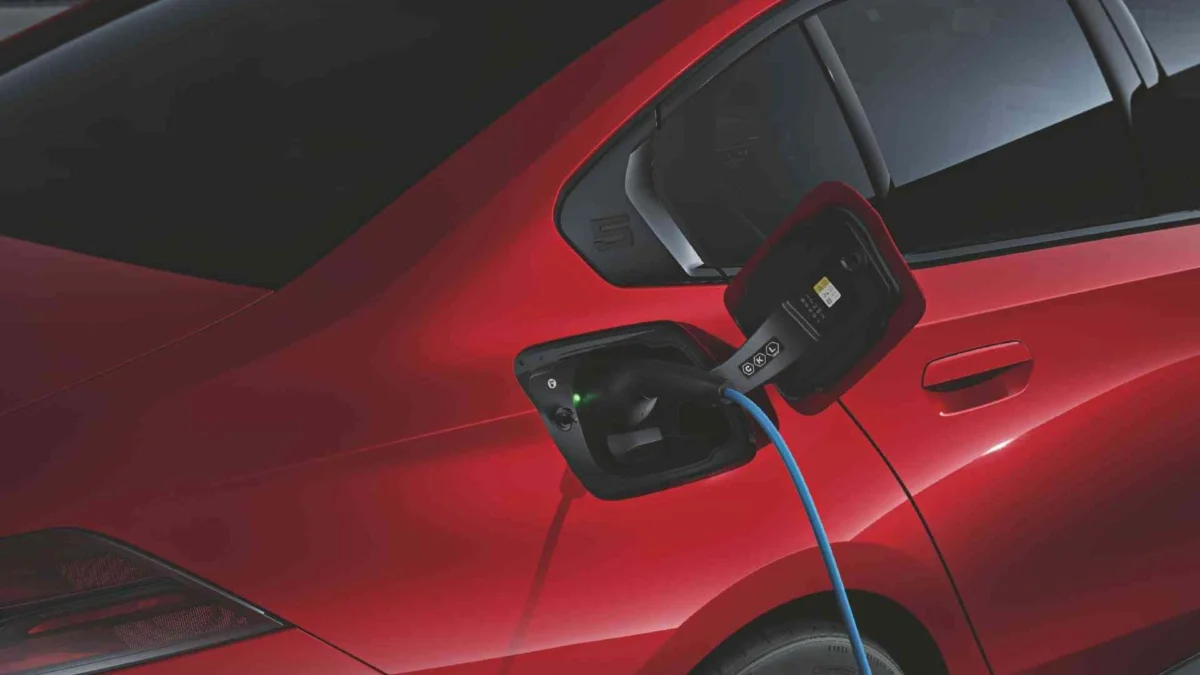
If range is the ghost of the past, charging speed is the reality of the future. BMW’s data suggests that the key to unlocking mass adoption lies not in larger batteries, but in faster, more convenient charging experiences.

When presented with a hypothetical scenario—an EV capable of adding 150 miles of range in a mere 10-minute charging stop—53 percent of respondents said they would be significantly more likely to consider an EV. This 10-minute window effectively mirrors the time a driver spends at a gas station, including paying, grabbing a coffee, or using the restroom.
The generational divide here is particularly telling:
- Younger Drivers (Gen Z/Millennials): These cohorts are significantly more attuned to the potential of ultra-fast charging and are more likely to view charging as a temporary stop rather than a significant inconvenience.
- Older Generations: While showing higher levels of skepticism, even older demographics are beginning to accept that 30 minutes is a reasonable time to wait for a full or near-full charge.
This shift in patience—with 55 percent of people now finding a 30-minute charge acceptable, up from 48 percent just a year ago—suggests that the public is becoming accustomed to the "plug-in" lifestyle.
Official Perspective: The View from Munich
Alexander Schleicher, the head of e-mobility for BMW Group North America, views these results as a clear indicator that the market is beginning to mature.
"As range and charging capability continue to advance," Schleicher noted, "we’re seeing consumers evaluate EVs the same way they’d evaluate any other vehicle: on performance, features and value, not on outdated assumptions about range."
For BMW, this is a call to action. The brand is betting that as the charging network matures—aided by government investment and private partnerships—the "range anxiety" that has defined the last decade will fade away. The company’s strategy involves balancing the delivery of high-performance driving dynamics with the convenience of fast-charging capabilities, moving away from the "bigger battery at all costs" mentality.
Implications for the Future of Mobility
The implications of this data for the automotive industry are profound.
1. The Death of the "Range War"
We are likely approaching the end of the era where manufacturers compete solely on who can build a car with the longest range. As the data shows, most Americans don’t need 500 miles of range. In fact, excessive range often leads to heavier, more expensive vehicles that require more resources to produce. A pivot toward more efficient, lighter, and faster-charging vehicles is not just a consumer preference—it is a logical engineering trajectory.
2. Infrastructure as the Primary Catalyst
The survey confirms that the consumer’s mindset is tethered to the availability and speed of infrastructure. As charging stations become as ubiquitous and reliable as gas stations, the psychological necessity for a "massive range" will continue to dissolve.
3. Education on Total Cost of Ownership
The industry has a massive opportunity to shift the narrative from "price" to "value." If 55 percent of people are looking at the used market, it indicates that price sensitivity is high. Manufacturers and dealers need to do a better job of educating consumers on the long-term savings associated with EVs, potentially through clearer leasing options or long-term ownership cost calculators.
4. Normalization of Electric Driving
The downward trend in viewing EV buyers as "early adopters" is perhaps the most significant finding. When a technology transitions from a niche enthusiast category to a standard consumer good, the marketing strategies must shift from "innovation-led" to "utility-led."
Conclusion
The findings from BMW Group North America serve as a mirror held up to the American car-buying public. They reveal a population that is caught between the habits of the past and the technology of the future. While fears of being "stranded" persist, they are increasingly based on hypothetical scenarios rather than the actual, documented behavior of the drivers themselves.
As the industry continues to evolve, the winners will not necessarily be those who offer the largest batteries, but those who offer the most seamless, rapid, and cost-effective charging experiences. The gap between what drivers say they want and what they actually use is closing, and as it does, the transition to an electrified future looks not only inevitable but increasingly practical for the average American household.