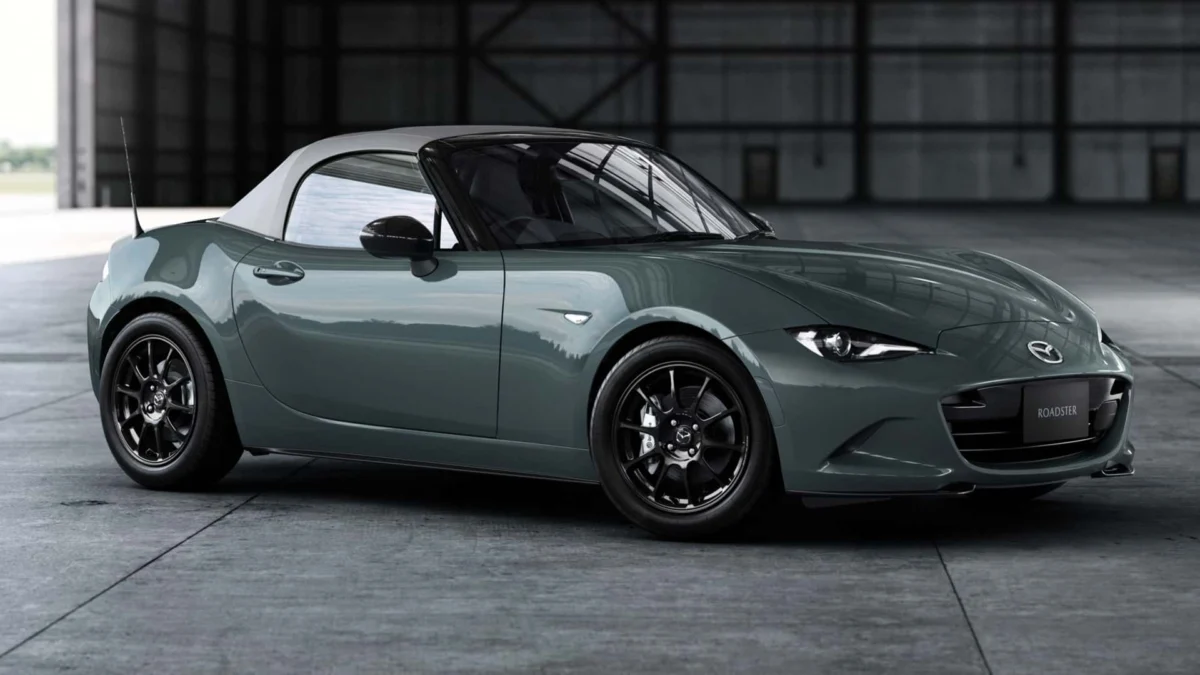
For over three decades, the Mazda MX-5 Miata has stood as the quintessential embodiment of the "Jinba Ittai" philosophy—the bond between horse and rider. Since its debut in 1989, it has remained a beacon for driving purists, resisting the industry-wide trend toward bloating, electrification, and over-digitization. However, even an icon must bow to the inexorable march of bureaucracy.
As the fourth-generation (ND) model enters its 12th year, Mazda finds itself in a delicate balancing act: preserving the visceral, lightweight soul of the world’s best-selling two-seater roadster while navigating an increasingly restrictive landscape of international safety and environmental legislation.
The Regulatory Pressure Cooker: Why the ND Must Evolve
While enthusiasts often clamor for radical performance upgrades, the latest series of updates to the 2026 and 2027 Mazda Miata models are not born from a desire for more horsepower, but from a necessity for survival. The automotive industry is currently grappling with Phase 3 vehicle noise regulations, which align with the international UN Regulation No. 51 (R51-03).
In Japan, these stringent rules have necessitated immediate engineering interventions. The legislation, which began impacting newly approved models in October 2024, will extend its reach to existing, ongoing production models starting next month. The core of the challenge lies in the decibel limits: whereas previous phases allowed for 70-74 dB (Phase 2) or even 72-75 dB (Phase 1), the new standards tighten the threshold to 68-72 dB.
To meet these requirements, Mazda’s engineering team has been forced to rethink the acoustic signature of the ND platform. This has resulted in the integration of quieter, low-rolling-resistance tires and the installation of a physically larger exhaust silencer. While these changes seem minor on paper, they represent significant packaging challenges for a car designed around the constraints of a "minimalist footprint."
Packaging Constraints: The Cost of Compliance
The Miata has always been a masterclass in tight packaging, but the mandate for a larger silencer has introduced tangible compromises. Most notably, owners of the Retractable Fastback (RF) model will find that the internal geometry of the trunk has been reduced to accommodate the bulky new hardware.
This isn’t merely a "plug-and-play" modification; it is a fundamental shift in how the vehicle occupies space. By reconfiguring the intake system and exhaust routing, Mazda has managed to keep the Miata compliant with the law while maintaining its rear-wheel-drive dynamics. However, the encroachment into luggage space serves as a stark reminder that even the most beloved sports cars are subject to the same geometric realities as a family hatchback when regulatory pressure mounts.
Chronology of a Legend: The ND Platform’s Endurance
To understand the significance of these 2026/2027 updates, one must look at the longevity of the ND platform. Introduced in 2015, the fourth-generation Miata was a radical departure from the NC, focusing heavily on shedding weight and returning to the "NA" ethos of the 90s.
Over the last 12 years, the car has undergone a series of incremental, yet critical, technical revisions:
- 2015-2018: The early years focused on pure, lightweight agility.
- 2019: A major powertrain update saw the 2.0-liter Skyactiv-G engine receive a significant bump in power (reaching 181 horsepower) and a higher redline, responding to fan requests for more punch.
- 2020-2023: Continued refinement of the Kinematic Posture Control (KPC) system, which improved cornering stability without adding traditional, heavy electronic active dampers.
- 2024-2027: The current era, defined by mandatory safety, cybersecurity, and noise regulation compliance.
The fact that the ND has remained relevant for over a decade is a testament to the platform’s initial brilliance, but it also highlights the difficulty of updating a 2015-era architecture to meet 2026-era global standards.
The 2027 Pure Sport: A Celebration of Identity
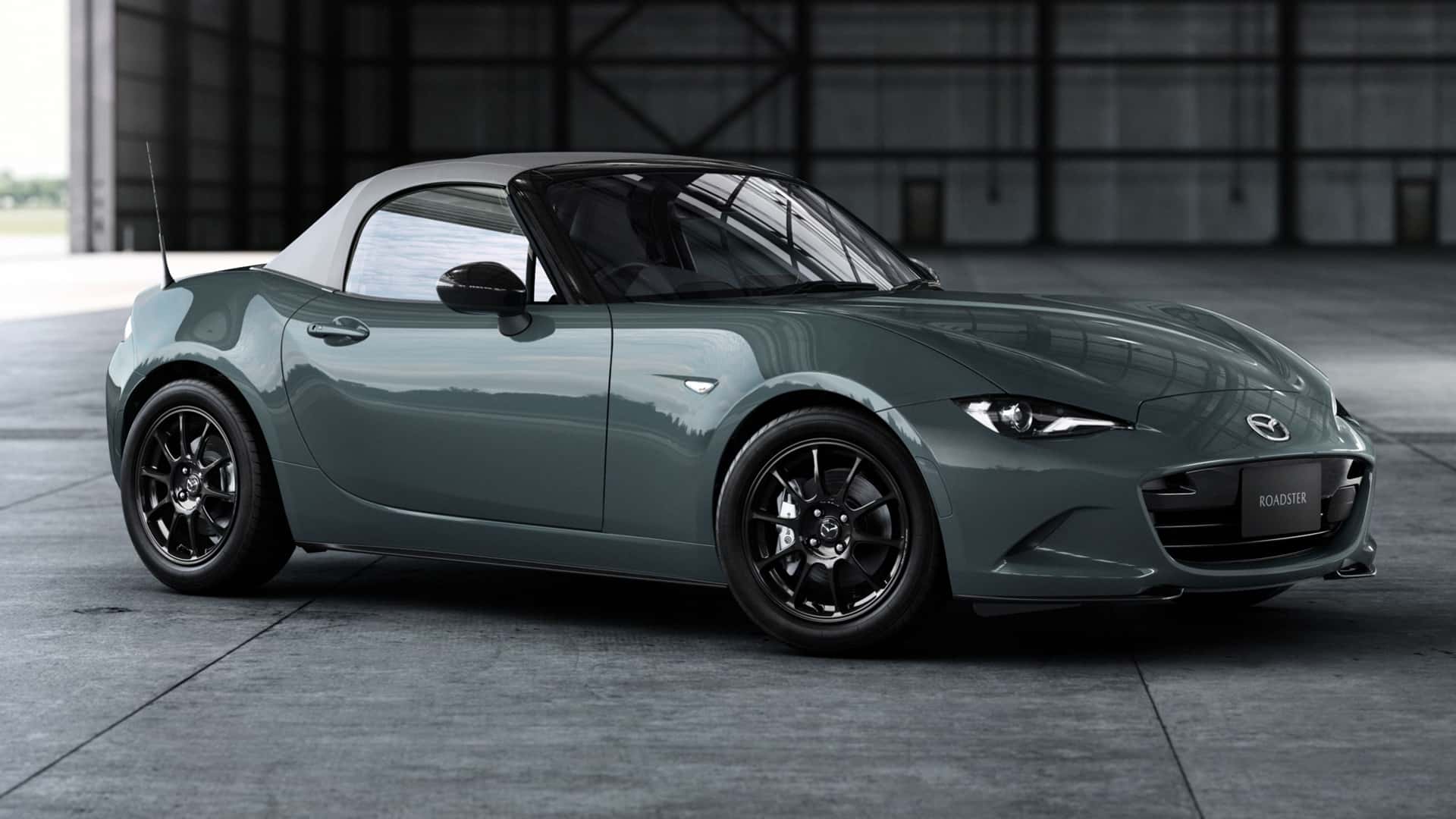
In the midst of these technical hurdles, Mazda continues to inject personality into the lineup. The introduction of the "Pure Sport" (PS) special edition for the Japanese market is a clear signal that Mazda refuses to let the Miata become a sterilized appliance.
The Pure Sport model, equipped with the 1.5-liter engine, is a masterclass in aesthetic and mechanical nuance. It features the striking "Zinc Green Metallic" paint—a color that has garnered significant attention—paired with a sophisticated gray fabric roof. The choice of 16-inch black Rays wheels and silver-caliper Brembo brakes provides a visual and functional upgrade that feels purposeful rather than decorative. Standard-fitment Bilstein dampers ensure that the "Pure Sport" moniker is backed by tangible handling improvements.
Inside, the cabin remains a focused, intimate space. By opting for suede-like fabric seats and black-ringed accents on the start/stop button and climate controls, Mazda has managed to modernize the interior without resorting to the "tablet-on-a-dashboard" aesthetic that has come to dominate the industry.
Official Stance: Preserving the DNA
Mazda executives have been vocal about the challenges of developing the next-generation Miata. In various interviews, the engineering team has emphasized that the goal is not to reinvent the wheel, but to "preserve the car’s DNA."
There is an internal mandate at Mazda to keep the next iteration of the car exceptionally lightweight—ideally staying under the 2,200-pound threshold. This is becoming increasingly difficult as safety equipment, mandatory driver-assistance systems, and stricter noise and emissions requirements add mass at every turn.
Regarding the interior, Mazda has recently taken a firm stance against the trend of massive, distracting touchscreens. While other manufacturers argue that larger screens are safer or more modern, Mazda’s design philosophy prioritizes physical controls and intuitive ergonomics. They believe that a driver’s focus should remain on the road, not on navigating a sub-menu of a glass display. This commitment to the "driver-first" experience is likely what will define the next chapter of the Miata, regardless of whether it adopts hybrid or fully internal combustion powertrains.
Implications for the Future
The implications of the 2027 noise regulations extend far beyond the Miata. For sports car manufacturers, the "sound" of a car is a critical part of the sensory experience. As global standards push for quieter exhaust notes, automakers are forced to explore artificial sound enhancement or, conversely, find ingenious ways to tune natural acoustics within the narrow confines of modern noise laws.
Furthermore, the need to modify a car’s trunk space or intake systems just to survive a regulatory shift in one market (Japan) highlights the massive R&D costs associated with maintaining a niche model. The fact that Mazda is willing to absorb these costs demonstrates the brand’s commitment to the MX-5 as a halo vehicle. It is not just a product; it is the soul of the company.
Conclusion: The Long Road Ahead
With over 1.26 million units sold since 1989, the Miata has transcended its status as a mere car to become a cultural phenomenon. As we look toward the latter half of the decade, the Miata finds itself at a crossroads. The transition to the fifth-generation (NE) platform will inevitably bring more electrification, more regulations, and more complex engineering challenges.
However, if the recent updates to the 2027 model are any indication, Mazda is not interested in shortcuts. They are prepared to sacrifice trunk space, adjust exhaust tuning, and meticulously refine every component to keep the Miata on the road. For the millions of enthusiasts who view the MX-5 as the last bastion of pure, affordable, analog driving pleasure, that is a comforting reality. The road ahead may be narrow and paved with regulations, but as long as the Miata is on it, the drive remains worth it.