We hear it tossed around in casual conversation, corporate boardrooms, and family dinner tables: "The Game of Life." It is a ubiquitous metaphor, embedded so deeply into the American psyche that we often forget it is a fabrication. From the enduring popularity of Milton Bradley’s 1860 board game—the first of its kind to find commercial success in the United States—to the shelves of bookstores filled with guides on "how to win," we have been conditioned to view our existence through the lens of competition, scoring, and eventual victory.
However, a growing chorus of philosophers, psychologists, and social critics are challenging this narrative. They argue that by viewing life as a competitive sport, we have traded our autonomy for an exhausting, zero-sum struggle that prioritizes vanity over vitality.
The Evolution of the Competitive Metaphor
The cultural obsession with "winning" at life has deep roots in the industrial age. In the 19th century, the rise of capitalism and the burgeoning middle class necessitated a framework for social mobility. Milton Bradley’s The Game of Life, originally titled The Checkered Game of Life, was designed to teach morality, but it inadvertently solidified a singular trajectory for success: get an education, secure a high-paying career, marry, and accumulate wealth.
Throughout the 20th century, this board game morphed into a cultural shorthand. Television commercials from the 1960s through the 1990s depicted the game as a rite of passage, reinforcing the idea that life follows a predictable, linear path where the goal is to reach the end with the most resources. This narrative has persisted, even as the nature of work and social connection has undergone radical shifts. Today, this metaphor has transitioned from a board game on the living room rug to a cognitive framework that dictates how we perceive our career status, the neighborhood we inhabit, and the university acceptance letters our children receive.
The Taxonomy of a Game vs. The Reality of Living
To understand why this metaphor is fundamentally flawed, one must distinguish between the structure of a game and the complexity of human life.
What Defines a Game?
Games are artificial constructs. They are defined by three distinct characteristics:
- External Rules: Rules that participants do not create but must follow to remain in the game.
- Arbitrary Objectives: Goals—like putting a ball through a hoop—that possess no intrinsic value outside the confines of the activity.
- The Zero-Sum Reality: In the vast majority of games, for there to be a winner, there must be a loser.
When we apply these constraints to our lives, we treat our existence as a series of hurdles to be cleared rather than an experience to be savored. We prioritize "objective" success—the tangible, measurable metrics of a bigger house, a more prestigious job title, or a higher net worth—because these are the only things that can be easily compared to our peers.
The Subjective Nature of the "Good Life"
Conversely, the elements that truly constitute a "good life" are entirely subjective and non-competitive. Ethics, deep emotional intimacy, the pursuit of personal curiosity, and professional fulfillment cannot be measured on a scoreboard. One cannot "outperform" a neighbor in the realm of meaningful relationships or personal integrity.
When life is treated as a competition, these vital, intangible aspects are marginalized. They are sidelined in favor of the "petty prizes"—the status symbols that allow for quick, often hollow, comparison.
The Erosion of Social Capital: When Friends Become Competitors
Perhaps the most damaging implication of the "Game of Life" mentality is its corrosive effect on human connection. Healthy relationships are built on empathy, shared vulnerability, and a genuine desire for the success of others.
If you view your life as a competition, this becomes logically impossible. When a colleague gets a promotion, you don’t see a friend’s success; you see a rival’s gain in a zero-sum game. This creates an atmosphere of "uneasy ambiguity." We find ourselves rooting for our friends and family, but only up to a point. If they exceed our own achievements, we feel the sting of defeat.
This environment is toxic to genuine closeness. It transforms the people in our lives from companions into benchmarks. When we interact with others, we are no longer listening to understand or connecting to share; we are scanning for data points to determine if we are "winning" or "losing" by comparison.
The Crisis of Autonomy: Playing by Someone Else’s Rules
By entering the "game," an individual implicitly accepts the rules set by society rather than their own values. This leads to what philosophers often call a "Pyrrhic victory"—a success so costly that it is tantamount to defeat.
When you chase prestige, you are chasing a goal formulated by a collective that does not know you, care about you, or understand your unique strengths and weaknesses. You are essentially renting your life goals from a society that prioritizes consumerism and status. The moment you decide that your worth is tied to these external metrics, you surrender your autonomy. You become a participant in a game where the goalposts are constantly moving, ensuring that true satisfaction remains perpetually just out of reach.
Data and Psychological Implications
Sociological data suggests that this competitive framework is a significant driver of the modern mental health crisis. Comparative thinking—constantly measuring one’s life against the curated highlights of others—is linked to increased rates of anxiety, depression, and social alienation.
A study published in the Journal of Social and Clinical Psychology suggests that individuals who engage in frequent upward social comparison are significantly more likely to report feelings of inadequacy. The "Game of Life" provides the perfect conditions for this, as it encourages us to look at the "winners" (the top 0.01%) and feel a sense of shame when our own, very human, setbacks occur.
Reclaiming the Narrative: A Call for Infinite Play
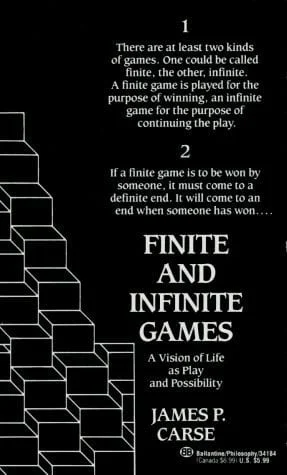
In his seminal work Finite and Infinite Games, James Carse distinguishes between two types of activity. A "finite game" is played for the purpose of winning. An "infinite game" is played for the purpose of continuing the play.
Life is the ultimate infinite game. There is no finish line, no final score, and no referee to declare a winner.
Practical Steps to Exit the Game:
- Redefine "Success": Shift your focus from objective, comparable metrics to internal, subjective values. Ask yourself: "What brings me a sense of peace and purpose?" rather than "What makes me look successful to others?"
- Cultivate "Zero-Sum-Free" Relationships: Surround yourself with people who celebrate your wins as their own, and do the same for them. These relationships are the true markers of a life well-lived.
- Embrace the Inevitability of Failure: Failure is not a "loss" in an infinite game; it is data. It is a necessary component of growth and learning. When you stop fearing the "specter of defeat," you gain the freedom to take risks and pursue what you truly love.
- Practice Selective Competition: Recognize that games have their place. It is perfectly healthy to enjoy the competition of a round of golf, a fantasy football league, or a workplace challenge. The tragedy occurs only when we fail to distinguish between the game and the reality of our own lives.
Conclusion: Life is Not a Dress Rehearsal
The danger of viewing life as a game is that it trivializes the most important aspects of our existence. By treating our careers, our families, and our values as competitive stakes, we turn our lives into a frantic scramble for status.
We must learn to look around at our friends, our passions, and our internal moral compass and recognize that these things are too important to be turned into a game. We are not here to win. We are here to live, to contribute, and to connect. When we finally step off the competitive treadmill, we don’t lose the game—we finally begin to enjoy the experience of being alive.