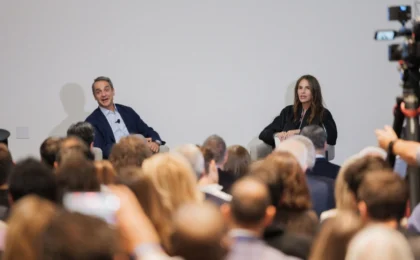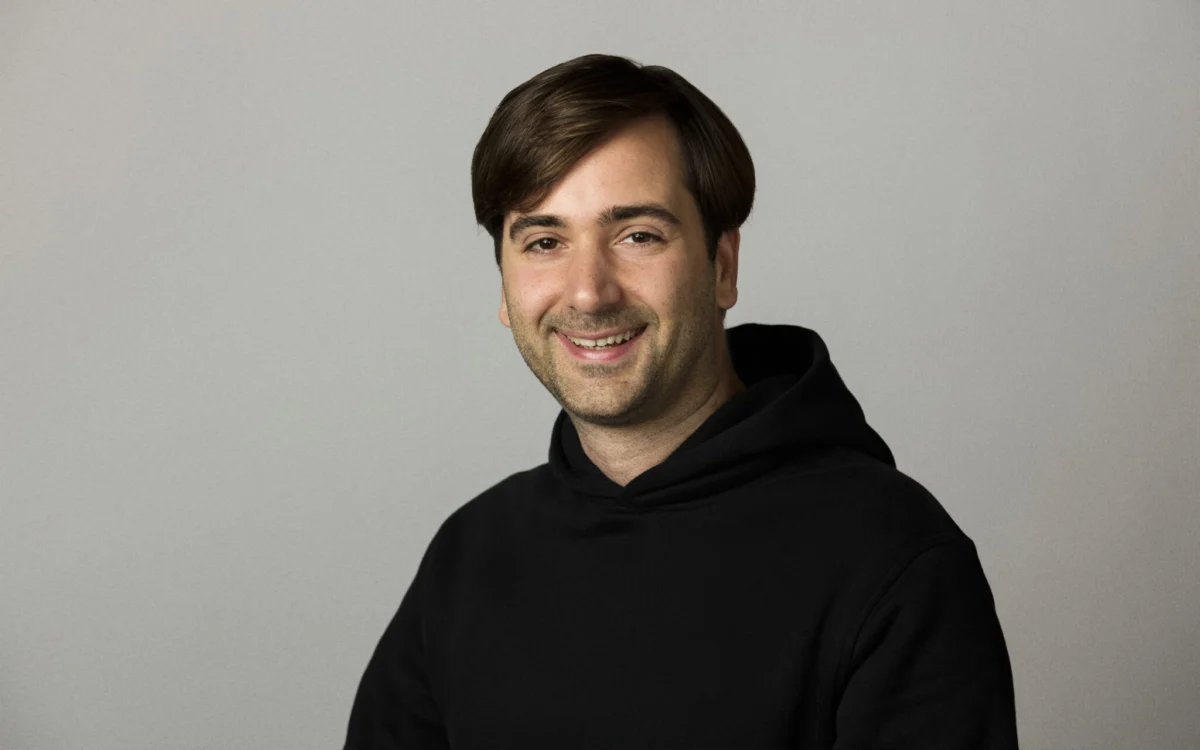
For those who have closely followed the evolution of OpenAI’s developer tools, Thibault Sottiaux is a familiar name. Often credited as the engineer who would quietly reset token limits during critical growth milestones for Codex, Sottiaux has transitioned from a backend optimizer to one of the most influential product leaders at the company. Today, he oversees the entirety of OpenAI’s core product suite—including the API, enterprise infrastructure, the classic ChatGPT interface, and the newly launched ChatGPT Work.
As OpenAI shifts its focus from a chatbot curiosity to an agentic powerhouse, Sottiaux finds himself at the center of the company’s most ambitious project yet: bringing autonomous AI agents into the daily workflows of white-collar professionals. In an exclusive interview, Sottiaux shed light on the design philosophy, economic strategy, and the philosophical hurdles of transforming AI from a text generator into a functional digital employee.
The Strategic Pivot: From Chatbot to Agent
For years, OpenAI’s mission was clear: develop models that were increasingly intelligent. However, the release of ChatGPT Work signals a pivot in the company’s roadmap. The goal is no longer just to answer questions; it is to perform complex, multi-step tasks autonomously.
"We wanted to bring the power of coding agents to everyone," Sottiaux explained. "This is an exercise in taking something that was made for technical people and packaging it in a way that is safe and delightful to use. Whether you’re on mobile or desktop, the aim is to make it available to the broadest population possible."
The launch of ChatGPT Work as part of the $20-a-month Plus plan is a calculated move to lower the barrier to entry. By bundling agentic capabilities with their existing consumer subscription, OpenAI is effectively democratizing access to technology that, until recently, was reserved for those with the technical expertise to manage API-driven workflows.
Chronology of Adoption: A Rapid Expansion
The trajectory of OpenAI’s product ecosystem has been characterized by aggressive, iterative deployment.
- The Codex Era: Early development focused on technical audiences. Codex provided the foundational logic for AI-assisted programming, establishing the "forgiving technical audience" testing ground.
- The ChatGPT Launch: The release of the original ChatGPT brought generative AI into the mainstream, focusing on conversational interfaces.
- Voice and Multimodality: The integration of ChatGPT Voice marked a significant shift in user experience, moving away from keyboard-heavy inputs to natural, conversational interactions.
- The Agentic Turn: With the introduction of ChatGPT Work and recent integrations—such as the ability to send messages via iMessage—OpenAI has moved into the realm of action. The company recently announced a milestone of 20 million users for its latest agentic offerings, signaling that the "magic" of autonomous agents is finding a receptive audience.
The Economics of Intelligence
A primary concern among industry analysts is the economic sustainability of these tools. If OpenAI is building a platform that can handle entire workflows—researching, drafting reports, and managing communications—what happens to the unit economics?
Sottiaux is quick to frame this as a value-based proposition rather than a cost-burden. "The more utility that we generate for users, the more they will be willing to pay," he stated. He views the subscription model as a natural exchange for time-saving and productivity.
However, the company is also acutely aware of the "cost of intelligence." Sottiaux highlighted the recent introduction of the "Luna" model, which brought an 80% reduction in price for frontier capabilities. "Our goal is to, over time, include more utility in the same dollar amount," Sottiaux noted. The long-term vision is a deflationary trend in AI costs, where users can accomplish significantly more six months from now for the same price they pay today.
Product Philosophy: Discovery over Design
When asked about the product design philosophy behind an "all-encompassing" tool, Sottiaux pushed back against the traditional notion of a static, feature-heavy product. Instead, he described a process of "discovery."
"As we push on the frontier of capabilities, we discover what the models are actually capable of," Sottiaux said. "We then lean into those strengths."
This approach contrasts sharply with competitors like Anthropic’s Claude, which often relies on A/B testing and explicit user choices to guide AI behavior. OpenAI’s philosophy favors "minimal product surface" and "delightful simplicity." By keeping the interface clean and the model’s capabilities high, the company aims to let the AI do the heavy lifting without burdening the user with manual configuration.
Safety and the "Magic" Threshold
The transition toward agents that can read email and send messages brings the issue of trust to the forefront. When an AI is empowered to act on behalf of a user, the margin for error shrinks to near zero.
Sottiaux emphasized that safety is not just a feature—it is the foundational layer of the product. "It’s important to pick models that are safe and aligned," he argued. "A very big part of our investment is in the safety stack, the safety approach, and publishing honest benchmarks."
Despite the inherent risks, Sottiaux believes the public is ready. The adoption numbers suggest that users are increasingly comfortable with the idea of "magic"—the ability for a machine to understand intent and execute a task autonomously.
Implications: The Future of White-Collar Work
The rise of agents like ChatGPT Work has profound implications for the labor market. If a single user can delegate deep research, report generation, and communications to an AI agent, the nature of "work" changes.
1. Shift in Human Responsibility
As models take over the execution of tasks, the human role shifts from "doer" to "manager." The skill set required for the next generation of workers will likely focus on orchestration, verification, and high-level strategy rather than the assembly of data.
2. The Death of the User Interface
Sottiaux’s emphasis on "getting out of the way of the model" suggests that the future of software may not be the traditional UI/UX we know today. If the model becomes sufficiently adept at interacting with other applications and APIs, the "app" may disappear entirely, replaced by a fluid, natural conversation that manifests results across the digital ecosystem.
3. The Competitive Landscape
OpenAI’s decision to integrate these tools into a low-cost, mass-market subscription puts immense pressure on enterprise software providers. If a $20/month subscription can replicate the functionality of several high-cost enterprise software packages, the "application relationship" between the user and the software company will be fundamentally rewritten.
Conclusion: The Road Ahead
Thibault Sottiaux remains optimistic about the path forward. By focusing on "diffusion"—the process of bringing advanced capabilities to the widest possible audience—OpenAI is betting that the utility of these models will eventually outweigh the friction of adoption.
As the company continues to iterate on models like the hypothetical "GPT 5.6," the line between a digital tool and a digital assistant will continue to blur. For Sottiaux and his team, the mission remains consistent: to build a system so capable, yet so simple, that it becomes an invisible, indispensable partner in every professional’s life.
Whether the world is truly prepared for the shift from "AI as a tool" to "AI as a coworker" remains an open question, but the rapid adoption of ChatGPT Work suggests that the transition is already well underway.