In the rapidly evolving landscape of artificial intelligence, a fundamental question continues to haunt boardrooms and trading floors alike: What comes first—the massive capital investment or the proven revenue stream? For the titans of the industry, the answer appears to be a multi-billion-dollar leap of faith.
Nvidia, the world’s preeminent manufacturer of AI-grade semiconductors, has officially committed to an "aggregate payment obligation" capped at $105 billion to support a massive data center project for OpenAI. This colossal guarantee, centered on a planned campus in Pike County, Ohio, marks a pivotal moment in the "AI arms race," signaling both the staggering scale of infrastructure required for next-generation models and the unconventional financial engineering being used to build it.
The deal, which was finalized and signed this week, represents a significant scaling back from earlier, even more ambitious figures. Nevertheless, it remains one of the largest corporate financial commitments in the history of the technology sector, highlighting the symbiotic—and increasingly scrutinized—relationship between the hardware providers and the software pioneers of the AI era.
I. Main Facts: The Architecture of the Deal
The partnership involves a complex tripartite arrangement between Nvidia, OpenAI, and SB Energy, a SoftBank-backed infrastructure developer. At its core, the deal is designed to facilitate the construction of a state-of-the-art technology campus in Ohio that will exclusively host Nvidia-powered AI compute clusters for OpenAI’s use.
The Financial Guarantee
Nvidia’s role is primarily that of a financial guarantor. The company is providing a $105 billion "backstop" to help SB Energy secure the necessary external financing for the project. This guarantee supports lease and power payments and ensures the value of the infrastructure should OpenAI default on its obligations. By providing this security, Nvidia effectively de-risks the project for traditional lenders, allowing for the mobilization of vast amounts of capital that might otherwise be unavailable for such a specialized venture.
The Project Scale
The Ohio data center is not merely a server farm; it is an industrial-scale undertaking. The campus is expected to eventually reach a staggering 8 to 10 gigawatts (GW) of computing capacity. To put this in perspective, 1 GW is typically enough to power roughly 750,000 homes. The initial phase, expected to come online in 2028, will deliver 800 megawatts (MW) of capacity, utilizing existing infrastructure from American Electric Power (AEP).
Direct Investment and Exclusivity
Beyond the $105 billion guarantee, Nvidia is also making a direct equity investment of $1.5 billion into SB Energy. In exchange for this financial support, Nvidia will serve as the exclusive provider of chips and networking hardware for the initial phases of the buildout. OpenAI, meanwhile, has committed to a 20-year lease for the facility, positioning the Ohio site as a cornerstone of its long-term research and deployment strategy.
II. Chronology: From Rumors to SEC Filings
The finalization of this deal follows months of speculation and fluctuating figures that mirrored the volatility of the broader AI market.
- July 2024: The $250 Billion Rumor: Reports first surfaced in the Wall Street Journal suggesting that Nvidia was in talks to guarantee up to $250 billion for OpenAI’s infrastructure needs. The sheer scale of this figure sent shockwaves through the market. Nvidia’s shares fell approximately 4.5% intraday as investors grappled with the implications of such a massive liability on the company’s balance sheet.
- August 14, 2024: The First Rollback: As the complexities of the deal and investor pushback became apparent, reports indicated that the guarantee had been slashed to "less than $120 billion." This reduction was seen as a strategic move to balance the need for infrastructure with the necessity of maintaining a healthy debt-to-equity profile.
- August 17–18, 2024: The Final Agreement: The partnership was officially signed. Nvidia disclosed the final $105 billion figure in an SEC filing, providing the public with the first concrete data on the "aggregate payment obligation."
- August 19, 2024: Public Disclosure: Details regarding the Ohio site, the role of SB Energy, and the 20-year lease agreement were made public through official notes from OpenAI and press releases from the involved parties.
III. Supporting Data: The Cost of Intelligence
The financial metrics of the Ohio project underscore the "Capex (Capital Expenditure) Crisis" currently being debated by Wall Street analysts.
Per-Gigawatt Costs
Nvidia’s internal projections suggest that each gigawatt of AI infrastructure requires between $50 billion and $60 billion in total spending. This includes not only the GPUs themselves but also the cooling systems, power substations, and physical security required to maintain them. For a 10 GW project, the total lifecycle cost could theoretically exceed half a trillion dollars.
Energy and Infrastructure
The project is being built on a former U.S. Department of Energy uranium-enrichment site, a location chosen for its existing (though currently insufficient) power grid connections. To support the full 10 GW vision, SB Energy plans to develop 9.2 GW of new natural-gas-fired generation. This highlights a growing trend: AI companies are no longer just software firms; they are becoming major players in the energy and utility sectors.
The Shift to Third-Party Funding
Nvidia is actively working to move these liabilities off its own books. The company recently partnered with six major financial institutions to launch compute-financing platforms. Their goal is to unlock more than $500 billion in third-party funding. A recent regulatory tailwind from the SEC has aided this effort; staff guidance issued in July 2024 concluded that certain data-center debt falls outside the Dodd-Frank securitization rules, which would have required Nvidia to retain a larger share of the risk.
IV. Official Responses: Defending the "AI Factory"
Despite the market’s nerves, the leadership at Nvidia and OpenAI remains resolute in their vision of an AI-integrated future.
Jensen Huang’s Perspective
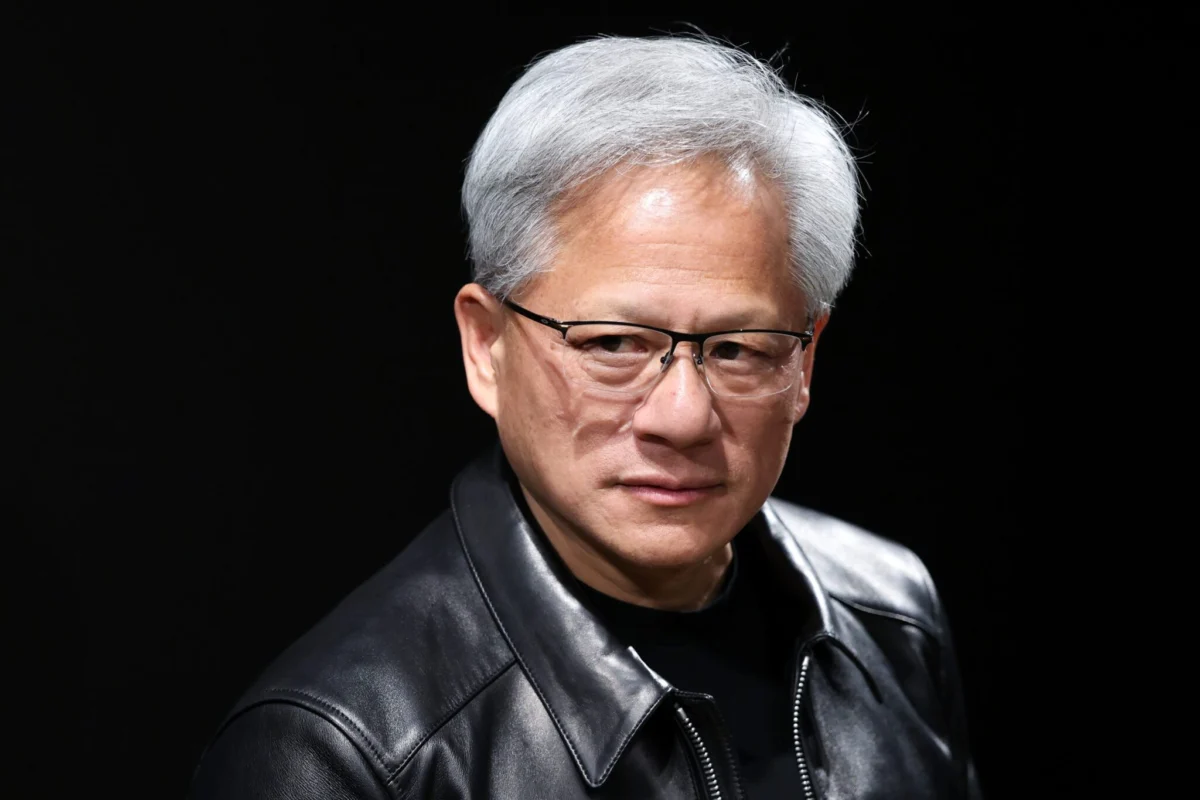
Nvidia CEO Jensen Huang has pushed back against the "circular financing" narrative. In an official statement, Huang described the deal as a way of "securing long-lived infrastructure for Nvidia compute so OpenAI can deploy the most productive AI factories." He emphasized that these facilities are designed to be "upgraded repeatedly," ensuring that each new generation of chips delivers better economics and more "intelligence" per watt.
OpenAI’s Mission
In a public note, OpenAI framed the Ohio project as essential to its survival and growth. "We expect to use this capacity to meet growing demand for advanced AI and maintain our lead as the frontier AI research laboratory," the company stated. They also acknowledged the infrastructure challenges, noting that further development would require "new power plants connected to the grid, including natural gas generation, as well as new transmission lines."
Market Silence
While official statements have been optimistic, both Nvidia and OpenAI declined to provide additional comments to Fortune regarding the specific reasons for the reduction in the guarantee from $250 billion to $105 billion. This silence suggests a sensitive balancing act between aggressive expansion and the need to soothe investor anxieties.
V. Implications: The Circularity Trap and the Future of AI
The Nvidia-OpenAI deal is more than just a real estate or hardware transaction; it is a test case for the sustainability of the entire AI ecosystem.
The "Circular Financing" Concern
The primary concern among investors is the "circular" nature of these funds. Nvidia is essentially providing the money (or the credit) to its customers so they can buy Nvidia’s products. While this helps seed the market, it creates a feedback loop that can be dangerous if the end-user—in this case, OpenAI—fails to generate enough revenue to pay back the debt. Critics point to the dot-com bubble or the Enron era as cautionary tales of what happens when companies manufacture their own demand through creative financing.
The Energy Bottleneck
The Ohio project proves that the limit on AI growth is no longer just code or chips; it is electricity. The need for 9.2 GW of natural gas generation to support the site raises significant environmental and regulatory questions. As Big Tech companies commit to "Net Zero" goals, the reality of powering "AI factories" with fossil fuels creates a glaring contradiction that will likely face political and social scrutiny in the coming years.
A Web of Interdependence
The Ohio deal is part of a broader, tangled web of partnerships. OpenAI has similar arrangements with Microsoft (Project Stargate), Oracle, and Coreweave. In many of these deals, the parties are simultaneously investors, customers, and landlords to one another. This interdependence means that a failure at one node—such as a dip in OpenAI’s subscription revenue or a delay in Nvidia’s next chip architecture—could have a systemic "domino effect" across the entire tech sector.
Conclusion
Nvidia’s $105 billion guarantee is a monumental bet that the "AI factories" of the future will generate enough economic value to justify their unprecedented costs. By reducing the guarantee from its initial rumored highs, Nvidia has signaled a degree of caution, yet the sheer scale of the Ohio project remains a testament to the industry’s belief in the transformative power of artificial intelligence. Whether this results in a new era of industrial productivity or becomes a cautionary tale of overextension remains the $105 billion question.