Welcome back to TechCrunch Mobility — your central hub for news and insights on the future of transportation. To get this in your inbox, sign up here for free — just click TechCrunch Mobility.
Main Facts: Waymo’s Vertical Integration and the Chip That Powers the Future
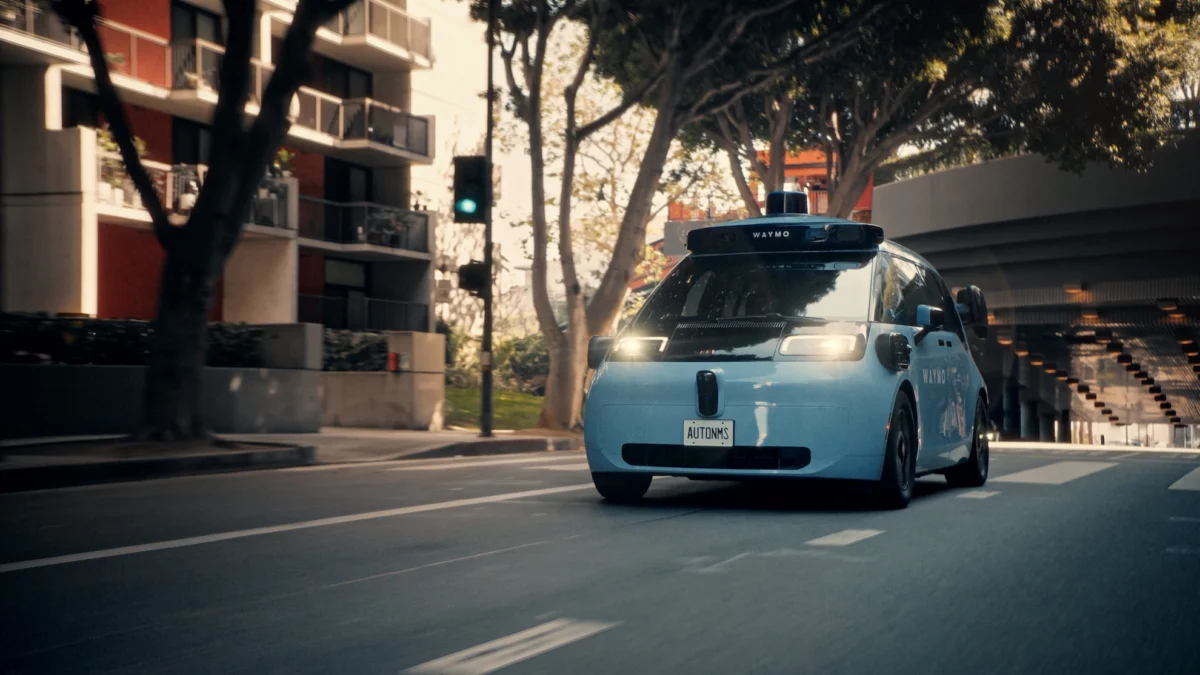
Waymo continues to dominate the discourse surrounding autonomous vehicles, not merely through its aggressive geographical expansion but through a fundamental shift in its technological architecture. As the company opens its next-generation Ojai robotaxi service to all riders across Los Angeles, Phoenix, and San Francisco, it has pulled back the curtain on the hardware powering its sixth-generation self-driving system.
The core revelation this week is Waymo’s decision to transition from off-the-shelf processing solutions to a bespoke, vertically integrated hardware strategy. The company has developed a custom 5nm ASIC (Application-Specific Integrated Circuit) chip designed specifically to ingest and process the torrent of raw sensor data generated by the Ojai platform. Given that each Ojai vehicle is equipped with 13 high-fidelity cameras, the computational requirements are staggering. Waymo claims this new chip delivers upwards of 1,000 TOPS (trillions of operations per second).
To put that in perspective, Waymo’s internal silicon now rivals the performance of industry stalwarts like Nvidia’s DRIVE AGX Thor. By owning the silicon layer, Waymo aims to achieve "unmatched efficiency and performance," reducing the latency between sensor input and vehicular reaction—a critical factor for navigating dense, unpredictable urban environments. While Waymo has taken the lead on the architecture, it is leaning on a deep bench of strategic partners, including AMD, Micron, Nvidia, Samsung, Sandisk, Socionext, and TSMC, to bring this hardware to mass production.
Chronology: A Week of Regulatory Probes and Rapid Scaling
The landscape of autonomous mobility shifted significantly this week, marked by a blend of technological breakthroughs and high-stakes government oversight.

- August 17: Uber announces a strategic partnership with Zipline, targeting a massive scale-up of drone deliveries with a goal of 1 million deliveries per day by 2029.
- August 18: Grounded, a Detroit-based startup, secures $5 million in seed funding to push its van customization platform forward. Meanwhile, Einride confirms a landmark deal to integrate 500 Tesla Semis into its electric trucking fleet over the next two years.
- August 19: Waymo officially opens the Ojai robotaxi to the public in its three major hubs. Simultaneously, Rivian spinout Also raises $150 million in a Series D round.
- August 20: Nevada regulators grant permits to Tesla, Uber, and Waymo to operate up to 8,000 robotaxis in Clark County (Las Vegas) over the next 12 months.
- August 21: The Idaho National Laboratory’s probe into Chinese-made lidar sensors comes to light, revealing that private industry entities are funding security research into foreign-sourced hardware. On the same day, the Dutch Data Protection Authority fines Uber $966 million over automated driver suspensions.
Supporting Data: The Economics of Autonomy
The industry’s push toward profitability remains the primary driver of these recent moves. For Waymo, the "cheaper to build, operate, and maintain" mantra is not just a PR slogan; it is an existential requirement. By moving to custom silicon, Waymo is betting that reduced power consumption and higher reliability will lead to a lower total cost of ownership (TCO) for its Ojai fleet.
The financial data from the startup sector reinforces this trend toward specialization. Also, which pivoted from simple e-bikes to sophisticated autonomous delivery vehicles, has now raised $455 million since its inception in early 2025. This rapid infusion of capital highlights investor confidence in the "last-mile" delivery robotics sector, even as companies like Serve Robotics face market volatility.
Serve Robotics’ experience serves as a case study in the necessity of diversification. After Uber sold its entire stake in the company and moved to scale back its reliance on Serve’s sidewalk robots, the company was forced to pivot quickly. By securing new partnerships with Grubhub and expanding its existing DoorDash footprint into San Jose and D.C., Serve has demonstrated that the "platform-agnostic" approach is the only viable path to survival in the current climate.
Official Responses and Industry Skepticism
The most contentious development this week involves the Idaho National Laboratory’s investigation into Chinese lidar sensors. While the security implications of foreign hardware in U.S. vehicles are clear, the origins of the research funding remain murky.
TechCrunch’s Sean O’Kane reached out to major industry players—including Rivian, General Motors, Ford, and Nuro—all of whom denied knowledge or involvement in the funding of this study. The lack of transparency suggests a deeper anxiety within the autonomous vehicle (AV) sector regarding supply chain reliance on China. As geopolitical tensions rise, the AV industry is finding itself under a microscope, forced to weigh the cost-benefits of global supply chains against potential national security liabilities.

Meanwhile, Waymo’s response to the National Highway Traffic Safety Administration (NHTSA) regarding the collision involving a child has been met with frustration. While Waymo has complied with the request for documents, the fact that these disclosures remain heavily redacted leaves the public—and regulators—with more questions than answers regarding the safety protocols of current-gen systems.
Implications: The Road Ahead
1. The Consolidation of the "Compute" Layer
As Waymo proves the value of custom ASIC design, we should expect a "compute arms race." Automotive-grade processors are becoming the most valuable intellectual property in the industry. Carmakers that fail to vertically integrate or partner deeply with silicon giants will find themselves at a performance disadvantage that no amount of software optimization can overcome.
2. The End of "Single-Partner" Dependency
The Uber-Serve Robotics breakup is a warning shot to the entire gig-economy ecosystem. The days of relying on a single major partner for deployment are ending. Future success will favor "delivery-as-a-service" providers that can plug into multiple apps simultaneously, effectively turning the delivery robot into a utility that operates independently of the app front-end.
3. The Geopolitical Lidar Divide
The Idaho National Laboratory probe is likely the tip of the iceberg. We are heading toward a bifurcated global market for sensor technology. U.S.-based AV companies will likely face increasing pressure—or regulation—to "de-risk" their sensor suites, removing Chinese-made components to ensure compatibility with federal safety and security standards. This will inevitably increase the cost of sensor hardware in the short term, putting further pressure on the already tight margins of the robotaxi business model.
4. Urban Transformation
The Nevada regulatory approval for 8,000 robotaxis in Clark County is a bellwether. While the full fleet size may not materialize immediately, the sheer scale of the permit signals that municipalities are moving from "experimental pilot" phases to "commercial utility" phases. The challenge for cities will be managing this influx of vehicles, not just in terms of traffic flow, but in infrastructure integration and data privacy.

As the industry matures, the divide between those who can successfully manage the hardware-software stack and those who rely on third-party integrations will widen. Waymo’s bet on 5nm silicon is a high-stakes move, but it is one that reflects the current reality: in the world of autonomous mobility, performance is no longer a luxury—it is the baseline for survival.
Got a tip for us? Email Kirsten Korosec at [email protected] or reach out via Signal at kkorosec.07. For investigative inquiries, contact Sean O’Kane at [email protected].
Disclaimer: When you purchase through links in our articles, we may earn a small commission. This doesn’t affect our editorial independence.